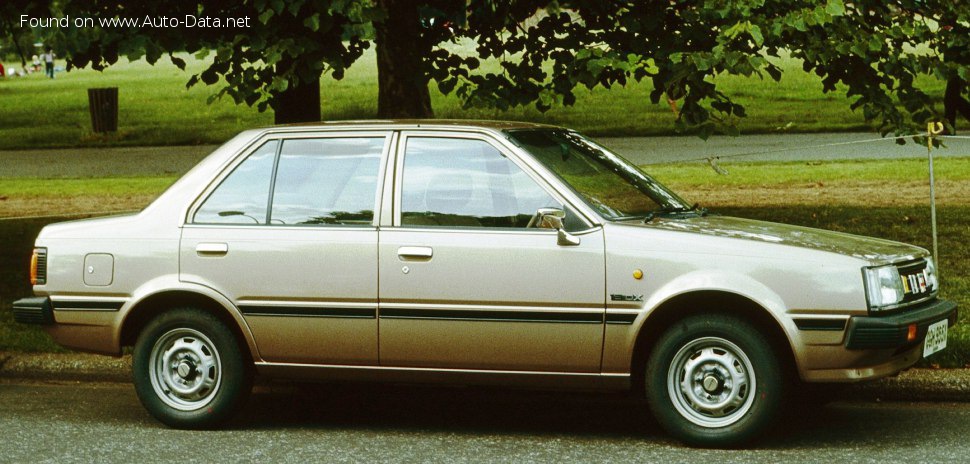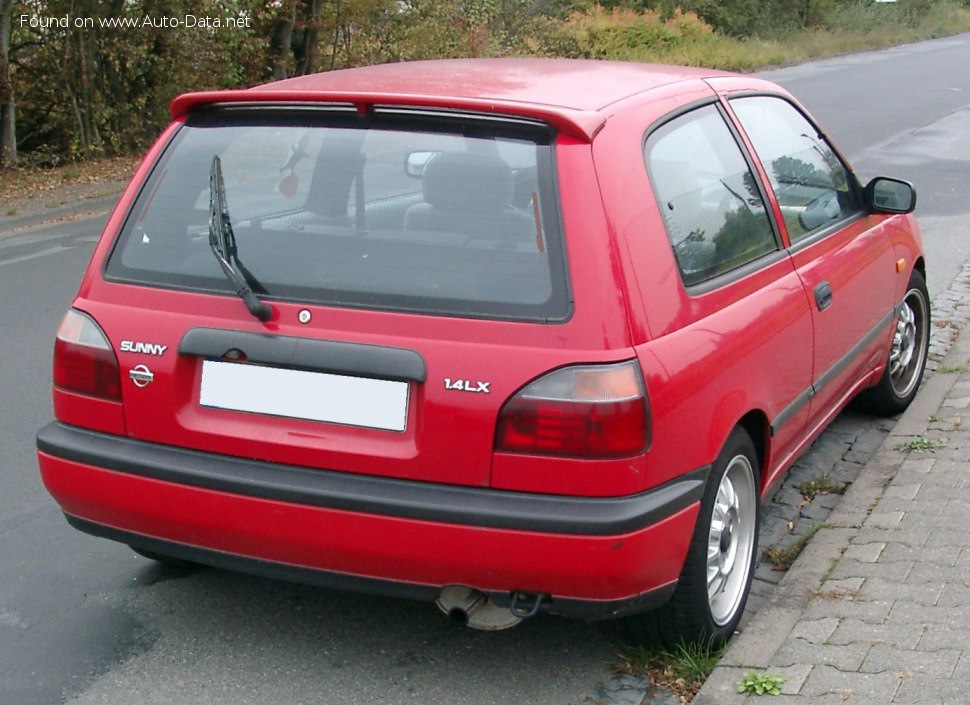
The Nissan Sunny III Hatch (N14) 3 doors 2.0 GTI 16V (143 Hp) represents a compelling chapter in Nissan’s global automotive history. While the Nissan Sunny, known as the Sentra in North America and Pulsar in Australia and Japan, was a mainstay of the compact car segment, the European and Japanese markets enjoyed a broader range of body styles and performance variants. The N14 generation, produced from 1990 to 1995, included the 3-door 2.0 GTI 16V, a hot hatch designed to appeal to driving enthusiasts. This model offered a unique blend of Japanese engineering, spirited performance, and practicality, positioning itself against established European rivals in a highly competitive market.
The Nissan Sunny III Hatch (N14) 3 doors 2.0 GTI 16V (143 Hp): A European Hot Hatch Icon
The 2.0 GTI 16V was specifically tailored for drivers seeking a daily vehicle that didn’t compromise on excitement. It embodied the early 1990s hot hatch ethos, prioritizing a lightweight build, a responsive naturally aspirated engine, and precise handling. Its primary market was Europe, where the hot hatch segment was thriving, and it directly competed with models from Volkswagen, Peugeot, and Honda, offering a distinctive Japanese alternative.
Engine & Performance
Powering the Nissan Sunny III Hatch (N14) 3 doors 2.0 GTI 16V was Nissan’s highly regarded SR20DE engine. This 2.0-liter (1998 cm3 or 121.93 cu. in.) inline four-cylinder engine was a cornerstone of Nissan’s performance offerings during the period, celebrated for its robust construction, smooth power delivery, and exceptional reliability. The SR20DE featured a Double Overhead Camshaft (DOHC) valvetrain with 4 valves per cylinder, and in this application, relied on multi-port fuel injection for efficient fuel delivery.
The engine generated 143 horsepower at 6400 rpm, resulting in a specific output of 71.6 horsepower per liter. Torque figures were also impressive for its class, peaking at 131.29 lb.-ft. (178 Nm) at 4800 rpm. A compression ratio of 10:1 and a square bore and stroke of 3.39 inches (86 mm) contributed to the engine’s responsiveness and willingness to rev. Power was transferred to the front wheels through a crisp 5-speed manual transmission, ideal for an engaging driving experience.
Performance metrics were competitive for the early 1990s hot hatch segment. The 2.0 GTI 16V could accelerate from 0 to 60 mph in 7.8 seconds (0-100 km/h in 8.2 seconds) and achieve a top speed of 130.49 mph (210 km/h). Its relatively light curb weight of 2438.31 lbs (1106 kg) resulted in an impressive weight-to-power ratio of 7.7 kg/Hp, or 129.3 Hp per tonne, and a weight-to-torque ratio of 6.2 kg/Nm, or 160.9 Nm per tonne. Fuel economy, considering its performance capabilities, was reasonable at 27.4 US mpg combined (8.6 l/100 km).
Design & Features
The Nissan Sunny III Hatch (N14) showcased a contemporary, though somewhat conservative, design for its time. The 3-door hatchback body style provided a sporty profile, emphasizing its performance intentions while maintaining a degree of practicality. Its dimensions – 156.5 inches (3975 mm) in length, 66.54 inches (1690 mm) in width, and 54.92 inches (1395 mm) in height – made it a compact and agile vehicle, well-suited for navigating European city streets and winding country roads. The 95.67-inch (2430 mm) wheelbase contributed to its stable handling characteristics.
As a GTI model, the N14 Sunny featured subtle aesthetic enhancements to differentiate it from standard models. These typically included unique alloy wheels, a more aggressive front fascia, side skirts, and potentially a rear spoiler. The interior boasted sport seats, a leather-wrapped steering wheel, and unique instrumentation, reinforcing its performance-oriented nature. Despite its compact exterior, the Sunny offered seating for five, with a practical trunk space of 9.89 cubic feet (280 liters) with the rear seats up, expanding to 34.96 cubic feet (990 liters) when folded down, providing surprising versatility for a hot hatch.
Safety features for the early 1990s were less advanced than today’s standards, but the inclusion of an Anti-lock Braking System (ABS) was a significant improvement, enhancing braking control in challenging conditions. The robust body structure and responsive handling also contributed to the vehicle’s overall safety profile.
Technical Specifications
| Category | Specification |
| General Information | |
| Brand | Nissan |
| Model | Sunny |
| Generation | Sunny III Hatch (N14) 3 doors |
| Type (Engine) | 2.0 GTI 16V (143 Hp) |
| Production Start | 1990 |
| Production End | 1995 |
| Powertrain Architecture | Internal Combustion Engine (ICE) |
| Body Type | Hatchback |
| Seats | 5 |
| Doors | 3 |
| Performance Specifications | |
| Fuel Consumption (Combined) | 27.4 US mpg (8.6 l/100 km) |
| Fuel Type | Gasoline (Petrol) |
| Acceleration 0-60 mph | 7.8 sec |
| Acceleration 0-100 km/h | 8.2 sec |
| Maximum Speed | 130.49 mph (210 km/h) |
| Weight-to-Power Ratio | 7.7 kg/Hp (129.3 Hp/tonne) |
| Weight-to-Torque Ratio | 6.2 kg/Nm (160.9 Nm/tonne) |
| Engine Specifications | |
| Power | 143 Hp @ 6400 rpm |
| Power per Liter | 71.6 Hp/l |
| Torque | 131.29 lb.-ft. (178 Nm) @ 4800 rpm |
| Engine Layout | Front, Transverse |
| Engine Model/Code | SR20DE |
| Engine Displacement | 2.0 liters (1998 cm3 / 121.93 cu. in.) |
| Number of Cylinders | 4 |
| Engine Configuration | Inline |
| Cylinder Bore | 3.39 in. (86 mm) |
| Piston Stroke | 3.39 in. (86 mm) |
| Compression Ratio | 10:1 |
| Valves per Cylinder | 4 |
| Fuel Injection System | Multi-port manifold injection |
| Engine Aspiration | Naturally aspirated |
| Valvetrain | DOHC |
| Engine Oil Capacity | 3.59 US qt (3.4 l) |
| Coolant Capacity | 6.02 US qt (5.7 l) |
| Space, Volume, and Weights | |
| Curb Weight | 2438.31 lbs (1106 kg) |
| Maximum Weight | 3450.23 lbs (1565 kg) |
| Maximum Load | 1011.92 lbs (459 kg) |
| Trunk Space (Minimum) | 9.89 cu. ft. (280 l) |
| Trunk Space (Maximum) | 34.96 cu. ft. (990 l) |
| Fuel Tank Capacity | 13.21 US gal (50 l) |
| Dimensions | |
| Length | 156.5 in. (3975 mm) |
| Width | 66.54 in. (1690 mm) |
| Height | 54.92 in. (1395 mm) |
| Wheelbase | 95.67 in. (2430 mm) |
| Front Track | 56.89 in. (1445 mm) |
| Rear Track | 55.91 in. (1420 mm) |
| Drivetrain, Brakes, and Suspension | |
| Drivetrain Architecture | Front-wheel drive (ICE drives front wheels) |
| Drive Wheel | Front-wheel drive |
| Gearbox Type | 5-speed manual transmission |
| Front Suspension | Wishbone |
| Rear Suspension | Coil spring |
| Front Brakes | Ventilated discs |
| Rear Brakes | Disc |
| Assisting Systems | ABS (Anti-lock braking system) |
| Steering Type | Steering rack and pinion |
| Power Steering | Hydraulic Steering |
| Tire Size | 195/55 R14 |
Legacy and Market Impact
The Nissan Sunny III Hatch (N14) 3 doors 2.0 GTI 16V (143 Hp) occupies a noteworthy, though often understated, position in hot hatch history. In its primary European market, it faced strong competition from segment leaders like the Volkswagen Golf GTI, Peugeot 205/306 GTI, and Renault Clio Williams. In Japan, where it was known as the Pulsar GTi-R, a turbocharged, all-wheel-drive variant existed, but the Sunny GTI offered a more accessible and road-friendly package for European buyers.
The Sunny GTI distinguished itself through its reputation for Japanese reliability combined with a genuinely engaging driving experience. The SR20DE engine was a standout feature, praised for its durability and potential for aftermarket tuning. While perhaps not as flamboyant as some French rivals or as universally recognized as the Golf GTI, the Sunny GTI provided a compelling alternative for those prioritizing precision engineering and a balanced performance package. Its contribution enhanced Nissan’s image as a manufacturer capable of producing dynamic and driver-focused vehicles. Today, these models are appreciated by collectors and enthusiasts for their mechanical robustness, the legendary SR20DE engine, and their role in a golden era of compact performance cars.