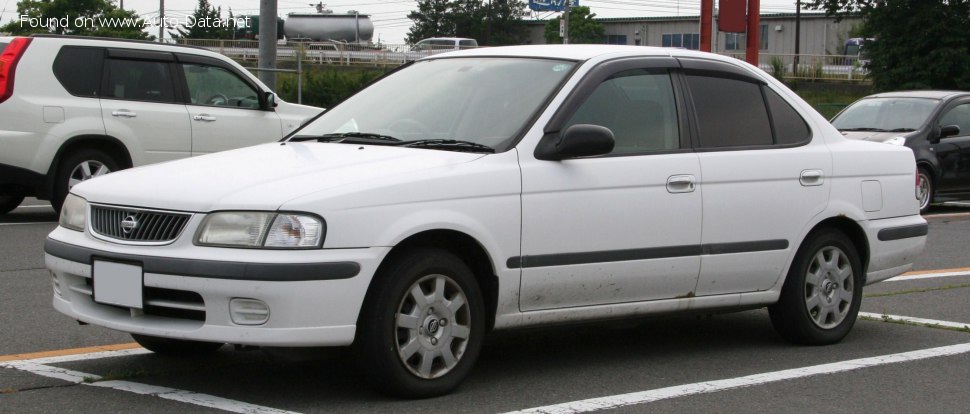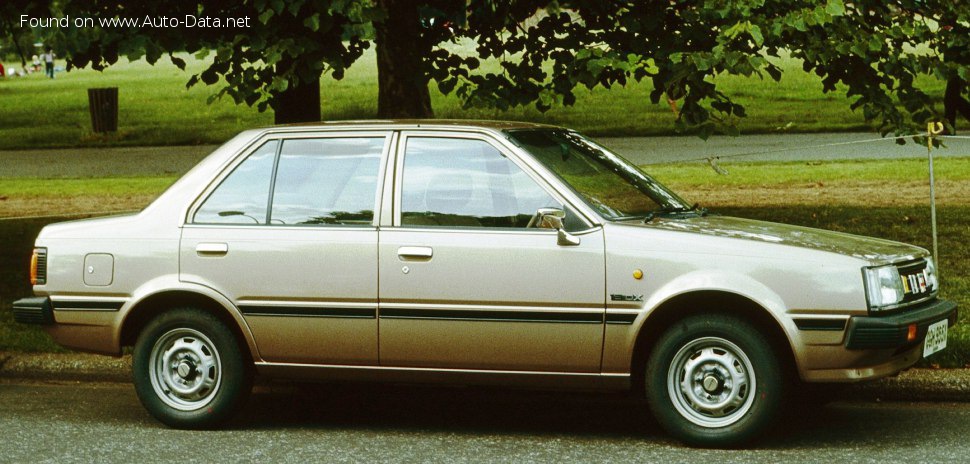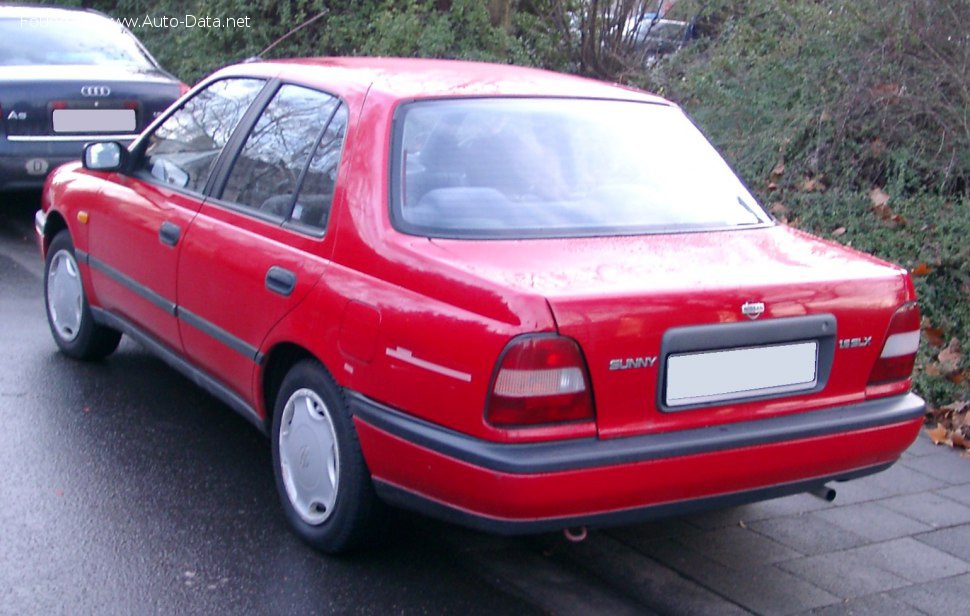
The Nissan Sunny III (N14) represents the third generation of Nissan’s globally recognized compact car, a lineage consistently praised for its dependability, fuel efficiency, and practicality in numerous international markets. Manufactured between 1990 and 1995, the N14 generation refined the strengths of its forebears, presenting a more modern aesthetic, enhanced safety provisions, and a wider selection of engine and drivetrain configurations. While marketed as the Sentra in North America, the “Sunny” nameplate was applied to models sold in Europe, Asia, and other territories, frequently with unique specifications designed for those specific regions. This comprehensive review centers on a notably interesting version: the Nissan Sunny III (N14) 1.6 i 16V 4WD (90 horsepower) sedan, a model that integrated all-wheel drive capability into a traditionally front-wheel drive compact class.
Nissan Sunny N14: A Global Perspective
The Sunny, and its Sentra equivalent, occupied a crucial position in Nissan’s global strategy. During the early 1990s, the compact sedan segment was intensely competitive. Manufacturers were striving to balance affordability with increasing demands for comfort, safety, and performance. The N14 Sunny aimed to strike this balance, offering a practical and reliable vehicle at a competitive price point. In Europe and Asia, the Sunny often served as a family’s first car, prized for its ease of maintenance and relatively low running costs. The availability of a four-wheel-drive variant, like the 1.6 i 16V, was particularly significant in regions with inclement weather or challenging road conditions, providing enhanced traction and stability. The N14 represented a step up in refinement compared to the N13 generation, with improvements to the interior, suspension, and overall build quality. It was a vehicle designed to appeal to a broad demographic, from young professionals to small families.
Market Positioning and Competition
The N14 Sunny competed directly with other popular compact sedans of the era, including the Toyota Corolla, Honda Civic, Ford Escort, and Opel Astra (Vauxhall Astra in the UK). Each of these vehicles offered a similar blend of practicality and affordability, but the Sunny distinguished itself with the option of all-wheel drive, a feature not commonly found in this class at the time. This gave it a competitive edge in markets where all-weather capability was highly valued. The 1.6-liter engine provided a reasonable balance between performance and fuel economy, making it a suitable choice for both city driving and longer journeys. While not a performance-oriented vehicle, the Sunny offered a comfortable and reliable driving experience.
Engine & Performance
The heart of the Nissan Sunny III (N14) 1.6 i 16V 4WD is a 1.6-liter, inline-four cylinder gasoline engine. This engine, designated as the GA16DE, is a naturally aspirated unit featuring a 16-valve cylinder head and multi-point fuel injection. It produced a maximum power output of 90 horsepower (67 kW) at 5,600 rpm and a peak torque of 134 Nm (99 lb-ft) at 3,600 rpm. While these figures may seem modest by modern standards, they were competitive for a compact sedan of the early 1990s. The engine is known for its robustness and longevity, contributing to the Sunny’s reputation for reliability. The four-wheel-drive system employed a viscous coupling to distribute torque between the front and rear axles, providing automatic engagement of the rear wheels when slippage was detected. This system enhanced traction on slippery surfaces, improving handling and stability in adverse conditions. The transmission options typically included a five-speed manual or a four-speed automatic. Performance figures varied depending on the transmission, but a manual-equipped model could achieve a 0-60 mph time of around 11-12 seconds, with a top speed of approximately 115 mph. Fuel economy was respectable for the time, averaging around 30-35 mpg in mixed driving conditions.
Design & Features
The Nissan Sunny III (N14) adopted a more rounded and aerodynamic design compared to its predecessor, reflecting the styling trends of the early 1990s. The exterior featured a relatively simple and understated aesthetic, prioritizing practicality over flamboyant styling. The sedan body style was the most common, although hatchback and coupe variants were also available in some markets. The interior of the N14 Sunny was functional and well-laid-out, with a focus on ergonomics and ease of use. The materials used were durable, although not particularly luxurious. Standard features typically included power steering, central locking, and electric windows. Higher trim levels offered additional amenities such as air conditioning, a radio/cassette player, and upgraded upholstery. Safety features were relatively basic by modern standards, but the N14 Sunny did incorporate some improvements over earlier models. These included reinforced side impact beams and an optional anti-lock braking system (ABS). The four-wheel-drive system itself contributed to enhanced safety by providing improved stability and control in challenging driving conditions. The N14’s suspension setup consisted of independent front struts and a torsion beam rear axle, providing a comfortable ride quality. The overall design of the Sunny N14 was aimed at providing a practical, reliable, and affordable vehicle for everyday use.
Technical Specifications
| Engine Type | 1.6 L Inline-4 Cylinder |
| Engine Code | GA16DE |
| Displacement | 1597 cc (97.4 cu in) |
| Horsepower | 90 hp (67 kW) @ 5600 rpm |
| Torque | 134 Nm (99 lb-ft) @ 3600 rpm |
| Fuel System | Multi-Point Fuel Injection |
| Transmission | 5-Speed Manual or 4-Speed Automatic |
| Drivetrain | All-Wheel Drive (4WD) |
| Brakes | Ventilated Discs (Front), Drums (Rear) |
| Suspension (Front) | Independent Struts |
| Suspension (Rear) | Torsion Beam |
| Curb Weight | 1,180 – 1,250 kg (2,601 – 2,756 lbs) |
| Fuel Economy (Combined) | 30-35 mpg (estimated) |
| Top Speed | 115 mph (approx.) |
| 0-60 mph | 11-12 seconds (approx. – Manual) |
The Nissan Sunny III (N14) 1.6 i 16V 4WD, while not a groundbreaking vehicle in terms of innovation, represented a solid and dependable offering in the competitive compact sedan segment. Its combination of practicality, reliability, and available all-wheel-drive capability made it a popular choice in various markets, particularly in regions where all-weather performance was a priority. The N14 Sunny’s enduring reputation for durability and affordability continues to resonate with enthusiasts and collectors today, solidifying its place as a significant model in Nissan’s history.