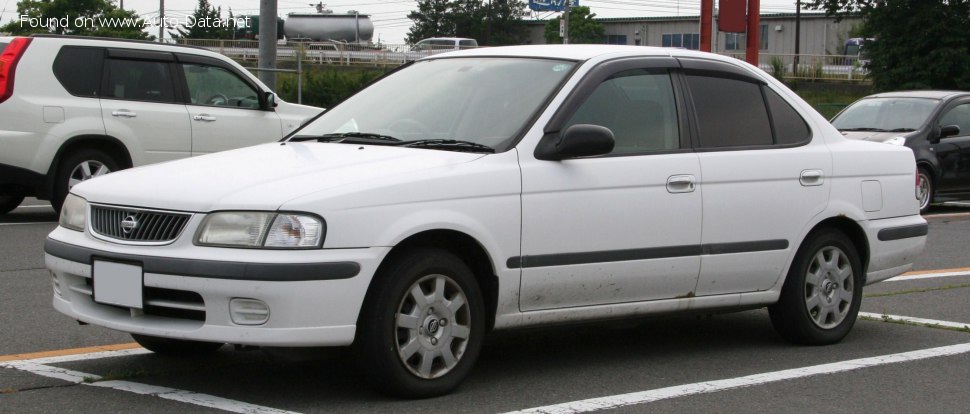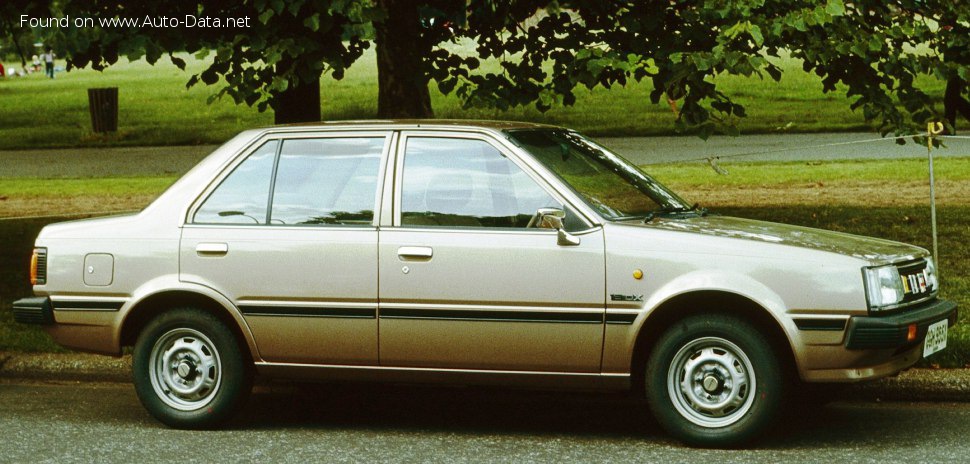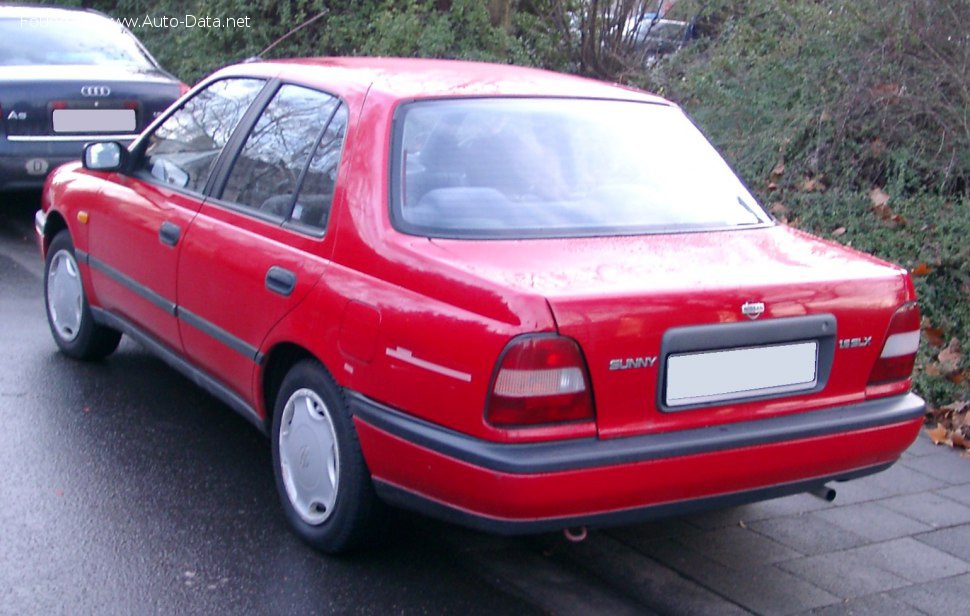
The Nissan Sunny III (N14) 2.0 D (55 Hp) represents a significant chapter in Nissan’s global automotive strategy during the early 1990s. Launched in 1990 and produced until 1994, the N14 generation of the Nissan Sunny was a compact car designed to offer practicality, reliability, and economical transportation to a broad international audience. While the Sunny nameplate had a presence in various markets, including North America (often as the Sentra), this specific 2.0 D (55 Hp) diesel variant was predominantly targeted at European and select Asian markets, where diesel engines in compact vehicles were highly valued for their fuel efficiency and robust performance, particularly in commercial and fleet applications.
The N14 generation brought a more modern, rounded aesthetic compared to its predecessors, aligning with early 1990s design trends. As a four-door sedan, the Nissan Sunny III (N14) 2.0 D (55 Hp) was positioned as a sensible choice for families and professionals seeking a dependable daily driver. Its powertrain, a naturally aspirated 2.0-liter diesel engine, underscores its focus on durability and economy over outright speed, a common characteristic of diesel offerings in that era’s European compact segment. This article delves into the technical specifications, design philosophy, and market impact of this utilitarian yet globally significant model.
Engine & Performance: The Heart of the Nissan Sunny III (N14)
At the core of the Nissan Sunny III (N14) 2.0 D (55 Hp) lies a powertrain engineered for longevity and exceptional fuel economy rather than blistering performance. The vehicle is equipped with a 2.0-liter (1998 cm3 or 121.93 cu. in.) inline four-cylinder diesel engine. This unit, designated as naturally aspirated, did not feature turbocharging, a technology that was still becoming widespread in passenger car diesels during the early 1990s. The engine layout is front, transverse, driving the front wheels, a standard configuration for compact cars of its time, optimizing interior space and manufacturing efficiency.
With a power output of 55 horsepower (Hp) at 4800 revolutions per minute (rpm), the engine delivers a power-per-liter ratio of 27.5 Hp/l. Torque, a crucial figure for diesel engines, stands at 104 Newton-meters (Nm), or approximately 76.71 pound-feet (lb.-ft.), available at a relatively low 2800 rpm. This low-end torque characteristic made the Sunny 2.0 D tractable in city driving and capable of handling varying loads, even if acceleration was leisurely. The engine featured a robust overhead camshaft (OHC) valvetrain with two valves per cylinder and utilized a precombustion chamber injection system, a common technology for indirect injection diesels of the period known for its smoother operation and quieter running compared to early direct injection systems.
The engine’s substantial compression ratio of 22.2:1 is typical for a naturally aspirated diesel, ensuring efficient combustion. Its ‘square’ bore and stroke dimensions (86 mm or 3.39 in. for both) indicate a design balanced for both torque and moderate revs. Power is transmitted to the front wheels via a five-speed manual transmission, offering the driver direct control and further contributing to the vehicle’s fuel efficiency. The curb weight of 2248.72 pounds (1020 kg) results in a weight-to-power ratio of 18.5 kg/Hp (53.9 Hp/tonne), underscoring its utilitarian focus where economy and durability were prioritized over dynamic performance.
Design & Features: Practicality and Functionality
The design of the Nissan Sunny III (N14) 2.0 D (55 Hp) reflects the practical ethos of its era and market segment. As a four-door sedan, it offered a conventional yet appealing silhouette that prioritized interior space and cargo capacity. The exterior dimensions of 166.54 inches (4230 mm) in length, 66.54 inches (1690 mm) in width, and 54.92 inches (1395 mm) in height made it a compact and maneuverable vehicle, ideal for navigating crowded European city streets and tight parking spaces. A wheelbase of 95.67 inches (2430 mm) contributed to a stable ride and adequate interior room for five occupants.
Inside, the Sunny N14 was designed for functionality. With seating for five, it provided a comfortable, albeit not luxurious, environment. The trunk space was a commendable 15.54 cubic feet (440 liters), making it a practical choice for family trips, groceries, or commercial use. The fuel tank capacity of 13.21 US gallons (50 liters) ensured a substantial driving range, a key advantage for a diesel-powered vehicle.
In terms of chassis and safety, the Sunny N14 featured a straightforward but effective setup. The front suspension utilized a wishbone design, known for its good handling and ride comfort, while the rear employed a spring strut system. Braking duties were handled by ventilated discs at the front, offering superior heat dissipation, paired with drum brakes at the rear. A notable safety feature for a vehicle in this segment and era was the availability of an Anti-lock Braking System (ABS), which provided enhanced control during emergency braking situations. Steering was managed by a rack and pinion system, assisted by hydraulic power steering, ensuring ease of maneuverability at low speeds and good feedback on the open road. The car rode on 195/70 R13 tires, a common size for compact cars, balancing ride comfort with grip.
Nissan Sunny III (N14) 2.0 D (55 Hp) Technical Specifications
| Category | Specification |
| General Information | |
| Brand | Nissan |
| Model | Sunny |
| Generation | Sunny III (N14) |
| Type (Engine) | 2.0 D (55 Hp) |
| Start of production | 1990 year |
| End of production | 1994 year |
| Powertrain Architecture | Internal Combustion engine |
| Body type | Sedan |
| Seats | 5 |
| Doors | 4 |
| Performance Specs | |
| Fuel Type | Diesel |
| Weight-to-power ratio | 18.5 kg/Hp |
| Weight-to-torque ratio | 9.8 kg/Nm |
| Engine Specs | |
| Power | 55 Hp @ 4800 rpm |
| Power per liter | 27.5 Hp/l |
| Torque | 104 Nm @ 2800 rpm |
| Engine layout | Front, Transverse |
| Engine displacement | 1998 cm3 |
| Number of cylinders | 4 |
| Engine configuration | Inline |
| Cylinder Bore | 86 mm |
| Piston Stroke | 86 mm |
| Compression ratio | 22.2:1 |
| Number of valves per cylinder | 2 |
| Fuel injection system | Precombustion chamber injection |
| Engine aspiration | Naturally aspirated engine |
| Valvetrain | OHC |
| Space, Volume and Weights | |
| Kerb Weight | 1020 kg |
| Trunk (boot) space – minimum | 440 l |
| Fuel tank capacity | 50 l |
| Dimensions | |
| Length | 4230 mm |
| Width | 1690 mm |
| Height | 1395 mm |
| Wheelbase | 2430 mm |
| Front track | 1445 mm |
| Rear (Back) track | 1430 mm |
| Drivetrain, Brakes and Suspension Specs | |
| Drivetrain Architecture | The Internal combustion engine (ICE) drives the front wheels of the vehicle. |
| Drive wheel | Front wheel drive |
| Number of gears and type of gearbox | 5 gears, manual transmission |
| Front suspension | Wishbone |
| Rear suspension | Spring Strut |
| Front brakes | Ventilated discs |
| Rear brakes | Drum |
| Assisting systems | ABS (Anti-lock braking system) |
| Steering type | Steering rack and pinion |
| Power steering | Hydraulic Steering |
| Tires size | 195/70 R13 |
Legacy & Market Impact of the Nissan Sunny III (N14) 2.0 D (55 Hp)
The Nissan Sunny III (N14) 2.0 D (55 Hp) carved out a significant niche in its primary markets, particularly in Europe. During the early 1990s, the European automotive landscape was highly competitive, with a strong demand for economical and durable compact cars. Diesel power, while not as refined as it is today, was already a popular choice due to lower fuel costs (especially for commercial users) and superior fuel efficiency compared to gasoline counterparts. The Sunny N14, with its robust 2.0-liter diesel engine, perfectly fit this demand, establishing a reputation as a reliable workhorse.
Its competitors in this segment were formidable and included well-established models such as the Opel Astra, Ford Escort, Volkswagen Golf/Jetta (especially their diesel variants like the 1.9 D), Toyota Corolla, and Honda Civic. While these rivals often offered more powerful or sportier gasoline options, the Sunny 2.0 D stood its ground by emphasizing dependability, low running costs, and a no-nonsense approach to transportation. It was a common sight as a taxi, fleet vehicle, or a practical family car for those who prioritized longevity and economy over dynamic performance.
The historical significance of the Nissan Sunny III (N14) 2.0 D (55 Hp) lies in its embodiment of Nissan’s global strategy to offer a diverse range of vehicles tailored to specific regional needs. In markets like the United States, where the Sentra (the Sunny’s North American counterpart) was sold, such a low-powered, naturally aspirated diesel sedan would have been a rarity and likely not well-received by consumers accustomed to gasoline engines and higher power outputs. However, in Europe, where diesel fuel was cheaper and fuel economy was a paramount concern, the 2.0 D variant was a logical and popular offering.
The N14 generation, including this diesel model, contributed to Nissan’s image as a manufacturer of reliable and practical vehicles. Its straightforward engineering, combined with Nissan’s known build quality, ensured many examples remained on the road for years, often accumulating high mileage. While not a glamourous vehicle, the Nissan Sunny III (N14) 2.0 D (55 Hp) played a crucial role in providing accessible, efficient, and durable personal transport, leaving a legacy as a dependable and economically sound choice for countless drivers across continents. It represents a period when automotive design focused on fundamental utility and cost-effectiveness, characteristics that still resonate with a segment of the global automotive market today.