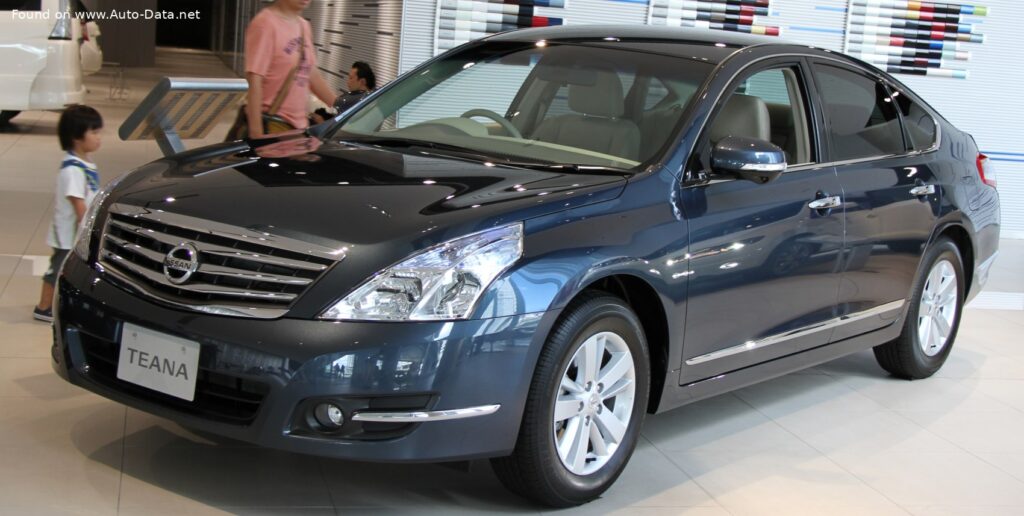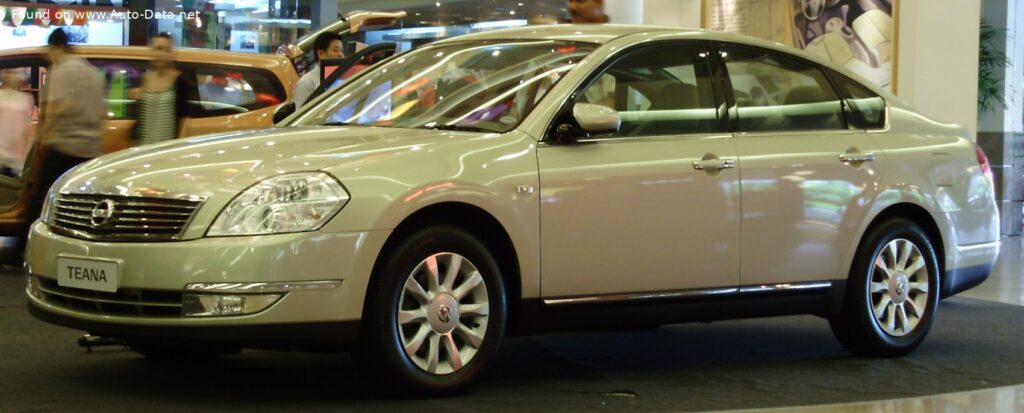
The Nissan Teana 3.5 i V6 (J31 Generation), produced from 2003 to 2008, was a strategically important model for Nissan, primarily targeting markets in Asia, the Middle East, and parts of Europe. Positioned as a mid-size to large luxury sedan, the Teana aimed to deliver a refined, comfortable, and sophisticated driving experience, often serving as a successor or complement to models like the Nissan Cefiro (known as the Maxima in some markets). Unlike its US counterparts, the Altima and Maxima, the Teana prioritized interior space, quietness, and a relaxed ambiance, embodying Nissan’s “Modern Living” concept. The 3.5 i V6 variant represented the flagship model, showcasing Nissan’s acclaimed VQ-series engine and offering a blend of power and luxury.
Nissan Teana 3.5 i V6: A Detailed Overview
The first-generation Teana (J31) distinguished itself from other Nissan sedans through its design philosophy. While sharing a platform with the US-market Altima and Maxima, the Teana was engineered to provide a more luxurious and comfortable experience, focusing on passenger well-being rather than sporty handling. This approach was particularly successful in markets where a smooth ride and spacious interior were highly valued, such as Japan and China. The Teana’s success helped Nissan establish a stronger presence in these regions and compete effectively against established rivals like the Toyota Camry and Honda Accord.
Engine & Performance
The Nissan Teana 3.5 i V6 was powered by the renowned VQ35DE engine, a 3.5-liter (3498 cm³ or 213.46 cu. in.) naturally aspirated V6. This engine, featuring a Double Overhead Camshaft (DOHC) valvetrain with four valves per cylinder, was celebrated for its smooth power delivery, robust low-end torque, and reliability. The VQ35DE was widely used across Nissan and Infiniti lineups, appearing in models ranging from the 350Z sports car to the Murano SUV and the Maxima sedan.
In the Teana, the VQ35DE produced 245 horsepower at 6000 rpm and 243.4 lb-ft (330 Nm) of torque at 3600 rpm. This output provided ample power for highway cruising and confident overtaking. The engine’s transverse layout and front-wheel-drive configuration maximized interior space and packaging efficiency. Performance figures were competitive for its class: 0 to 60 mph in 7.5 seconds, 0 to 100 km/h in 7.9 seconds, and a electronically limited top speed of 130.49 mph (210 km/h). The power-to-weight ratio was 154.2 Hp per tonne (6.5 kg/Hp). Fuel economy was reasonable for a V6-powered sedan of its era, achieving a combined 21.8 US mpg (10.8 l/100 km), 15.7 US mpg (15 l/100 km) in urban settings, and 28 US mpg (8.4 l/100 km) on the highway.
Design & Features
The Teana J31 generation featured a distinctive design characterized by clean lines, a prominent chrome grille, and large headlamps, projecting an image of understated elegance. As a four-door sedan with five seats, it prioritized practicality and passenger comfort. Its dimensions – 190.75 inches (4845 mm) in length, 69.49 inches (1765 mm) in width, and 58.07 inches (1475 mm) in height, with a 109.25-inch (2775 mm) wheelbase – provided substantial interior volume.
The interior embodied Nissan’s “Modern Living” concept, focusing on creating a serene, spacious, and luxurious cabin. High-quality materials, soft-touch surfaces, and tasteful accents (wood grain or metallic finishes) were common. Ergonomically designed seats and generous legroom, especially in the rear, enhanced passenger comfort. Standard features in the 3.5 i V6 included automatic climate control, a sophisticated audio system, and power-adjustable seating. The trunk offered 16.81 cu. ft. (476 liters) of cargo space. The chassis featured coil springs in the front and a spring strut system in the rear, providing a comfortable ride. Ventilated front and solid rear discs, coupled with an Anti-lock Braking System (ABS), ensured effective braking. The rack and pinion steering system offered precise handling, and the standard tire size was 215/55 R17.
Technical Specifications
| Category | Specification |
| Brand | Nissan |
| Model | Teana |
| Generation | Teana (J31) |
| Type (Engine) | 3.5 i V6 (245 Hp) |
| Start of Production | 2003 |
| End of Production | 2008 |
| Powertrain Architecture | Internal Combustion engine |
| Body type | Sedan |
| Seats | 5 |
| Doors | 4 |
| Fuel consumption (economy) – urban | 15 l/100 km (15.7 US mpg) |
| Fuel consumption (economy) – extra urban | 8.4 l/100 km (28 US mpg) |
| Fuel consumption (economy) – combined | 10.8 l/100 km (21.8 US mpg) |
| Fuel Type | Petrol (Gasoline) |
| Acceleration 0 – 60 mph | 7.5 sec |
| Acceleration 0 – 100 km/h | 7.9 sec |
| Maximum speed | 210 km/h (130.49 mph) |
| Weight-to-power ratio | 6.5 kg/Hp (154.2 Hp/tonne) |
| Engine Power | 245 Hp @ 6000 rpm |
| Engine Torque | 330 Nm @ 3600 rpm (243.4 lb.-ft. @ 3600 rpm) |
| Engine Displacement | 3498 cm³ (3.5 Liters / 213.46 cu. in.) |
| Number of cylinders | 6 |
| Engine configuration | V-engine |
| Length | 4845 mm (190.75 in.) |
| Width | 1765 mm (69.49 in.) |
| Height | 1475 mm (58.07 in.) |
| Wheelbase | 2775 mm (109.25 in.) |
Legacy and Market Impact
The Nissan Teana J31, particularly the 3.5 i V6, established a strong position for Nissan in its target markets. It was often considered a more luxurious and comfortable alternative to competitors like the Toyota Camry and Honda Accord. Its success in Japan and China solidified Nissan’s presence and market share, and the car’s platform sharing with the US-market Altima and Maxima demonstrated Nissan’s efficient use of engineering resources. Even today, the first-generation Teana remains a popular choice in the used car market, valued for its reliability, spaciousness, and well-appointed interior. The Nissan Teana 3.5 i V6 stands as a testament to Nissan’s ability to create a compelling luxury sedan tailored to the preferences of its international customer base.