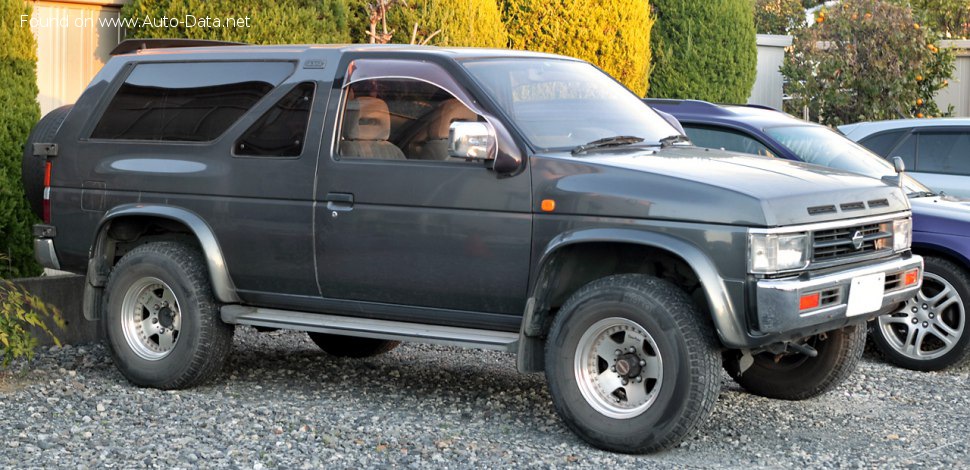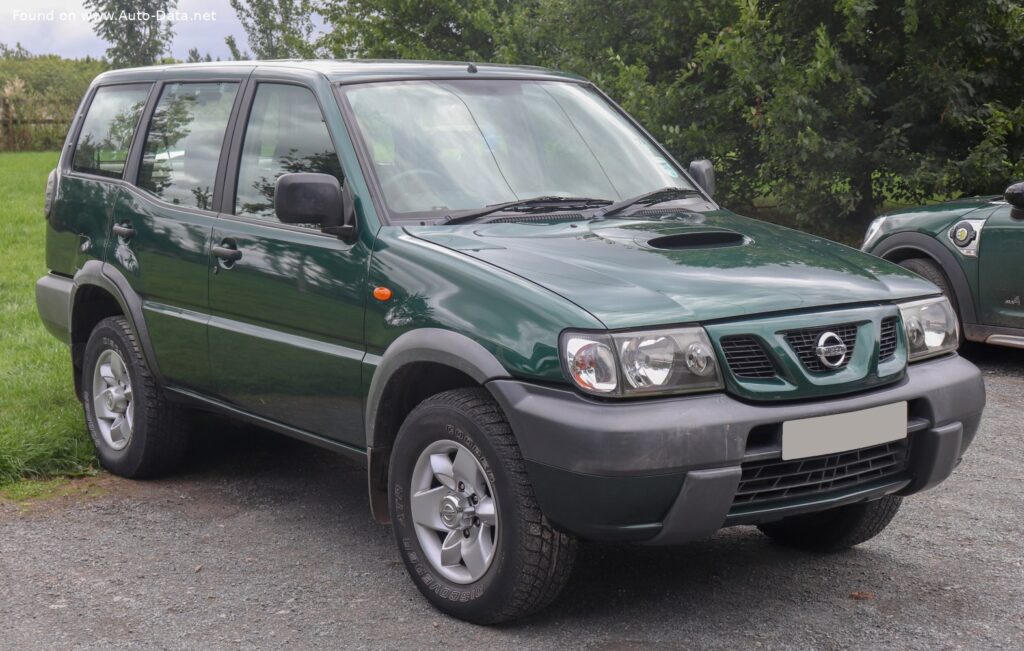
The Nissan Terrano II (R20) represents a significant chapter in the history of compact to mid-size sport utility vehicles, particularly within European and other global markets where it served as a robust and versatile offering. Produced from 1996 to 2004, the Terrano II was the second generation of a model line aimed at consumers seeking a blend of on-road comfort and genuine off-road capability. This particular variant, the Nissan Terrano II (R20) 2.4 i 12V (3 dr) (116 Hp), stands out as a practical three-door model, emphasizing its utility and more compact dimensions suitable for diverse environments, from urban streets to challenging trails. While not officially sold in the United States under the Terrano nameplate, its mechanical underpinnings and design principles reflect the broader trends in SUV development during the late 20th century, offering a glimpse into Nissan’s global strategy for the burgeoning SUV segment.
Nissan Terrano II (R20): A Global SUV
The Nissan Terrano II (R20) occupied a crucial position in Nissan’s global lineup during the late 1990s and early 2000s. Primarily marketed in Europe, Asia, and parts of South America, it filled a gap between smaller, more car-like crossovers and larger, more dedicated off-road vehicles. It was a product of a joint venture with Ford, sharing a platform and many components with the Ford Maverick, a strategic partnership designed to reduce development costs and expand market reach for both brands. The Terrano II’s appeal lay in its combination of practicality, durability, and off-road prowess, making it a popular choice for both private buyers and commercial users.
Engine & Performance
At the heart of the Nissan Terrano II (R20) 2.4 i 12V lies Nissan’s KA24 engine, a 2.4-liter (2389 cm3) inline-four cylinder gasoline unit. This naturally aspirated engine, featuring an overhead cam (OHC) and a 12-valve configuration, was engineered for a balance of power and reliability. It produces 116 horsepower at 4800 revolutions per minute (rpm) and 140.87 lb.-ft. of torque at 3200 rpm. While not a performance-oriented engine, this output was sufficient for the Terrano II’s intended purpose – a utilitarian SUV capable of handling passengers, cargo, and moderate off-road conditions. The engine’s power is delivered through a durable 5-speed manual transmission to all four wheels, reinforcing its off-road capabilities. The KA24 engine is well-regarded for its robustness and longevity, contributing to the Terrano II’s reputation for dependable service. Performance figures for the 3-door model reveal its practical nature. Acceleration from 0 to 60 mph is estimated at 12.4 seconds, with a top speed of approximately 99.42 mph (160 km/h). Fuel economy is rated at 21.2 US miles per gallon (11.1 l/100 km) for the combined cycle, a reasonable figure considering its weight and 4×4 drivetrain.
Design & Features
The design of the Nissan Terrano II (R20) is characteristic of 1990s SUV styling – functional, rugged, and with a touch of contemporary design. The 3-door variant offers a more compact footprint than the 5-door model, enhancing maneuverability. It measures 164.76 inches (4185 mm) in length, 69.09 inches (1755 mm) in width, and stands 72.05 inches (1830 mm) tall, with a wheelbase of 96.46 inches (2450 mm). The Terrano II excels in utility, offering a minimum trunk space of 11.83 cubic feet (335 liters) that expands to an impressive 58.27 cubic feet (1650 liters) with the rear seats folded. Its kerb weight is 3593.53 lbs (1630 kg), with a maximum permissible weight of 5533.6 lbs (2510 kg), allowing for a substantial maximum load of 1940.07 lbs (880 kg). A 19.02 US gallon (72-liter) fuel tank provides a decent cruising range. The chassis and drivetrain are engineered for capability, featuring a robust all-wheel-drive (4×4) system and a 5-speed manual transmission. The suspension comprises a double wishbone system at the front and a coil spring arrangement at the rear, balancing ride comfort and off-road articulation. Braking is handled by ventilated discs at the front and drum brakes at the rear, with an Anti-lock Braking System (ABS) enhancing safety during emergency stops. Hydraulic rack and pinion steering provides direct feedback and ease of maneuverability.
Technical Specifications
| Brand | Nissan |
| Model | Terrano |
| Generation | Terrano II (R20) |
| Type (Engine) | 2.4 i 12V (3 dr) (116 Hp) |
| Start of production | 1996 year |
| End of production | 2004 year |
| Powertrain Architecture | Internal Combustion engine |
| Body type | SUV |
| Seats | 5 |
| Doors | 3 |
| Fuel consumption (economy) – combined | 11.1 l/100 km (21.2 US mpg) |
| Fuel Type | Petrol (Gasoline) |
| Acceleration 0 – 60 mph | 12.4 sec |
| Maximum speed | 160 km/h (99.42 mph) |
| Weight-to-power ratio | 14.1 kg/Hp (71.2 Hp/tonne) |
| Weight-to-torque ratio | 8.5 kg/Nm (117.2 Nm/tonne) |
| Power | 116 Hp @ 4800 rpm |
| Power per liter | 48.6 Hp/l |
| Torque | 191 Nm @ 3200 rpm (140.87 lb.-ft. @ 3200 rpm) |
| Engine layout | Front, Longitudinal |
| Engine Model/Code | KA24 |
| Engine displacement | 2389 cm3 (145.79 cu. in.) |
| Number of cylinders | 4 |
| Engine configuration | Inline |
| Cylinder Bore | 89 mm (3.5 in.) |
| Piston Stroke | 96 mm (3.78 in.) |
| Compression ratio | 8.6:1 |
| Number of valves per cylinder | 3 |
| Fuel injection system | Multi-port manifold injection |
| Engine aspiration | Naturally aspirated engine |
| Valvetrain | OHC |
| Engine oil capacity | 4.3 l (4.54 US qt) |
| Coolant | 6.9 l (7.29 US qt) |
| Kerb Weight | 1630 kg (3593.53 lbs) |
| Max. weight | 2510 kg (5533.6 lbs) |
| Max load | 880 kg (1940.07 lbs) |
| Trunk (boot) space – minimum | 335 l (11.83 cu. ft.) |
| Trunk (boot) space – maximum | 1650 l (58.27 cu. ft.) |
| Fuel tank capacity | 72 l (19.02 US gal) |
| Length | 4185 mm (164.76 in.) |
| Width | 1755 mm (69.09 in.) |
| Height | 1830 mm (72.05 in.) |
| Wheelbase | 2450 mm (96.46 in.) |
| Front track | 1455 mm (57.28 in.) |
| Rear (Back) track | 1430 mm (56.3 in.) |
| Drive wheel | All wheel drive (4×4) |
| Number of gears and type of gearbox | 5 gears, manual transmission |
| Front suspension | Double wishbone |
| Rear suspension | Coil spring |
| Front brakes | Ventilated discs |
| Rear brakes | Drum |
| Assisting systems | ABS (Anti-lock braking system) |
| Steering type | Steering rack and pinion |
| Power steering | Hydraulic Steering |
| Tires size | 235/75 R15 S |
Legacy and Market Impact
The Nissan Terrano II (R20) established a strong presence in European and international markets, appealing to buyers seeking a reliable and capable SUV without excessive size or cost. Its production run from 1996 to 2004 demonstrates its sustained popularity. The Terrano II’s association with the Ford Maverick, stemming from their joint venture, allowed both brands to compete effectively in the growing SUV segment. Its reputation was built on robust construction, dependable mechanicals, and genuine off-road capability. While facing competition from rivals like the Mitsubishi Pajero Sport and Land Rover Freelander, the Terrano II offered a more traditional, rugged SUV experience. Today, many Terrano IIs remain in operation, valued for their reliability and straightforward maintenance. The 3-door variant, in particular, is sought after by those desiring a nimble and capable off-roader.