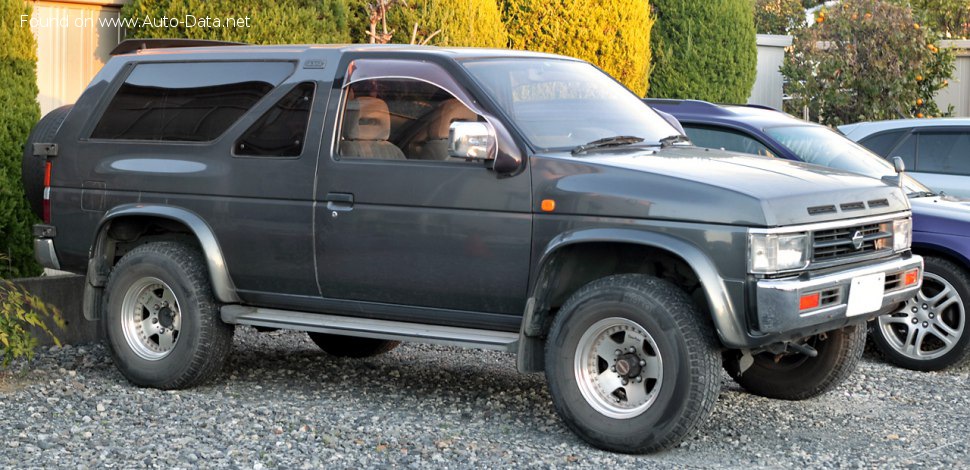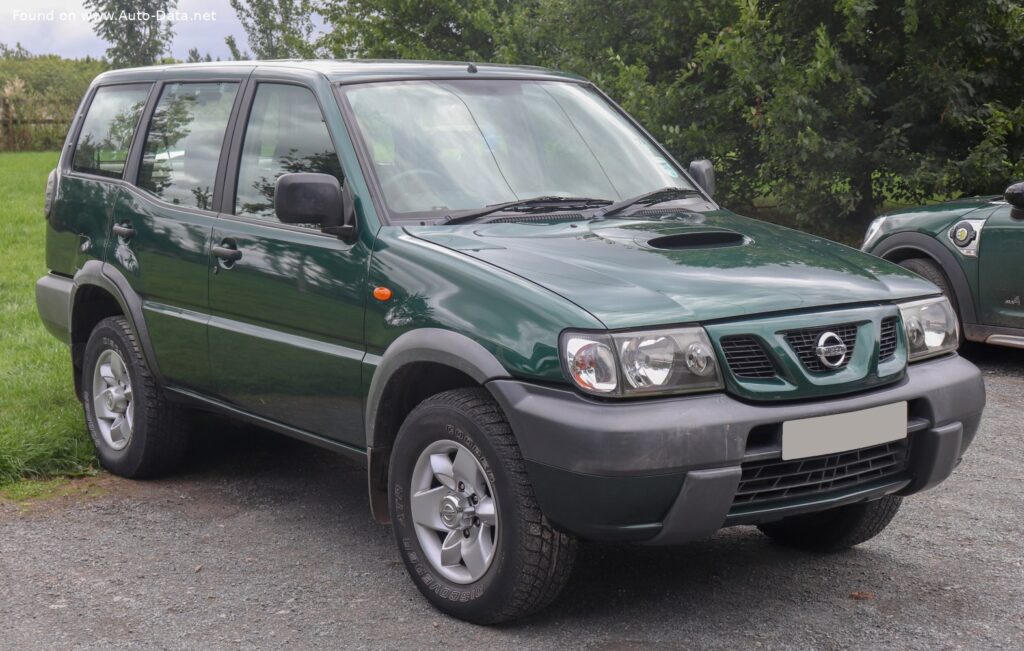
The Nissan Terrano II (R20) represents a significant chapter in the evolution of the compact sport utility vehicle (SUV) segment, particularly within European and Asian markets during the 1990s. Launched in 1993, this generation, internally designated R20, was a collaborative effort between Nissan and Ford Europe, where it was also sold as the Ford Maverick. Positioned as a rugged yet more refined alternative to traditional off-roaders, the Terrano II aimed to blend genuine four-wheel-drive capability with improved on-road manners and comfort, catering to a growing demand for versatile family vehicles that could tackle both urban commutes and adventurous weekend excursions. The 2.4 i 12V 4WD (5 dr) (124 Hp) variant, specifically, served as a popular gasoline-powered option, offering a balance of performance and utility for its target audience.
The Nissan Terrano II (R20): A Global Compact SUV
The Nissan Terrano II (R20) was a key player in Nissan’s global SUV strategy, particularly outside of North America where the Pathfinder (known as Terrano in some markets) served a similar role. Its design and engineering were carefully considered to meet the diverse needs of European and Asian consumers, who often faced varied road conditions and sought vehicles capable of handling challenging terrains while still being practical for daily use. The collaboration with Ford was instrumental in expanding its market reach, leveraging Ford’s established dealer network and brand recognition in Europe. This partnership allowed for shared development costs and a broader appeal, making the Terrano II (and its Maverick twin) a common sight on European roads throughout the mid-1990s. Its robust body-on-frame construction, coupled with a capable four-wheel-drive system, underscored its serious off-road credentials, distinguishing it from many car-based SUVs that would emerge later in the decade.
Engine & Performance
At the heart of the 1993-1996 Nissan Terrano II (R20) 2.4 i 12V 4WD (5 dr) (124 Hp) lies the venerable KA24 inline-four engine. This naturally aspirated, 2.4-liter (2389 cm3 or 145.79 cubic inches) gasoline powerplant was renowned for its durability and straightforward design, featuring a single overhead camshaft (OHC) valvetrain with three valves per cylinder. It delivered a respectable 124 horsepower at 5200 rpm, providing ample motivation for the compact SUV. Torque output was equally competitive for its class, peaking at 145.3 lb-ft (197 Nm) at 4000 rpm, which was crucial for off-road maneuvering and towing. The multi-port manifold injection system ensured efficient fuel delivery and reliable performance across various operating conditions. Paired with a standard 5-speed manual transmission and a robust all-wheel-drive (4×4) system, the Terrano II was engineered for versatility.
Performance figures for the 2.4-liter Terrano II reflected its utility-focused design rather than outright speed. It accelerated from 0 to 60 mph in a calculated 12.6 seconds (0-100 km/h in 13.3 seconds), with a maximum speed of approximately 99.42 mph (160 km/h). While not a speed demon, these figures were perfectly adequate for highway cruising and navigating diverse road conditions. Fuel economy was rated at 20.6 US mpg (11.4 liters per 100 km) in combined driving, which was a reasonable figure for a gasoline-powered 4×4 SUV of its size and era. The vehicle’s weight-to-power ratio of 14.1 kg/Hp (70.9 Hp/tonne) and weight-to-torque ratio of 8.9 kg/Nm (112.6 Nm/tonne) highlighted its balanced approach to power delivery and capability.
Design & Features
The Nissan Terrano II (R20) 2.4 i 12V 4WD (5 dr) (124 Hp) presented a distinctive and rugged aesthetic, characterized by its traditional SUV proportions and utilitarian design cues. As a 5-door SUV, it offered practical access to its spacious interior, which could accommodate up to seven occupants. This 7-seat configuration was a significant selling point, providing flexibility for larger families or those needing additional passenger capacity, especially in markets where multi-purpose vehicles were highly valued. The exterior styling was robust, featuring prominent wheel arches, a relatively high ground clearance, and a spare tire mounted on the rear door, a classic SUV design element emphasizing its adventurous spirit.
Dimensions of the Terrano II were substantial for a compact SUV of its time, measuring 180.51 inches (4585 mm) in length, 68.31 inches (1735 mm) in width, and 71.26 inches (1810 mm) in height. A wheelbase of 104.33 inches (2650 mm) contributed to a stable ride and generous interior space. The vehicle’s curb weight stood at 3858.09 lbs (1750 kg), with a maximum permissible weight of 5687.93 lbs (2580 kg), indicating its robust construction and significant payload capacity of 1829.84 lbs (830 kg). Inside, the Terrano II offered commendable versatility with a minimum trunk (boot) space of 4.06 cubic feet (115 liters), expanding to an impressive 67.1 cubic feet (1900 liters) with the rear seats folded, making it highly practical for cargo hauling.
From a chassis perspective, the Terrano II was built for durability and off-road prowess. It featured an independent double wishbone front suspension for improved on-road comfort and handling, while the rear utilized a coil spring setup, providing a good balance between load-carrying capability and ride quality. Braking was handled by ventilated discs at the front and traditional drums at the rear, supplemented by an Anti-lock Braking System (ABS) as an assisting feature, which was a significant safety enhancement for the era. Hydraulic power steering made maneuvering the robust SUV more manageable, and the 215/75 R15 S tires provided a good grip for various surfaces. The 21.13 US gallons (80 liters) fuel tank ensured a decent range for longer journeys.
Technical Specifications
| Category | Specification |
| Brand | Nissan |
| Model | Terrano |
| Generation | Terrano II (R20) |
| Type (Engine) | 2.4 i 12V 4WD (5 dr) (124 Hp) |
| Start of production | 1993 year |
| End of production | 1996 year |
| Powertrain Architecture | Internal Combustion engine |
| Body type | SUV |
| Seats | 7 |
| Doors | 5 |
| Fuel consumption (combined) | 11.4 l/100 km (20.6 US mpg) |
| Fuel Type | Gasoline (Petrol) |
| Acceleration 0 – 60 mph | 12.6 sec |
| Acceleration 0 – 100 km/h | 13.3 sec |
| Maximum speed | 160 km/h (99.42 mph) |
| Weight-to-power ratio | 14.1 kg/Hp (70.9 Hp/tonne) |
| Weight-to-torque ratio | 8.9 kg/Nm (112.6 Nm/tonne) |
| Power | 124 Hp @ 5200 rpm |
| Power per liter | 51.9 Hp/l |
| Torque | 197 Nm @ 4000 rpm (145.3 lb.-ft. @ 4000 rpm) |
| Engine layout | Front, Longitudinal |
| Engine Model/Code | KA24 |
| Engine displacement | 2389 cm3 (145.79 cu. in.) |
| Number of cylinders | 4 |
| Engine configuration | Inline |
| Cylinder Bore | 89 mm (3.5 in.) |
| Piston Stroke | 96 mm (3.78 in.) |
| Compression ratio | 8.6:1 |
| Number of valves per cylinder | 3 |
| Fuel injection system | Multi-port manifold injection |
| Engine aspiration | Naturally aspirated engine |
| Valvetrain | OHC |
| Engine oil capacity | 4.3 l (4.54 US qt) |
| Coolant capacity | 6.9 l (7.29 US qt) |
| Curb Weight | 1750 kg (3858.09 lbs) |
| Max. weight | 2580 kg (5687.93 lbs) |
| Max load | 830 kg (1829.84 lbs) |
| Trunk (boot) space – minimum | 115 l (4.06 cu. ft.) |
| Trunk (boot) space – maximum | 1900 l (67.1 cu. ft.) |
| Fuel tank capacity | 80 l (21.13 US gal) |
| Length | 4585 mm (180.51 in.) |
| Width | 1735 mm (68.31 in.) |
| Height | 1810 mm (71.26 in.) |
| Wheelbase | 2650 mm (104.33 in.) |
| Front track | 1455 mm (57.28 in.) |
| Rear (Back) track | 1430 mm (56.3 in.) |
| Drive wheel | All wheel drive (4×4) |
| Number of gears and type of gearbox | 5 gears, manual transmission |
| Front suspension | Double wishbone |
| Rear suspension | Coil spring |
| Front brakes | Ventilated discs |
| Rear brakes | Drum |
| Assisting systems | ABS (Anti-lock braking system) |
| Power steering | Hydraulic Steering |
| Tires size | 215/75 R15 S |
Legacy and Market Impact
The Nissan Terrano II (R20) carved out a significant niche in the European and Asian SUV markets during its production run from 1993 to 2006 (though the 2.4 i 12V 4WD (5 dr) (124 Hp) variant was produced until 1996). It entered a burgeoning market where consumers were increasingly looking for vehicles that combined the ruggedness of a traditional off-roader with the practicality and comfort of a family car. Its primary competitors included vehicles like the Mitsubishi Pajero Sport (known as Montero Sport in some markets), Toyota 4Runner (Hilux Surf), and later, the Land Rover Freelander. What set the Terrano II apart was its reputation for reliability, its sturdy construction, and its genuine off-road capability, often surpassing many soft-roaders that began to populate the market.
The collaboration with Ford, which saw the Terrano II rebadged as the Ford Maverick, was a strategic move that amplified its market presence and sales volume, especially in Europe. This dual-brand approach allowed both Nissan and Ford to capture a larger share of the growing SUV segment. The Terrano II was particularly popular in countries where varied terrain and harsh winters necessitated a capable four-wheel-drive vehicle, but also where fuel efficiency and practicality were important considerations. Its 7-seat option further enhanced its appeal as a versatile family vehicle, making it a strong contender against larger, more expensive SUVs. Despite its success, the Terrano II eventually faced increasing competition from a new generation of more car-like, unibody SUVs that prioritized on-road handling and fuel economy over extreme off-road prowess. However, its legacy endures as a practical, reliable, and capable compact SUV that successfully bridged the gap between utilitarian off-roaders and more consumer-friendly family vehicles. It represented a pivotal moment in Nissan’s European product strategy, demonstrating the brand’s ability to adapt to regional demands and collaborate effectively to achieve market penetration. Today, well-maintained Nissan Terrano II (R20) models are still valued for their robustness and utility, a testament to their enduring design and engineering.