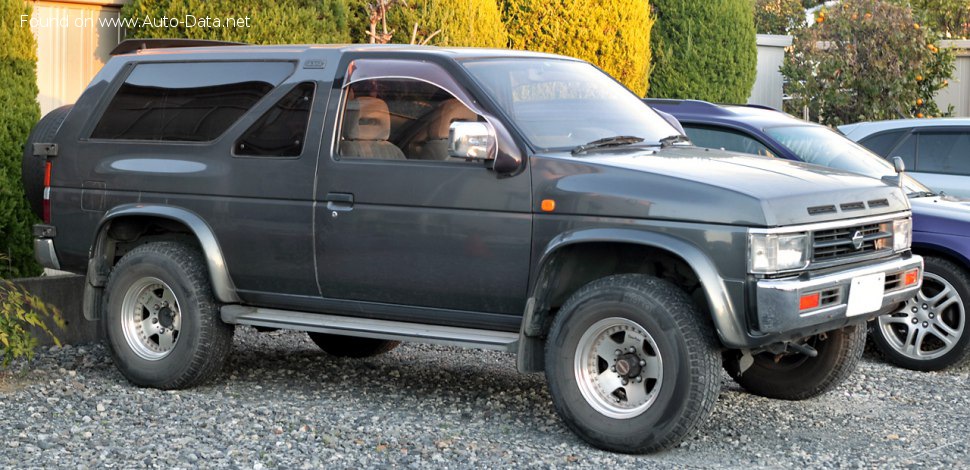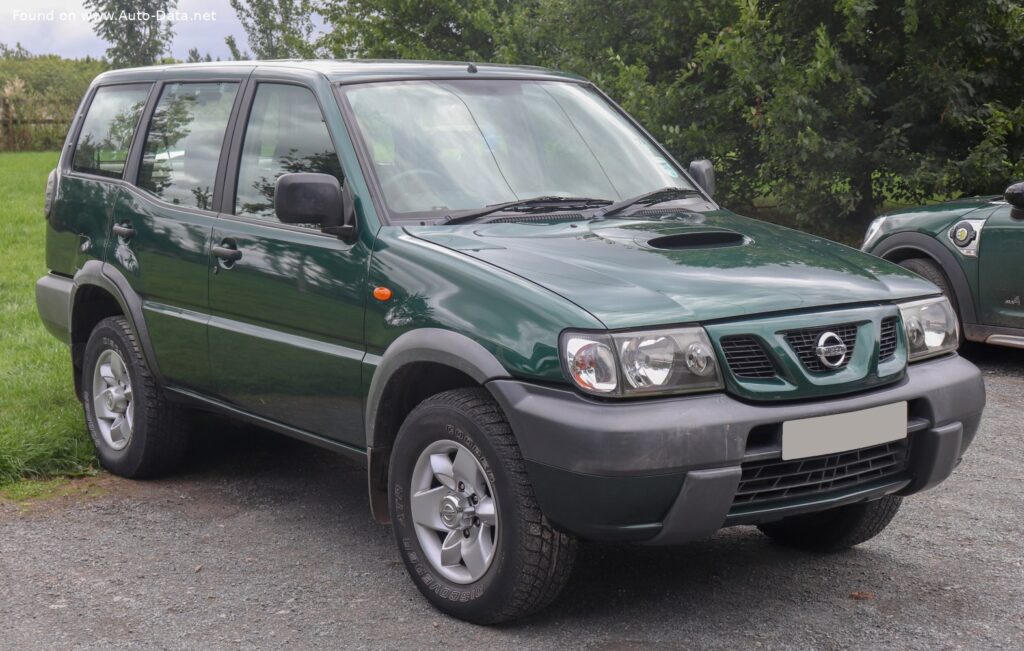
The Nissan Terrano II (R20) was a mid-size SUV produced by Nissan from 1993 to 1996. While not officially sold in the United States, the Terrano II was a significant vehicle in the European market, offering a robust and capable platform for both on-road comfort and off-road adventures. It represented Nissan’s second attempt at a dedicated SUV, building upon the success of the original Terrano (known as the Mistral in some markets). The R20 generation was particularly noted for its durable diesel engine options and its body-on-frame construction, making it a popular choice for those needing a practical and reliable vehicle.
Nissan Terrano II (R20): An Overview
The Terrano II occupied a growing segment of the automotive market – the compact to mid-size SUV. It competed with vehicles like the Suzuki Vitara, Toyota RAV4, and Mitsubishi Pajero, offering a blend of affordability, practicality, and off-road capability. The R20 was designed to appeal to buyers seeking a vehicle suitable for both daily commuting and weekend excursions. Its five-door configuration and seating for five passengers made it a versatile option for families and individuals alike. The 2.7 TD variant, equipped with a turbocharged diesel engine, was a popular choice for those prioritizing fuel efficiency and torque for towing or navigating challenging terrain.
Engine & Performance
The 2.7 TD model of the Nissan Terrano II (R20) is powered by the TD27T inline-four cylinder diesel engine, displacing 2.7 liters (2663 cm3 or 162.51 cu. in.). This engine produces 100 horsepower (Hp) at 4000 rpm and 221 Newton-meters (163 lb.-ft.) of torque at 2200 rpm. The engine utilizes a precombustion chamber injection system and is turbocharged, enhancing its power output and efficiency. While not a performance-oriented vehicle, the Terrano II 2.7 TD offers adequate power for most driving situations. Acceleration from 0 to 100 km/h (0-62 mph) takes approximately 19 seconds, and 0 to 60 mph is achieved in around 18.1 seconds. The top speed is rated at 145 km/h (90.1 mph). The weight-to-power ratio of 18.5 kg/Hp and weight-to-torque ratio of 8.4 kg/Nm reflect the vehicle’s focus on practicality over outright speed. Fuel consumption is rated at 11.2 liters per 100 kilometers (21 US mpg or 25.2 UK mpg).
Design & Features
The Nissan Terrano II (R20) features a traditional SUV body style with a five-door configuration. Its body-on-frame construction provides a robust and durable platform, well-suited for off-road use. The exterior design is functional and utilitarian, prioritizing practicality over stylistic flourishes. The interior offers seating for five passengers and provides a reasonable level of comfort for its class. Key features include hydraulic power steering and an Anti-lock Braking System (ABS), enhancing safety and driver control. The rear cargo area is spacious and versatile, offering a minimum of 115 liters (4.06 cu. ft.) of storage space, which can be expanded to a maximum of 1900 liters (67.1 cu. ft.) with the rear seats folded down. The vehicle’s all-wheel-drive system provides enhanced traction in various driving conditions, making it a capable off-road performer. The 80-liter (21.13 US gal) fuel tank provides a respectable driving range.
Technical Specifications
| Brand | Nissan |
| Model | Terrano |
| Generation | Terrano II (R20) |
| Type (Engine) | 2.7 TD (5 dr) (100 Hp) |
| Start of production | 1993 |
| End of production | 1996 |
| Powertrain Architecture | Internal Combustion engine |
| Body type | SUV |
| Seats | 5 |
| Doors | 5 |
| Fuel consumption (combined) | 11.2 l/100 km |
| Fuel consumption (US mpg) | 21 |
| Fuel consumption (UK mpg) | 25.2 |
| Fuel consumption (km/l) | 8.9 |
| Fuel Type | Diesel |
| Acceleration 0 – 100 km/h | 19 sec |
| Acceleration 0 – 62 mph | 19 sec |
| Acceleration 0 – 60 mph | 18.1 sec |
| Maximum speed | 145 km/h |
| Maximum speed (mph) | 90.1 |
| Weight-to-power ratio | 18.5 kg/Hp |
| Weight-to-torque ratio | 8.4 kg/Nm |
| Power | 100 Hp @ 4000 rpm |
| Power per litre | 37.6 Hp/l |
| Torque | 221 Nm @ 2200 rpm |
| Torque (lb.-ft.) | 163 @ 2200 rpm |
| Engine layout | Front, Longitudinal |
| Engine Model/Code | TD27T |
| Engine displacement | 2663 cm3 |
| Engine displacement (cu. in.) | 162.51 |
| Number of cylinders | 4 |
| Engine configuration | Inline |
| Cylinder Bore | 96 mm |
| Cylinder Bore (in.) | 3.78 |
| Piston Stroke | 92 mm |
| Piston Stroke (in.) | 3.62 |
| Compression ratio | 21.9:1 |
| Number of valves per cylinder | 2 |
| Fuel injection system | Precombustion chamber injection |
| Engine aspiration | Turbocharger |
| Engine oil capacity | 6.2 l |
| Engine oil capacity (US qt) | 6.55 |
| Engine oil capacity (UK qt) | 5.46 |
| Coolant | 10 l |
| Coolant (US qt) | 10.57 |
| Coolant (UK qt) | 8.8 |
| Kerb Weight | 1850 kg |
| Kerb Weight (lbs.) | 4078.55 |
| Max. weight | 2580 kg |
| Max. weight (lbs.) | 5687.93 |
| Max load | 730 kg |
| Max load (lbs.) | 1609.37 |
| Trunk (boot) space – minimum | 115 l |
| Trunk (boot) space – minimum (cu. ft.) | 4.06 |
| Trunk (boot) space – maximum | 1900 l |
| Trunk (boot) space – maximum (cu. ft.) | 67.1 |
| Fuel tank capacity | 80 l |
| Fuel tank capacity (US gal) | 21.13 |
| Fuel tank capacity (UK gal) | 17.6 |
| Length | 4585 mm |
| Length (in.) | 180.51 |
| Width | 1735 mm |
| Width (in.) | 68.31 |
| Height | 1810 mm |
| Height (in.) | 71.26 |
| Wheelbase | 2650 mm |
| Wheelbase (in.) | 104.33 |
| Front track | 1455 mm |
| Front track (in.) | 57.28 |
| Rear (Back) track | 1430 mm |
| Rear (Back) track (in.) | 56.3 |
| Drive wheel | All wheel drive (4×4) |
| Number of gears | 5 |
| Type of gearbox | Manual transmission |
| Front suspension | Double wishbone |
| Rear suspension | Coil spring |
| Front brakes | Ventilated discs |
| Rear brakes | Drum |
| Assisting systems | ABS (Anti-lock braking system) |
| Power steering | Hydraulic Steering |
| Tires size | 215/75 R15 S |
The Nissan Terrano II (R20) 2.7 TD, while not a luxury vehicle, provided a practical and reliable transportation solution for buyers in Europe and other markets. Its robust construction, capable four-wheel-drive system, and fuel-efficient diesel engine made it a popular choice for those seeking a versatile SUV.