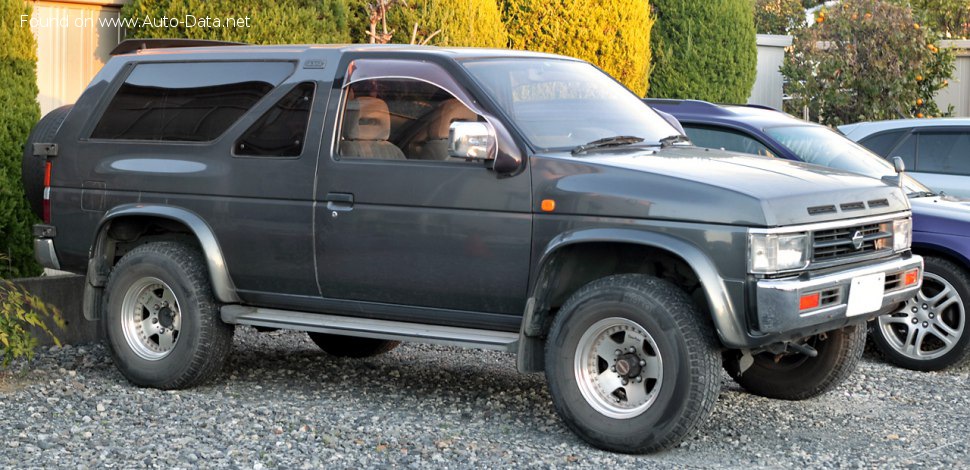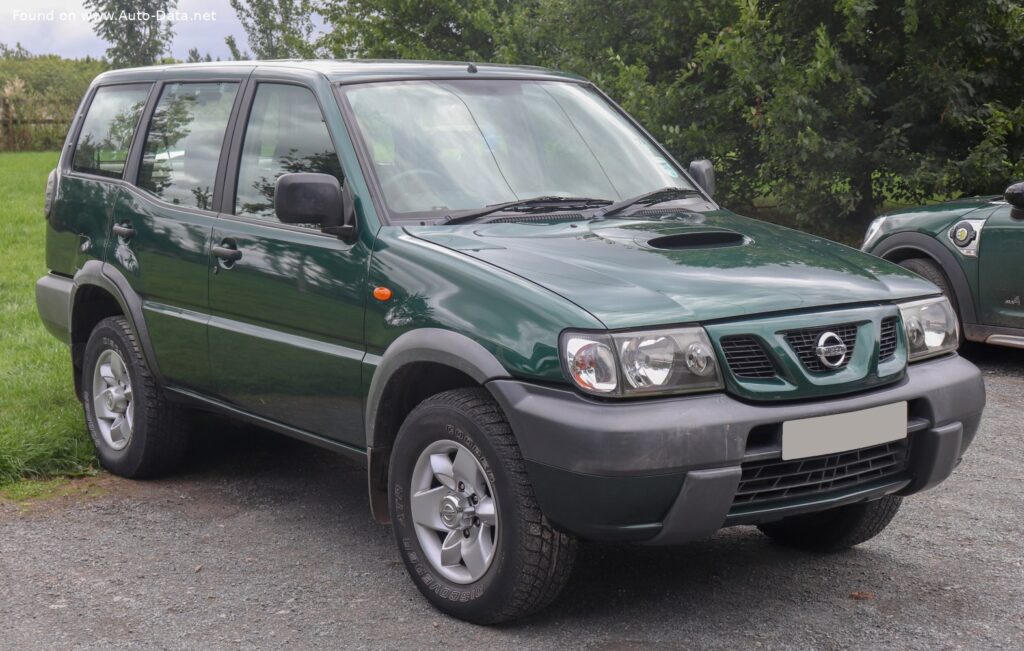
The Nissan Terrano II (R20) was a compact SUV produced by Nissan from 2001 to 2004. While not officially sold in the United States, the Terrano II was a significant model in the European market, positioned as a robust and practical vehicle for both on-road and light off-road use. It represented Nissan’s second attempt at a dedicated SUV in the European segment, building upon the success of the original Terrano. The R20 generation, specifically the 3.0 TDi 16V (3-door) variant, offered a blend of diesel efficiency, respectable power, and a utilitarian design appealing to buyers seeking a versatile vehicle.
Nissan Terrano II (R20): Overview
The Terrano II was designed to compete with other compact SUVs popular in Europe, such as the Suzuki Vitara and the Toyota RAV4. It was based on a ladder-frame chassis, providing durability and off-road capability. The 3-door configuration, coupled with the 3.0-liter turbodiesel engine, aimed to provide a balance between practicality, fuel economy, and performance. The vehicle was primarily marketed towards those needing a workhorse vehicle, or those who enjoyed outdoor activities.
Engine & Performance
The heart of the Terrano II 3.0 TDi 16V is a 2.953-liter inline-four cylinder diesel engine, designated the ZD30Ti. This engine produces 154 horsepower at 3600 rpm and 304 Nm (224.22 lb-ft) of torque at 1600 rpm. The engine utilizes a diesel commonrail fuel injection system and is equipped with a turbocharger and intercooler to enhance power and efficiency. The engine’s longitudinal front-engine layout contributes to a balanced weight distribution. Acceleration from 0 to 100 km/h (0-62 mph) takes 13.3 seconds, while 0 to 60 mph is achieved in approximately 12.6 seconds. The Terrano II boasts a maximum speed of 170 km/h (105.63 mph). The weight-to-power ratio is 11.4 kg/Hp, and the weight-to-torque ratio is 5.8 kg/Nm, indicating a reasonable level of performance for its class and intended use.
Design & Features
The Nissan Terrano II R20 is a three-door SUV with a functional and rugged design. It offers seating for five passengers, although rear passenger space in the three-door model is somewhat limited. The body-on-frame construction contributes to its durability and off-road capability. Key features include a robust suspension system – double wishbone at the front and coil springs at the rear – designed to handle varied terrain. Braking is provided by ventilated discs at the front and drums at the rear, assisted by an Anti-lock Braking System (ABS). Hydraulic power steering is standard. The interior is typically utilitarian, focusing on practicality rather than luxury. Trunk space ranges from a minimum of 335 liters (11.83 cu. ft.) to a maximum of 1650 liters (58.27 cu. ft.) with the rear seats folded down. The vehicle’s dimensions are 4217 mm (166.02 in) in length, 1755 mm (69.09 in) in width, and 1830 mm (72.05 in) in height, with a wheelbase of 2450 mm (96.46 in).
Technical Specifications
| Brand | Nissan |
| Model | Terrano |
| Generation | Terrano II (R20) |
| Type | 3.0 TDi 16V (3 dr) (154 Hp) |
| Start of production | 2001 |
| End of production | 2004 |
| Powertrain Architecture | Internal Combustion engine |
| Body type | SUV |
| Seats | 5 |
| Doors | 3 |
| Fuel consumption (urban) | 11.3 l/100 km (20.8 US mpg / 25 UK mpg) |
| Fuel consumption (extra urban) | 7.4 l/100 km (31.8 US mpg / 38.2 UK mpg) |
| Fuel consumption (combined) | 8.8 l/100 km (26.7 US mpg / 32.1 UK mpg) |
| Fuel Type | Diesel |
| Acceleration 0 – 100 km/h | 13.3 sec |
| Acceleration 0 – 62 mph | 13.3 sec |
| Acceleration 0 – 60 mph | 12.6 sec |
| Maximum speed | 170 km/h (105.63 mph) |
| Weight-to-power ratio | 11.4 kg/Hp |
| Weight-to-torque ratio | 5.8 kg/Nm |
| Power | 154 Hp @ 3600 rpm |
| Torque | 304 Nm @ 1600 rpm (224.22 lb.-ft. @ 1600 rpm) |
| Engine layout | Front, Longitudinal |
| Engine Model/Code | ZD30Ti |
| Engine displacement | 2953 cm3 (180.2 cu. in.) |
| Number of cylinders | 4 |
| Engine configuration | Inline |
| Cylinder Bore | 96 mm (3.78 in.) |
| Piston Stroke | 102 mm (4.02 in.) |
| Compression ratio | 17.9:1 |
| Number of valves per cylinder | 4 |
| Fuel injection system | Diesel Commonrail |
| Engine aspiration | Turbocharger, Intercooler |
| Valvetrain | DOHC |
| Engine oil capacity | 6.7 l (7.08 US qt | 5.9 UK qt) |
| Coolant capacity | 10.6 l (11.2 US qt | 9.33 UK qt) |
| Kerb Weight | 1760 kg (3880.14 lbs.) |
| Max. weight | 2510 kg (5533.6 lbs.) |
| Max load | 750 kg (1653.47 lbs.) |
| Trunk (boot) space – minimum | 335 l (11.83 cu. ft.) |
| Trunk (boot) space – maximum | 1650 l (58.27 cu. ft.) |
| Fuel tank capacity | 72 l (19.02 US gal | 15.84 UK gal) |
| Length | 4217 mm (166.02 in.) |
| Width | 1755 mm (69.09 in.) |
| Height | 1830 mm (72.05 in.) |
| Wheelbase | 2450 mm (96.46 in.) |
| Front track | 1455 mm (57.28 in.) |
| Rear track | 1430 mm (56.3 in.) |
| Drive wheel | All wheel drive (4×4) |
| Number of gears | 5 |
| Gearbox type | Manual transmission |
| Front suspension | Double wishbone |
| Rear suspension | Coil spring |
| Front brakes | Ventilated discs |
| Rear brakes | Drum |
| Assisting systems | ABS (Anti-lock braking system) |
| Power steering | Hydraulic Steering |
| Tires size | 235/70 R17 |
The Nissan Terrano II R20 3.0 TDi 16V, while not a luxury vehicle, offered a compelling package for buyers seeking a durable, capable, and relatively fuel-efficient SUV in the early 2000s. Its robust construction and diesel engine made it well-suited for a variety of tasks, from daily commuting to light off-road adventures.