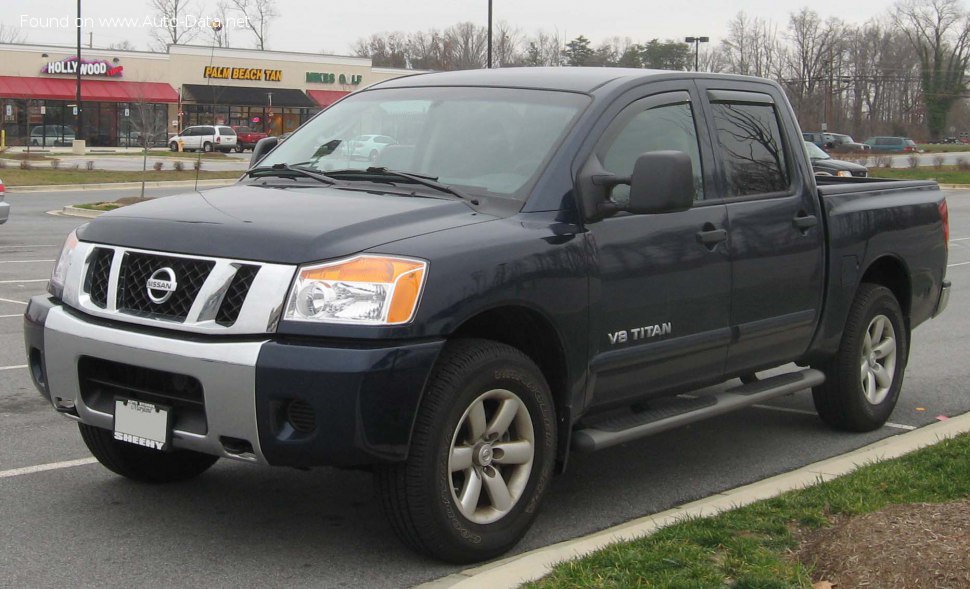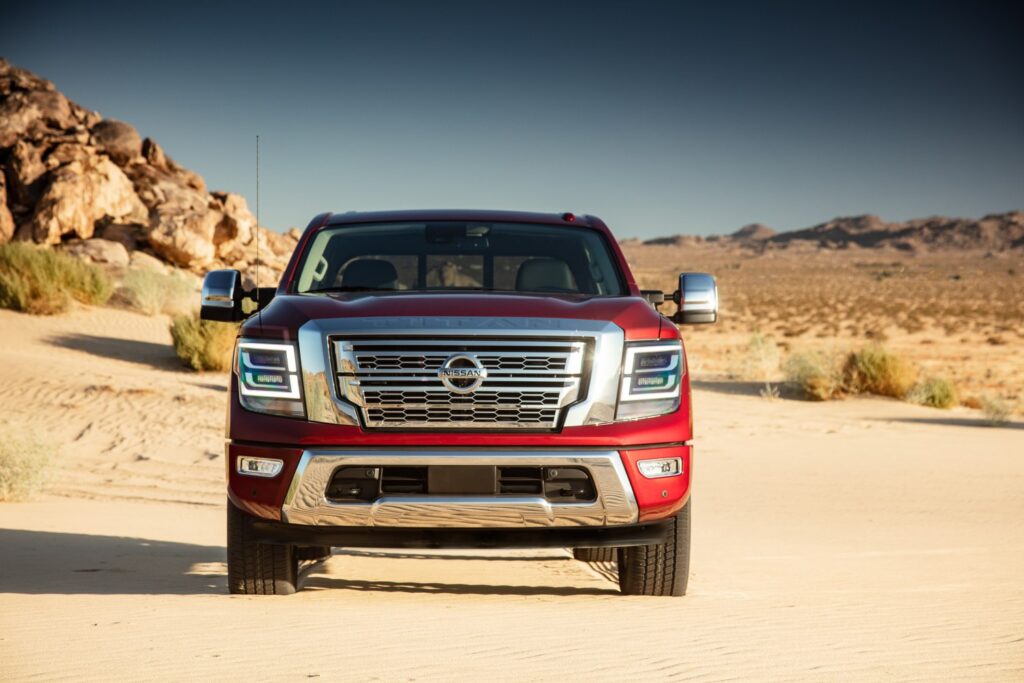
The Nissan Titan II Crew Cab, particularly the 2020 facelifted model, represents Nissan’s full-size pickup truck offering for the North American market. Introduced as a complete redesign for the 2016 model year, the Titan II aimed to provide a more competitive alternative to established American manufacturers like Ford, Chevrolet, and Ram. The 2020 refresh brought updated styling, enhanced technology, and a continued focus on delivering a robust and capable truck for both work and family use. This iteration of the Titan is exclusively a North American vehicle, not sold in other major markets like Europe or Asia, and is positioned to appeal to buyers seeking a powerful, full-featured pickup with a strong value proposition.
Nissan Titan II Crew Cab (2020): A Detailed Overview
The Titan II Crew Cab distinguishes itself within the competitive full-size pickup segment through its standard V8 engine and a commitment to providing a comfortable and well-equipped cabin. While not achieving the sales volume of its domestic rivals, the Titan II has cultivated a loyal following among buyers who appreciate its unique blend of capability, features, and Nissan’s reputation for reliability. The facelifted 2020 model further refined this formula, addressing some earlier criticisms and enhancing the overall ownership experience.
Engine & Performance
At the heart of the 2020 Nissan Titan II Crew Cab lies the VK56VD 5.6-liter V8 engine, producing 400 horsepower at 5800 rpm and 560 Nm (413.03 lb.-ft.) of torque at 4000 rpm. This naturally aspirated engine delivers strong acceleration and ample power for towing and hauling. The engine features direct fuel injection and a variable valve timing system (VVWL, CVTS) to optimize performance and efficiency. Power is delivered to all four wheels via a sophisticated 9-speed automatic transmission, providing smooth and responsive shifting. The weight-to-power ratio of 6.4 kg/Hp and a weight-to-torque ratio of 4.6 kg/Nm contribute to the truck’s responsive feel. Fuel economy is rated at 13.1 l/100 km (18 US mpg combined), reflecting the inherent demands of a large displacement V8 engine and four-wheel drive system. The engine’s displacement is 5552 cm3 (338.8 cu. in.), and it boasts a compression ratio of 11.2:1.
Design & Features
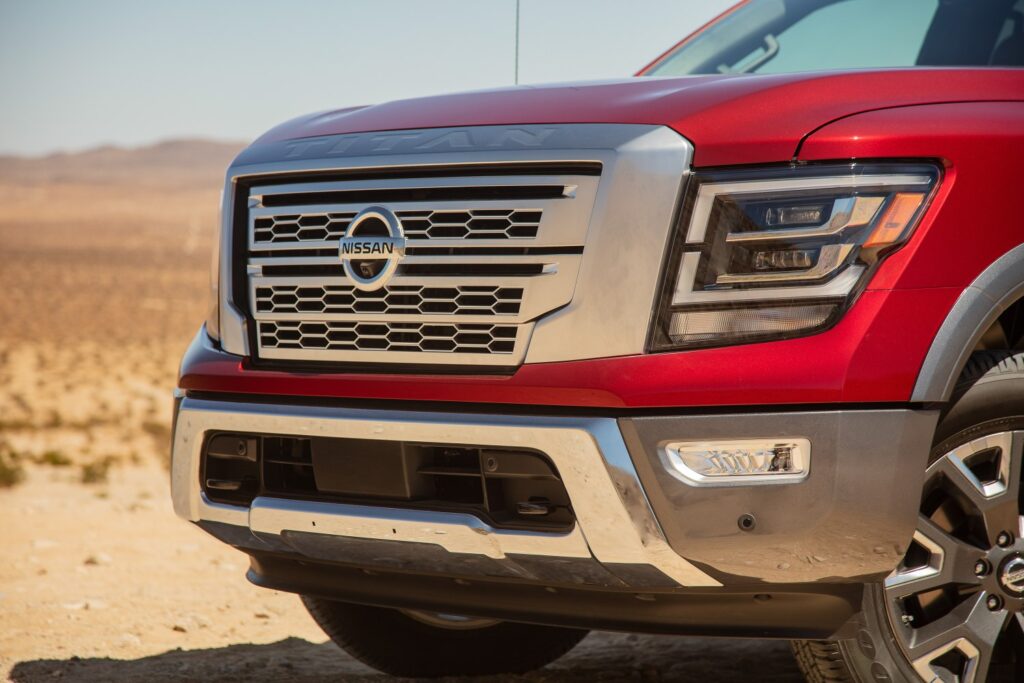
The 2020 Nissan Titan II Crew Cab maintains the robust and muscular styling cues established with the second-generation model. The facelift brought subtle but noticeable updates to the front fascia, including a revised grille and headlights, enhancing the truck’s visual appeal. As a Crew Cab, it offers a spacious interior with seating for up to six passengers. The cabin is well-appointed, with comfortable seating and a focus on practicality. Key features include a standard 8-inch touchscreen infotainment system, Apple CarPlay and Android Auto compatibility, and a suite of advanced driver-assistance systems (ADAS) such as Automatic Emergency Braking and Blind Spot Monitoring. The Titan II prioritizes safety with features like ABS (Anti-lock braking system). The pickup bed provides ample cargo space, and the Titan II is capable of towing up to 4178 kg (9210.91 lbs) with brakes, making it a versatile choice for both recreational and work-related tasks. The vehicle’s dimensions are substantial, with a length of 5796 mm (228.19 in), a width of 2019 mm (79.49 in), and a height of 1930 mm (75.98 in). Ground clearance is a respectable 226 mm (8.9 in).
Technical Specifications
| Brand | Nissan |
| Model | Titan |
| Generation | Titan II Crew Cab (facelift 2020) |
| Type | 5.6 V8 (400 Hp) 4WD Automatic 6 seats |
| Start of production | 2020 |
| Powertrain Architecture | Internal Combustion engine |
| Body type | Pick-up |
| Seats | 6 |
| Doors | 4 |
| Fuel consumption (urban) | 15.7 l/100 km (15 US mpg, 18 UK mpg) |
| Fuel consumption (extra urban) | 11.2 l/100 km (21 US mpg, 25.2 UK mpg) |
| Fuel consumption (combined) | 13.1 l/100 km (18 US mpg, 21.6 UK mpg) |
| Fuel Type | Petrol (Gasoline) |
| Emission standard | LEV3-ULEV200 |
| Weight-to-power ratio | 6.4 kg/Hp |
| Weight-to-torque ratio | 4.6 kg/Nm |
| Power | 400 Hp @ 5800 rpm |
| Torque | 560 Nm @ 4000 rpm (413.03 lb.-ft. @ 4000 rpm) |
| Maximum engine speed | 6000 rpm |
| Engine layout | Front, Longitudinal |
| Engine Model/Code | VK56VD |
| Engine displacement | 5552 cm3 (338.8 cu. in.) |
| Number of cylinders | 8 |
| Engine configuration | V-engine |
| Cylinder Bore | 98 mm (3.86 in.) |
| Piston Stroke | 92 mm (3.62 in.) |
| Compression ratio | 11.2:1 |
| Number of valves per cylinder | 4 |
| Fuel injection system | Direct injection |
| Engine aspiration | Naturally aspirated engine |
| Valvetrain | VVWL, CVTS |
| Engine oil capacity | 6.5 l (6.87 US qt | 5.72 UK qt) |
| Coolant capacity | 13.4 l (14.16 US qt | 11.79 UK qt) |
| Kerb Weight | 2563-2587 kg (5650.45 – 5703.36 lbs.) |
| Max. weight | 3311 kg (7299.51 lbs.) |
| Max load | 724-748 kg (1596.15 – 1649.06 lbs.) |
| Fuel tank capacity | 98 l (25.89 US gal | 21.56 UK gal) |
| Permitted trailer load with brakes (12%) | 4178 kg (9210.91 lbs.) |
| Length | 5796 mm (228.19 in.) |
| Width | 2019 mm (79.49 in.) |
| Height | 1930 mm (75.98 in.) |
| Wheelbase | 3551 mm (139.8 in.) |
| Front track | 1725 mm (67.91 in.) |
| Rear track | 1725 mm (67.91 in.) |
| Ride height (ground clearance) | 226 mm (8.9 in.) |
| Minimum turning circle | 14.6 m (47.9 ft.) |
| Approach angle | 17.5-17.6° |
| Departure angle | 21.5° |
| Ramp-over angle | 19.7° |
| Drivetrain Architecture | All wheel drive (4×4). ICE drives rear wheels, front wheels engaged via clutch. |
| Number of gears | 9 |
| Gearbox type | Automatic transmission |
| Front suspension | Double wishbone |
| Rear suspension | Leaf spring |
| Front brakes | Ventilated discs, 350 mm |
| Rear brakes | Ventilated discs, 345 mm |
| Tire size | 265/75 R18; 265/70 R18 |
| Wheel rims size | 8J x 18 |