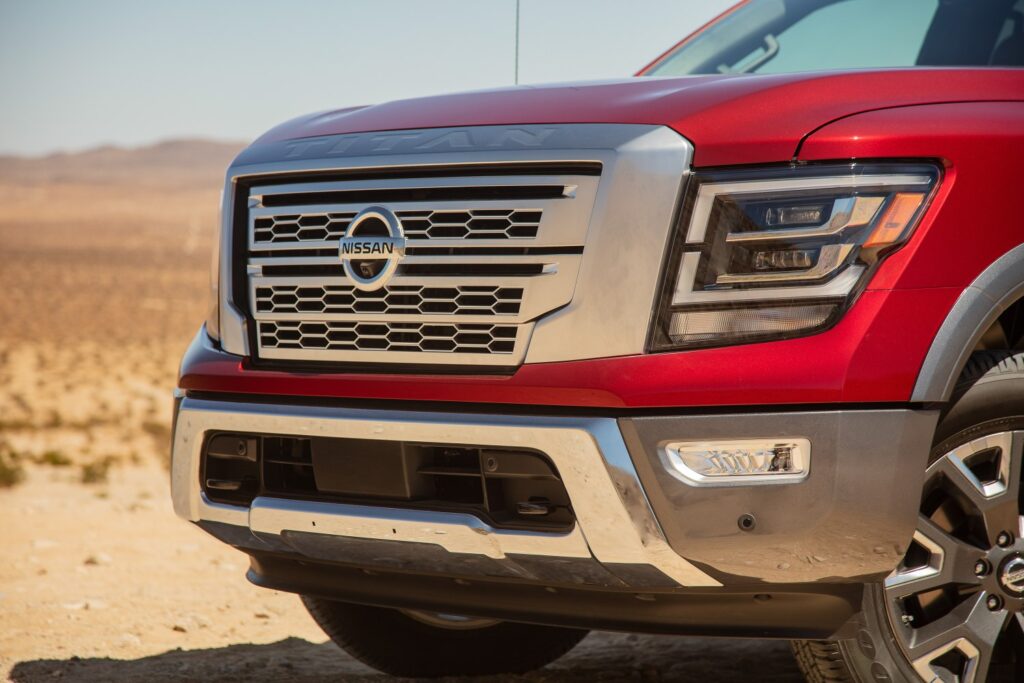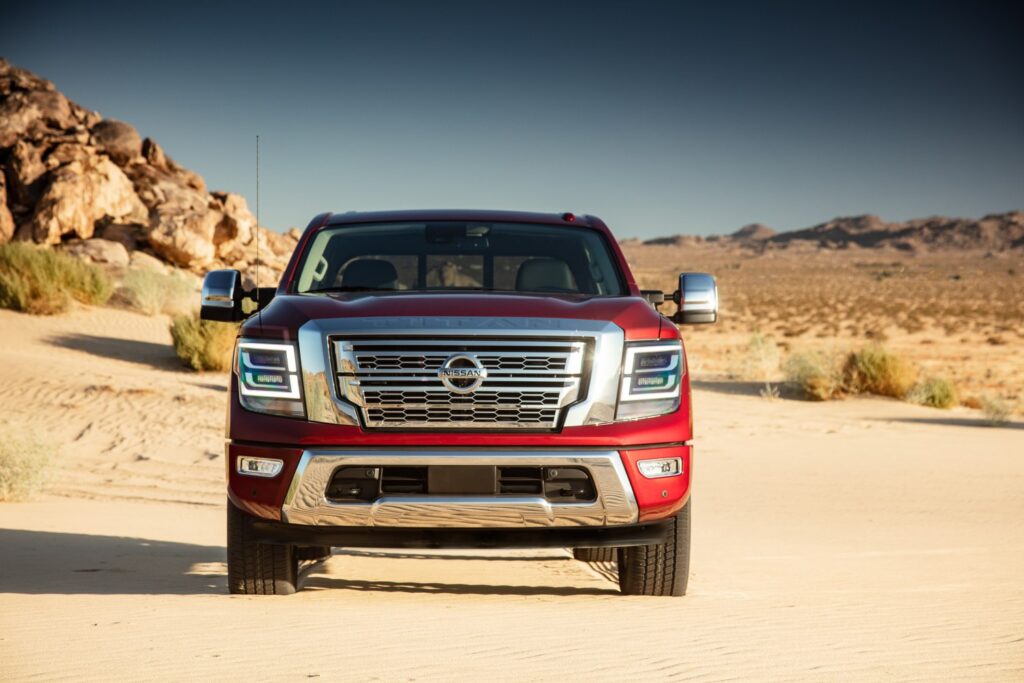
The Nissan Titan II King Cab, introduced in 2016, represents the second generation of Nissan’s full-size pickup truck. Designed primarily for the North American market, the Titan II aimed to provide a robust and capable alternative to established domestic competitors like Ford, Chevrolet, and Ram. The King Cab configuration offers extended passenger space compared to the standard cab, making it suitable for both work and family use. This generation marked a significant step forward for Nissan in the competitive full-size truck segment, focusing on enhanced performance, technology, and comfort.
Nissan Titan II King Cab: An Overview
The Titan II King Cab occupies the full-size pickup truck segment, catering to buyers who require substantial towing and hauling capacity alongside passenger comfort. It distinguishes itself with a powerful 5.6-liter V8 engine and a focus on providing a comfortable ride. While not as widely recognized as some of its American counterparts, the Titan II King Cab offers a compelling package for those seeking a capable and reliable truck with a unique blend of features.
Engine & Performance
At the heart of the Nissan Titan II King Cab lies the VK56VD 5.6-liter V8 engine. This naturally aspirated powerplant delivers 390 horsepower at 5800 rpm and 394 Nm (290.6 lb.-ft.) of torque at 4000 rpm. The engine utilizes direct fuel injection and a double overhead camshaft (DOHC) valvetrain, contributing to its responsive performance. Power is transferred to the rear wheels via a seven-speed automatic transmission. The weight-to-power ratio of 6.4 kg/Hp (156.8 Hp/tonne) and weight-to-torque ratio of 6.3 kg/Nm (158.4 Nm/tonne) demonstrate a respectable balance between power and mass. Fuel economy is rated at 15.7 l/100 km (15 US mpg, 18 UK mpg, 6.4 km/l) combined, 18.8 l/100 km (12.5 US mpg, 15 UK mpg, 5.3 km/l) in urban settings, and 13.5 l/100 km (17.4 US mpg, 20.9 UK mpg, 7.4 km/l) on the extra-urban cycle. While not exceptionally fuel-efficient by modern standards, these figures are typical for a full-size V8 pickup truck.
Design & Features
The Nissan Titan II King Cab is a four-door pickup truck with seating for five to six passengers, depending on configuration. Its body-on-frame construction provides a robust platform for demanding tasks. The King Cab configuration extends the rear passenger compartment, offering increased legroom and comfort compared to the standard cab. The truck features a double wishbone front suspension and a leaf spring rear suspension, balancing ride quality with load-carrying capability. Ventilated disc brakes are employed on all four wheels, enhanced by an Anti-lock Braking System (ABS) for improved stopping performance. Standard features include power steering (electric), and the vehicle rides on 18-inch wheels with tire sizes of 265/70 R18 or 275/70 R18. The Titan II King Cab offers a ground clearance ranging from 211 to 246 mm (8.31 to 9.69 inches), along with approach, departure, and ramp-over angles designed for moderate off-road capability.
Technical Specifications
| Brand | Nissan |
| Model | Titan |
| Generation | Titan II King Cab |
| Type (Engine) | 5.6 V8 (390 Hp) Automatic |
| Start of production | 2016 |
| Powertrain Architecture | Internal Combustion engine |
| Body type | Pick-up |
| Seats | 5-6 |
| Doors | 4 |
| Fuel consumption (urban) | 18.8 l/100 km (12.5 US mpg, 15 UK mpg, 5.3 km/l) |
| Fuel consumption (extra urban) | 13.5 l/100 km (17.4 US mpg, 20.9 UK mpg, 7.4 km/l) |
| Fuel consumption (combined) | 15.7 l/100 km (15 US mpg, 18 UK mpg, 6.4 km/l) |
| Fuel Type | Petrol (Gasoline) |
| Weight-to-power ratio | 6.4 kg/Hp (156.8 Hp/tonne) |
| Weight-to-torque ratio | 6.3 kg/Nm (158.4 Nm/tonne) |
| Power | 390 Hp @ 5800 rpm |
| Power per litre | 70.2 Hp/l |
| Torque | 394 Nm @ 4000 rpm (290.6 lb.-ft. @ 4000 rpm) |
| Maximum engine speed | 6000 rpm |
| Engine layout | Front, Longitudinal |
| Engine Model/Code | VK56VD |
| Engine displacement | 5552 cm3 (338.8 cu. in.) |
| Number of cylinders | 8 |
| Engine configuration | V-engine |
| Cylinder Bore | 98 mm (3.86 in.) |
| Piston Stroke | 92 mm (3.62 in.) |
| Compression ratio | 11.2:1 |
| Number of valves per cylinder | 4 |
| Fuel injection system | Direct injection |
| Engine aspiration | Naturally aspirated engine |
| Valvetrain | DOHC |
| Engine oil capacity | 6.5 l (6.87 US qt | 5.72 UK qt) |
| Coolant capacity | 15.23 l (16.09 US qt | 13.4 UK qt) |
| Kerb Weight | 2488-2493 kg (5485.1 – 5496.12 lbs.) |
| Max. weight | 3221 kg (7101.09 lbs.) |
| Max load | 728-733 kg (1604.97 – 1615.99 lbs.) |
| Fuel tank capacity | 98 l (25.89 US gal | 21.56 UK gal) |
| Length | 5794-5804 mm (228.11 – 228.5 in.) |
| Width | 2019-2050 mm (79.49 – 80.71 in.) |
| Height | 1908 mm (75.12 in.) |
| Wheelbase | 3551 mm (139.8 in.) |
| Front track | 1725-1727 mm (67.91 – 67.99 in.) |
| Rear track | 1725-1727 mm (67.91 – 67.99 in.) |
| Ride height (ground clearance) | 211-246 mm (8.31 – 9.69 in.) |
| Approach angle | 16.3-16.5° |
| Departure angle | 20.8° |
| Ramp-over angle | 20.5-20.8° |
| Drivetrain Architecture | Rear wheel drive (ICE drives rear wheels) |
| Number of gears | 7 |
| Gearbox type | Automatic transmission |
| Front suspension | Double wishbone |
| Rear suspension | Leaf spring |
| Front brakes | Ventilated discs |
| Rear brakes | Ventilated discs |
| Assisting systems | ABS (Anti-lock braking system) |
| Steering type | Steering rack and pinion |
| Power steering | Electric |
| Tires size | 265/70 R18; 275/70 R18 |
| Wheel rims size | 8.0J x 18 |