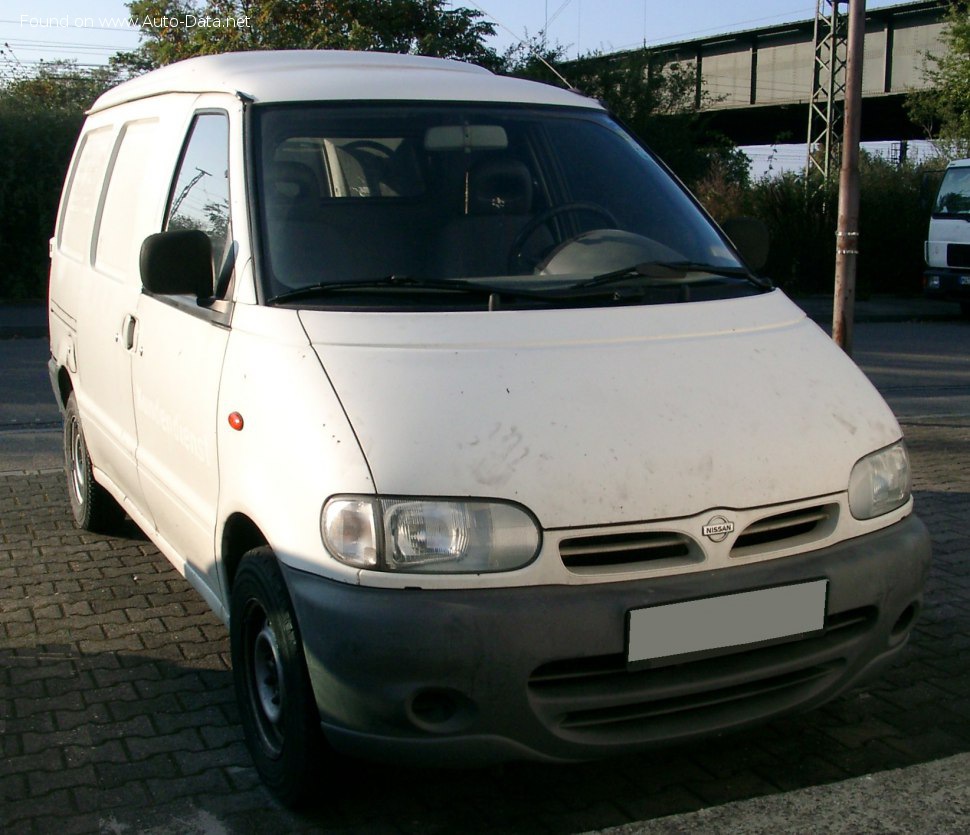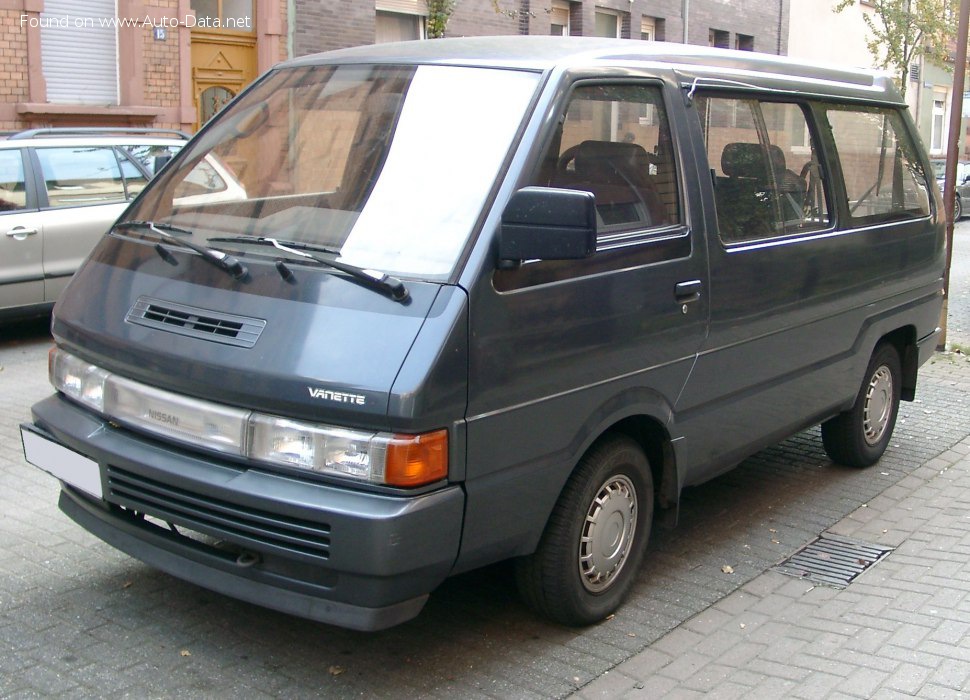
The Nissan Vanette 2.4 i, produced between 1988 and 1995, represents a significant offering in the compact minivan segment, particularly within the Japanese domestic market (JDM). While not widely sold in the United States, the Vanette served as a practical and versatile people-carrier for families and commercial users in Japan and export markets. This generation of the Vanette, known for its robust build and efficient design, offered a blend of affordability and functionality, making it a popular choice for those needing a spacious and reliable vehicle. The 2.4 i designation refers to the engine displacement and indicates a gasoline-powered powertrain delivering 105 horsepower.
Nissan Vanette 2.4 i: A Detailed Overview
The Vanette, throughout its various generations, has been a mainstay of Nissan’s commercial and passenger vehicle lineup. The 1988-1995 iteration, specifically the 2.4 i model, focused on providing a comfortable and economical transportation solution. It catered to a market segment demanding practicality and space, often utilized for family transport, small business operations, and even as a base for camper conversions. Its rear-wheel-drive configuration, while less common in modern minivans, contributed to its durability and suitability for varied road conditions.
Engine & Performance
The heart of the Nissan Vanette 2.4 i is a 2.4-liter inline four-cylinder gasoline engine. This naturally aspirated engine produces 105 horsepower at 4800 rpm and 186 Nm (137.19 lb.-ft.) of torque at 2400 rpm. While not a performance-oriented vehicle, the engine provides adequate power for everyday driving and load-carrying duties. The power-to-weight ratio of 12.7 kg/Hp (78.9 Hp/tonne) and torque-to-weight ratio of 7.2 kg/Nm (139.8 Nm/tonne) reflect its focus on usability rather than outright speed. The engine utilizes a single-point fuel injection system, a common technology for the era, contributing to reasonable fuel economy. Fuel consumption is rated at 12.4 l/100 km (19 US mpg) in urban settings and 9.8 l/100 km (24 US mpg) on the open road. The Vanette achieves a maximum speed of 150 km/h (93.21 mph). The longitudinal engine layout and rear-wheel-drive configuration were typical for vans of this period, offering a balance of packaging efficiency and driving dynamics.
Design & Features
The Nissan Vanette 2.4 i is a four-door minivan designed to accommodate up to eight passengers. Its boxy, utilitarian design prioritizes interior space and practicality over aerodynamic styling. The vehicle’s dimensions – 4365 mm (171.85 in.) in length, 1690 mm (66.54 in.) in width, and 1900 mm (74.8 in.) in height – provide a generous cabin volume. The wheelbase of 2350 mm (92.52 in.) contributes to a relatively stable ride. Key features of the Vanette include sliding rear doors for easy access, a relatively high roofline for comfortable headroom, and a large cargo area when seats are folded or removed. Safety features, while limited by the standards of the late 1980s and early 1990s, typically included seatbelts and a robust body structure. The interior was generally functional and durable, with materials chosen for longevity rather than luxury. The Vanette’s design reflects the needs of its target market – a vehicle built for work and family, prioritizing space, reliability, and affordability.
Technical Specifications
| Brand | Nissan |
| Model | Vanette |
| Generation | Vanette |
| Type (Engine) | 2.4 i (105 Hp) |
| Start of production | 1988 |
| End of production | 1995 |
| Powertrain Architecture | Internal Combustion engine |
| Body type | Minivan |
| Seats | 8 |
| Doors | 4 |
| Fuel consumption (urban) | 12.4 l/100 km (19 US mpg, 22.8 UK mpg) |
| Fuel consumption (extra urban) | 9.8 l/100 km (24 US mpg, 28.8 UK mpg) |
| Fuel Type | Petrol (Gasoline) |
| Maximum speed | 150 km/h (93.21 mph) |
| Weight-to-power ratio | 12.7 kg/Hp |
| Weight-to-torque ratio | 7.2 kg/Nm |
| Power | 105 Hp @ 4800 rpm |
| Power per litre | 44 Hp/l |
| Torque | 186 Nm @ 2400 rpm (137.19 lb.-ft. @ 2400 rpm) |
| Engine layout | Front, Longitudinal |
| Engine displacement | 2388 cm3 (145.72 cu. in.) |
| Number of cylinders | 4 |
| Engine configuration | Inline |
| Cylinder Bore | 89 mm (3.5 in.) |
| Piston Stroke | 96 mm (3.78 in.) |
| Compression ratio | 8.3:1 |
| Number of valves per cylinder | 2 |
| Fuel injection system | Single-point injection |
| Engine aspiration | Naturally aspirated |
| Kerb Weight | 1330 kg (2932.15 lbs.) |
| Max. weight | 2180 kg (4806.08 lbs.) |
| Max load | 850 kg (1873.93 lbs.) |
| Length | 4365 mm (171.85 in.) |
| Width | 1690 mm (66.54 in.) |
| Height | 1900 mm (74.8 in.) |
| Wheelbase | 2350 mm (92.52 in.) |
| Drivetrain Architecture | Rear wheel drive, Internal Combustion engine |
| Drive wheel | Rear wheel drive |
| Number of gears and type of gearbox | 5 gears, manual transmission |
| Tires size | 195/70 R14 89S |
In conclusion, the Nissan Vanette 2.4 i, while not a household name in the United States, was a significant vehicle in its target markets. Its blend of practicality, affordability, and reliability made it a popular choice for families and businesses alike. The Vanette represents a period of Japanese automotive engineering focused on efficient and durable transportation solutions.