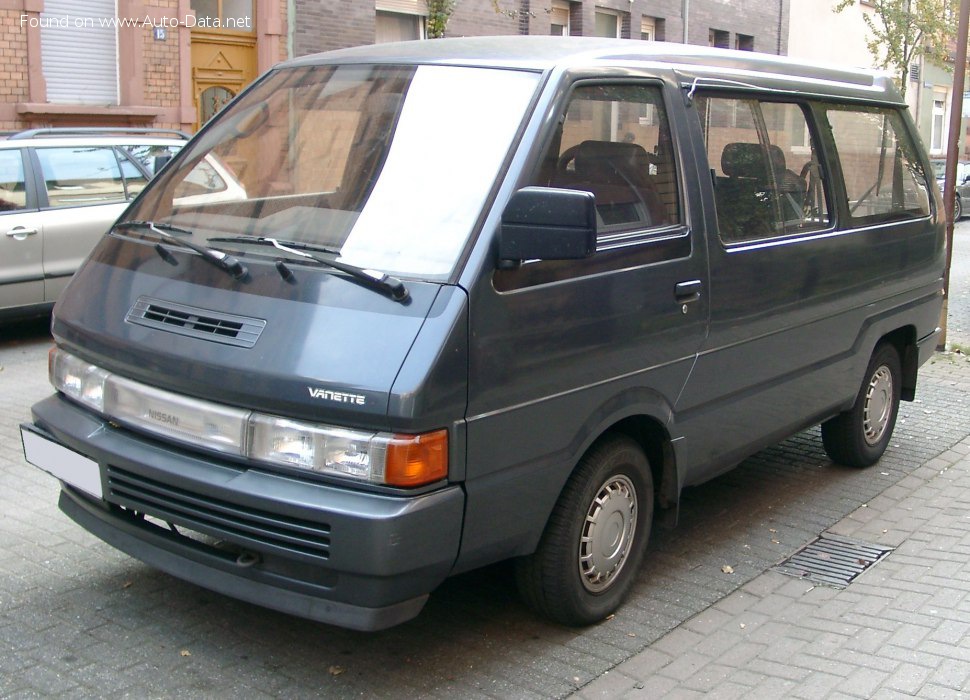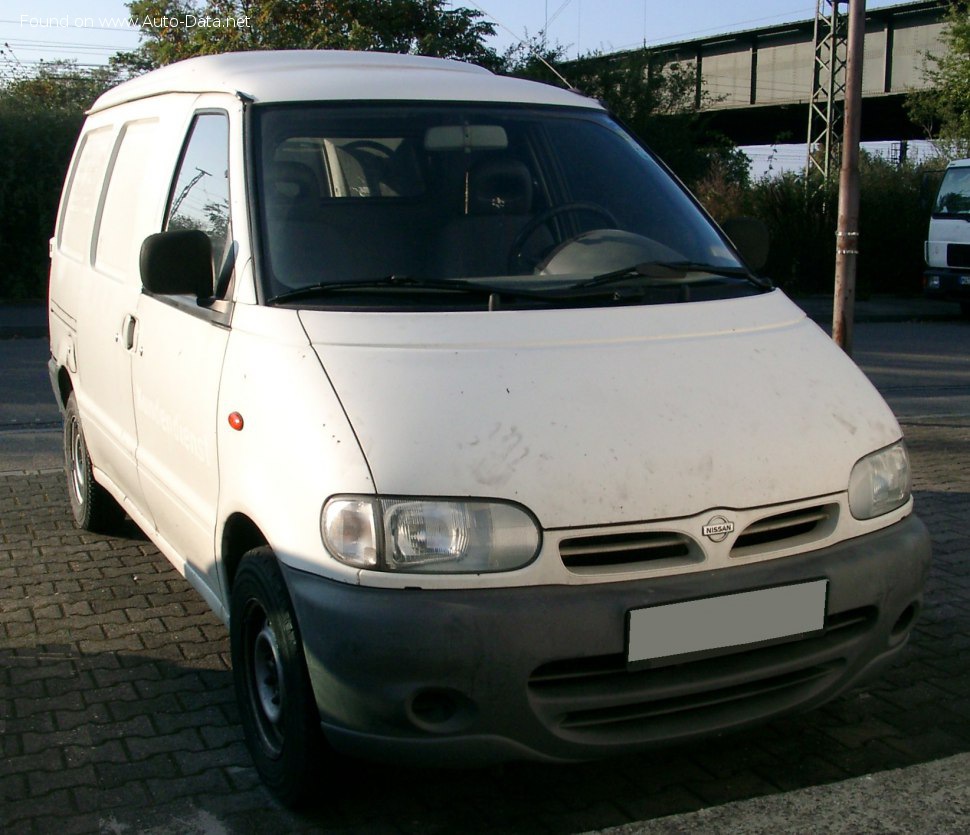
The Nissan Vanette Cargo 2.3 d (75 Hp) is a light commercial vehicle produced by Nissan from 1995 to 2002. While largely unknown in North America, the Vanette held a significant role in the Japanese and European markets as a versatile and economical workhorse. It primarily served as a panel van, catering to small businesses, delivery services, and tradespeople requiring a practical and reliable vehicle for transporting goods. The Vanette Cargo represented Nissan’s offering in the competitive compact van segment, focusing on functionality and affordability rather than luxury or high performance. This generation of Vanette, specifically the 2.3 d variant, was characterized by its robust diesel engine and utilitarian design.
Nissan Vanette Cargo 2.3 d: A Detailed Overview
The Vanette Cargo 2.3 d was designed to meet the demands of commercial users who prioritized cargo capacity and fuel efficiency. It was available in various configurations, including different roof heights and load space arrangements, to suit diverse operational needs. The vehicle’s relatively compact footprint made it maneuverable in urban environments, while its durable construction ensured longevity and minimized downtime. The 2.3-liter diesel engine, while not powerful by modern standards, provided sufficient torque for hauling moderate loads and offered reasonable fuel economy for its class.
Engine & Performance
The heart of the Nissan Vanette Cargo 2.3 d is a 2.3-liter inline-four cylinder diesel engine. This engine produces 75 horsepower at 4300 rpm and 145 Nm (106.95 lb.-ft.) of torque at 2300 rpm. The engine’s design incorporates a precombustion chamber injection system, a common technology for diesel engines of that era, aimed at improving combustion efficiency and reducing emissions. The naturally aspirated configuration contributes to its simplicity and reliability, though it limits overall power output. The engine is longitudinally mounted in a mid-engine layout, which contributes to a balanced weight distribution. The power-to-weight ratio stands at 20.5 kg/Hp, and the torque-to-weight ratio is 10.6 kg/Nm. While acceleration is not a strong point, the engine’s torque delivery makes it suitable for carrying loads. Fuel consumption figures are 12.7 l/100 km (18.5 US mpg, 22.2 UK mpg, 7.9 km/l) in urban settings, 7.9 l/100 km (29.8 US mpg, 35.8 UK mpg, 12.7 km/l) on the open road, and 9.6 l/100 km (24.5 US mpg, 29.4 UK mpg, 10.4 km/l) combined.
Design & Features
The Nissan Vanette Cargo 2.3 d is a traditional panel van, characterized by its boxy shape and utilitarian aesthetics. The body type is a minivan, but it’s specifically designed for commercial use, prioritizing cargo space over passenger comfort. The vehicle’s design emphasizes practicality, with a large rear cargo area accessible through sliding side doors and rear doors. The interior is spartan, focusing on durability and ease of cleaning. Features were minimal, reflecting the vehicle’s intended purpose. Safety features were basic for the time, typically including seatbelts and a robust chassis construction. The Vanette Cargo’s design was largely dictated by its function – to provide a reliable and cost-effective solution for light commercial transport. The vehicle’s dimensions are 4500 mm (177.17 in) in length, 1695 mm (66.73 in) in width, and 1980 mm (77.95 in) in height, with a wheelbase of 2895 mm (113.98 in). The kerb weight is 1537 kg (3388.5 lbs), and the maximum permissible weight is 2505 kg (5522.58 lbs), allowing for a maximum load capacity of 968 kg (2134.07 lbs).
Market Position and Legacy
The Nissan Vanette Cargo, particularly the 2.3 d variant, was a popular choice in Europe and Asia for small businesses and tradespeople. It competed with other light commercial vehicles such as the Citroën Berlingo, Renault Kangoo, and Volkswagen Caddy. Its appeal lay in its affordability, reliability, and fuel efficiency. While not known for its performance or luxurious features, the Vanette Cargo provided a practical and dependable solution for transporting goods. The Vanette’s legacy is one of a hardworking and economical vehicle that played a vital role in supporting small businesses and commercial operations.
Technical Specifications
| Brand | Nissan |
| Model | Vanette |
| Generation | Vanette Cargo |
| Type (Engine) | 2.3 d (75 Hp) |
| Start of production | 1995 year |
| End of production | 2002 year |
| Powertrain Architecture | Internal Combustion engine |
| Body type | Minivan |
| Fuel consumption (economy) – urban | 12.7 l/100 km |
| Fuel consumption (economy) – extra urban | 7.9 l/100 km |
| Fuel consumption (economy) – combined | 9.6 l/100 km |
| Fuel Type | Diesel |
| Weight-to-power ratio | 20.5 kg/Hp |
| Weight-to-torque ratio | 10.6 kg/Nm |
| Power | 75 Hp @ 4300 rpm |
| Power per litre | 32.9 Hp/l |
| Torque | 145 Nm @ 2300 rpm (106.95 lb.-ft. @ 2300 rpm) |
| Engine layout | Middle, Longitudinal |
| Engine displacement | 2283 cm3 (139.32 cu. in.) |
| Number of cylinders | 4 |
| Engine configuration | Inline |
| Cylinder Bore | 87 mm (3.43 in.) |
| Piston Stroke | 96 mm (3.78 in.) |
| Compression ratio | 22.5:1 |
| Number of valves per cylinder | 2 |
| Fuel injection system | Precombustion chamber injection |
| Engine aspiration | Naturally aspirated engine |
| Valvetrain | OHC |
| Kerb Weight | 1537 kg (3388.5 lbs) |
| Max. weight | 2505 kg (5522.58 lbs) |
| Max load | 968 kg (2134.07 lbs) |
| Fuel tank capacity | 58 l (15.32 US gal | 12.76 UK gal) |
| Length | 4500 mm (177.17 in) |
| Width | 1695 mm (66.73 in) |
| Height | 1980 mm (77.95 in) |
| Wheelbase | 2895 mm (113.98 in) |