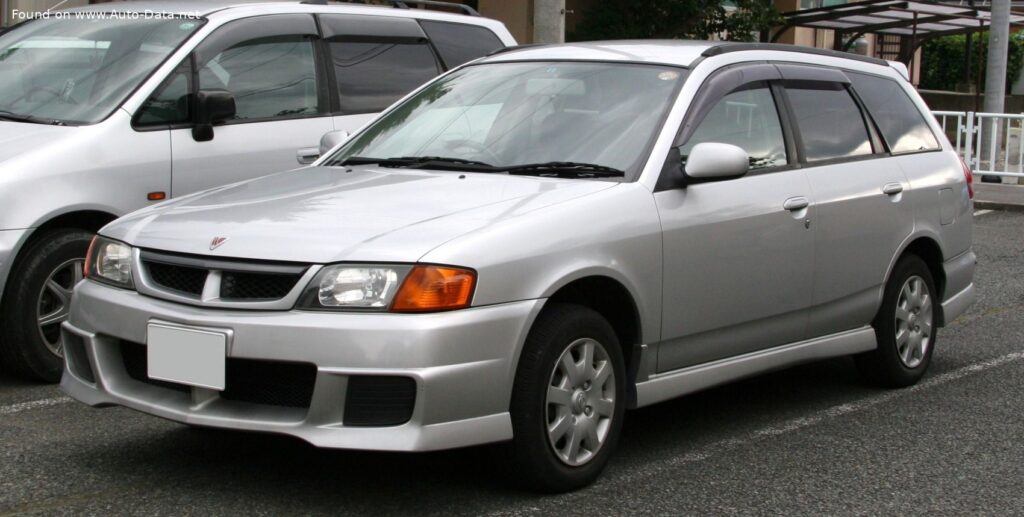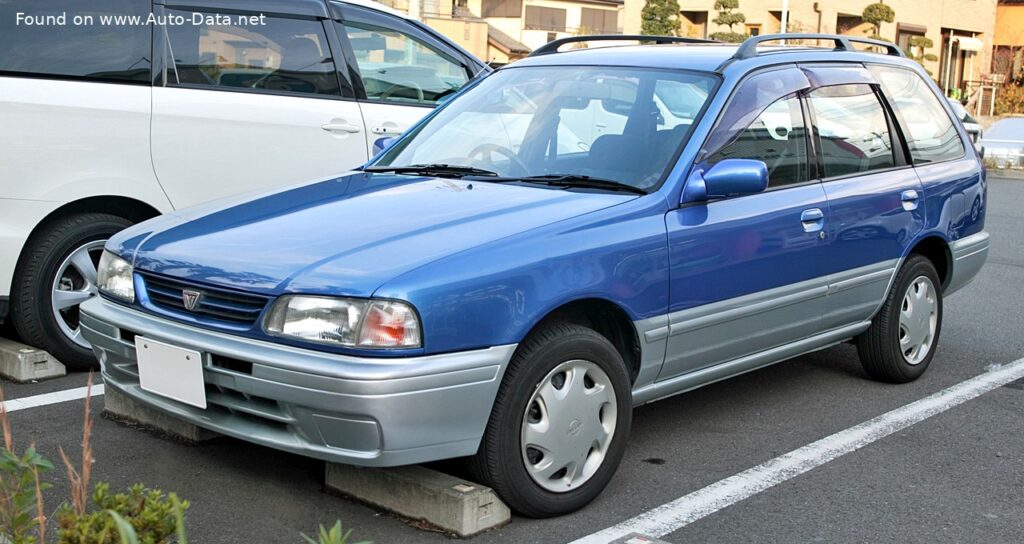
The Nissan Wingroad (Y10), produced between 1997 and 1999, is a compact station wagon primarily aimed at the Japanese domestic market (JDM). While not officially sold in the United States, the Wingroad represents a practical and versatile vehicle popular for its spacious interior and fuel efficiency. It falls into the category of a small family car, offering a balance between affordability, functionality, and reasonable performance. The Y10 generation, powered by a 1.5-liter 16-valve engine producing 105 horsepower, was designed to cater to the needs of Japanese families seeking a comfortable and reliable vehicle for daily commuting and weekend trips.
Nissan Wingroad (Y10): An Overview
The Wingroad, known as the Nissan Ad Lib in some markets, was conceived as a competitor to other compact wagons like the Toyota Corolla Wagon and Honda Civic Wagon. Its design prioritized interior space and practicality, making it a popular choice for small families and individuals needing a versatile vehicle. The Y10 generation marked a refinement of the Wingroad concept, offering improved fuel economy and a more modern interior compared to its predecessors. The vehicle’s focus was on providing a comfortable and economical transportation solution, rather than outright performance or luxury.
Engine & Performance
The heart of the Y10 Wingroad is the GA15DE 1.5-liter inline-four cylinder engine. This naturally aspirated engine delivers 105 horsepower at 6000 rpm and 135 Nm (99.57 lb-ft) of torque at 4000 rpm. While not a powerhouse, the GA15DE provides adequate performance for everyday driving. The engine’s power-to-weight ratio of 10 kg/Hp and torque-to-weight ratio of 7.8 kg/Nm contribute to a reasonably responsive driving experience. The engine features a double overhead camshaft (DOHC) valvetrain and multi-port fuel injection, technologies that enhance efficiency and power delivery. Coupled with a 5-speed manual transmission, the Wingroad offers drivers a direct connection to the powertrain. The front-wheel-drive configuration contributes to fuel efficiency and simplified mechanical complexity. The engine’s 9.9:1 compression ratio is typical for engines of this era, balancing performance and fuel economy.
Design & Features
The Nissan Wingroad Y10 is a five-door station wagon, offering a practical and spacious interior. Its design is functional rather than flamboyant, prioritizing usability and maximizing cargo space. The vehicle comfortably seats five passengers and provides ample room for luggage and other cargo. The interior features a straightforward layout with durable materials, reflecting its focus on practicality. Safety features for the time included ventilated disc brakes on the front wheels and drum brakes on the rear, providing adequate stopping power. The suspension system, consisting of a spring strut setup at the front and a torsion beam at the rear, offers a comfortable ride quality. The vehicle’s 175/65 R14 tires provide a good balance between grip and fuel efficiency. The Wingroad’s relatively compact dimensions – 4295 mm in length, 1665 mm in width, and 1515 mm in height – make it easy to maneuver in urban environments. The 2400 mm wheelbase contributes to a stable and comfortable ride.
Technical Specifications
| Brand | Nissan |
| Model | Wingroad |
| Generation | Wingroad (Y10) |
| Type (Engine) | 1.5 16V (105 Hp) |
| Start of production | 1997 |
| End of production | 1999 |
| Powertrain Architecture | Internal Combustion engine |
| Body type | Station wagon (estate) |
| Seats | 5 |
| Doors | 5 |
| Fuel Type | Petrol (Gasoline) |
| Weight-to-power ratio | 10 kg/Hp |
| Weight-to-torque ratio | 7.8 kg/Nm |
| Power | 105 Hp @ 6000 rpm |
| Power per litre | 70.1 Hp/l |
| Torque | 135 Nm @ 4000 rpm / 99.57 lb.-ft. @ 4000 rpm |
| Engine layout | Front, Transverse |
| Engine Model/Code | GA15DE |
| Engine displacement | 1498 cm3 / 91.41 cu. in. |
| Number of cylinders | 4 |
| Engine configuration | Inline |
| Cylinder Bore | 73.6 mm / 2.9 in. |
| Piston Stroke | 88 mm / 3.46 in. |
| Compression ratio | 9.9:1 |
| Number of valves per cylinder | 4 |
| Fuel injection system | Multi-port manifold injection |
| Engine aspiration | Naturally aspirated engine |
| Valvetrain | DOHC |
| Kerb Weight | 1050 kg / 2314.85 lbs |
| Fuel tank capacity | 50 l / 13.21 US gal | 11 UK gal |
| Length | 4295 mm / 169.09 in. |
| Width | 1665 mm / 65.55 in. |
| Height | 1515 mm / 59.65 in. |
| Wheelbase | 2400 mm / 94.49 in. |
| Front track | 1445 mm / 56.89 in. |
| Rear (Back) track | 1445 mm / 56.89 in. |
| Minimum turning circle (turning diameter) | 10.4 m / 34.12 ft |
| Drivetrain Architecture | The Internal combustion engine (ICE) drives the front wheels of the vehicle. |
| Drive wheel | Front wheel drive |
| Number of gears and type of gearbox | 5 gears, manual transmission |
| Front suspension | Spring Strut |
| Rear suspension | Torsion |
| Front brakes | Ventilated discs |
| Rear brakes | Drum |
| Tires size | 175/65 R14 82H |
In conclusion, the Nissan Wingroad (Y10) 1.5 16V represents a practical and efficient compact station wagon designed for the demands of the Japanese market. While not a performance vehicle, it offered a comfortable ride, spacious interior, and reasonable fuel economy, making it a popular choice for families and individuals seeking a versatile and reliable mode of transportation. Its simple, yet effective design and engineering reflect the priorities of the late 1990s automotive landscape.