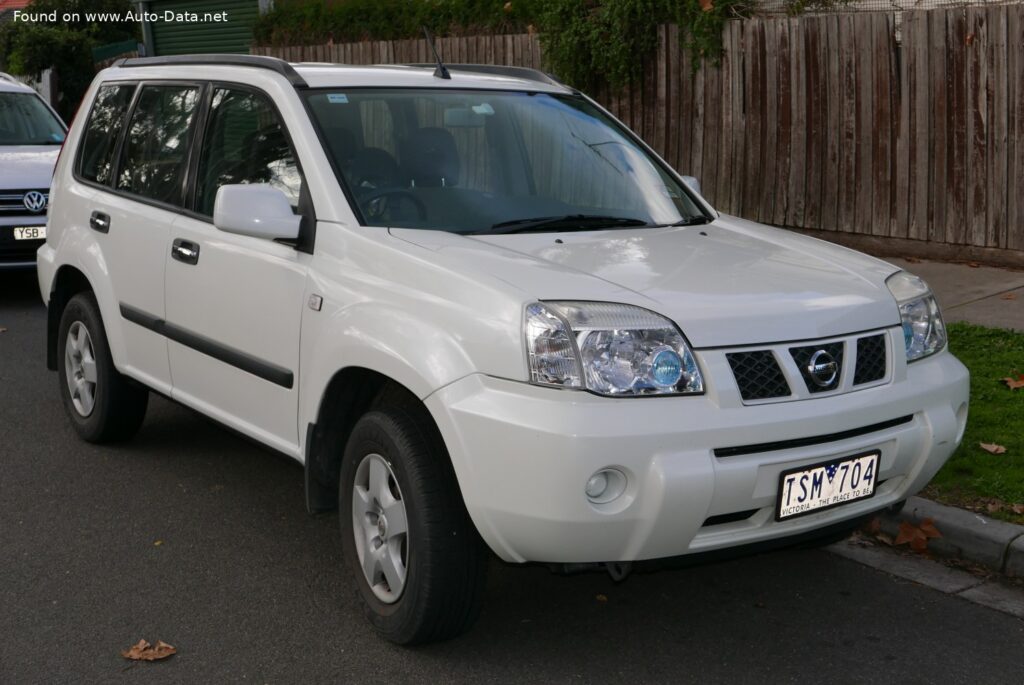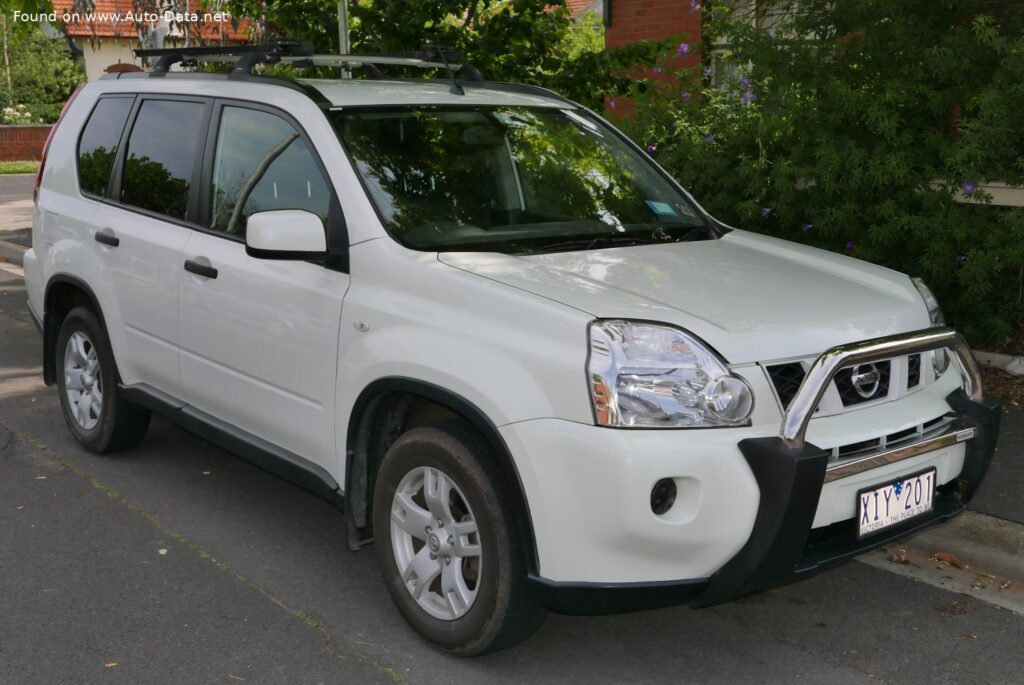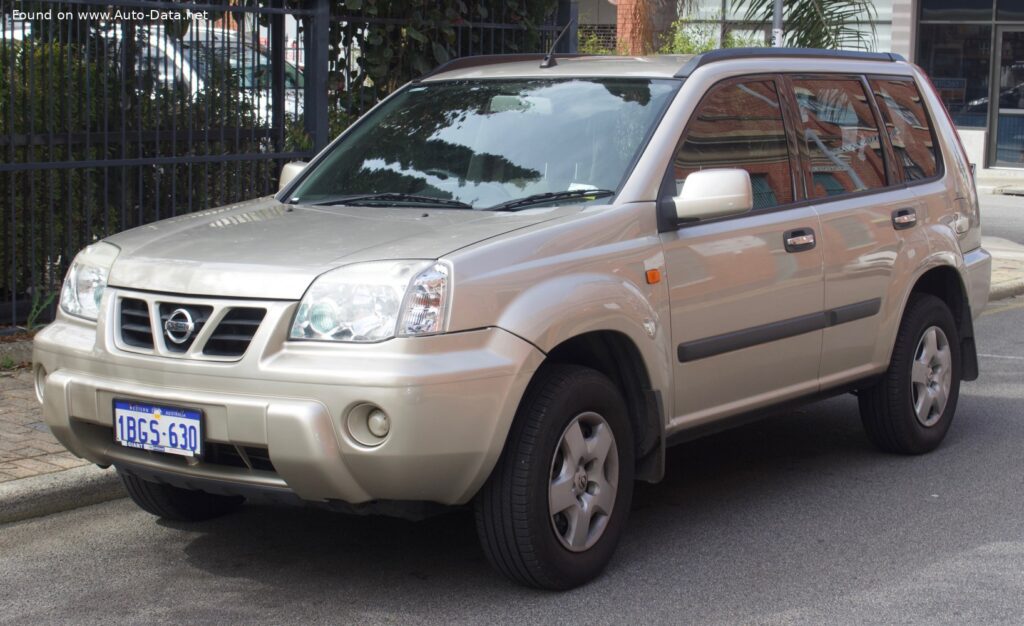
The Nissan X-Trail I (T30), produced from 2001 to 2003, represents Nissan’s initial foray into the compact SUV market. While not initially sold in the United States, the X-Trail was a significant vehicle in Europe and other international markets, offering a blend of practicality, affordability, and available all-wheel drive. It aimed to compete with established players like the Honda CR-V and Toyota RAV4, providing a versatile option for families and individuals seeking a capable and comfortable vehicle. The T30 generation laid the foundation for the X-Trail’s continued success and evolution into the globally recognized model it is today.
Nissan X-Trail I (T30) 2.0 4×4 Automatic
The X-Trail I (T30) 2.0 4×4 Automatic is a five-door, five-seat SUV powered by a 2.0-liter gasoline engine paired with a four-speed automatic transmission. This configuration was popular in markets where manual transmissions were less common and automatic convenience was highly valued. The all-wheel-drive system provided enhanced traction and stability, making it suitable for varied road conditions. The T30 X-Trail was positioned as a practical and reliable vehicle, emphasizing functionality over outright performance.
Engine & Performance
The heart of the X-Trail I (T30) 2.0 4×4 Automatic is the QR20DE 2.0-liter inline-four cylinder engine. This naturally aspirated engine produces 140 horsepower at 6000 rpm and 192 Nm (141.61 lb.-ft.) of torque at 4000 rpm. While not a powerhouse, the engine provides adequate power for everyday driving and moderate loads. The engine’s power-to-weight ratio is 10.3 kg/Hp, and the torque-to-weight ratio is 7.5 kg/Nm. Acceleration from 0 to 100 km/h (0-62 mph) takes 13.1 seconds, and 0 to 60 mph is achieved in approximately 12.4 seconds. The vehicle has a maximum speed of 163 km/h (101.28 mph). Fuel economy is rated at 10 liters per 100 kilometers (23.5 US mpg) combined, with 13.2 l/100 km (17.8 US mpg) in urban settings and 8.1 l/100 km (29 US mpg) on the extra-urban cycle. CO2 emissions are 237 g/km, meeting Euro 3 emission standards.
Design & Features
The Nissan X-Trail I (T30) features a traditional SUV body style with a five-door configuration. Its design prioritized practicality and space, offering a comfortable interior for passengers and a generous cargo area. The vehicle measures 4510 mm (177.56 in) in length, 1765 mm (69.49 in) in width, and 1675 mm (65.94 in) in height, with a wheelbase of 2625 mm (103.35 in). The interior is designed with durability and ease of use in mind. Key features include an independent McPherson strut front suspension and an independent multi-link rear suspension, providing a comfortable ride. Braking is handled by ventilated discs on all four wheels, assisted by an Anti-lock Braking System (ABS). The X-Trail offers a trunk (boot) space ranging from 410 liters (14.48 cu. ft.) with the rear seats up to 1841 liters (65.01 cu. ft.) with the rear seats folded down. Standard features included power steering, and the vehicle is equipped to handle a maximum roof load of 100 kg (220.46 lbs.) and can tow trailers up to 1300 kg (2866.01 lbs) with brakes or 750 kg (1653.47 lbs) without brakes.
Technical Specifications
| Brand | Nissan |
| Model | X-Trail |
| Generation | X-Trail I (T30) |
| Type (Engine) | 2.0 (140 Hp) 4×4 Automatic |
| Start of production | 2001 |
| End of production | 2003 |
| Powertrain Architecture | Internal Combustion engine |
| Body type | SUV |
| Seats | 5 |
| Doors | 5 |
| Fuel consumption (urban) | 13.2 l/100 km (17.8 US mpg, 21.4 UK mpg, 7.6 km/l) |
| Fuel consumption (extra urban) | 8.1 l/100 km (29 US mpg, 34.9 UK mpg, 12.3 km/l) |
| Fuel consumption (combined) | 10 l/100 km (23.5 US mpg, 28.2 UK mpg, 10 km/l) |
| CO2 emissions | 237 g/km |
| Fuel Type | Petrol (Gasoline) |
| Acceleration 0 – 100 km/h | 13.1 sec |
| Acceleration 0 – 62 mph | 13.1 sec |
| Acceleration 0 – 60 mph | 12.4 sec |
| Maximum speed | 163 km/h (101.28 mph) |
| Emission standard | Euro 3 |
| Weight-to-power ratio | 10.3 kg/Hp |
| Weight-to-torque ratio | 7.5 kg/Nm |
| Power | 140 Hp @ 6000 rpm |
| Torque | 192 Nm @ 4000 rpm (141.61 lb.-ft. @ 4000 rpm) |
| Engine layout | Front, Transverse |
| Engine Model/Code | QR20DE |
| Engine displacement | 1998 cm3 (121.93 cu. in.) |
| Number of cylinders | 4 |
| Engine configuration | Inline |
| Cylinder Bore | 89 mm (3.5 in.) |
| Piston Stroke | 80.3 mm (3.16 in.) |
| Compression ratio | 9.9:1 |
| Number of valves per cylinder | 4 |
| Fuel injection system | Multi-port manifold injection |
| Engine aspiration | Naturally aspirated engine |
| Valvetrain | DOHC |
| Engine oil capacity | 3.9 l (4.12 US qt | 3.43 UK qt) |
| Coolant | 7.1 l (7.5 US qt | 6.25 UK qt) |
| Kerb Weight | 1445 kg (3185.68 lbs.) |
| Max. weight | 2000 kg (4409.25 lbs.) |
| Max load | 555 kg (1223.57 lbs.) |
| Trunk (boot) space – minimum | 410 l (14.48 cu. ft.) |
| Trunk (boot) space – maximum | 1841 l (65.01 cu. ft.) |
| Fuel tank capacity | 60 l (15.85 US gal | 13.2 UK gal) |
| Max. roof load | 100 kg (220.46 lbs.) |
| Permitted trailer load with brakes (12%) | 1300 kg (2866.01 lbs.) |
| Permitted trailer load without brakes | 750 kg (1653.47 lbs.) |
| Length | 4510 mm (177.56 in.) |
| Width | 1765 mm (69.49 in.) |
| Height | 1675 mm (65.94 in.) |
| Wheelbase | 2625 mm (103.35 in.) |
| Front track | 1530 mm (60.24 in.) |
| Rear (Back) track | 1530 mm (60.24 in.) |
| Minimum turning circle (turning diameter) | 11 m (36.09 ft.) |
| Drive wheel | All wheel drive (4×4) |
| Number of gears and type of gearbox | 4 gears, automatic transmission |
| Front suspension | Independent, type McPherson with coil spring and anti-roll bar |
| Rear suspension | Independent multi-link suspension, Coil spring |
| Front brakes | Ventilated discs |
| Rear brakes | Ventilated discs |
| Assisting systems | ABS (Anti-lock braking system) |
| Steering type | Steering rack and pinion |
| Power steering | Hydraulic Steering |
| Tires size | 215/70 R16 |
| Wheel rims size | 16 |