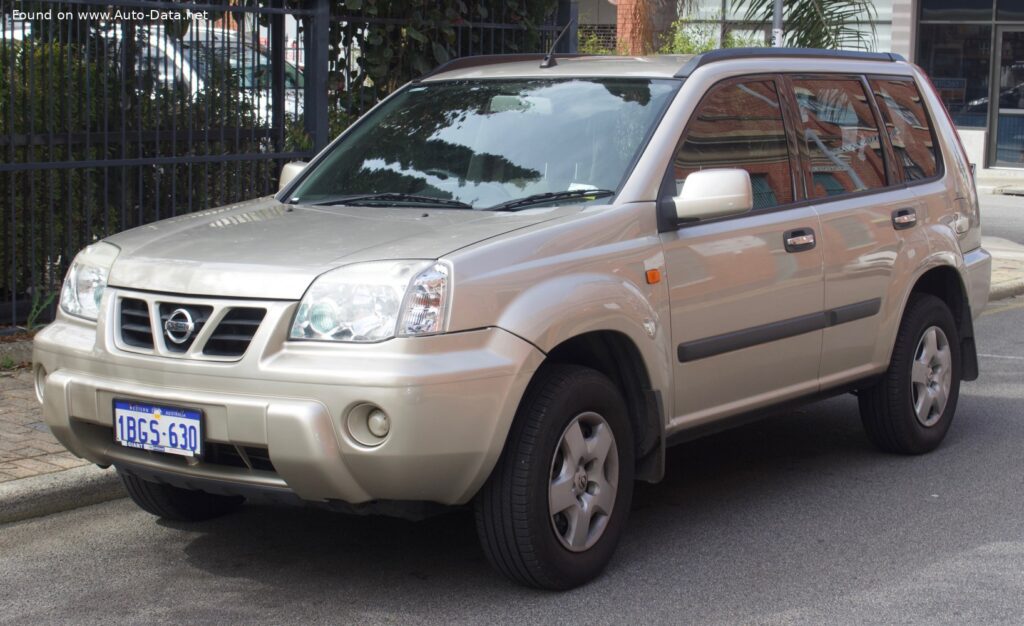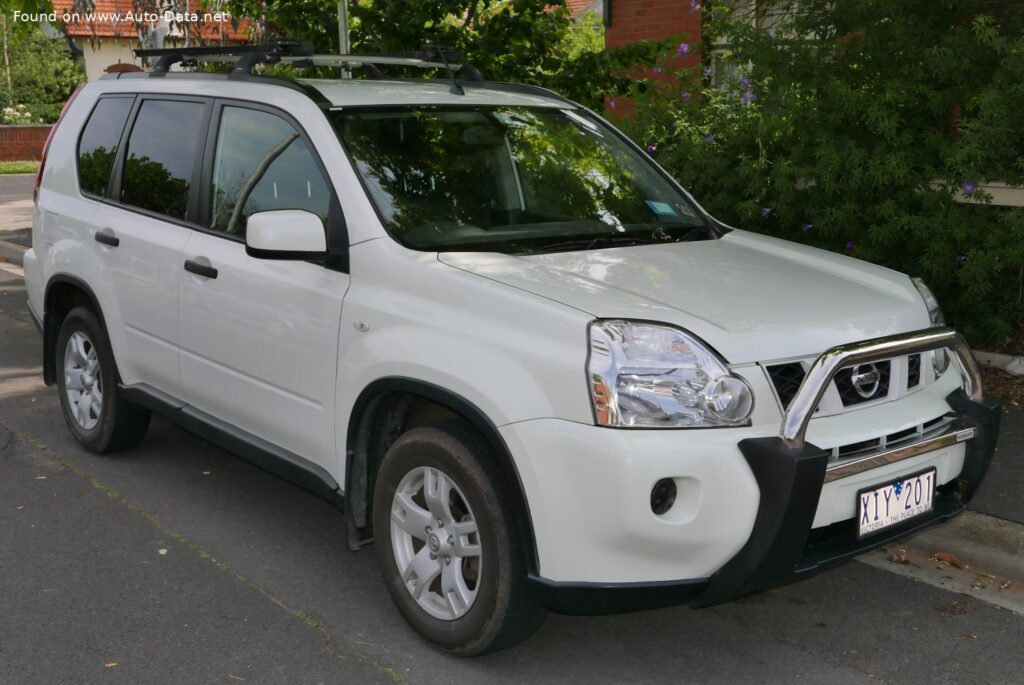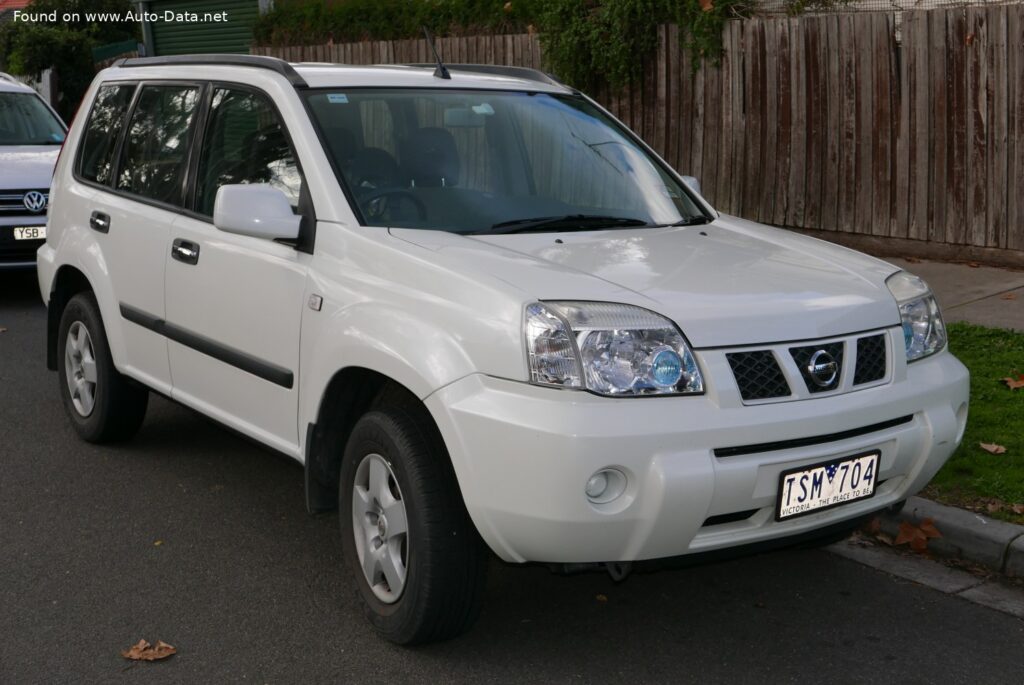
The Nissan X-Trail I (T30), particularly the facelifted version produced from 2005 to 2007, represents Nissan’s entry into the burgeoning compact SUV market. While not initially sold in the United States, the X-Trail was a significant model for Nissan in Europe and other international markets, offering a blend of practicality, affordability, and available all-wheel drive. The T30 generation, and specifically this facelift, aimed to refine the original design and enhance its appeal to a wider customer base. This 2.0-liter variant, producing 140 horsepower, was a popular choice for buyers seeking a balance between fuel economy and performance.
Nissan X-Trail I (T30, Facelift 2003): An Overview
The X-Trail I (T30) was Nissan’s first dedicated compact SUV, launched in 2000. The 2003 facelift brought styling updates, interior refinements, and improvements to the powertrain. Positioned as a competitor to vehicles like the Honda CR-V and Toyota RAV4, the X-Trail distinguished itself with its robust build quality and available four-wheel-drive system. The vehicle’s five-door body style and five-seat configuration catered to families and individuals needing versatile cargo space. The X-Trail’s success in Europe and Asia demonstrated Nissan’s ability to create a competitive SUV that resonated with international consumers.
Engine & Performance
The 2005-2007 Nissan X-Trail I (T30) 2.0-liter model is powered by the QR20DE inline-four cylinder engine. This naturally aspirated engine delivers 140 horsepower at 6000 rpm and 192 Nm (141.61 lb.-ft.) of torque at 4000 rpm. The engine features multi-port fuel injection and a double overhead camshaft (DOHC) valvetrain, contributing to its relatively efficient operation. Power is delivered to the front wheels via a five-speed manual transmission. Acceleration from 0 to 100 km/h (0-62 mph) takes approximately 11 seconds, while the 0-60 mph sprint is achieved in around 10.5 seconds. The vehicle has a maximum speed of 177 km/h (109.98 mph). The engine’s 9.9:1 compression ratio and 1998 cm³ (121.93 cu. in.) displacement provide a good balance of power and fuel efficiency for its class.
Design & Features
The Nissan X-Trail I (T30) boasts a practical and functional design. Its five-door SUV body style offers easy access for passengers and cargo. The interior is designed with durability and usability in mind, featuring comfortable seating for five occupants. The facelifted model received subtle exterior updates, including revised headlights and a redesigned front grille. A key feature of the X-Trail is its spacious interior and versatile cargo area. With the rear seats up, the trunk offers 410 liters (14.48 cu. ft.) of space, expanding to a substantial 1841 liters (65.01 cu. ft.) when the rear seats are folded down. Safety features included ABS (Anti-lock Braking System) as standard, reflecting the growing importance of safety technology in the early 2000s. The X-Trail’s robust suspension system – independent McPherson struts at the front and an independent multi-link setup at the rear – provides a comfortable ride and competent handling.
Technical Specifications
| Brand | Nissan |
| Model | X-Trail |
| Generation | X-Trail I (T30, facelift 2003) |
| Type (Engine) | 2.0 (140 Hp) |
| Start of production | 2005 |
| End of production | 2007 |
| Powertrain Architecture | Internal Combustion engine |
| Body type | SUV |
| Seats | 5 |
| Doors | 5 |
| Fuel consumption (urban) | 11.9 l/100 km (19.8 US mpg, 23.7 UK mpg, 8.4 km/l) |
| Fuel consumption (extra urban) | 7.4 l/100 km (31.8 US mpg, 38.2 UK mpg, 13.5 km/l) |
| Fuel consumption (combined) | 9.1 l/100 km (25.8 US mpg, 31 UK mpg, 11 km/l) |
| CO2 emissions | 217 g/km |
| Fuel Type | Petrol (Gasoline) |
| Acceleration 0 – 100 km/h | 11 sec |
| Acceleration 0 – 62 mph | 11 sec |
| Acceleration 0 – 60 mph | 10.5 sec |
| Maximum speed | 177 km/h (109.98 mph) |
| Emission standard | Euro 4 |
| Weight-to-power ratio | 9.9 kg/Hp, 101.4 Hp/tonne |
| Weight-to-torque ratio | 7.2 kg/Nm, 139.1 Nm/tonne |
| Power | 140 Hp @ 6000 rpm |
| Power per litre | 70.1 Hp/l |
| Torque | 192 Nm @ 4000 rpm (141.61 lb.-ft. @ 4000 rpm) |
| Engine layout | Front, Transverse |
| Engine Model/Code | QR20DE |
| Engine displacement | 1998 cm3 (121.93 cu. in.) |
| Number of cylinders | 4 |
| Engine configuration | Inline |
| Cylinder Bore | 89 mm (3.5 in.) |
| Piston Stroke | 80.3 mm (3.16 in.) |
| Compression ratio | 9.9:1 |
| Number of valves per cylinder | 4 |
| Fuel injection system | Multi-port manifold injection |
| Engine aspiration | Naturally aspirated engine |
| Valvetrain | DOHC |
| Engine oil capacity | 3.9 l (4.12 US qt | 3.43 UK qt) |
| Coolant | 7.1 l (7.5 US qt | 6.25 UK qt) |
| Kerb Weight | 1380 kg (3042.38 lbs.) |
| Max. weight | 2000 kg (4409.25 lbs.) |
| Max load | 620 kg (1366.87 lbs.) |
| Trunk (boot) space – minimum | 410 l (14.48 cu. ft.) |
| Trunk (boot) space – maximum | 1841 l (65.01 cu. ft.) |
| Fuel tank capacity | 60 l (15.85 US gal | 13.2 UK gal) |
| Max. roof load | 100 kg (220.46 lbs.) |
| Permitted trailer load with brakes (12%) | 1500 kg (3306.93 lbs.) |
| Permitted trailer load without brakes | 750 kg (1653.47 lbs.) |
| Length | 4455 mm (175.39 in.) |
| Width | 1765 mm (69.49 in.) |
| Height | 1675 mm (65.94 in.) |
| Wheelbase | 2625 mm (103.35 in.) |
| Front track | 1530 mm (60.24 in.) |
| Rear (Back) track | 1530 mm (60.24 in.) |
| Minimum turning circle (turning diameter) | 11.00 m (36.09 ft.) |
| Drivetrain Architecture | The Internal combustion engine (ICE) drives the front wheels of the vehicle. |
| Drive wheel | Front wheel drive |
| Number of gears and type of gearbox | 5 gears, manual transmission |
| Front suspension | Independent, type McPherson with coil spring and anti-roll bar |
| Rear suspension | Independent multi-link suspension, Coil spring |
| Front brakes | Ventilated discs |
| Rear brakes | Ventilated discs |
| Assisting systems | ABS (Anti-lock braking system) |
| Steering type | Steering rack and pinion |
| Power steering | Hydraulic Steering |
| Tires size | 215/70 R15 |
| Wheel rims size | 15 |