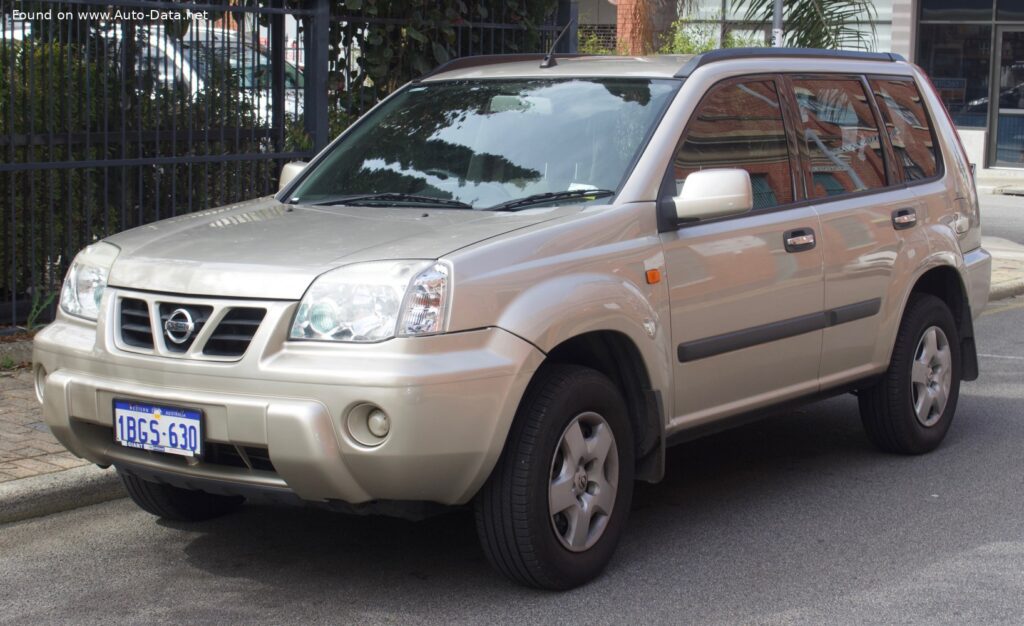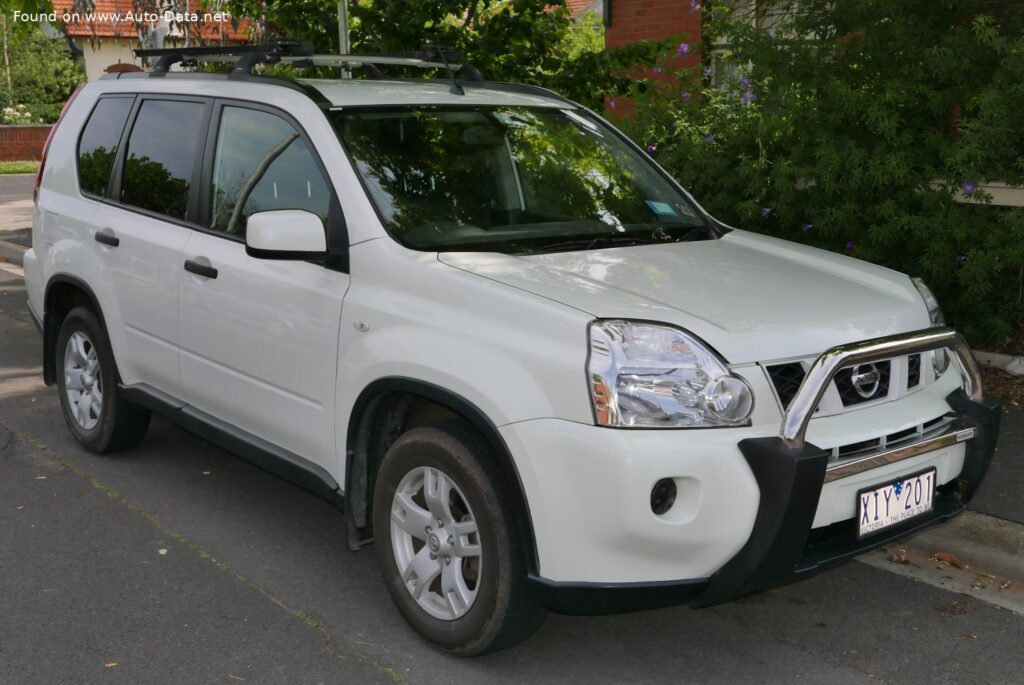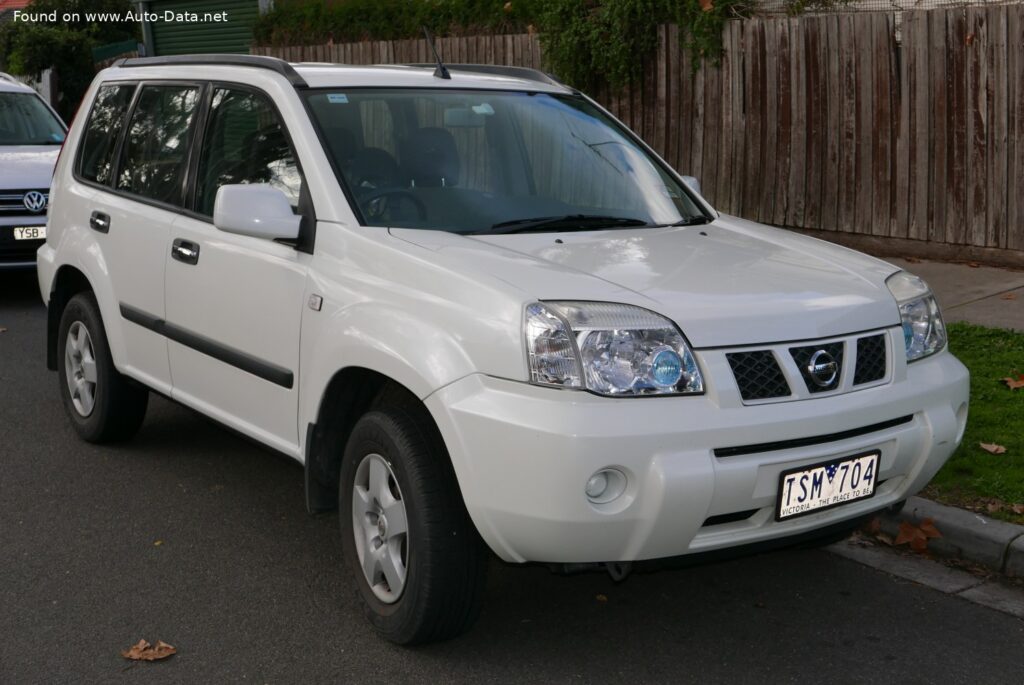
The Nissan X-Trail I (T30), particularly the facelifted version introduced in 2003, represents Nissan’s entry into the burgeoning compact SUV market. While not initially sold in the United States, the X-Trail was a significant model for Nissan in Europe and other international markets. Positioned as a versatile and practical vehicle, it aimed to combine the comfort of a passenger car with the capability of a four-wheel-drive vehicle. The 2003 facelift brought styling updates and, crucially, the introduction of a refined 2.2-liter dCi diesel engine, offering a balance of performance and fuel efficiency. This generation X-Trail competed with vehicles like the Honda CR-V, Toyota RAV4, and Land Rover Freelander, offering a compelling alternative with its standard all-wheel-drive system.
Nissan X-Trail I (T30, Facelift 2003) 2.2 dCi 4×4
The X-Trail I, designated the T30 chassis code, was produced from 2001 to 2007. The 2003 facelift brought noticeable changes to the front and rear styling, including revised headlights, a new grille, and updated interior trim. The introduction of the 2.2 dCi engine was a key upgrade, providing a more powerful and efficient diesel option compared to the earlier petrol engines. This model was primarily aimed at European consumers seeking a practical, all-weather vehicle with good fuel economy and a reasonable level of off-road capability. The X-Trail’s design emphasized functionality and durability, making it a popular choice for families and outdoor enthusiasts.
Engine & Performance
The heart of the 2003 Nissan X-Trail 2.2 dCi 4×4 is its YD22ETi 2.2-liter inline-four cylinder diesel engine. This engine produces 136 horsepower at 4000 rpm and 314 Nm (231.59 lb.-ft.) of torque at 2000 rpm. The engine utilizes a diesel commonrail fuel injection system and a turbocharger with an intercooler to enhance performance and efficiency. Power is delivered to all four wheels via a six-speed manual transmission, providing good control and responsiveness. Acceleration from 0 to 100 km/h (0-62 mph) takes 11.5 seconds, while the vehicle reaches a maximum speed of 180 km/h (111.85 mph). The engine’s 16.7:1 compression ratio contributes to its efficiency, and the DOHC valvetrain ensures optimal engine breathing. Fuel economy is rated at 7.6 l/100 km (30.9 US mpg) combined, with 9.2 l/100 km (25.6 US mpg) in urban conditions and 6.8 l/100 km (34.6 US mpg) on the extra-urban cycle. CO2 emissions are rated at 203 g/km, meeting Euro 4 emission standards.
Design & Features
The Nissan X-Trail I is a five-door SUV with a practical and functional design. It offers seating for five passengers and a generous cargo area. The body-on-frame construction provides a robust and durable platform. The 2003 facelift brought a more modern and refined appearance to the exterior, with a focus on improving the vehicle’s aesthetics. Inside, the X-Trail offers a comfortable and spacious cabin with a focus on practicality. Key features include standard all-wheel drive, ABS (Anti-lock Braking System), ventilated disc brakes on all four wheels, and hydraulic power steering. The interior is designed with durability in mind, using hard-wearing materials that can withstand the rigors of daily use. The rear seats can be folded down to increase cargo space, offering a maximum capacity of 1841 liters (65.01 cu. ft.) with the seats folded. The minimum trunk space is 410 liters (14.48 cu. ft.). The X-Trail’s design prioritizes functionality and versatility, making it a suitable vehicle for both urban and rural environments.
Technical Specifications
| Brand | Nissan |
| Model | X-Trail |
| Generation | X-Trail I (T30, facelift 2003) |
| Type (Engine) | 2.2 dCi (136 Hp) 4×4 |
| Start of production | 2003 |
| End of production | 2007 |
| Powertrain Architecture | Internal Combustion engine |
| Body type | SUV |
| Seats | 5 |
| Doors | 5 |
| Fuel consumption (urban) | 9.2 l/100 km (25.6 US mpg) |
| Fuel consumption (extra urban) | 6.8 l/100 km (34.6 US mpg) |
| Fuel consumption (combined) | 7.6 l/100 km (30.9 US mpg) |
| CO2 emissions | 203 g/km |
| Fuel Type | Diesel |
| Acceleration 0 – 100 km/h | 11.5 sec |
| Acceleration 0 – 60 mph | 10.9 sec |
| Maximum speed | 180 km/h (111.85 mph) |
| Emission standard | Euro 4 |
| Weight-to-power ratio | 11.2 kg/Hp |
| Power | 136 Hp @ 4000 rpm |
| Torque | 314 Nm @ 2000 rpm (231.59 lb.-ft. @ 2000 rpm) |
| Engine layout | Front, Transverse |
| Engine Model/Code | YD22ETi |
| Engine displacement | 2184 cm3 (133.28 cu. in.) |
| Number of cylinders | 4 |
| Engine configuration | Inline |
| Cylinder Bore | 86 mm (3.39 in.) |
| Piston Stroke | 94 mm (3.7 in.) |
| Compression ratio | 16.7:1 |
| Number of valves per cylinder | 4 |
| Fuel injection system | Diesel Commonrail |
| Engine aspiration | Turbocharger, Intercooler |
| Valvetrain | DOHC |
| Engine oil capacity | 5.4 l (5.71 US qt | 4.75 UK qt) |
| Coolant | 10 l (10.57 US qt | 8.8 UK qt) |
| Kerb Weight | 1525 kg (3362.05 lbs.) |
| Max. weight | 2050 kg (4519.48 lbs.) |
| Max load | 525 kg (1157.43 lbs.) |
| Trunk (boot) space – minimum | 410 l (14.48 cu. ft.) |
| Trunk (boot) space – maximum | 1841 l (65.01 cu. ft.) |
| Fuel tank capacity | 60 l (15.85 US gal | 13.2 UK gal) |
| Max. roof load | 100 kg (220.46 lbs.) |
| Permitted trailer load with brakes (12%) | 2000 kg (4409.25 lbs.) |
| Permitted trailer load without brakes | 750 kg (1653.47 lbs.) |
| Length | 4455 mm (175.39 in.) |
| Width | 1765 mm (69.49 in.) |
| Height | 1675 mm (65.94 in.) |
| Wheelbase | 2625 mm (103.35 in.) |
| Front track | 1530 mm (60.24 in.) |
| Rear (Back) track | 1530 mm (60.24 in.) |
| Minimum turning circle | 11.0 m (36.09 ft.) |
| Drive wheel | All wheel drive (4×4) |
| Number of gears | 6 gears, manual transmission |
| Front suspension | Independent, type McPherson with coil spring and anti-roll bar |
| Rear suspension | Independent multi-link suspension, Coil spring |
| Front brakes | Ventilated discs |
| Rear brakes | Ventilated discs |
| Assisting systems | ABS (Anti-lock braking system) |
| Steering type | Steering rack and pinion |
| Power steering | Hydraulic Steering |
| Tires size | 215/70 R15; 215/65 R16 |
| Wheel rims size | 15; 16 |