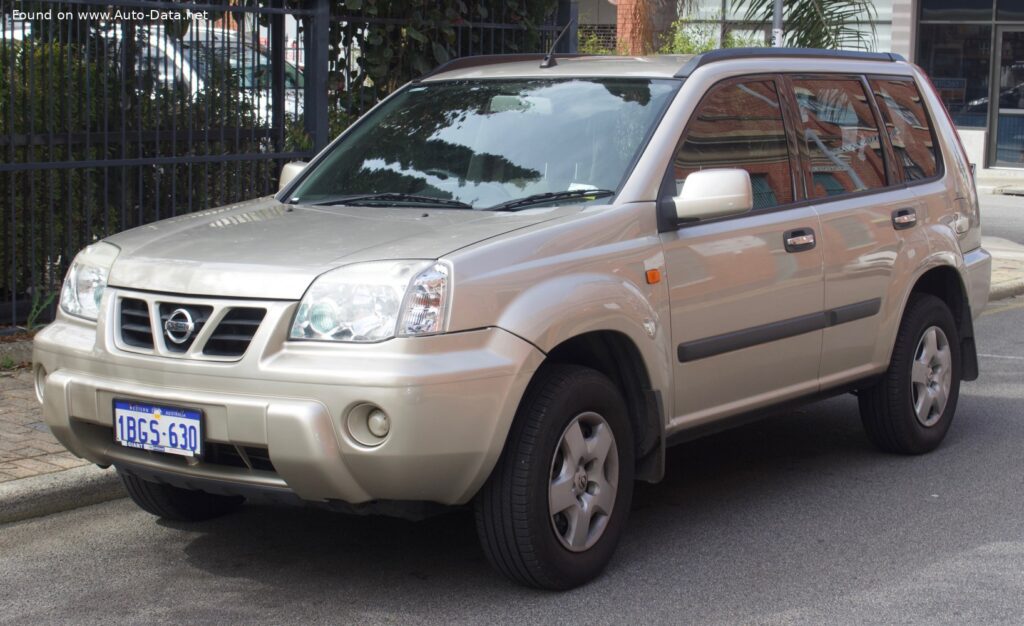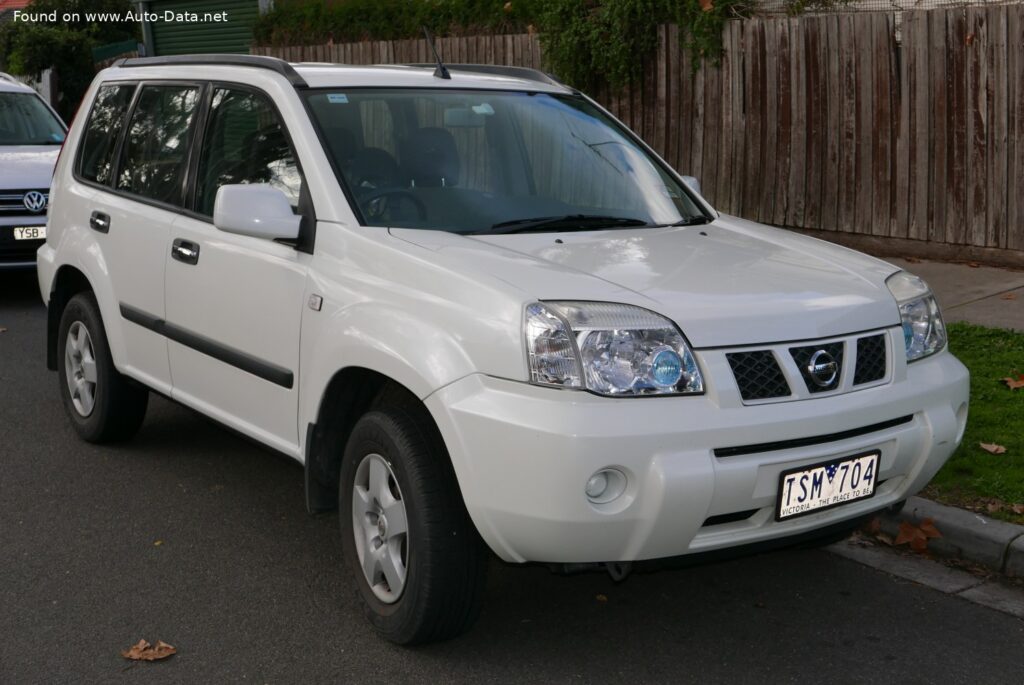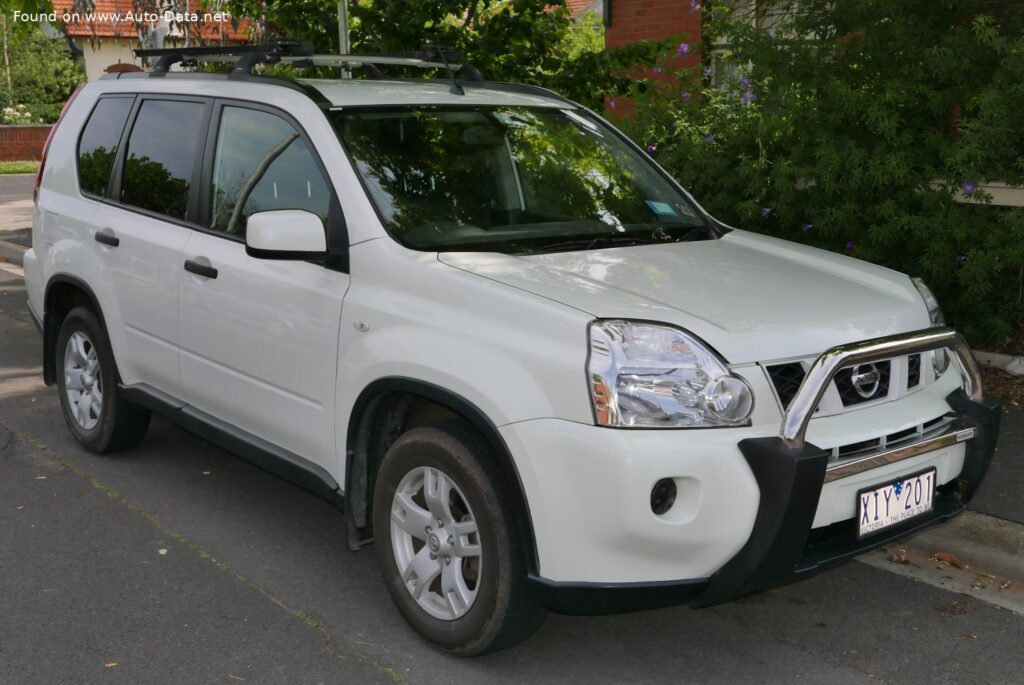
The Nissan X-Trail II (T31), produced from 2007 to 2008, represents the second generation of Nissan’s compact SUV. While not initially a major seller in the United States – the X-Trail was not officially offered in the US market during this generation – it was a significant vehicle in Europe, Australia, and Asia. Positioned as a competitor to vehicles like the Honda CR-V and Toyota RAV4, the T31 X-Trail offered a blend of practicality, available all-wheel drive, and a focus on family-oriented features. This article details the 2.0i 16V (141 Hp) 4×4 CVT variant, outlining its technical specifications and characteristics.
Nissan X-Trail II (T31): Overview
The T31 X-Trail built upon the success of the first-generation model, offering improved refinement, interior space, and a more modern design. It was designed to appeal to buyers seeking a versatile vehicle capable of handling both urban commutes and weekend adventures. The 2.0-liter engine option, paired with a Continuously Variable Transmission (CVT) and all-wheel drive, was a popular configuration in many markets, offering a balance between fuel efficiency and capability. The X-Trail’s key selling points included its spacious interior, comfortable ride, and available four-wheel drive system, making it a practical choice for families and individuals alike.
Engine & Performance
The 2.0i 16V variant of the X-Trail II is powered by the MR20DE engine, a 1.998-liter (121.93 cubic inches) inline-four cylinder gasoline engine. This naturally aspirated engine produces 141 horsepower at 6000 rpm and 196 Nm (144.56 lb-ft) of torque at 4800 rpm. The engine features multi-port fuel injection and a double overhead camshaft (DOHC) valvetrain with four valves per cylinder. Power delivery is managed through a CVT, offering smooth and stepless acceleration. While not a performance-oriented vehicle, the X-Trail 2.0i 4×4 achieves a 0-100 km/h (0-62 mph) time of 11.9 seconds and a top speed of 172 km/h (106.88 mph). The weight-to-power ratio is 10.7 kg/Hp, and the weight-to-torque ratio is 7.7 kg/Nm. Fuel economy is rated at 8.5 l/100 km (27.7 US mpg) combined, with 10.8 l/100 km (21.8 US mpg) in urban conditions and 7.2 l/100 km (32.7 US mpg) on the extra-urban cycle. CO2 emissions are rated at 204 g/km, meeting Euro 4 emission standards.
Design & Features
The Nissan X-Trail II (T31) is a five-door SUV with a five-seat configuration. Its design emphasizes practicality and a rugged aesthetic. The body features a relatively high ground clearance of 200 mm (7.87 inches), enhancing its off-road capability. The interior is designed with family use in mind, offering a spacious cabin and a versatile cargo area. Trunk space ranges from a minimum of 603 liters (21.29 cubic feet) to a maximum of 1742 liters (61.52 cubic feet) with the rear seats folded down. Standard features included ABS (Anti-lock Braking System) and electric power steering. The X-Trail’s suspension utilizes an independent McPherson strut setup at the front and an independent multi-link setup at the rear, providing a comfortable ride. Approach, departure, and ramp-over angles are 29.0°, 23.0°, and 20.0° respectively, aiding in off-road traversal. The vehicle also boasts a wading depth of 450 mm (17.72 inches).
Technical Specifications
| Brand | Nissan |
| Model | X-Trail |
| Generation | X-Trail II (T31) |
| Type (Engine) | 2.0i 16V (141 Hp) 4×4 CVT |
| Start of production | 2007 |
| End of production | 2008 |
| Powertrain Architecture | Internal Combustion engine |
| Body type | SUV |
| Seats | 5 |
| Doors | 5 |
| Fuel consumption (urban) | 10.8 l/100 km (21.8 US mpg) |
| Fuel consumption (extra urban) | 7.2 l/100 km (32.7 US mpg) |
| Fuel consumption (combined) | 8.5 l/100 km (27.7 US mpg) |
| CO2 emissions | 204 g/km |
| Fuel Type | Petrol (Gasoline) |
| Acceleration 0 – 100 km/h | 11.9 sec |
| Acceleration 0 – 62 mph | 11.9 sec |
| Acceleration 0 – 60 mph | 11.3 sec |
| Maximum speed | 172 km/h (106.88 mph) |
| Emission standard | Euro 4 |
| Weight-to-power ratio | 10.7 kg/Hp |
| Weight-to-torque ratio | 7.7 kg/Nm |
| Power | 141 Hp @ 6000 rpm |
| Torque | 196 Nm @ 4800 rpm (144.56 lb.-ft. @ 4800 rpm) |
| Engine layout | Front, Transverse |
| Engine Model/Code | MR20DE |
| Engine displacement | 1998 cm3 (121.93 cu. in.) |
| Number of cylinders | 4 |
| Engine configuration | Inline |
| Cylinder Bore | 84 mm (3.31 in.) |
| Piston Stroke | 90 mm (3.54 in.) |
| Compression ratio | 10:1 |
| Number of valves per cylinder | 4 |
| Fuel injection system | Multi-port manifold injection |
| Engine aspiration | Naturally aspirated engine |
| Valvetrain | DOHC |
| Engine oil capacity | 4.4 l (4.65 US qt | 3.87 UK qt) |
| Coolant | 7.4 l (7.82 US qt | 6.51 UK qt) |
| Kerb Weight | 1514 kg (3337.8 lbs.) |
| Max. weight | 2050 kg (4519.48 lbs.) |
| Max load | 536 kg (1181.68 lbs.) |
| Trunk (boot) space – minimum | 603 l (21.29 cu. ft.) |
| Trunk (boot) space – maximum | 1742 l (61.52 cu. ft.) |
| Fuel tank capacity | 65 l (17.17 US gal | 14.3 UK gal) |
| Max. roof load | 100 kg (220.46 lbs.) |
| Permitted trailer load with brakes (12%) | 1300 kg (2866.01 lbs.) |
| Permitted trailer load without brakes | 750 kg (1653.47 lbs.) |
| Permitted towbar download | 75 kg (165.35 lbs.) |
| Length | 4630 mm (182.28 in.) |
| Width | 1785 mm (70.28 in.) |
| Height | 1685 mm (66.34 in.) |
| Wheelbase | 2630 mm (103.54 in.) |
| Front track | 1530 mm (60.24 in.) |
| Rear (Back) track | 1535 mm (60.43 in.) |
| Ride height (ground clearance) | 200 mm (7.87 in.) |
| Minimum turning circle (turning diameter) | 10.8 m (35.43 ft.) |
| Drive wheel | All wheel drive (4×4) |
| Number of gears and type of gearbox | 1 gears, automatic transmission CVT |
| Front suspension | Independent, type McPherson with coil spring and anti-roll bar |
| Rear suspension | Independent multi-link spring suspension with stabilizer |
| Front brakes | Ventilated discs |
| Rear brakes | Disc |
| Steering type | Steering rack and pinion |
| Power steering | Electric Steering |
| Tires size | 215/60 R17 |
| Wheel rims size | 17 |
The Nissan X-Trail II (T31) 2.0i 16V 4×4 CVT, while not a high-performance vehicle, offered a practical and versatile option for buyers seeking a capable and comfortable compact SUV. Its blend of fuel efficiency, all-wheel drive capability, and spacious interior made it a popular choice in its target markets.