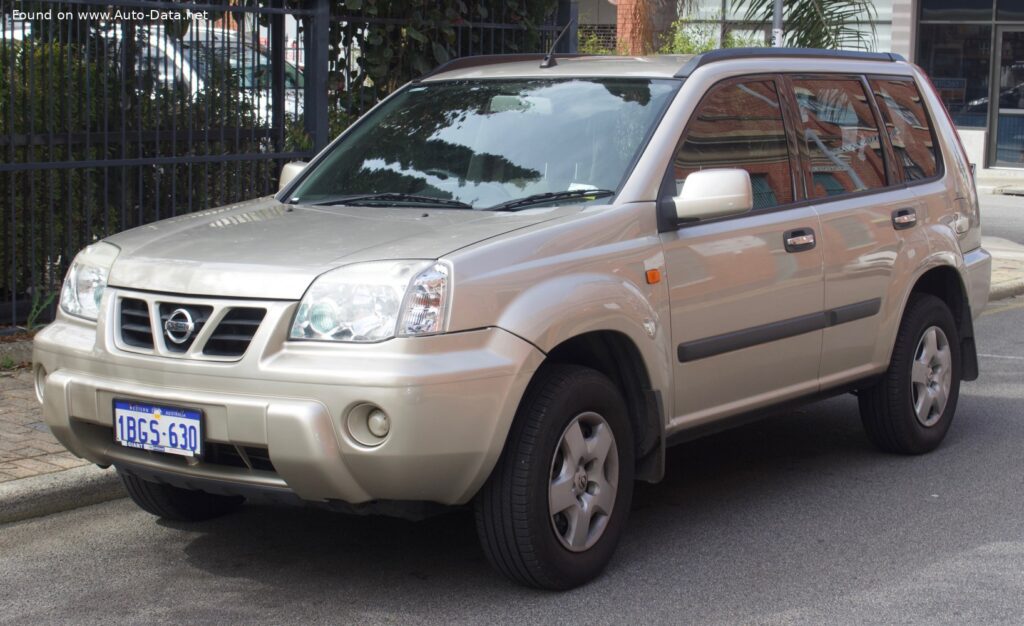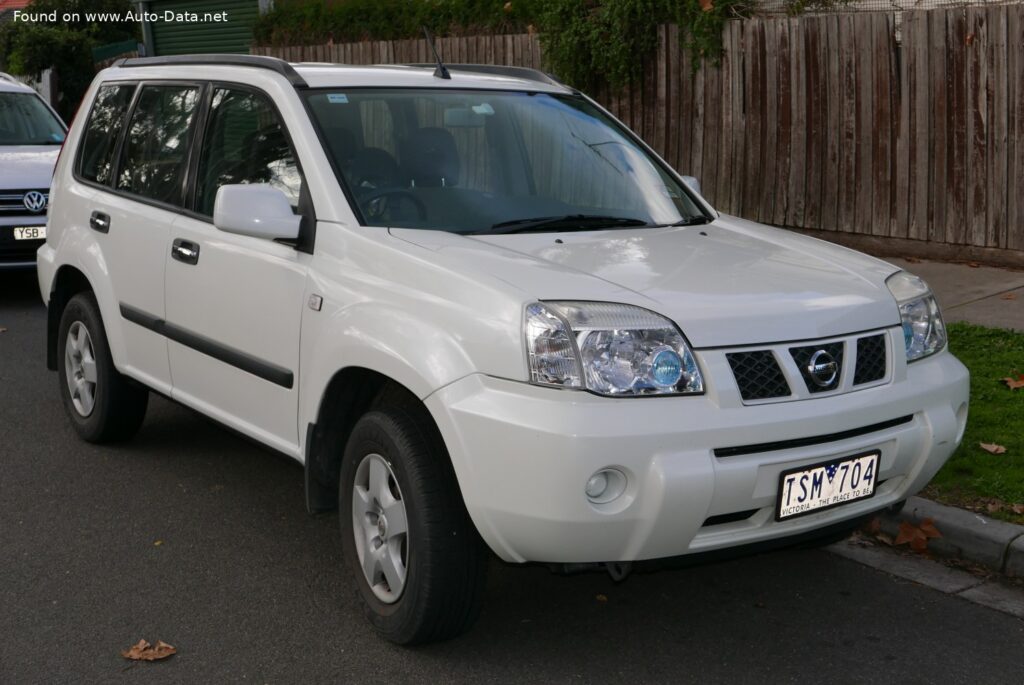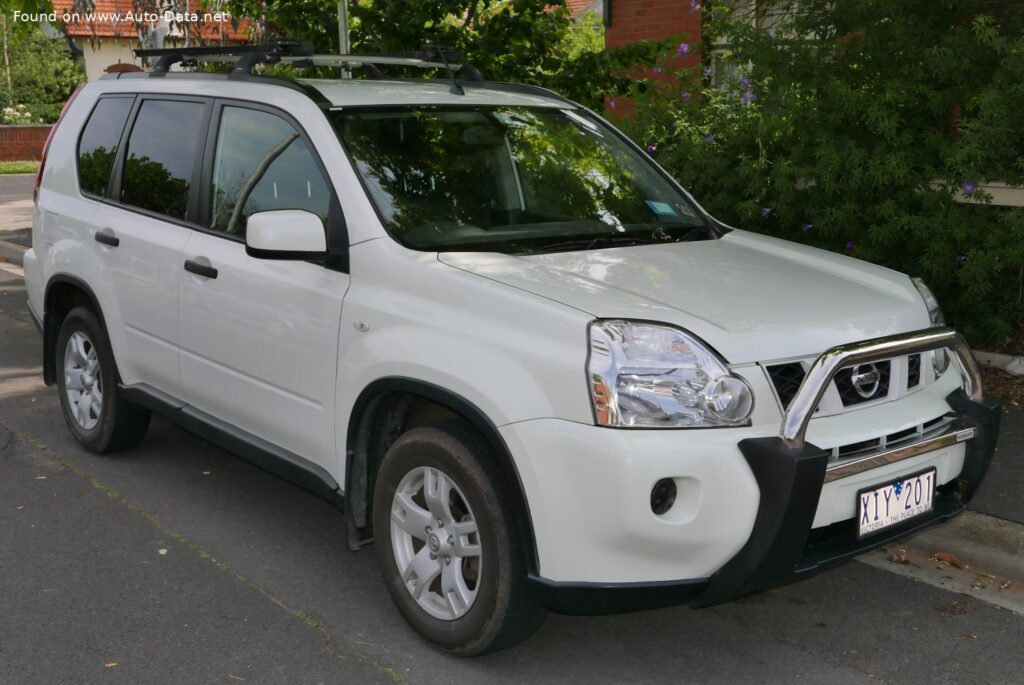
The Nissan X-Trail II (T31), produced between 2007 and 2010, represents the second generation of Nissan’s compact SUV. Designed primarily for the European market, the X-Trail T31 offered a blend of practicality, off-road capability, and family-friendly features. While not initially a major seller in the United States (Nissan’s US lineup focused on other SUV models during this period), the X-Trail II gained recognition for its robust build quality and available all-wheel-drive system. This generation marked a significant step forward in terms of refinement and technology compared to its predecessor, aiming to compete with established players like the Honda CR-V and Toyota RAV4 in the European market.
Nissan X-Trail II (T31) 2.5i 16V: An Overview
The T31 generation X-Trail was a five-door SUV available with a range of engine options, varying by market. The 2.5i 16V model, equipped with the QR25DE engine, was a popular choice, offering a balance of performance and fuel economy. This model specifically delivered 169 horsepower and 171.85 lb-ft of torque, coupled with a six-speed manual transmission and Nissan’s ALLMODE 4×4 system. The X-Trail II aimed to provide a versatile vehicle suitable for both urban commuting and light off-road adventures.
Engine & Performance
The heart of the X-Trail II 2.5i 16V is the QR25DE 2.5-liter inline-four cylinder engine. This naturally aspirated engine produces 169 horsepower at 6000 rpm and 233 Nm (171.85 lb-ft) of torque at 4400 rpm. The engine features multi-port fuel injection and a double overhead camshaft (DOHC) valvetrain, contributing to its relatively smooth operation. Acceleration from 0 to 100 km/h (0-62 mph) takes 9.8 seconds, while 0-60 mph is achieved in approximately 9.3 seconds. The top speed is rated at 194 km/h (120.55 mph). Fuel economy is rated at 9.6 liters per 100 kilometers combined (24.5 US mpg, 29.4 UK mpg), with urban consumption at 13 l/100 km (18.1 US mpg) and extra-urban at 7.7 l/100 km (30.5 US mpg). The engine’s power-to-weight ratio is 8.7 kg/Hp, and the torque-to-weight ratio is 6.3 kg/Nm.
Design & Features
The Nissan X-Trail II (T31) boasts a practical and functional design. Its five-door SUV body style provides ample space for passengers and cargo. The interior is designed with family use in mind, offering comfortable seating for five occupants. Key features include a spacious trunk with a minimum capacity of 603 liters (21.29 cu. ft.) which expands to 1742 liters (61.52 cu. ft.) with the rear seats folded down. The vehicle’s dimensions are 4630 mm (182.28 in) in length, 1785 mm (70.28 in) in width, and 1685 mm (66.34 in) in height. Ground clearance is a respectable 200 mm (7.87 in), enhancing its off-road capability. Safety features, typical for vehicles of this era, include ABS (Anti-lock Braking System). The X-Trail II’s design prioritized practicality and durability over outright luxury, making it a reliable and versatile choice for everyday use.
Technical Specifications
| Brand | Nissan |
| Model | X-Trail |
| Generation | X-Trail II (T31) |
| Type (Engine) | 2.5i 16V (169 Hp) 4×4 |
| Start of production | 2007 |
| End of production | 2010 |
| Powertrain Architecture | Internal Combustion engine |
| Body type | SUV |
| Seats | 5 |
| Doors | 5 |
| Fuel consumption (urban) | 13 l/100 km (18.1 US mpg, 21.7 UK mpg) |
| Fuel consumption (extra urban) | 7.7 l/100 km (30.5 US mpg, 36.7 UK mpg) |
| Fuel consumption (combined) | 9.6 l/100 km (24.5 US mpg, 29.4 UK mpg) |
| CO2 emissions | 230 g/km |
| Fuel Type | Petrol (Gasoline) |
| Acceleration 0 – 100 km/h | 9.8 sec |
| Acceleration 0 – 62 mph | 9.8 sec |
| Acceleration 0 – 60 mph | 9.3 sec |
| Maximum speed | 194 km/h (120.55 mph) |
| Emission standard | Euro 4 |
| Weight-to-power ratio | 8.7 kg/Hp |
| Weight-to-torque ratio | 6.3 kg/Nm |
| Power | 169 Hp @ 6000 rpm |
| Torque | 233 Nm @ 4400 rpm (171.85 lb.-ft. @ 4400 rpm) |
| Engine layout | Front, Transverse |
| Engine Model/Code | QR25DE |
| Engine displacement | 2488 cm3 (151.83 cu. in.) |
| Number of cylinders | 4 |
| Engine configuration | Inline |
| Cylinder Bore | 89 mm (3.5 in.) |
| Piston Stroke | 100 mm (3.94 in.) |
| Compression ratio | 9.5:1 |
| Number of valves per cylinder | 4 |
| Fuel injection system | Multi-port manifold injection |
| Engine aspiration | Naturally aspirated engine |
| Valvetrain | DOHC |
| Engine oil capacity | 5.1 l (5.39 US qt | 4.49 UK qt) |
| Coolant | 6.8 l (7.19 US qt | 5.98 UK qt) |
| Kerb Weight | 1469 kg (3238.59 lbs.) |
| Max. weight | 2050 kg (4519.48 lbs.) |
| Max load | 581 kg (1280.89 lbs.) |
| Trunk (boot) space – minimum | 603 l (21.29 cu. ft.) |
| Trunk (boot) space – maximum | 1742 l (61.52 cu. ft.) |
| Fuel tank capacity | 65 l (17.17 US gal | 14.3 UK gal) |
| Max. roof load | 100 kg (220.46 lbs.) |
| Permitted trailer load with brakes (12%) | 2000 kg (4409.25 lbs.) |
| Permitted trailer load without brakes | 750 kg (1653.47 lbs.) |
| Permitted towbar download | 100 kg (220.46 lbs.) |
| Length | 4630 mm (182.28 in.) |
| Width | 1785 mm (70.28 in.) |
| Height | 1685 mm (66.34 in.) |
| Wheelbase | 2630 mm (103.54 in.) |
| Front track | 1530 mm (60.24 in.) |
| Rear (Back) track | 1535 mm (60.43 in.) |
| Ride height (ground clearance) | 200 mm (7.87 in.) |
| Minimum turning circle (turning diameter) | 10.8 m (35.43 ft.) |
| Approach angle | 29.0° |
| Departure angle | 23.0° |
| Ramp-over (brakeover) angle | 20.0° |
| Wading depth | 450 mm (17.72 in.) |
| Drive wheel | All wheel drive (4×4) |
| Number of gears and type of gearbox | 6 gears, manual transmission |
| Front suspension | Independent, type McPherson with coil spring and anti-roll bar |
| Rear suspension | Independent multi-link spring suspension with stabilizer |
| Front brakes | Ventilated discs |
| Rear brakes | Disc |
| Assisting systems | ABS (Anti-lock braking system) |
| Steering type | Steering rack and pinion |
| Power steering | Electric Steering |
| Tires size | 215/65 R17 |
| Wheel rims size | 17 |