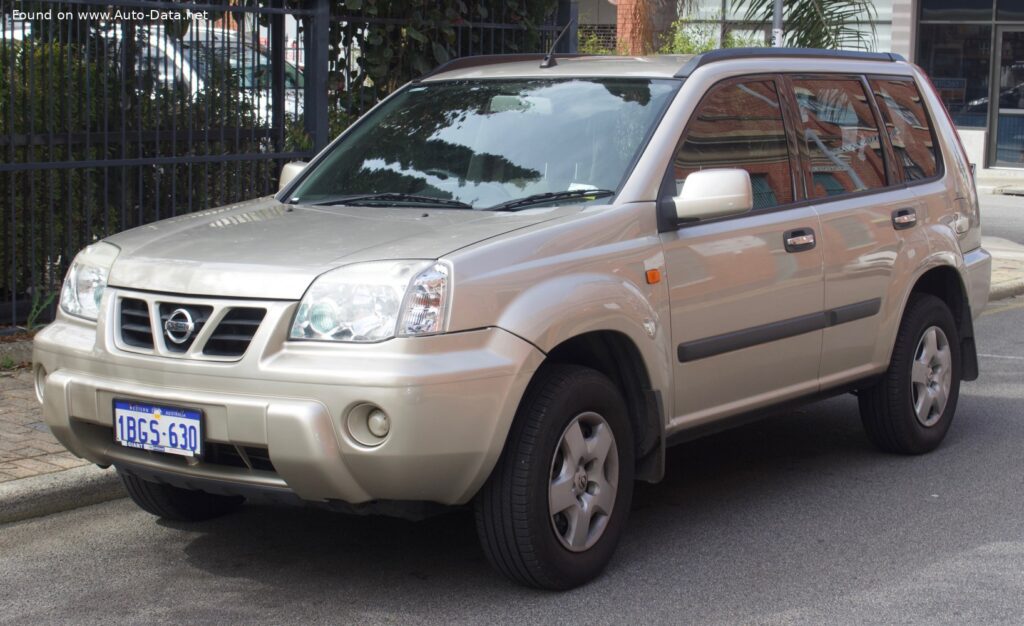
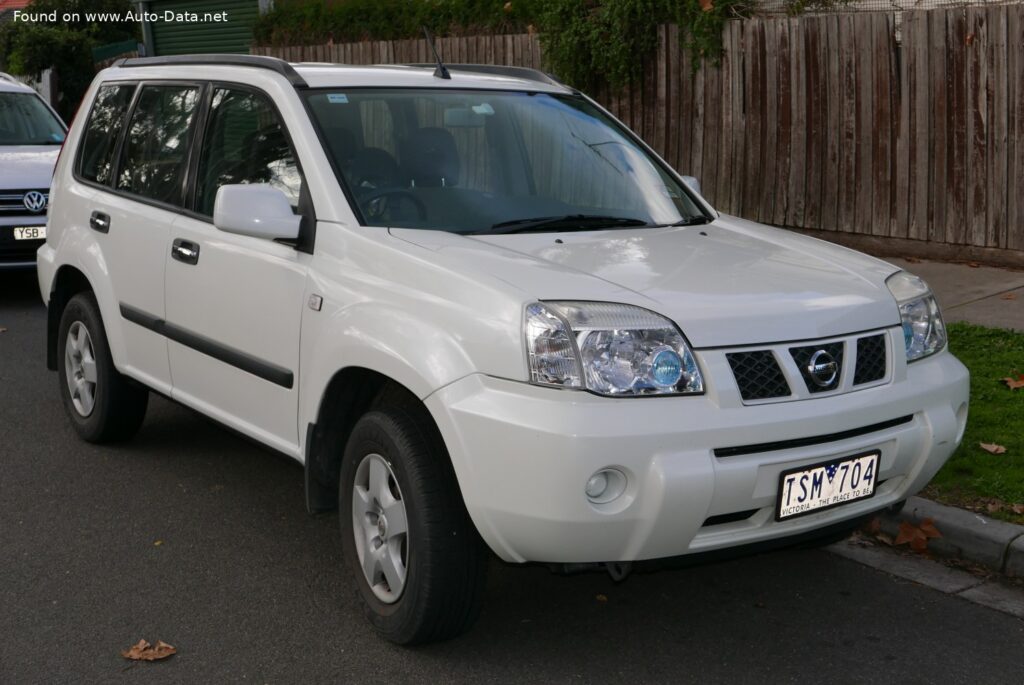
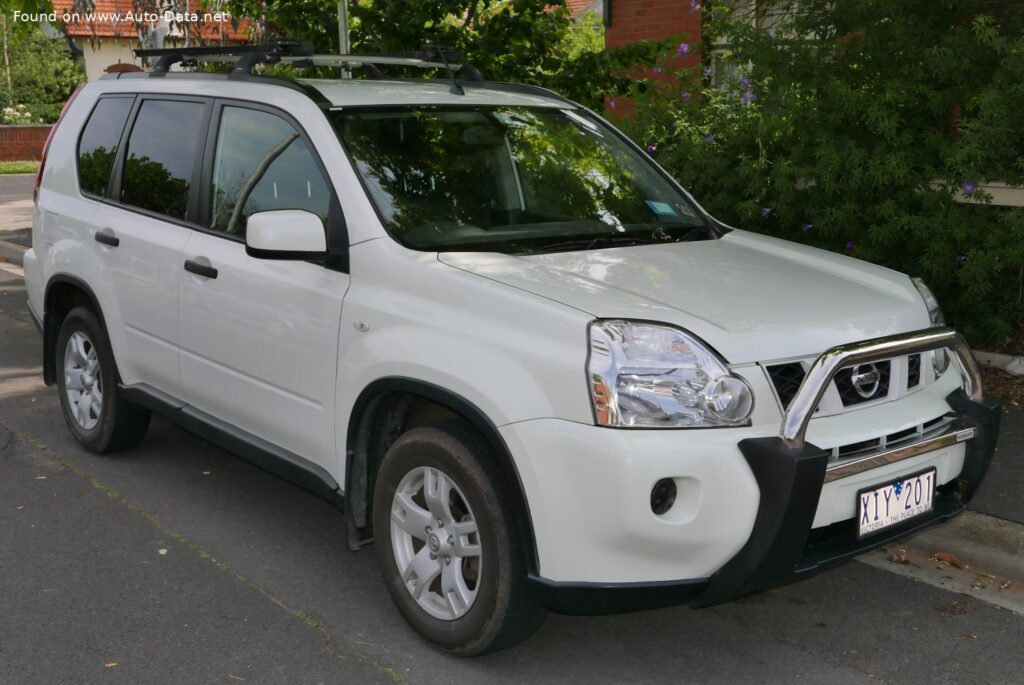
The Nissan X-Trail III (T32), produced from 2015 to 2017, represents the third generation of Nissan’s popular compact SUV. This generation marked a significant evolution in design and technology for the X-Trail, aiming to broaden its appeal in the highly competitive European and global SUV markets. While not initially a major seller in the United States (Nissan discontinued X-Trail sales in the US after the first generation), the T32 X-Trail was a key model for Nissan in Europe, Australia, and parts of Asia, offering a practical and versatile option for families. The 1.6 dCi variant, equipped with a 130 horsepower diesel engine and offering seven-seat configuration, was a popular choice for those prioritizing fuel efficiency and passenger capacity.
Nissan X-Trail III (T32) 1.6 dCi: Overview
The T32 X-Trail aimed to address criticisms of the previous generation by offering a more refined driving experience, improved interior quality, and a wider range of technology features. It built upon the X-Trail’s reputation for practicality and robustness, while incorporating modern design cues and a focus on fuel economy. The 1.6 dCi engine was a key component of this strategy, providing a balance between performance and efficiency, particularly appealing to European buyers facing higher fuel costs and stricter emissions regulations. The availability of a seven-seat option further enhanced its practicality for larger families.
Engine & Performance
The heart of the X-Trail III 1.6 dCi is a 1.6-liter inline-four cylinder diesel engine, designated the R9M. This engine produces 130 horsepower at 4000 rpm and 320 Nm (236.02 lb.-ft.) of torque at 1750 rpm. The engine utilizes a turbocharger with an intercooler and a diesel commonrail fuel injection system to optimize performance and fuel efficiency. Power is delivered to the front wheels via a six-speed manual transmission. Acceleration from 0 to 100 km/h (0-62 mph) takes 10.5 seconds, with a top speed of 188 km/h (116.82 mph). The engine’s relatively high torque output at low engine speeds contributes to its usability in everyday driving conditions. The weight-to-power ratio is 11.9 kg/Hp, and the weight-to-torque ratio is 4.8 kg/Nm, indicating a reasonable balance between engine output and vehicle mass. This engine meets Euro 6 emission standards.
Design & Features
The Nissan X-Trail III (T32) features a contemporary SUV design, characterized by its bold front grille, sculpted body lines, and distinctive C-pillar treatment. The vehicle is a five-door SUV with the option of seven seats, providing flexible passenger and cargo space. The interior of the T32 X-Trail represents a step up in quality compared to its predecessor, with improved materials and a more modern dashboard layout. Key features included air conditioning, power windows, central locking, and an audio system. Higher trim levels offered features such as navigation, leather upholstery, and parking sensors. Safety features were also enhanced, including ABS (Anti-lock Braking System), and multiple airbags. The seven-seat configuration provides versatility for families, although the third-row seats are best suited for children or shorter adults. Trunk space varies from 135 liters (4.77 cu. ft.) with all seats in use to 1877 liters (66.29 cu. ft.) with the rear seats folded down.
Technical Specifications
| Brand | Nissan |
| Model | X-Trail |
| Generation | X-Trail III (T32) |
| Type (Engine) | 1.6 dCi (130 Hp) 7 Seat |
| Start of production | 2015 |
| End of production | 2017 |
| Powertrain Architecture | Internal Combustion engine |
| Body type | SUV |
| Seats | 7 |
| Doors | 5 |
| Fuel consumption (urban) | 5.7 – 5.8 l/100 km (41.3 – 40.6 US mpg) |
| Fuel consumption (extra urban) | 4.5 – 4.6 l/100 km (52.3 – 51.1 US mpg) |
| Fuel consumption (combined) | 4.9 – 5.1 l/100 km (48 – 46.1 US mpg) |
| CO2 emissions | 129 – 133 g/km |
| Fuel Type | Diesel |
| Acceleration 0 – 100 km/h | 10.5 sec |
| Acceleration 0 – 62 mph | 10.5 sec |
| Acceleration 0 – 60 mph | 10 sec |
| Maximum speed | 188 km/h (116.82 mph) |
| Emission standard | Euro 6 |
| Weight-to-power ratio | 11.9 kg/Hp |
| Weight-to-torque ratio | 4.8 kg/Nm |
| Power | 130 Hp @ 4000 rpm |
| Torque | 320 Nm @ 1750 rpm (236.02 lb.-ft. @ 1750 rpm) |
| Engine layout | Front, Transverse |
| Engine Model/Code | R9M |
| Engine displacement | 1598 cm3 (97.52 cu. in.) |
| Number of cylinders | 4 |
| Engine configuration | Inline |
| Cylinder Bore | 80 mm (3.15 in.) |
| Piston Stroke | 79.5 mm (3.13 in.) |
| Number of valves per cylinder | 4 |
| Fuel injection system | Diesel Commonrail |
| Engine aspiration | Turbocharger, Intercooler |
| Engine oil capacity | 5.5 l (5.81 US qt | 4.84 UK qt) |
| Coolant | 7.9 l (8.35 US qt | 6.95 UK qt) |
| Kerb Weight | 1550-1695 kg (3417.17 – 3736.84 lbs.) |
| Max. weight | 2310 kg (5092.68 lbs.) |
| Max load | 615-760 kg (1355.84 – 1675.51 lbs.) |
| Trunk (boot) space – minimum | 135 l (4.77 cu. ft.) |
| Trunk (boot) space – maximum | 1877 l (66.29 cu. ft.) |
| Fuel tank capacity | 60 l (15.85 US gal | 13.2 UK gal) |
| Max. roof load | 100 kg (220.46 lbs.) |
| Permitted trailer load with brakes (12%) | 2000 kg (4409.25 lbs.) |
| Permitted trailer load without brakes | 750 kg (1653.47 lbs.) |
| Permitted towbar download | 100 kg (220.46 lbs.) |
| Length | 4640 mm (182.68 in.) |
| Width | 1820 mm (71.65 in.) |
| Height | 1715 mm (67.52 in.) |
| Wheelbase | 2705 mm (106.5 in.) |
| Front track | 1575-1585 mm (62.01 – 62.4 in.) |
| Rear (Back) track | 1575-1585 mm (62.01 – 62.4 in.) |
| Ride height (ground clearance) | 210 mm (8.27 in.) |
| Minimum turning circle (turning diameter) | 11.2 m (36.75 ft.) |
| Drivetrain Architecture | Front wheel drive |
| Number of gears and type of gearbox | 6 gears, manual transmission |
| Front suspension | Independent type McPherson |
| Rear suspension | Independent multi-link suspension |
| Front brakes | Ventilated discs |
| Rear brakes | Disc |
| Tires size | 225/65 R17; 225/55 R19 |
| Wheel rims size | 7.0J x 17; 7.0J x 19 |
The Nissan X-Trail III (T32) 1.6 dCi offered a compelling package for buyers seeking a practical, fuel-efficient, and versatile SUV. While not sold in the US market, it was a significant model for Nissan in other parts of the world, representing a step forward in design, technology, and overall refinement.