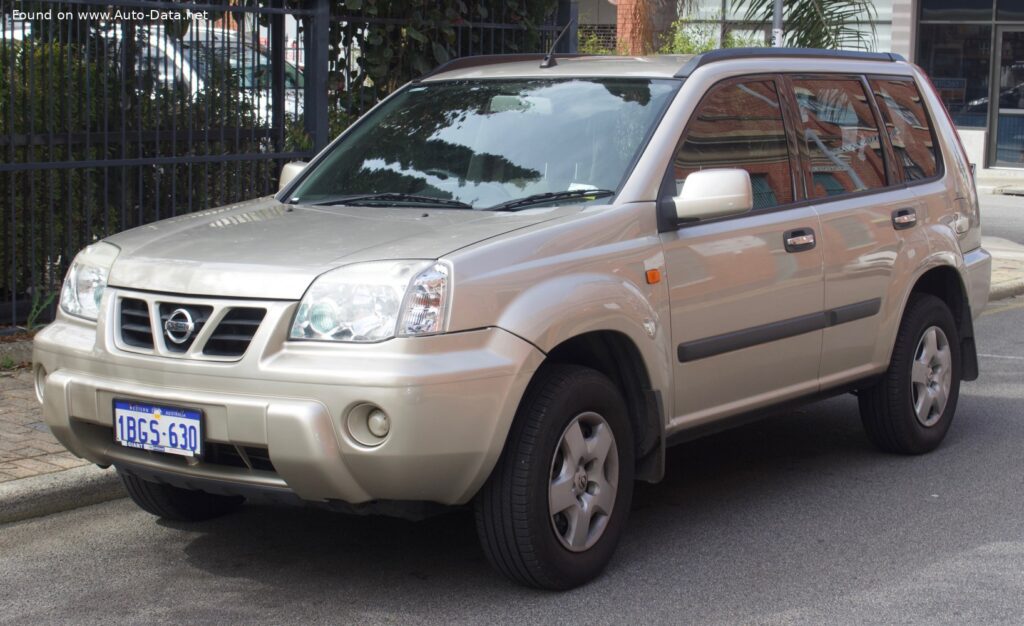
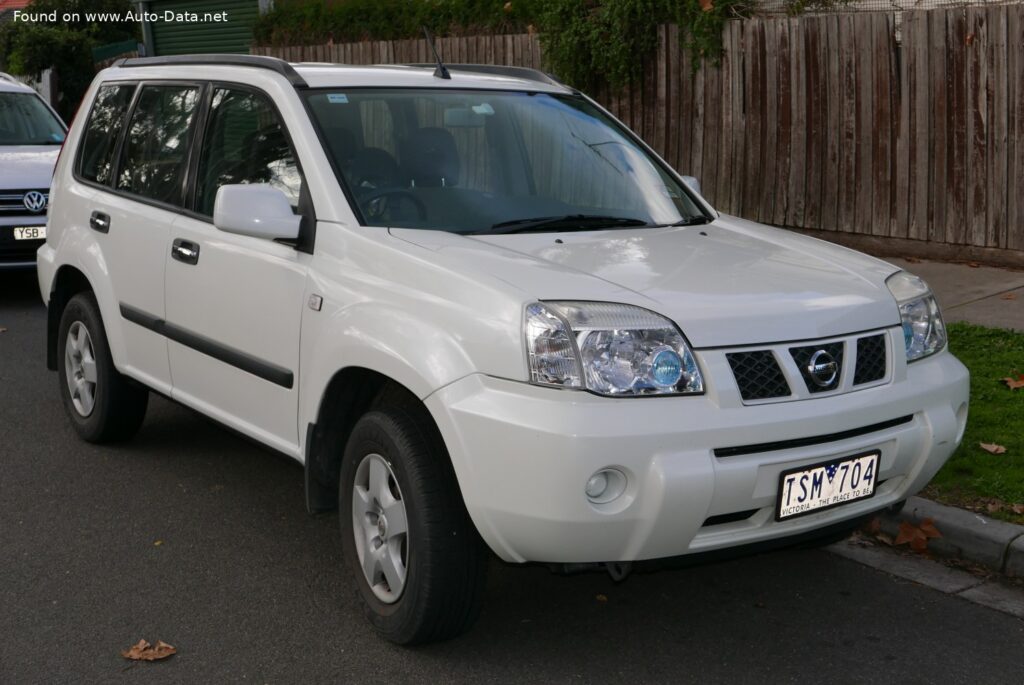
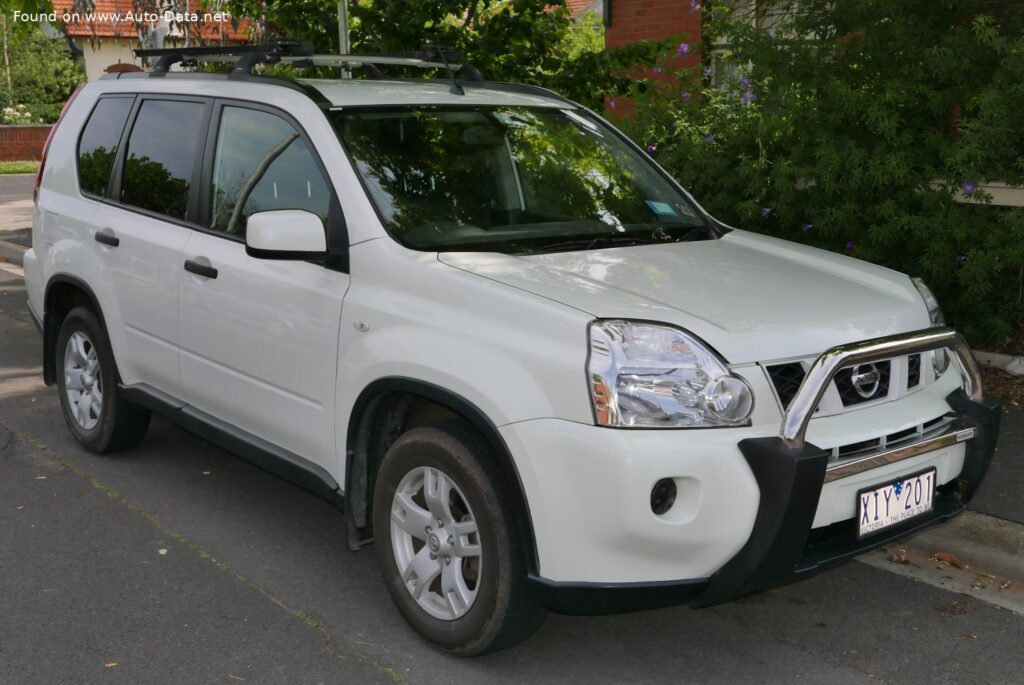
The Nissan X-Trail III (T32), produced from 2016 to 2017, represents the third generation of Nissan’s popular compact SUV. Positioned as a family-focused vehicle, the T32 X-Trail offered a compelling blend of practicality, space, and available all-wheel drive. While not initially a major seller in the United States – Nissan primarily offered the Rogue as its compact SUV in the North American market – the X-Trail was a significant model in Europe, Asia, and other international markets. This generation marked a substantial evolution in design and technology compared to its predecessors, focusing on improved fuel efficiency and enhanced passenger comfort. The 2.0 dCi variant, equipped with a 177 horsepower diesel engine and four-wheel drive, was a popular choice for buyers needing both performance and economy.
Nissan X-Trail III (T32) 2.0 dCi: An Overview
The T32 X-Trail aimed to provide a versatile vehicle capable of handling both urban commutes and weekend adventures. Its key selling points included available seven-passenger seating, a spacious interior, and Nissan’s ALL-MODE 4×4 system. The 2.0 dCi engine was designed to meet increasingly stringent European emission standards while delivering adequate power for everyday driving and towing. The X-Trail competed with other compact SUVs like the Kia Sportage, Hyundai Tucson, and Volkswagen Tiguan, offering a distinct Nissan styling and a reputation for reliability.
Engine & Performance
The heart of the X-Trail III 2.0 dCi is a 1995cc (121.74 cu. in.) inline-four cylinder diesel engine, designated the M9R. This engine produces 177 horsepower at 3750 rpm and a substantial 380 Nm (280.27 lb.-ft.) of torque at 2000 rpm. The engine utilizes a diesel commonrail fuel injection system and is equipped with a turbocharger and intercooler to optimize performance and efficiency. Power is delivered to all four wheels via a six-speed manual transmission, providing a balance between driver control and fuel economy. Acceleration from 0 to 100 km/h (0-62 mph) takes 9.4 seconds, while 0-60 mph is achieved in approximately 8.9 seconds. The vehicle boasts a maximum speed of 204 km/h (126.76 mph). The engine’s power-to-weight ratio is 8.7 kg/Hp, and its torque-to-weight ratio is 4.1 kg/Nm, contributing to a responsive driving experience.
Design & Features
The Nissan X-Trail III (T32) features a modern SUV body style with a five-door configuration and the option of seven seats. Its exterior design is characterized by bold lines, a prominent front grille, and distinctive headlights. The interior prioritizes practicality and comfort, with a focus on maximizing space for passengers and cargo. The available seven-seat configuration provides flexibility for families, while the rear seats can be folded down to create a larger cargo area. The trunk offers 135 liters (4.77 cu. ft.) of space with all seats in place, expanding to a generous 1877 liters (66.29 cu. ft.) with the rear seats folded. Safety features include ABS (Anti-lock Braking System) and a robust chassis designed to protect occupants in the event of a collision. Other notable features include electric power steering, independent suspension systems (McPherson struts at the front and a multi-link setup at the rear), and a range of available technology options depending on the trim level.
Technical Specifications
| Brand | Nissan |
| Model | X-Trail |
| Generation | X-Trail III (T32) |
| Type | 2.0 dCi (177 Hp) 4×4 7 Seat |
| Start of production | 2016 |
| End of production | 2017 |
| Powertrain Architecture | Internal Combustion engine |
| Body type | SUV |
| Seats | 7 |
| Doors | 5 |
| Fuel consumption (urban) | 6.3-6.7 l/100 km (37.3 – 35.1 US mpg) |
| Fuel consumption (extra urban) | 5.3-5.2 l/100 km (44.4 – 45.2 US mpg) |
| Fuel consumption (combined) | 5.6-5.8 l/100 km (42 – 40.6 US mpg) |
| CO2 emissions | 149-153 g/km |
| Fuel Type | Diesel |
| Acceleration 0 – 100 km/h | 9.4 sec |
| Acceleration 0 – 62 mph | 9.4 sec |
| Acceleration 0 – 60 mph | 8.9 sec |
| Maximum speed | 204 km/h (126.76 mph) |
| Emission standard | Euro 6 |
| Weight-to-power ratio | 8.7 kg/Hp |
| Weight-to-torque ratio | 4.1 kg/Nm |
| Power | 177 Hp @ 3750 rpm |
| Torque | 380 Nm @ 2000 rpm (280.27 lb.-ft. @ 2000 rpm) |
| Engine layout | Front, Transverse |
| Engine Model/Code | M9R |
| Engine displacement | 1995 cm3 (121.74 cu. in.) |
| Number of cylinders | 4 |
| Engine configuration | Inline |
| Cylinder Bore | 84 mm (3.31 in.) |
| Piston Stroke | 90 mm (3.54 in.) |
| Number of valves per cylinder | 4 |
| Fuel injection system | Diesel Commonrail |
| Engine aspiration | Turbocharger, Intercooler |
| Valvetrain | DOHC |
| Engine oil capacity | 7.4 l (7.82 US qt | 6.51 UK qt) |
| Coolant | 7.7 l (8.14 US qt | 6.78 UK qt) |
| Kerb Weight | 1540-1600 kg (3395.12 – 3527.4 lbs.) |
| Max. weight | 2350 kg (5180.86 lbs.) |
| Max load | 750-810 kg (1653.47 – 1785.74 lbs.) |
| Trunk (boot) space – minimum | 135 l (4.77 cu. ft.) |
| Trunk (boot) space – maximum | 1877 l (66.29 cu. ft.) |
| Fuel tank capacity | 60 l (15.85 US gal | 13.2 UK gal) |
| Max. roof load | 100 kg (220.46 lbs.) |
| Permitted trailer load with brakes (12%) | 2000 kg (4409.25 lbs.) |
| Permitted trailer load without brakes | 750 kg (1653.47 lbs.) |
| Permitted towbar download | 100 kg (220.46 lbs.) |
| Length | 4640 mm (182.68 in.) |
| Width | 1820 mm (71.65 in.) |
| Height | 1715 mm (67.52 in.) |
| Wheelbase | 2705 mm (106.5 in.) |
| Front track | 1575-1585 mm (62.01 – 62.4 in.) |
| Rear (Back) track | 1575-1585 mm (62.01 – 62.4 in.) |
| Ride height (ground clearance) | 210 mm (8.27 in.) |
| Minimum turning circle (turning diameter) | 11.2 m (36.75 ft.) |
| Drivetrain Architecture | All wheel drive (4×4). ICE drives front wheels, rear wheels engaged via clutch. |
| Number of gears and type of gearbox | 6 gears, manual transmission |
| Front suspension | Independent type McPherson |
| Rear suspension | Independent multi-link suspension |
| Front brakes | Ventilated discs |
| Rear brakes | Disc |
| Tires size | 225/65 R17; 225/55 R19 |
| Wheel rims size | 7.0J x 17; 7.0J x 19 |