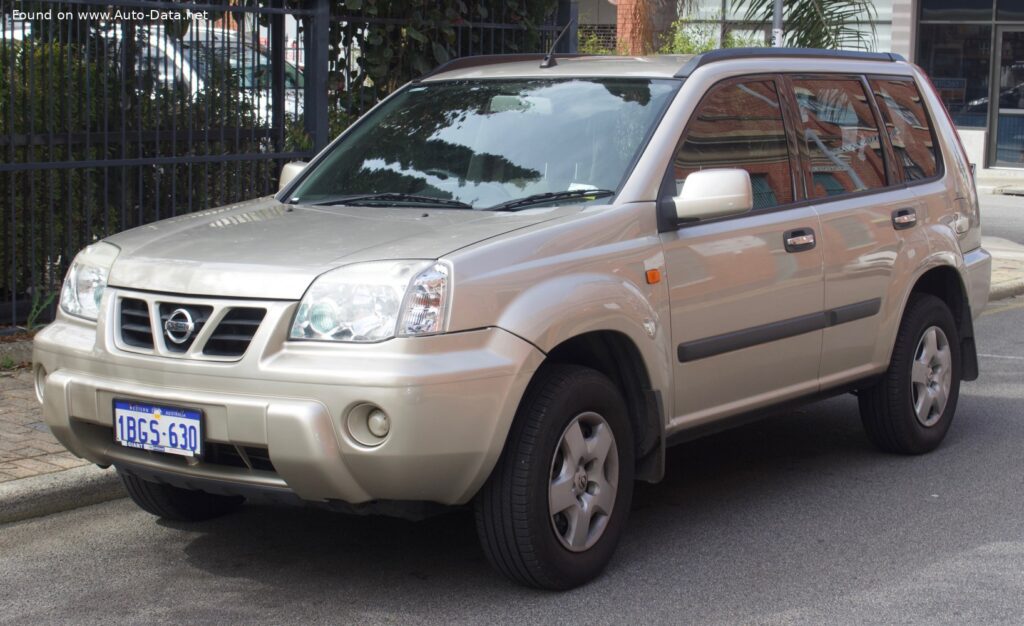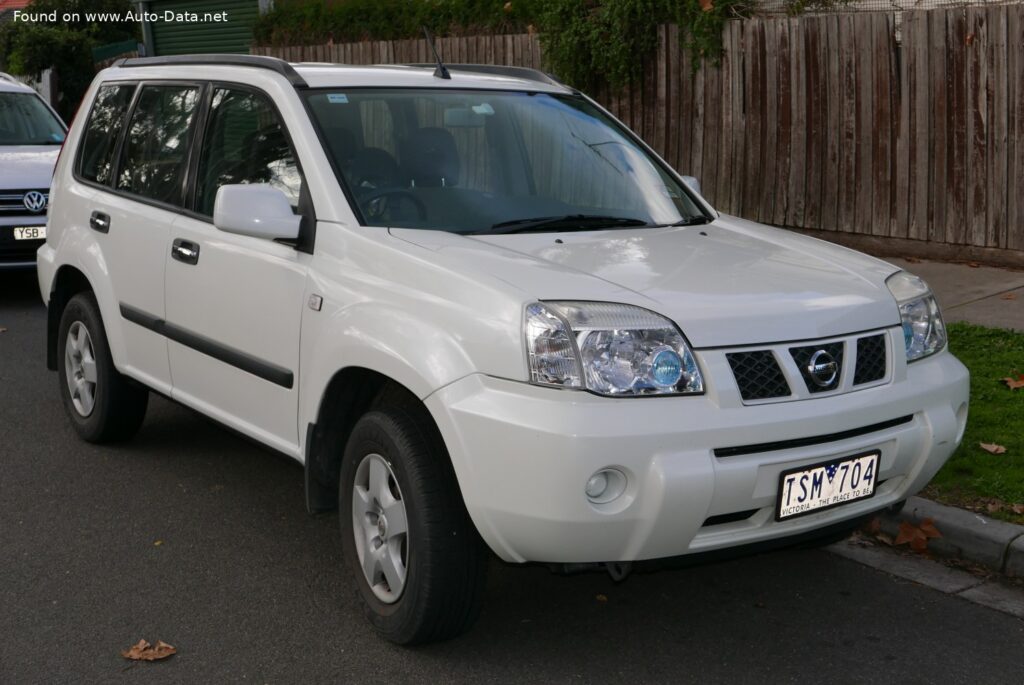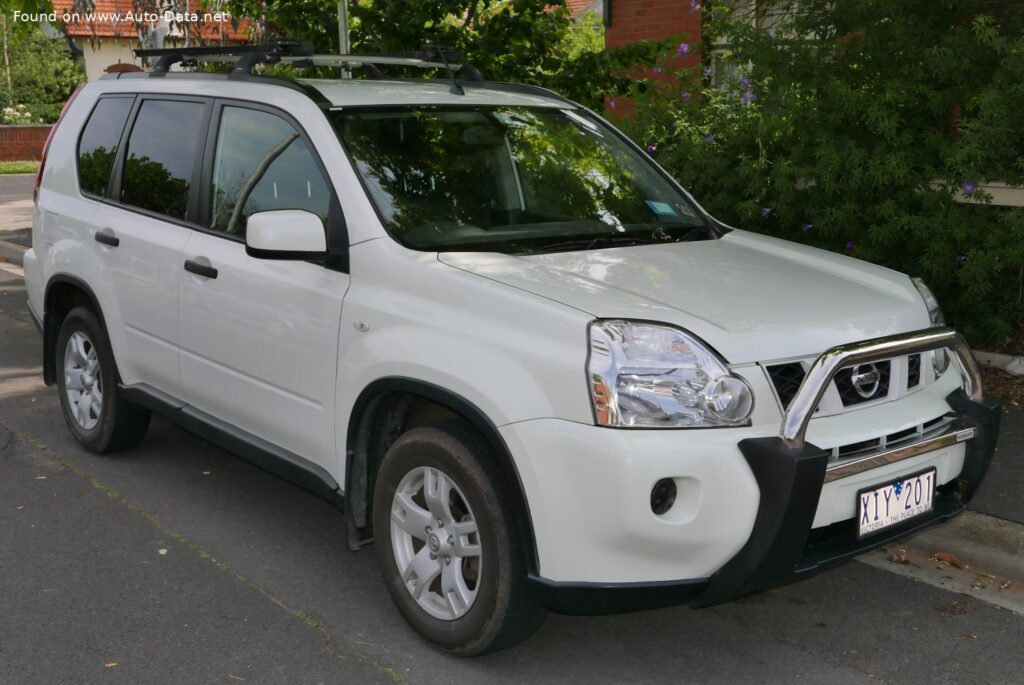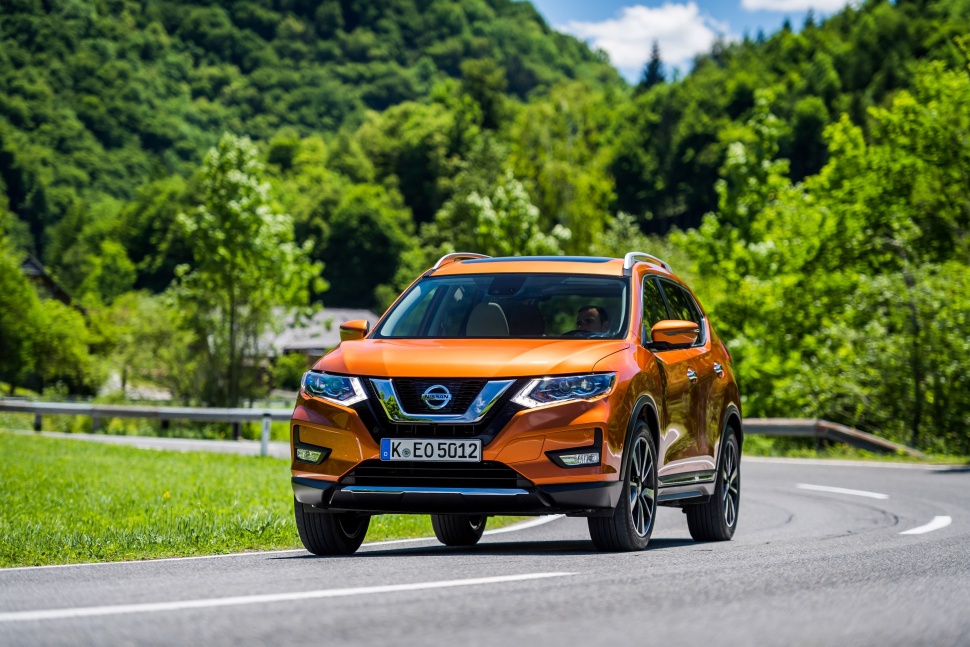
The Nissan X-Trail III (T32 series), particularly the facelifted version introduced in 2017, represents Nissan’s entry into the compact SUV segment. This generation, produced from 2019 to 2020, offered a practical and versatile vehicle, especially appealing to families. While not initially a major seller in the United States (Nissan discontinued X-Trail sales in the US in 2015), the X-Trail is a significant model in Europe, Asia, and other international markets, competing with vehicles like the Kia Sportage, Hyundai Tucson, and Volkswagen Tiguan. The 1.7 dCi variant, equipped with a seven-seat configuration, aimed to provide efficient diesel power combined with family-friendly space.
Nissan X-Trail III (T32, facelift 2017) 1.7 dCi: Overview
The T32 X-Trail, launched in 2014 and facelifted in 2017, marked a shift in Nissan’s SUV design language. The facelift brought updated styling, improved technology, and refined engine options. The 1.7 dCi engine was a key offering in many European markets, prized for its fuel efficiency and torque. The availability of a seven-seat layout further enhanced the X-Trail’s appeal to larger families, a feature less common in this class. This model year focused on balancing practicality, comfort, and running costs.
Engine & Performance
The heart of the X-Trail 1.7 dCi is a 1.7-liter inline-four cylinder diesel engine, designated the R9N. This engine produces 150 horsepower at 3500 rpm and 340 Nm (250.77 lb.-ft.) of torque at 1750 rpm. The engine utilizes a turbocharger with an intercooler and a diesel commonrail fuel injection system to optimize performance and efficiency. Power is delivered to the front wheels via a six-speed manual transmission. Acceleration from 0 to 100 km/h (0-62 mph) takes 10.7 seconds, while 0-60 mph is achieved in 10.2 seconds. The X-Trail 1.7 dCi boasts a maximum speed of 194 km/h (120.55 mph). The engine’s design prioritizes fuel economy, achieving combined fuel consumption figures between 5.2 and 5.4 liters per 100 kilometers (45.2 – 43.6 US mpg), and CO2 emissions ranging from 137 to 143 g/km, meeting Euro 6d-TEMP emission standards.
Design & Features
The Nissan X-Trail III (T32) is a five-door SUV offering seating for up to seven passengers. The body style is characterized by its robust appearance, with sculpted lines and a prominent front grille. The facelifted model features revised headlights, a redesigned bumper, and updated interior trim. The seven-seat configuration provides flexibility for families, although the third-row seats are best suited for children or shorter journeys. Interior features include a comfortable cabin with ample storage space, a user-friendly infotainment system, and a range of safety technologies. Standard safety equipment typically includes ABS (Anti-lock Braking System), electronic stability control, and multiple airbags. The X-Trail also offers a generous trunk space, ranging from 135 liters (4.77 cu. ft.) with all seats in place to 1877 liters (66.29 cu. ft.) with the rear seats folded down. Practicality is a key focus, with features like a split-folding rear seat and a relatively high ride height (210 mm / 8.27 in) for improved visibility and off-road capability.
Technical Specifications
| Brand | Nissan |
| Model | X-Trail |
| Generation | X-Trail III (T32, facelift 2017) |
| Type (Engine) | 1.7 dCi (150 Hp) 7 Seat |
| Start of production | January, 2019 |
| End of production | December, 2020 |
| Powertrain Architecture | Internal Combustion engine |
| Body type | SUV |
| Seats | 7 |
| Doors | 5 |
| Fuel consumption (urban) | 5.9-6.3 l/100 km (39.9 – 37.3 US mpg) |
| Fuel consumption (extra urban) | 4.8-4.9 l/100 km (49 – 48 US mpg) |
| Fuel consumption (combined) | 5.2-5.4 l/100 km (45.2 – 43.6 US mpg) |
| CO2 emissions | 137-143 g/km |
| Fuel Type | Diesel |
| Acceleration 0 – 100 km/h | 10.7 sec |
| Acceleration 0 – 62 mph | 10.7 sec |
| Acceleration 0 – 60 mph | 10.2 sec |
| Maximum speed | 194 km/h (120.55 mph) |
| Emission standard | Euro 6d-TEMP |
| Weight-to-power ratio | 11.3 kg/Hp |
| Weight-to-torque ratio | 5 kg/Nm |
| Power | 150 Hp @ 3500 rpm |
| Torque | 340 Nm @ 1750 rpm (250.77 lb.-ft. @ 1750 rpm) |
| Engine layout | Front, Transverse |
| Engine Model/Code | R9N |
| Engine displacement | 1749 cm3 (106.73 cu. in.) |
| Number of cylinders | 4 |
| Engine configuration | Inline |
| Cylinder Bore | 80 mm (3.15 in.) |
| Piston Stroke | 87 mm (3.43 in.) |
| Number of valves per cylinder | 4 |
| Fuel injection system | Diesel Commonrail |
| Engine aspiration | Turbocharger, Intercooler |
| Engine oil capacity | 5.9 l (6.23 US qt | 5.19 UK qt) |
| Coolant | 8.7 l (9.19 US qt | 7.65 UK qt) |
| Kerb Weight | 1700-1764 kg (3747.86 – 3888.95 lbs.) |
| Max. weight | 2295 kg (5059.61 lbs.) |
| Max load | 531-595 kg (1170.65 – 1311.75 lbs.) |
| Trunk (boot) space – minimum | 135 l (4.77 cu. ft.) |
| Trunk (boot) space – maximum | 1877 l (66.29 cu. ft.) |
| Fuel tank capacity | 60 l (15.85 US gal | 13.2 UK gal) |
| AdBlue tank | 17 l (4.49 US gal | 3.74 UK gal) |
| Max. roof load | 100 kg (220.46 lbs.) |
| Permitted trailer load with brakes (12%) | 2000 kg (4409.25 lbs.) |
| Permitted trailer load without brakes | 750 kg (1653.47 lbs.) |
| Permitted towbar download | 100 kg (220.46 lbs.) |
| Length | 4690 mm (184.65 in.) |
| Width | 1820-1830 mm (71.65 – 72.05 in.) |
| Height | 1700-1730 mm (66.93 – 68.11 in.) |
| Wheelbase | 2705 mm (106.5 in.) |
| Front track | 1575-1585 mm (62.01 – 62.4 in.) |
| Rear (Back) track | 1575-1585 mm (62.01 – 62.4 in.) |
| Ride height (ground clearance) | 210 mm (8.27 in.) |
| Minimum turning circle (turning diameter) | 11.2 m (36.75 ft.) |
| Drivetrain Architecture | Front wheel drive |
| Number of gears and type of gearbox | 6 gears, manual transmission |
| Front suspension | Independent type McPherson |
| Rear suspension | Independent multi-link suspension |
| Tires size | 225/65 R17; 225/60 R18; 225/55 R19 |
| Wheel rims size | 7.0J x 17; 7.0J x 18; 7.0J x 19 |