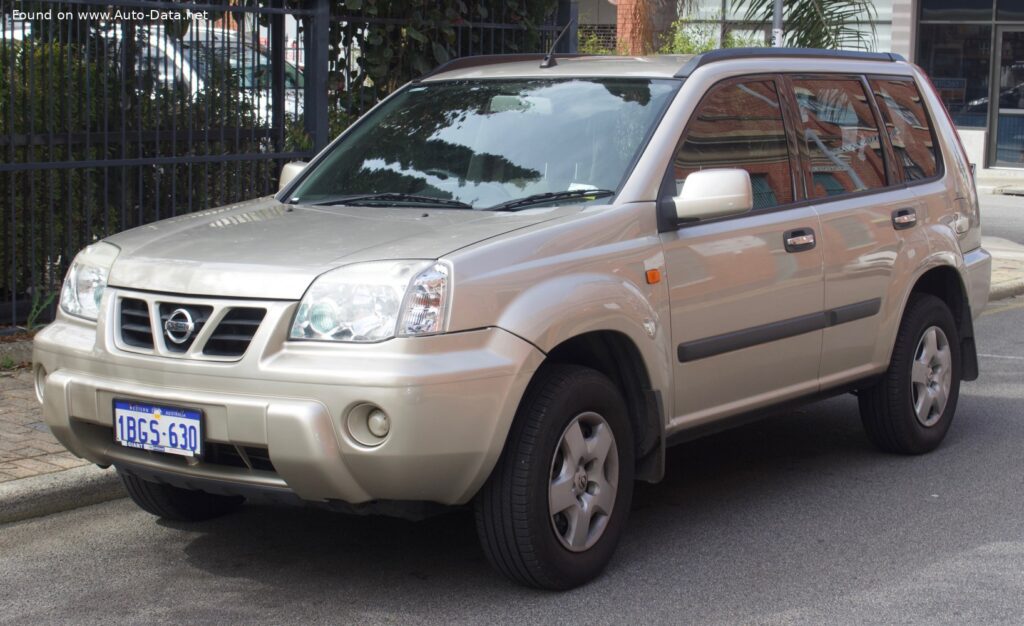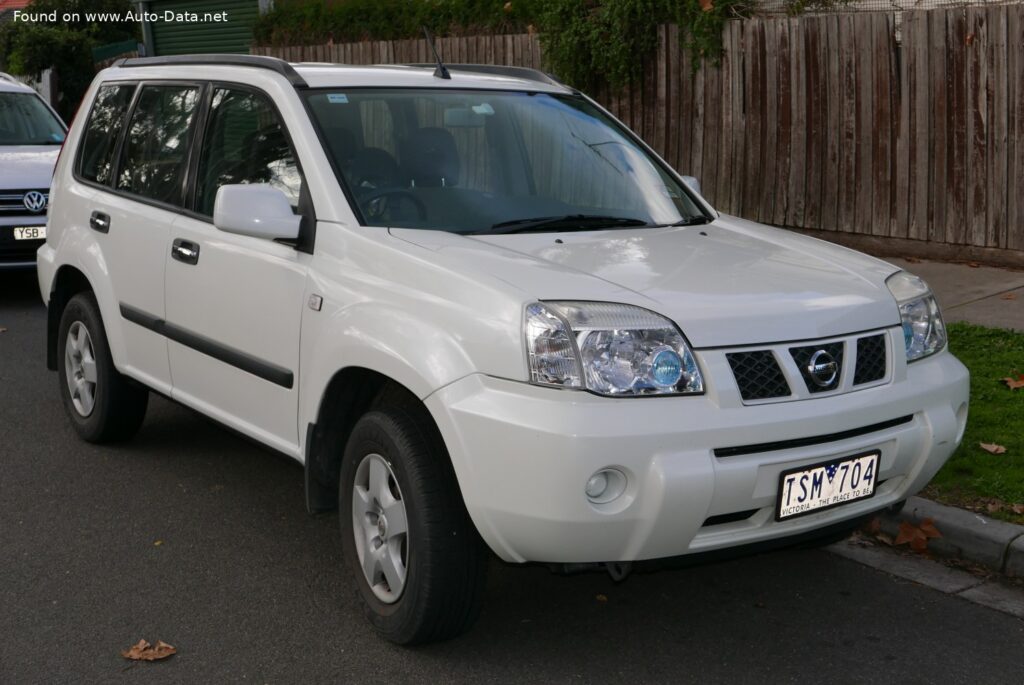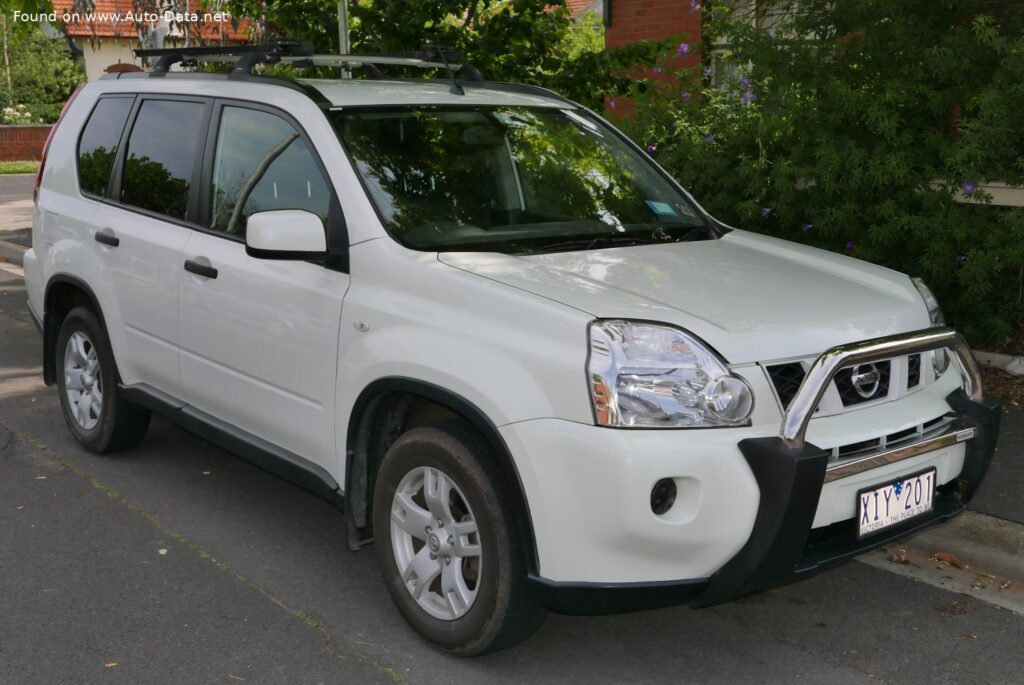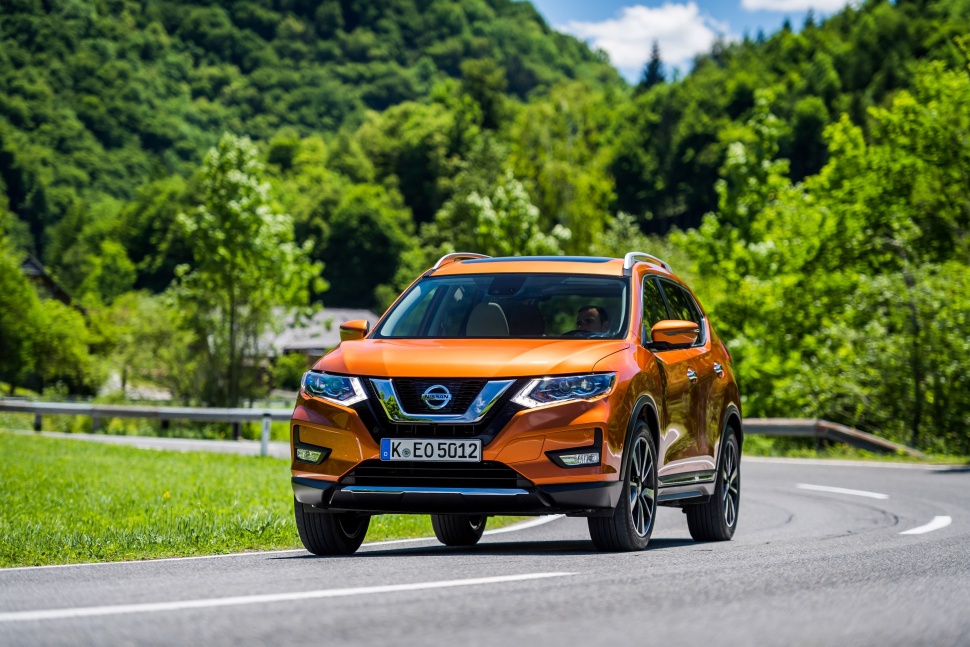
The Nissan X-Trail III (T32 series), particularly the facelifted version introduced in 2017, represents Nissan’s offering in the compact SUV segment. While not initially a major seller in the United States (Nissan offered the Rogue as its primary compact SUV in North America), the X-Trail is a significant vehicle in European, Asian, and Australian markets. The T32 generation, produced from 2013 to 2021, aimed to provide a practical and family-oriented vehicle with available all-wheel drive and a focus on fuel efficiency. This article details the specifications and characteristics of the 2.0i (144 Hp) variant of the facelifted X-Trail, produced between 2017 and 2021.
Nissan X-Trail III (T32, Facelift 2017) 2.0i: An Overview
The facelifted X-Trail T32, launched in 2017, brought styling updates and technological enhancements to the already popular model. The 2.0i variant, powered by the MR20DD engine, was positioned as an entry-level option, prioritizing fuel economy and affordability. It catered to buyers seeking a versatile SUV for daily commuting and family transportation. The X-Trail’s appeal lay in its spacious interior, comfortable ride, and available features, making it a competitive choice in its class.
Engine & Performance
The 2017-2021 Nissan X-Trail 2.0i is equipped with the MR20DD 2.0-liter inline-four cylinder gasoline engine. This naturally aspirated engine produces 144 horsepower at 6000 rpm and 200 Newton-meters (147.51 lb.-ft.) of torque at 4400 rpm. The engine features direct fuel injection and a Double Overhead Camshaft (DOHC) valvetrain with Twin Continuously Variable Valve Timing Control (CVTC), optimizing performance and efficiency. Power is delivered to the front wheels via a 6-speed manual transmission. The weight-to-power ratio is 9.9 kg/Hp, and the weight-to-torque ratio is 7.1 kg/Nm. Combined fuel consumption is rated at 8.2 liters per 100 kilometers (28.7 US mpg, 34.4 UK mpg, 12.2 km/l), with CO2 emissions of 190 grams per kilometer. The engine’s 11.2:1 compression ratio contributes to its efficiency, while its transverse mounting optimizes space within the engine bay.
Design & Features
The Nissan X-Trail III (T32) is a five-door, five-seat SUV characterized by its robust styling and practical design. The facelifted model features a more prominent V-motion grille, revised headlights, and updated bumpers, giving it a more modern appearance. The interior is designed with family use in mind, offering ample passenger space and a versatile cargo area. Trunk space ranges from a minimum of 565 liters (19.95 cu. ft.) to a maximum of 945 liters (33.37 cu. ft.) with the rear seats folded down. Standard safety features include ABS (Anti-lock Braking System) and ventilated disc brakes on all four wheels. The X-Trail also incorporates an optional Start & Stop System to further improve fuel economy. Ride height (ground clearance) is a substantial 210 mm (8.27 in), enhancing its capability on varied terrain. The vehicle’s dimensions are 4690 mm (184.65 in) in length, 1820 mm (71.65 in) in width, and 1740 mm (68.5 in) in height, with a wheelbase of 2705 mm (106.5 in).
Technical Specifications
| Brand | Nissan |
| Model | X-Trail |
| Generation | X-Trail III (T32, facelift 2017) |
| Type (Engine) | 2.0i (144 Hp) |
| Start of production | 2017 |
| End of production | 2021 |
| Powertrain Architecture | Internal Combustion engine |
| Body type | SUV |
| Seats | 5 |
| Doors | 5 |
| Fuel consumption (economy) – combined | 8.2 l/100 km |
| Fuel consumption (economy) – combined | 28.7 US mpg |
| Fuel consumption (economy) – combined | 34.4 UK mpg |
| Fuel consumption (economy) – combined | 12.2 km/l |
| CO2 emissions | 190 g/km |
| Fuel Type | Petrol (Gasoline) |
| Weight-to-power ratio | 9.9 kg/Hp |
| Weight-to-power ratio | 101.1 Hp/tonne |
| Weight-to-torque ratio | 7.1 kg/Nm |
| Weight-to-torque ratio | 140.4 Nm/tonne |
| Power | 144 Hp @ 6000 rpm |
| Power per litre | 72.1 Hp/l |
| Torque | 200 Nm @ 4400 rpm |
| Torque | 147.51 lb.-ft. @ 4400 rpm |
| Engine layout | Front, Transverse |
| Engine Model/Code | MR20DD |
| Engine displacement | 1997 cm3 |
| Engine displacement | 121.86 cu. in. |
| Number of cylinders | 4 |
| Engine configuration | Inline |
| Cylinder Bore | 84 mm |
| Cylinder Bore | 3.31 in. |
| Piston Stroke | 90.1 mm |
| Piston Stroke | 3.55 in. |
| Compression ratio | 11.2:1 |
| Number of valves per cylinder | 4 |
| Fuel injection system | Direct injection |
| Engine aspiration | Naturally aspirated engine |
| Valvetrain | DOHC, Twin CVTC |
| Engine oil capacity | 3.8 l |
| Engine oil capacity | 4.02 US qt | 3.34 UK qt |
| Coolant | 7.2 l |
| Coolant | 7.61 US qt | 6.34 UK qt |
| Kerb Weight | 1425 kg |
| Kerb Weight | 3141.59 lbs. |
| Trunk (boot) space – minimum | 565 l |
| Trunk (boot) space – minimum | 19.95 cu. ft. |
| Trunk (boot) space – maximum | 945 l |
| Trunk (boot) space – maximum | 33.37 cu. ft. |
| Fuel tank capacity | 60 l |
| Fuel tank capacity | 15.85 US gal | 13.2 UK gal |
| Permitted trailer load with brakes (12%) | 1500 kg |
| Permitted trailer load with brakes (12%) | 3306.93 lbs. |
| Permitted trailer load without brakes | 750 kg |
| Permitted trailer load without brakes | 1653.47 lbs. |
| Length | 4690 mm |
| Length | 184.65 in. |
| Width | 1820 mm |
| Width | 71.65 in. |
| Height | 1740 mm |
| Height | 68.5 in. |
| Wheelbase | 2705 mm |
| Wheelbase | 106.5 in. |
| Front track | 1575 mm |
| Front track | 62.01 in. |
| Rear (Back) track | 1575 mm |
| Rear (Back) track | 62.01 in. |
| Front overhang | 975 mm |
| Front overhang | 38.39 in. |
| Rear overhang | 1010 mm |
| Rear overhang | 39.76 in. |
| Ride height (ground clearance) | 210 mm |
| Ride height (ground clearance) | 8.27 in. |
| Minimum turning circle (turning diameter) | 11.2 m |
| Minimum turning circle (turning diameter) | 36.75 ft. |
| Drivetrain Architecture | The Internal combustion engine (ICE) drives the front wheels of the vehicle. |
| Drive wheel | Front wheel drive |
| Number of gears and type of gearbox | 6 gears, manual transmission |
| Front suspension | Independent, type McPherson with coil spring and anti-roll bar |
| Rear suspension | Independent multi-link spring suspension with stabilizer |
| Front brakes | Ventilated discs |
| Rear brakes | Ventilated discs |
| Assisting systems | ABS (Anti-lock braking system) |
| Steering type | Steering rack and pinion |
| Power steering | Electric Steering |
| Tires size | 225/65 R17 |
| Wheel rims size | 7.0J x 17 |