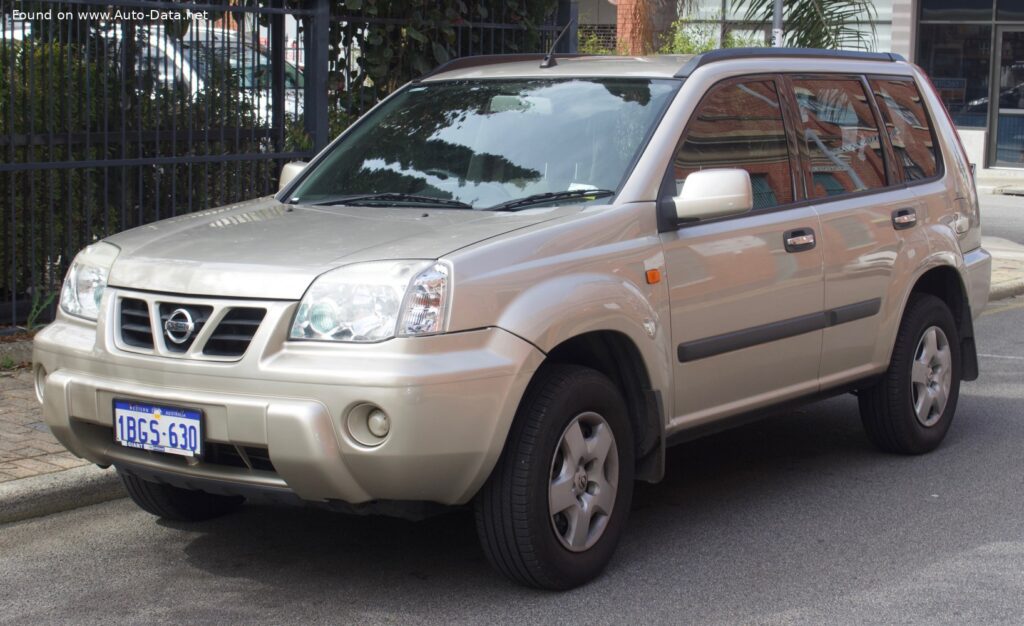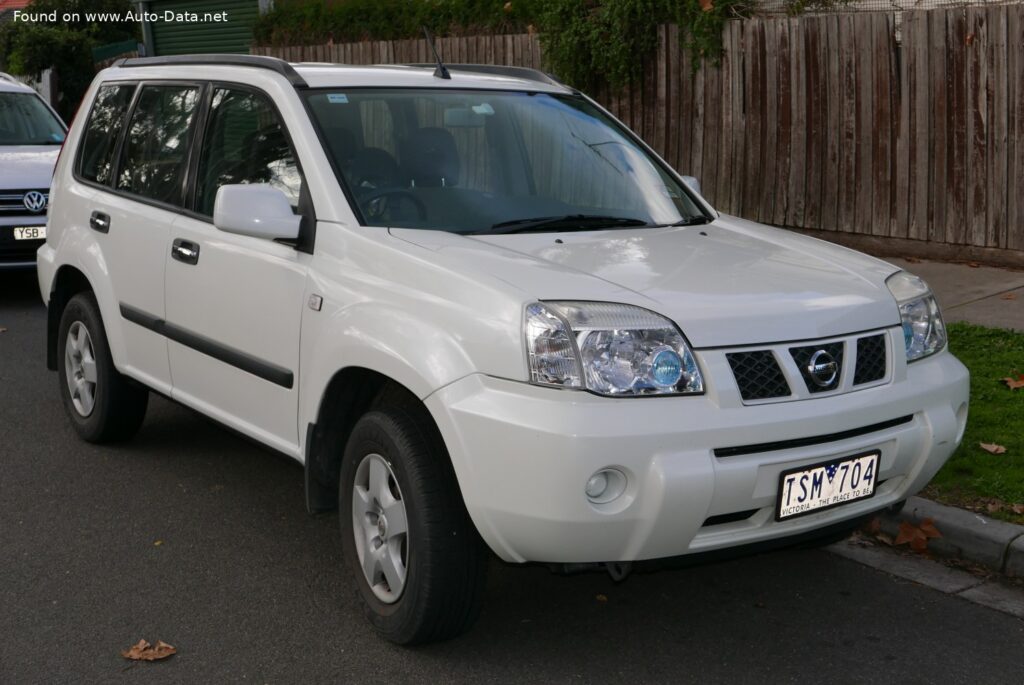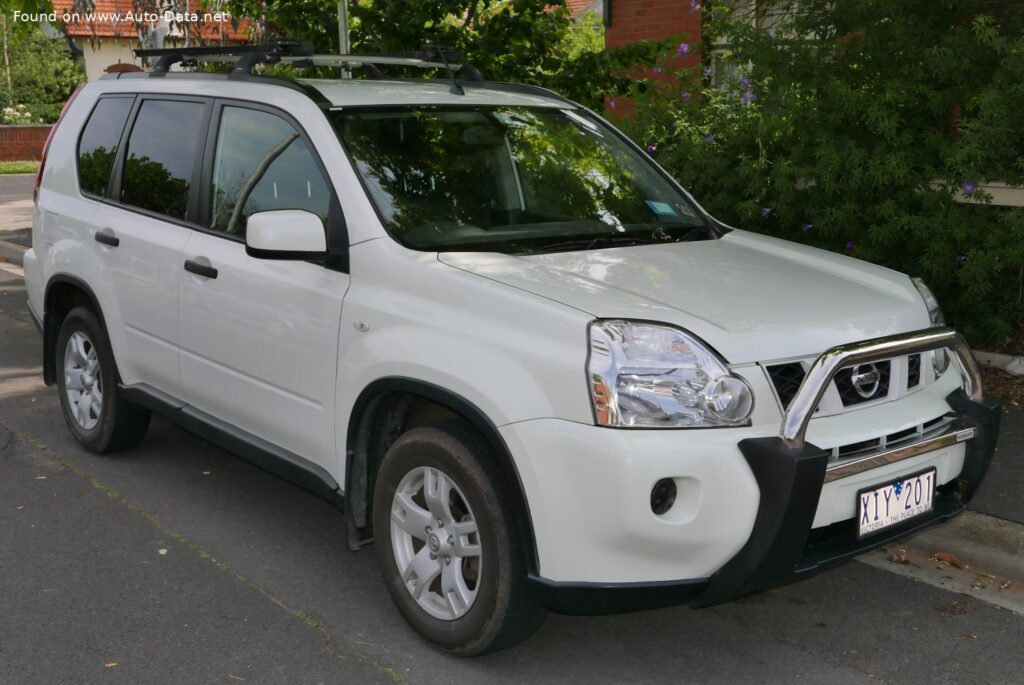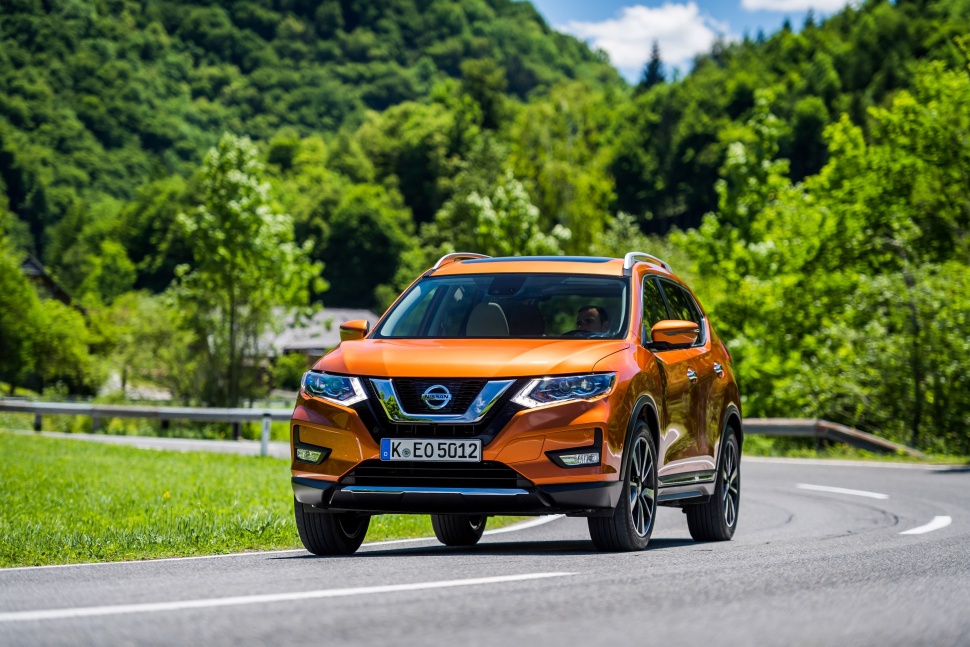
The Nissan X-Trail III (T32 series), particularly the facelifted version introduced in 2017, represents Nissan’s offering in the compact SUV segment. While not initially a major seller in the United States (Nissan discontinued X-Trail sales in the US in 2015), the X-Trail is a hugely popular vehicle in Europe, Asia, and other global markets. Positioned as a practical and family-oriented vehicle, the T32 X-Trail aimed to provide a blend of comfort, versatility, and reasonable fuel efficiency. The 2.5i model, equipped with a 171 horsepower engine and Xtronic CVT transmission, was a significant variant, often offered with seven-seat configurations to cater to larger families. This generation of the X-Trail saw improvements in interior quality, technology, and safety features compared to its predecessors.
Nissan X-Trail III (T32, facelift 2017) 2.5i: An Overview
The facelifted 2017 X-Trail brought styling updates and refinements to Nissan’s popular SUV. The 2.5i variant, powered by the QR25DE engine, focused on providing a balance between performance and fuel economy. The Xtronic CVT transmission was a key feature, designed to deliver smooth and efficient power delivery. The availability of a seven-seat layout further enhanced the X-Trail’s appeal to families needing extra passenger capacity. This model year also saw improvements in the vehicle’s safety technology and infotainment systems, aligning it with contemporary expectations in the SUV market.
Engine & Performance
The heart of the 2017-2021 Nissan X-Trail 2.5i is the QR25DE 2.5-liter inline-four cylinder gasoline engine. This naturally aspirated engine produces 171 horsepower at 6000 rpm and 226 Nm (166.69 lb-ft) of torque at 4400 rpm. The engine features multi-port fuel injection and a Double Overhead Camshaft (DOHC) valvetrain with Twin Continuously Variable Valve Timing Control (CVTC), optimizing performance and efficiency. Power is delivered to the front wheels via Nissan’s Xtronic Continuously Variable Transmission (CVT). This CVT is designed to simulate traditional gear changes while offering seamless acceleration and improved fuel economy. The weight-to-power ratio of 8.8 kg/Hp and a weight-to-torque ratio of 6.7 kg/Nm contribute to a responsive driving experience. Fuel consumption is rated at 8.1 liters per 100 kilometers (29 US mpg), with CO2 emissions of 188 g/km.
Design & Features
The Nissan X-Trail III (T32) is a five-door SUV characterized by its robust and practical design. The 2017 facelift brought a more modern aesthetic with revised front and rear styling, including a prominent V-motion grille. The vehicle’s interior is designed with family use in mind, offering a spacious cabin and flexible seating arrangements. The seven-seat configuration, when equipped, provides ample space for passengers, although the third-row seats are best suited for children or shorter adults. Key features include ventilated front disc brakes and ventilated rear disc brakes, ABS (Anti-lock Braking System), electric power steering, and independent suspension systems – McPherson struts at the front and a multi-link setup at the rear – for a comfortable ride. The X-Trail also incorporates a Start & Stop System to improve fuel efficiency. Trunk space ranges from a minimum of 135 liters (4.77 cu. ft.) with all seats up to a maximum of 825 liters (29.13 cu. ft.) with the rear seats folded down. The vehicle’s ride height of 210 mm (8.27 in) provides adequate ground clearance for navigating varied terrain.
Technical Specifications
| Brand | Nissan |
| Model | X-Trail |
| Generation | X-Trail III (T32, facelift 2017) |
| Type | 2.5i (171 Hp) Xtronic CVT 7 Seat |
| Start of production | 2017 |
| End of production | 2021 |
| Powertrain Architecture | Internal Combustion engine |
| Body type | SUV |
| Seats | 7 |
| Doors | 5 |
| Fuel consumption (combined) | 8.1 l/100 km (29 US mpg, 34.9 UK mpg, 12.3 km/l) |
| CO2 emissions | 188 g/km |
| Fuel Type | Petrol (Gasoline) |
| Weight-to-power ratio | 8.8 kg/Hp |
| Weight-to-torque ratio | 6.7 kg/Nm |
| Power | 171 Hp @ 6000 rpm |
| Power per litre | 68.7 Hp/l |
| Torque | 226 Nm @ 4400 rpm (166.69 lb.-ft. @ 4400 rpm) |
| Engine layout | Front, Transverse |
| Engine Model/Code | QR25DE |
| Engine displacement | 2488 cm3 (151.83 cu. in.) |
| Number of cylinders | 4 |
| Engine configuration | Inline |
| Cylinder Bore | 89 mm (3.5 in.) |
| Piston Stroke | 100 mm (3.94 in.) |
| Compression ratio | 10:1 |
| Number of valves per cylinder | 4 |
| Fuel injection system | Multi-port manifold injection |
| Engine aspiration | Naturally aspirated engine |
| Valvetrain | DOHC, Twin CVTC |
| Engine oil capacity | 4.6 l (4.86 US qt | 4.05 UK qt) |
| Coolant capacity | 8.2 l (8.66 US qt | 7.21 UK qt) |
| Kerb Weight | 1508-1534 kg (3324.57 – 3381.89 lbs.) |
| Trunk (boot) space – minimum | 135 l (4.77 cu. ft.) |
| Trunk (boot) space – maximum | 825 l (29.13 cu. ft.) |
| Fuel tank capacity | 60 l (15.85 US gal | 13.2 UK gal) |
| Permitted trailer load with brakes (12%) | 1500 kg (3306.93 lbs.) |
| Permitted trailer load without brakes | 750 kg (1653.47 lbs.) |
| Length | 4690 mm (184.65 in.) |
| Width | 1820 mm (71.65 in.) |
| Height | 1740 mm (68.5 in.) |
| Wheelbase | 2705 mm (106.5 in.) |
| Front track | 1575 mm (62.01 in.) |
| Rear track | 1575 mm (62.01 in.) |
| Front overhang | 975 mm (38.39 in.) |
| Rear overhang | 1010 mm (39.76 in.) |
| Ride height (ground clearance) | 210 mm (8.27 in.) |
| Minimum turning circle | 11.2 m (36.75 ft.) |
| Drivetrain | Front wheel drive |
| Gearbox | Xtronic CVT |
| Front suspension | Independent, McPherson with coil spring and anti-roll bar |
| Rear suspension | Independent multi-link with stabilizer |
| Front brakes | Ventilated discs |
| Rear brakes | Ventilated discs |
| Tires size | 225/65 R17 |
| Wheel rims size | 7.0J x 17 |