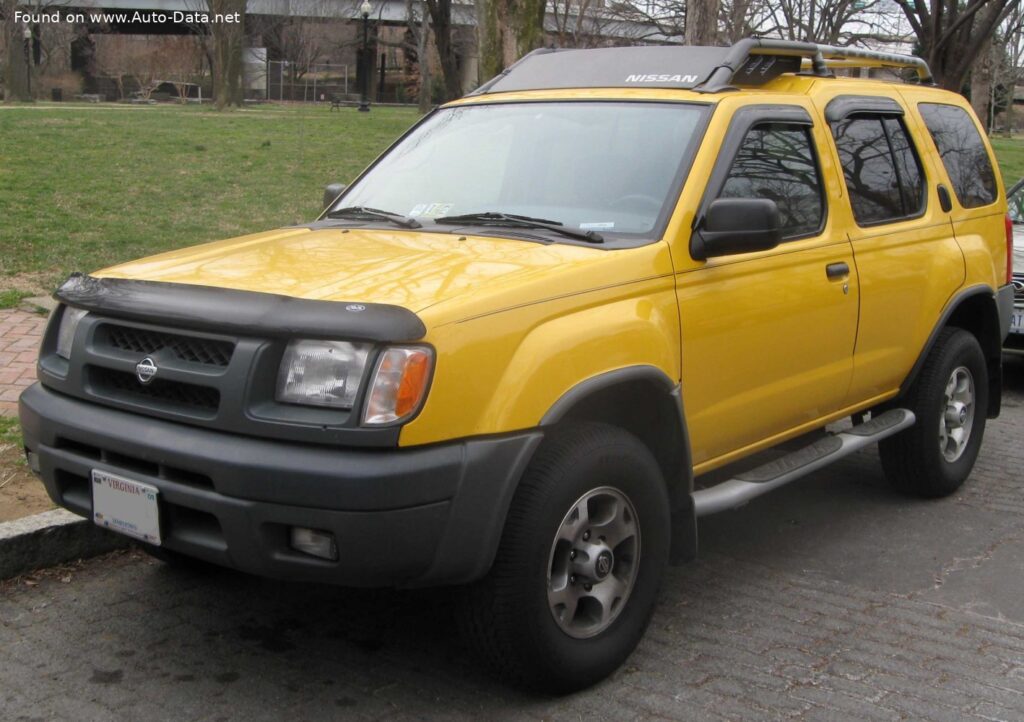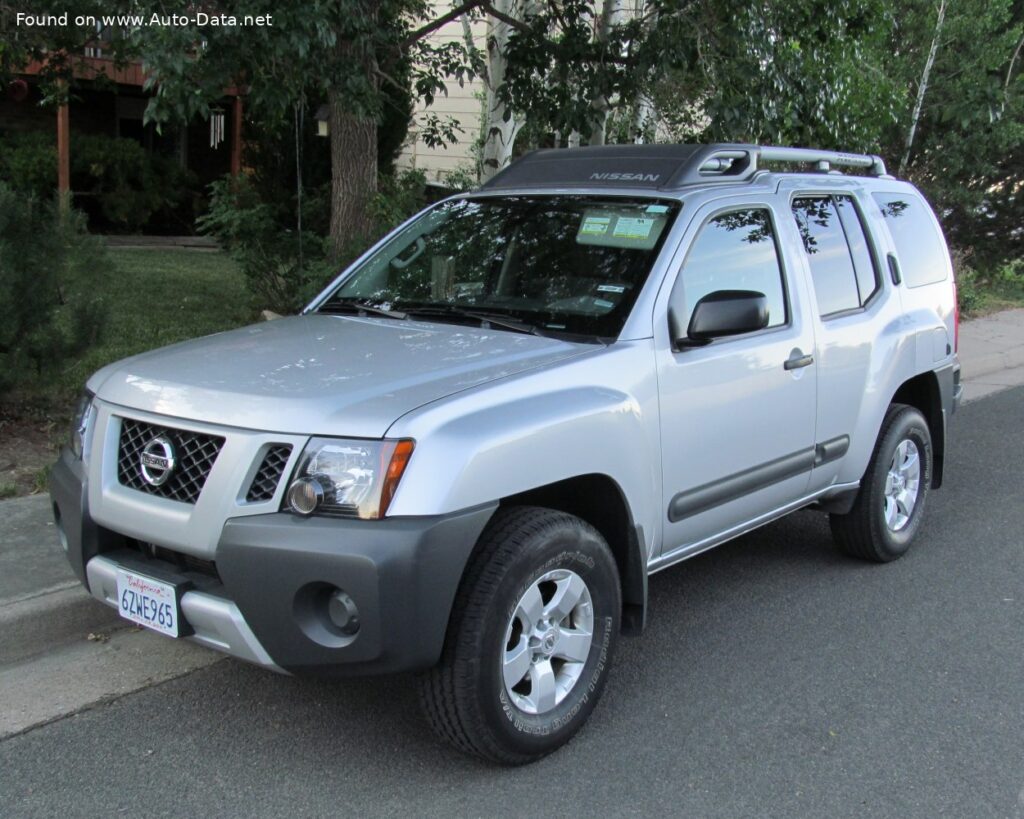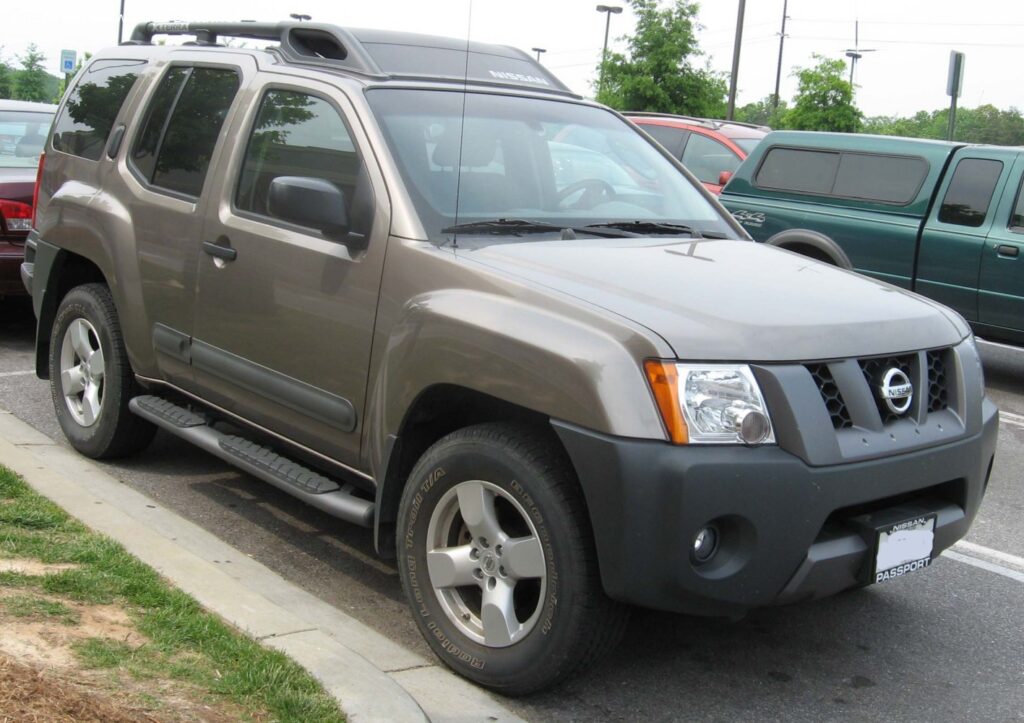
The Nissan Xterra II 4.0 V6 (265 Hp) 4×4, produced from 2005 to 2008, represents a significant chapter in Nissan’s history of rugged, body-on-frame sport utility vehicles. Specifically designed to cater to the North American market’s demand for capable off-road vehicles, the Xterra II built upon the foundation laid by its predecessor, enhancing its reputation for durability and utility. In an era where many SUVs were transitioning to lighter, unibody constructions, the Xterra II remained committed to its truck-based platform – the F-Alpha – shared with the Frontier pickup and Pathfinder SUV. This deliberate choice positioned the Xterra II as a compelling option for consumers prioritizing genuine off-road capability and a robust build quality over the increasingly common crossover aesthetic. The 4.0 V6 (265 Hp) 4×4 variant, with its powerful engine and four-wheel-drive system, became a standout model, solidifying the Xterra II’s status as a true icon in its segment.
Nissan Xterra II 4.0 V6 (265 Hp) 4×4: Power and Drivetrain Dynamics
The heart of the Nissan Xterra II 4.0 V6 (265 Hp) 4×4 is the VQ40DE engine, a 4.0-liter (3954 cm³ or 241.29 cu. in.) naturally aspirated V6. This engine is a member of Nissan’s highly regarded VQ engine family, known for its reliability and smooth operation. The VQ40DE in the Xterra II delivers 265 horsepower at 5600 rpm, achieving a power-per-liter ratio of 67 horsepower. However, its true strength lies in its torque output – a substantial 281 lb-ft (381 Nm) peaking at 4000 rpm. This torque is critical for off-road performance, enabling confident climbing and towing, with a maximum trailer load capacity of 5,000 lbs (2268 kg) when equipped with brakes.
The Xterra II 4.0 V6 (265 Hp) 4×4’s powertrain is engineered for versatility and robustness. It utilizes a rear-wheel-drive based all-wheel-drive (4×4) system. The engine primarily powers the rear wheels, with the front wheels engaging as needed through an electrically or mechanically operated clutch. This provides both fuel efficiency in two-wheel-drive mode and enhanced traction in four-wheel-drive. A 6-speed manual transmission is standard, offering drivers precise control over gear selection – a feature favored by off-road enthusiasts. The engine is mounted longitudinally in the front of the vehicle, contributing to balanced weight distribution and optimal drivetrain geometry for a 4×4 system.
Further technical details of the VQ40DE include a dual overhead camshaft (DOHC) valvetrain with 4 valves per cylinder, optimizing airflow and combustion efficiency. Fuel is delivered via a multi-port fuel injection system, ensuring reliable fuel delivery. The engine has a compression ratio of 9.7:1 and is designed to operate on regular gasoline. The cylinder bore measures 3.76 inches (95.5 mm) and the piston stroke is 3.62 inches (92 mm), resulting in an oversquare design that favors higher RPM power. Despite its performance, fuel economy is rated at approximately 17 US mpg (13.8 l/100 km) in urban driving and 21 US mpg (11.2 l/100 km) on the highway. With a 21.13 US gallon (80 l) fuel tank, the Xterra II offers a reasonable driving range. The vehicle’s weight-to-power ratio is 7.5 kg/Hp (134 Hp/tonne), and its weight-to-torque ratio is 5.2 kg/Nm (192.6 Nm/tonne), reflecting its solid performance given its curb weight of 4360.74 – 4387.2 lbs (1978-1990 kg).
Design, Utility, and Chassis of the Nissan Xterra II
The design of the Nissan Xterra II 4.0 V6 (265 Hp) 4×4 prioritizes functionality and a rugged aesthetic. It’s a traditional 5-door SUV with seating for five passengers. Its dimensions – 178.7 inches (4539 mm) long, 72.8 inches (1849 mm) wide, and 74.88 inches (1902 mm) high – provide a substantial presence without being overly large. The 106.3-inch (2700 mm) wheelbase contributes to a stable ride, and the identical front and rear track widths of 61.81 inches (1570 mm) enhance stability.
The Xterra II excels in off-road capability. It boasts a ground clearance ranging from 8.31 to 9.49 inches (211-241 mm), allowing it to navigate obstacles that would challenge many other SUVs. Excellent approach (30.5-33.2°), departure (27.3-29.4°), and ramp-over (22.1-24.6°) angles further enhance its ability to traverse uneven terrain. The vehicle rides on 265/75 R16 tires, providing a large contact patch and ample sidewall for improved traction and impact absorption.
The interior of the Xterra II is designed for practicality and durability, featuring robust materials and ample storage space. Cargo capacity is a key strength, offering 35.21 cu. ft. (997 liters) of space behind the rear seats, expanding to 65.69 cu. ft. (1860 liters) with the rear seats folded. This makes it ideal for carrying gear for outdoor activities. The body-on-frame construction provides the necessary rigidity for both on- and off-road use. Braking is handled by ventilated discs at all four wheels, enhanced by an Anti-lock Braking System (ABS) for improved safety. The hydraulic rack and pinion steering system provides direct feedback and precise handling, essential for navigating challenging conditions. The Xterra II, with its blend of rugged design, practical features, and formidable off-road specifications, embodies the spirit of adventure.
Technical Specifications
| Brand | Nissan |
| Model | Xterra |
| Generation | Xterra II |
| Type (Engine) | 4.0 V6 (265 Hp) 4×4 |
| Start of production | 2005 year |
| End of production | 2008 year |
| Powertrain Architecture | Internal Combustion engine |
| Body type | SUV |
| Seats | 5 |
| Doors | 5 |
| Fuel consumption (economy) – urban | 17 US mpg (13.8 l/100 km) |
| Fuel consumption (economy) – extra urban | 21 US mpg (11.2 l/100 km) |
| Fuel Type | Petrol (Gasoline) |
| Emission standard | LEV2-LEV |
| Weight-to-power ratio | 7.5 kg/Hp, 134 Hp/tonne |
| Weight-to-torque ratio | 5.2 kg/Nm, 192.6 Nm/tonne |
| Power | 265 Hp @ 5600 rpm. |
| Power per litre | 67 Hp/l |
| Torque | 281.01 lb.-ft. @ 4000 rpm (381 Nm @ 4000 rpm) |
| Engine layout | Front, Longitudinal |
| Engine Model/Code | VQ40DE |
| Engine displacement | 241.29 cu. in. (3954 cm3) |
| Number of cylinders | 6 |
| Engine configuration | V-engine |
| Cylinder Bore | 3.76 in. (95.5 mm) |
| Piston Stroke | 3.62 in. (92 mm) |
| Compression ratio | 9.7:1 |
| Number of valves per cylinder | 4 |
| Fuel injection system | Multi-port manifold injection |
| Engine aspiration | Naturally aspirated engine |
| Valvetrain | DOHC |
| Engine oil capacity | 5.39 US qt (5.1 l) |
| Coolant | 10.78 US qt (10.2 l) |
| Kerb Weight | 4360.74 – 4387.2 lbs. (1978-1990 kg) |
| Trunk (boot) space – minimum | 35.21 cu. ft. (997 l) |
| Trunk (boot) space – maximum | 65.69 cu. ft. (1860 l) |
| Fuel tank capacity | 21.13 US gal (80 l) |
| Permitted trailer load with brakes (12%) | 5000.08 lbs. (2268 kg) |
| Length | 178.7 in. (4539 mm) |
| Width | 72.8 in. (1849 mm) |
| Height | 74.88 in. (1902 mm) |
| Wheelbase | 106.3 in. (2700 mm) |
| Front track | 61.81 in. (1570 mm) |
| Rear (Back) track | 61.81 in. (1570 mm) |
| Ride height (ground clearance) | 8.31 – 9.49 in. (211-241 mm) |
| Approach angle | 30.5-33.2° |
| Departure angle | 27.3-29.4° |
| Ramp-over (brakeover) angle | 22.1-24.6° |
| Drivetrain Architecture | The Internal combustion engine (ICE) drives the rear wheels permanently, and the front wheels are driven through an electrically or mechanically operated clutch if necessary. |
| Drive wheel | All wheel drive (4×4) |
| Number of gears and type of gearbox | 6 gears, manual transmission |
| Front brakes | Ventilated discs |
| Rear brakes | Ventilated discs |
| Assisting systems | ABS (Anti-lock braking system) |
| Steering type | Steering rack and pinion |
| Power steering | Hydraulic Steering |
| Tires size | 265/75 R16 |