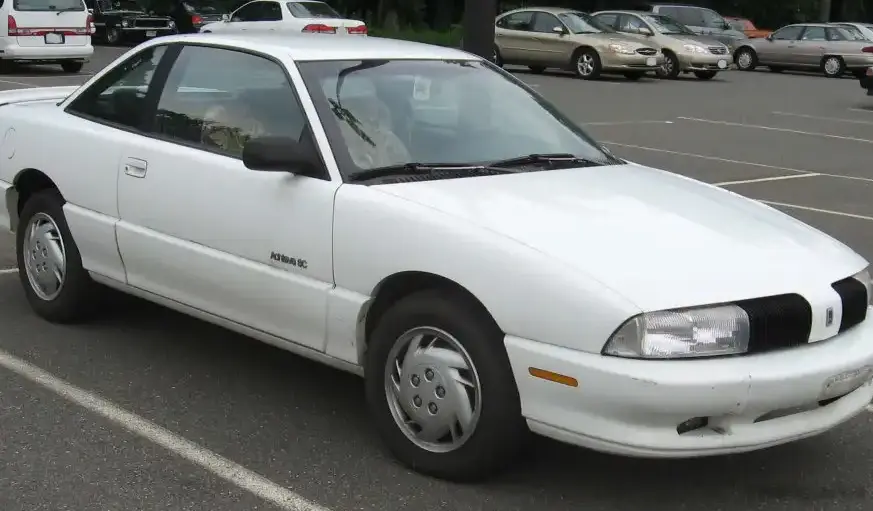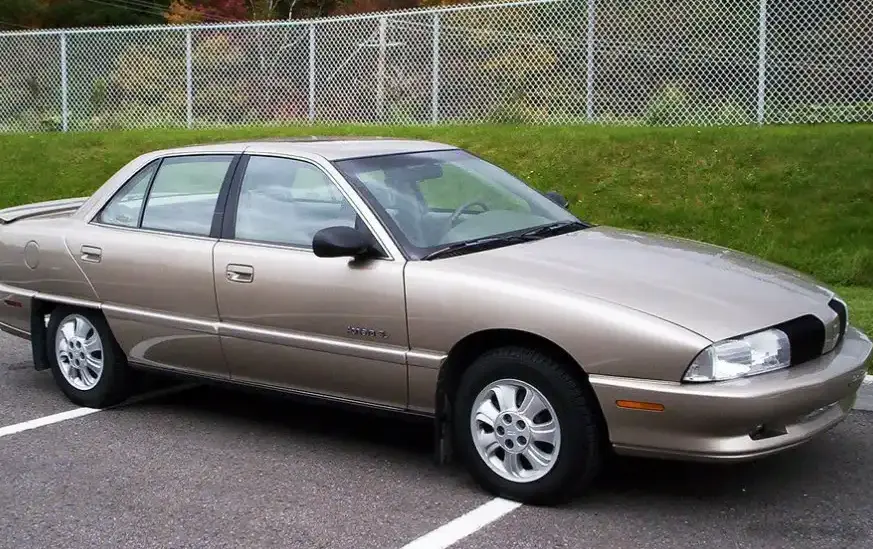
The Oldsmobile Achieva 2.3i, produced between 1991 and 1993, represented a key offering in Oldsmobile’s compact sedan lineup. Positioned as a mainstream, family-oriented vehicle, the Achieva aimed to provide comfortable and reliable transportation. It was part of the first generation of the Achieva (1992-1998), sharing its GM N-body platform with other models like the Buick Skylark and Pontiac Grand Am. The 2.3i variant, equipped with a 2.3-liter inline-four engine and an automatic transmission, served as a popular choice for buyers prioritizing ease of use and affordability over outright performance. This model occupied a middle ground within the Achieva range, offering a step up from the base models while remaining more accessible than the higher-trim, sportier options.
Technical Specifications
| Brand | Oldsmobile |
| Model | Achieva |
| Generation | Achieva |
| Type (Engine) | 2.3 i (117 Hp) |
| Start of production | 1991 year |
| End of production | 1993 year |
| Powertrain Architecture | Internal Combustion engine |
| Body type | Sedan |
| Seats | 5 |
| Doors | 4 |
| Fuel consumption (economy) – urban | 13 l/100 km (18.1 US mpg, 21.7 UK mpg, 7.7 km/l) |
| Fuel consumption (economy) – extra urban | 7 l/100 km (33.6 US mpg, 40.4 UK mpg, 14.3 km/l) |
| Fuel Type | Petrol (Gasoline) |
| Acceleration 0 – 100 km/h | 12 sec |
| Acceleration 0 – 62 mph | 12 sec |
| Acceleration 0 – 60 mph | 11.4 sec |
| Maximum speed | 170 km/h (105.63 mph) |
| Weight-to-power ratio | 10.8 kg/Hp, 92.9 Hp/tonne |
| Weight-to-torque ratio | 6.6 kg/Nm, 150.8 Nm/tonne |
| Power | 117 Hp @ 5200 rpm |
| Power per litre | 51.8 Hp/l |
| Torque | 190 Nm @ 3200 rpm (140.14 lb.-ft. @ 3200 rpm) |
| Engine layout | Front, Transverse |
| Engine Model/Code | L40 |
| Engine displacement | 2260 cm3 (137.91 cu. in.) |
| Number of cylinders | 4 |
| Engine configuration | Inline |
| Cylinder Bore | 92 mm (3.62 in.) |
| Piston Stroke | 85 mm (3.35 in.) |
| Compression ratio | 9.5:1 |
| Number of valves per cylinder | 2 |
| Fuel injection system | Multi-port manifold injection |
| Engine aspiration | Naturally aspirated engine |
| Engine oil capacity | 3.8 l (4.02 US qt | 3.34 UK qt) |
| Coolant | 9.8 l (10.36 US qt | 8.62 UK qt) |
| Kerb Weight | 1260 kg (2777.82 lbs.) |
| Trunk (boot) space – minimum | 395 l (13.95 cu. ft.) |
| Fuel tank capacity | 57 l (15.06 US gal | 12.54 UK gal) |
| Length | 4770 mm (187.8 in.) |
| Width | 1715 mm (67.52 in.) |
| Height | 1350 mm (53.15 in.) |
| Wheelbase | 2625 mm (103.35 in.) |
| Front track | 1415 mm (55.71 in.) |
| Rear (Back) track | 1440 mm (56.69 in.) |
| Drivetrain Architecture | The Internal combustion engine (ICE) drives the front wheels of the vehicle. |
| Drive wheel | Front wheel drive |
| Number of gears and type of gearbox | 5 gears, automatic transmission |
| Front suspension | Coil spring |
| Rear suspension | Coil spring |
| Front brakes | Ventilated discs |
| Rear brakes | Drum |
| Assisting systems | ABS (Anti-lock braking system) |
| Steering type | Steering rack and pinion |
| Power steering | Hydraulic Steering |
| Tires size | 195/65 R15 |
Powertrain & Engine Architecture
The heart of the Achieva 2.3i was the L40 2.3-liter inline-four cylinder engine. This engine, a staple of GM’s compact vehicle offerings, featured a cast iron block and an aluminum cylinder head. It utilized a multi-port fuel injection system, delivering fuel directly to each cylinder for improved efficiency and responsiveness. The engine’s 9.5:1 compression ratio was a compromise between performance and the ability to run on regular unleaded gasoline. The valvetrain employed two valves per cylinder (SOHC), a common configuration for engines of this era. The automatic transmission paired with this engine was typically a 3-speed Turbo-Hydramatic 300, known for its durability and smooth operation. While not a performance-oriented transmission, it provided adequate shifting for everyday driving.
Driving Characteristics
The 117 horsepower and 140 lb-ft of torque produced by the 2.3-liter engine, when coupled with the automatic transmission, resulted in a driving experience focused on comfort and convenience rather than spirited acceleration. Acceleration from 0-60 mph took around 11.4 seconds, which was typical for a family sedan of the early 1990s. The automatic transmission’s gear ratios were optimized for fuel economy and smooth cruising, meaning quick downshifts for passing maneuvers weren’t particularly brisk. Compared to the available 5-speed manual transmission, the automatic version felt noticeably slower. However, the automatic offered a more relaxed driving experience, particularly in city traffic. The Achieva 2.3i was generally considered to have adequate power for most daily driving situations, but it lacked the punch of the higher-output engines offered in other Achieva trims.
Equipment & Trim Levels
The Achieva 2.3i typically came standard with features considered essential for the time, including air conditioning, power steering, and an AM/FM stereo. Interior upholstery was typically cloth, with a relatively simple dashboard layout. Optional extras included power windows and locks, cruise control, and a upgraded sound system. The trim level of the 2.3i often dictated the availability of these options. While not as lavishly equipped as the higher-end Achieva models, the 2.3i provided a comfortable and functional interior for its price point.
Chassis & Braking
The Achieva 2.3i utilized a front-wheel-drive layout with independent coil spring suspension in the front and a coil spring rear suspension. The front suspension featured a MacPherson strut design, while the rear employed a semi-independent setup. Braking duties were handled by ventilated discs in the front and drum brakes in the rear. An anti-lock braking system (ABS) was often included as standard equipment, enhancing safety. The suspension tuning prioritized ride comfort over sporty handling, resulting in a relatively soft and forgiving ride quality. Stabilizer bars were present, but their thickness was modest, contributing to the car’s overall focus on comfort.
Market Reception & Comparison
The Oldsmobile Achieva 2.3i was generally well-received by automotive critics as a practical and affordable family sedan. It was praised for its comfortable ride, spacious interior, and reasonable fuel economy. However, it was often criticized for its lack of excitement and its somewhat bland styling. Compared to other trims in the Achieva lineup, such as the sporty SL model, the 2.3i offered less performance but a lower price. Fuel economy was comparable to other compact sedans of the era, averaging around 21 mpg in the city and 34 mpg on the highway. Reliability was generally good, although some owners reported minor issues with the automatic transmission over time.
Legacy
The Oldsmobile Achieva 2.3i, while not a particularly memorable or groundbreaking vehicle, served as a solid and dependable option for buyers seeking a no-frills compact sedan. The L40 2.3-liter engine proved to be relatively durable, and many examples are still on the road today. In the used car market, the Achieva 2.3i is often valued for its affordability and simplicity. While it may not appeal to enthusiasts seeking a performance car, it remains a viable option for those needing a basic and reliable mode of transportation. The Achieva, as a whole, represents a transitional period for Oldsmobile, as the brand began to shift away from its traditional focus on larger, more luxurious vehicles towards a more mainstream market position.