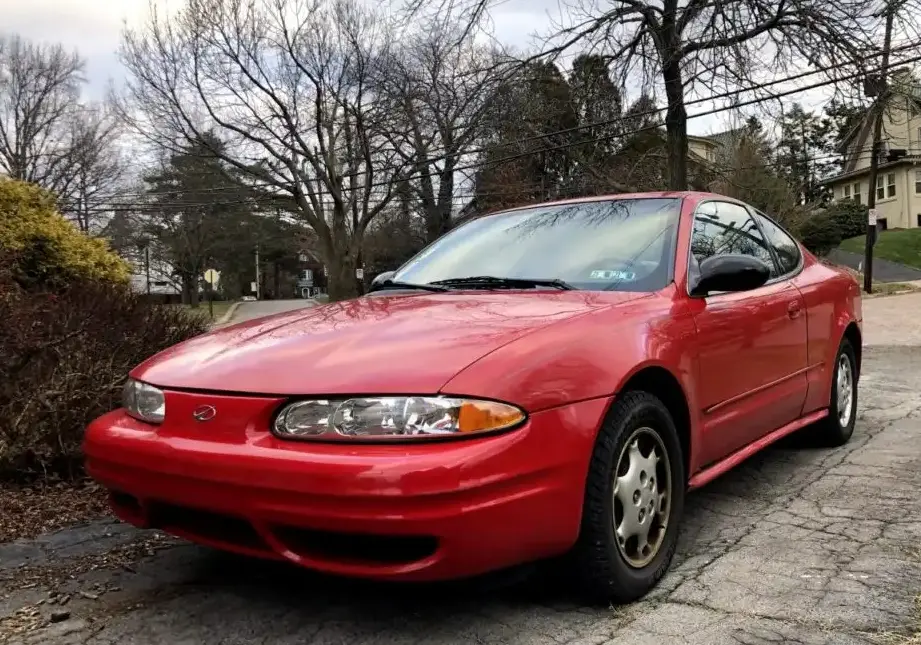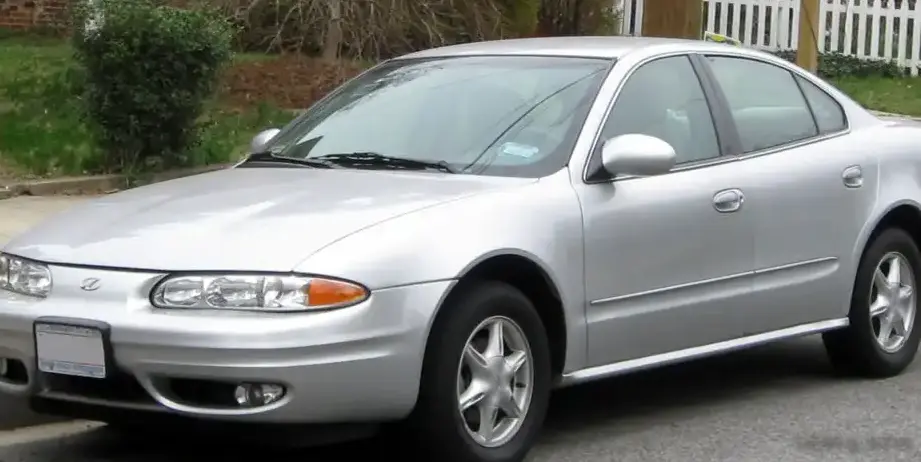
The Oldsmobile Alero 2.2 16V, producing 141 horsepower, was a mid-range offering in the second generation Alero lineup, produced from 2002 to 2004. Positioned between the base 2.4L engine and the more powerful 3.4L V6, the 2.2L variant aimed to provide a balance of fuel efficiency and acceptable performance for the average commuter. The Alero itself was Oldsmobile’s entry into the compact car segment, intended to replace the aging Cutlass Ciera and compete with popular models like the Honda Accord and Toyota Camry. It was built on General Motors’ L-series platform, shared with other vehicles like the Chevrolet Malibu and Pontiac Grand Am.
Technical Specifications
| Brand | Oldsmobile |
| Model | Alero |
| Generation | Alero |
| Type (Engine) | 2.2 16V (141 Hp) |
| Start of production | 2002 |
| End of production | 2004 |
| Powertrain Architecture | Internal Combustion engine |
| Body type | Sedan |
| Seats | 5 |
| Doors | 4 |
| Fuel consumption (urban) | 9.4 l/100 km (25 US mpg) |
| Fuel consumption (extra urban) | 7.1 l/100 km (33.1 US mpg) |
| Fuel consumption (combined) | 8.4 l/100 km (28 US mpg) |
| Fuel Type | Petrol (Gasoline) |
| Acceleration 0 – 100 km/h | 10.8 sec |
| Acceleration 0 – 62 mph | 10.8 sec |
| Acceleration 0 – 60 mph | 10.3 sec |
| Maximum speed | 200 km/h (124.27 mph) |
| Weight-to-power ratio | 9.7 kg/Hp |
| Weight-to-torque ratio | 6.7 kg/Nm |
| Power | 141 Hp @ 5600 rpm |
| Torque | 203 Nm @ 4000 rpm (149.73 lb.-ft. @ 4000 rpm) |
| Engine layout | Front, Transverse |
| Engine Model/Code | L61 |
| Engine displacement | 2198 cm3 (134.13 cu. in.) |
| Number of cylinders | 4 |
| Engine configuration | Inline |
| Cylinder Bore | 86 mm (3.39 in.) |
| Piston Stroke | 94.6 mm (3.72 in.) |
| Compression ratio | 10:1 |
| Number of valves per cylinder | 4 |
| Fuel injection system | Multi-port manifold injection |
| Engine aspiration | Naturally aspirated |
| Engine oil capacity | 3.8 l (4.02 US qt | 3.34 UK qt) |
| Coolant capacity | 8.2 l (8.66 US qt | 7.21 UK qt) |
| Kerb Weight | 1370 kg (3020.33 lbs.) |
| Trunk (boot) space – minimum | 435 l (15.36 cu. ft.) |
| Fuel tank capacity | 53 l (14 US gal | 11.66 UK gal) |
| Length | 4740 mm (186.61 in.) |
| Width | 1780 mm (70.08 in.) |
| Height | 1385 mm (54.53 in.) |
| Wheelbase | 2720 mm (107.09 in.) |
| Front track | 1500 mm (59.06 in.) |
| Rear track | 1505 mm (59.25 in.) |
| Drivetrain Architecture | Front wheel drive |
| Number of gears | 5 |
| Gearbox type | Manual transmission |
| Front suspension | Spring Strut |
| Rear suspension | Double wishbone |
| Front brakes | Ventilated discs |
| Rear brakes | Disc |
| Steering type | Steering rack and pinion |
| Power steering | Hydraulic |
| Tires size | 215/60 R15 |
Powertrain & Engine Architecture
The Alero 2.2 utilized General Motors’ L61 engine, a 2.2-liter inline-four cylinder powerplant. This engine was a mainstay in many GM vehicles of the era, known for its relative simplicity and durability. The L61 featured a cast iron block and aluminum cylinder head, incorporating a dual overhead camshaft (DOHC) design with four valves per cylinder. Fuel delivery was handled by a multi-port fuel injection system, providing precise fuel metering for improved efficiency and emissions control. The engine produced 141 horsepower at 5600 rpm and 203 Nm (149.73 lb-ft) of torque at 4000 rpm. The standard transmission for this variant was a five-speed manual, although a four-speed automatic transmission was also available as an option. The automatic transmission, a 4T45-E, was a common unit in GM’s front-wheel-drive vehicles, offering smooth shifts but sacrificing some performance compared to the manual.
Driving Characteristics
The Alero 2.2 with the manual transmission offered adequate, though not exhilarating, performance. Acceleration from 0-60 mph took around 10.3 seconds, making it competitive with other cars in its class. The 4T45-E automatic transmission slightly dulled acceleration, adding roughly half a second to the 0-60 time. The engine felt relatively responsive at lower RPMs, providing sufficient power for everyday driving situations. However, passing maneuvers at highway speeds required downshifting, and the engine could feel strained when pushed hard. The manual transmission provided a more engaging driving experience, allowing drivers to better control the engine’s power band. The Alero’s suspension was tuned for comfort, resulting in a relatively soft ride, but also some body roll during cornering.
Equipment & Trim Levels
The Alero 2.2 typically came standard with features like air conditioning, power windows and locks, an AM/FM stereo with CD player, and cloth upholstery. Higher trim levels, such as the Alero GL, added features like upgraded audio systems, alloy wheels, and keyless entry. Optional extras included a sunroof, leather upholstery, and traction control. Interior styling was fairly basic, reflecting the Alero’s position as an affordable mid-size sedan. The dashboard layout was functional, with easy-to-read gauges and logically placed controls. The 2.2L trim generally offered a good balance of features for the price, appealing to buyers who didn’t need the extra power or luxury of the V6 models.
Chassis & Braking
The Alero 2.2 featured a front-wheel-drive layout with an independent front suspension utilizing spring struts and a double wishbone rear suspension. This setup provided a comfortable ride, but wasn’t particularly sporty. Braking duties were handled by ventilated discs in the front and solid discs in the rear. Anti-lock brakes (ABS) were standard, enhancing safety and control during emergency braking situations. The Alero’s steering was rack-and-pinion, providing reasonably precise steering feel, although it lacked the feedback of more performance-oriented vehicles. The standard tire size was 215/60R15, offering a good compromise between ride comfort and handling.
Market Reception & Comparison
The Alero 2.2 received mixed reviews from automotive critics. While praised for its fuel efficiency (around 28 mpg combined) and comfortable ride, it was often criticized for its lack of power and somewhat bland styling. Compared to the Alero 3.4L V6, the 2.2L offered significantly less performance, but at a lower price point. The V6 was favored by drivers who prioritized acceleration and responsiveness. The 2.2L was also often compared to competitors like the Honda Accord and Toyota Camry, which were generally considered to offer more refined interiors and better overall driving dynamics. However, the Alero 2.2 was typically more affordable than these Japanese rivals.
Legacy
The Oldsmobile Alero 2.2, while not a standout performer, proved to be a relatively reliable vehicle. The L61 engine is known for its durability, and with proper maintenance, can last for many years. The 4T45-E automatic transmission, while not as robust as some other GM transmissions, is generally reliable as well. Today, the Alero 2.2 can be found on the used car market at very affordable prices. While it may not offer the latest technology or the most exciting driving experience, it remains a practical and economical option for budget-conscious buyers. Parts availability is generally good, as the L61 engine and 4T45-E transmission were used in a wide range of GM vehicles. However, potential buyers should be aware of potential issues with rust, particularly in areas with harsh winters.