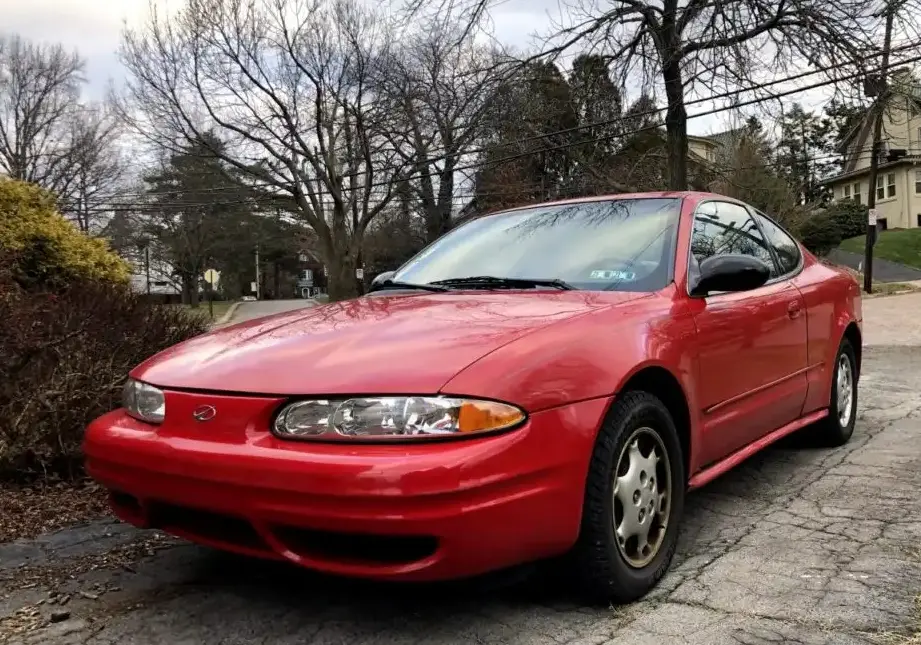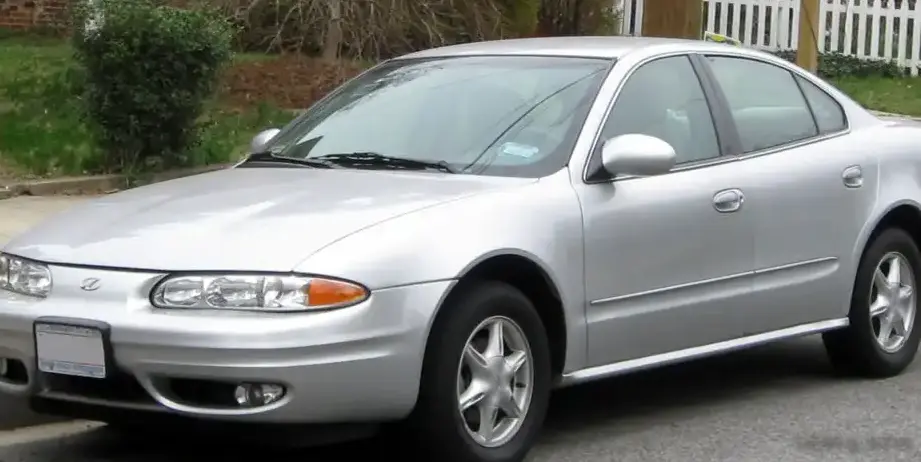
The Oldsmobile Alero 3.4 V6, produced from 1999 to 2004, represented a mid-cycle offering within the first generation of the Alero (1999-2004). Positioned as a step up from the base 2.4L four-cylinder models, the 3.4L V6 aimed to provide a balance of performance and affordability in the American mid-size sedan segment. The Alero, as a whole, was intended to replace the aging Cutlass Ciera and Achieva, offering a more modern design and features. This particular variant, with its 3.4-liter V6 and four-speed automatic transmission, was a popular choice for buyers seeking a comfortable and reasonably powerful family sedan.
Technical Specifications
| Brand | Oldsmobile |
| Model | Alero |
| Generation | Alero (First Generation) |
| Type (Engine) | 3.4 V6 24V (173 Hp) |
| Start of production | 1999 |
| End of production | 2004 |
| Powertrain Architecture | Internal Combustion Engine |
| Body type | Sedan |
| Seats | 5 |
| Doors | 4 |
| Fuel consumption (urban) | 11.8 l/100 km (19.9 US mpg) |
| Fuel consumption (extra urban) | 8.1 l/100 km (29 US mpg) |
| Fuel Type | Petrol (Gasoline) |
| Acceleration 0 – 100 km/h | 9.5 sec |
| Acceleration 0 – 60 mph | 9 sec |
| Maximum speed | 190 km/h (118.06 mph) |
| Weight-to-power ratio | 8.1 kg/Hp |
| Weight-to-torque ratio | 5.2 kg/Nm |
| Power | 173 Hp @ 4800 rpm |
| Torque | 271 Nm @ 4000 rpm (199.88 lb.-ft. @ 4000 rpm) |
| Engine layout | Front, Transverse |
| Engine Model/Code | LA1 |
| Engine displacement | 3350 cm3 (204.43 cu. in.) |
| Number of cylinders | 6 |
| Engine configuration | V-engine |
| Cylinder Bore | 92 mm (3.62 in.) |
| Piston Stroke | 84 mm (3.31 in.) |
| Compression ratio | 9.5:1 |
| Number of valves per cylinder | 4 |
| Fuel injection system | Multi-port manifold injection |
| Engine aspiration | Naturally aspirated |
| Engine oil capacity | 4.3 l (4.54 US qt | 3.78 UK qt) |
| Coolant capacity | 11.8 l (12.47 US qt | 10.38 UK qt) |
| Kerb Weight | 1400 kg (3086.47 lbs.) |
| Trunk (boot) space | 435 l (15.36 cu. ft.) |
| Fuel tank capacity | 57 l (15.06 US gal | 12.54 UK gal) |
| Length | 4740 mm (186.61 in.) |
| Width | 1780 mm (70.08 in.) |
| Height | 1390 mm (54.72 in.) |
| Wheelbase | 2720 mm (107.09 in.) |
| Front track | 1500 mm (59.06 in.) |
| Rear track | 1505 mm (59.25 in.) |
| Drivetrain | Front Wheel Drive |
| Number of gears | 4 |
| Gearbox type | Automatic Transmission |
| Front suspension | Spring Strut |
| Rear suspension | Double wishbone |
| Front brakes | Ventilated discs |
| Rear brakes | Ventilated discs |
| Assisting systems | ABS (Anti-lock braking system) |
| Steering type | Steering rack and pinion |
| Power steering | Hydraulic |
| Tires size | 215/60 R15 |
Powertrain & Engine Architecture
The heart of this Alero variant was the LA1 3.4-liter (204.4 cu in) V6 engine. This engine was a member of GM’s 60-degree V6 family, known for its relatively smooth operation and decent power output. It featured a cast iron block with aluminum cylinder heads, utilizing a dual overhead camshaft (DOHC) valvetrain with four valves per cylinder. Fuel delivery was handled by a multi-port fuel injection system, providing precise fuel metering for improved efficiency and performance. The engine produced 173 horsepower at 4800 rpm and 271 Nm (199.88 lb-ft) of torque at 4000 rpm. The engine was paired with a four-speed automatic transmission (4T65E), a common GM unit known for its reliability. This transmission was electronically controlled, adapting shift points based on driving conditions.
Driving Characteristics
The Alero 3.4L Automatic offered a noticeable improvement in acceleration compared to the base 2.4L models. The 0-60 mph time of around 9 seconds was respectable for its class in the early 2000s. While not a sports sedan, the V6 provided sufficient power for highway merging and passing maneuvers. The four-speed automatic transmission, while not as sophisticated as some newer transmissions, offered smooth shifts and adequate responsiveness. The gear ratios were tuned for a balance of fuel economy and acceleration, prioritizing comfortable cruising over outright performance. Compared to a manual transmission equipped Alero (which was rare), the automatic sacrificed some responsiveness and fuel efficiency, but offered greater convenience for everyday driving.
Equipment & Trim Levels
The Alero 3.4L typically came standard with features such as air conditioning, power windows and locks, a CD player, and cloth upholstery. Higher trim levels, such as the GL and GX, added features like alloy wheels, upgraded audio systems, a power driver’s seat, and keyless entry. Optional extras included a sunroof, leather upholstery, and traction control. The interior design was generally functional and comfortable, though materials were typical for a mid-size sedan in its price range. The dashboard layout was straightforward and easy to use, with clearly labeled controls.
Chassis & Braking
The Alero utilized a front-wheel-drive layout with an independent front suspension featuring spring struts and a double wishbone rear suspension. This suspension setup provided a comfortable ride, absorbing bumps and irregularities in the road surface effectively. The braking system consisted of ventilated discs on all four wheels, providing adequate stopping power. Anti-lock brakes (ABS) were standard, enhancing safety by preventing wheel lockup during hard braking. The steering was rack-and-pinion with hydraulic power assist, offering precise and responsive steering feel.
Market Reception & Comparison
The Alero 3.4L was generally well-received by critics as a competent and affordable mid-size sedan. It offered a good balance of features, comfort, and performance for its price point. However, it faced stiff competition from established rivals such as the Honda Accord, Toyota Camry, and Ford Taurus. Compared to the base 2.4L Alero, the 3.4L offered a significant performance boost, but at a slightly higher price. Fuel economy was comparable to other V6-powered sedans in its class. Reliability was generally good, though some owners reported minor issues with the automatic transmission and cooling system. The 4T65E transmission, while generally robust, could exhibit issues with harsh shifting or solenoid failures as it aged.
Legacy
The Oldsmobile Alero, and particularly the 3.4L V6 variant, remains a relatively affordable and accessible used car today. The LA1 V6 engine is known for its durability, and with proper maintenance, can provide many years of reliable service. However, like any older vehicle, it is important to inspect potential purchases carefully for signs of wear and tear. Common areas to check include the cooling system (radiator, hoses, water pump) and the transmission for any signs of slipping or unusual noises. The Alero represents a transitional period for Oldsmobile, as the brand was discontinued by General Motors in 2004. While not a groundbreaking vehicle, the Alero 3.4L offered a solid and dependable transportation option for families in the early 2000s, and a noticeable step up in performance from the base four-cylinder models.