Technical Specifications
| Brand | Oldsmobile |
| Model | Aurora |
| Generation | Aurora II |
| Type (Engine) | 3.5 V6 24V (218 Hp) |
| Start of production | 2001 |
| End of production | 2003 |
| Powertrain Architecture | Internal Combustion engine |
| Body type | Sedan |
| Seats | 4 |
| Doors | 4 |
| Fuel consumption (urban) | 13.1 l/100 km (18 US mpg, 21.6 UK mpg, 7.6 km/l) |
| Fuel consumption (extra urban) | 8.7 l/100 km (27 US mpg, 32.5 UK mpg, 11.5 km/l) |
| Fuel consumption (combined) | 10.7 l/100 km (22 US mpg, 26.4 UK mpg, 9.3 km/l) |
| Fuel Type | Petrol (Gasoline) |
| Acceleration 0 – 100 km/h | 10.4 sec |
| Acceleration 0 – 62 mph | 10.4 sec |
| Acceleration 0 – 60 mph | 9.9 sec |
| Maximum speed | 200 km/h (124.27 mph) |
| Weight-to-power ratio | 7.5 kg/Hp, 132.5 Hp/tonne |
| Weight-to-torque ratio | 5.3 kg/Nm, 189.7 Nm/tonne |
| Power | 218 Hp @ 5600 rpm |
| Power per litre | 62.8 Hp/l |
| Torque | 312 Nm @ 4400 rpm (230.12 lb.-ft. @ 4400 rpm) |
| Engine layout | Front, Transverse |
| Engine Model/Code | LX5 |
| Engine displacement | 3473 cm3 (211.94 cu. in.) |
| Number of cylinders | 6 |
| Engine configuration | V-engine |
| Cylinder Bore | 89.5 mm (3.52 in.) |
| Piston Stroke | 92 mm (3.62 in.) |
| Compression ratio | 9.3:1 |
| Number of valves per cylinder | 4 |
| Fuel injection system | Multi-port manifold injection |
| Engine aspiration | Naturally aspirated engine |
| Valvetrain | DOHC |
| Engine oil capacity | 5.7 l (6.02 US qt | 5.02 UK qt) |
| Coolant | 9.5 l (10.04 US qt | 8.36 UK qt) |
| Kerb Weight | 1645 kg (3626.6 lbs.) |
| Trunk (boot) space – minimum | 425 l (15.01 cu. ft.) |
| Fuel tank capacity | 70 l (18.49 US gal | 15.4 UK gal) |
| Length | 5060 mm (199.21 in.) |
| Width | 1850 mm (72.83 in.) |
| Height | 1440 mm (56.69 in.) |
| Wheelbase | 2850 mm (112.2 in.) |
| Front track | 1580 mm (62.2 in.) |
| Rear (Back) track | 1580 mm (62.2 in.) |
| Drivetrain Architecture | The Internal combustion engine (ICE) drives the front wheels of the vehicle. |
| Drive wheel | Front wheel drive |
| Number of gears and type of gearbox | 4 gears, automatic transmission |
| Front suspension | Wishbone |
| Rear suspension | Trailing arm |
| Front brakes | Ventilated discs |
| Rear brakes | Disc |
| Assisting systems | ABS (Anti-lock braking system) |
| Steering type | Steering rack and pinion |
| Power steering | Hydraulic Steering |
| Tires size | 225/60 R16 |
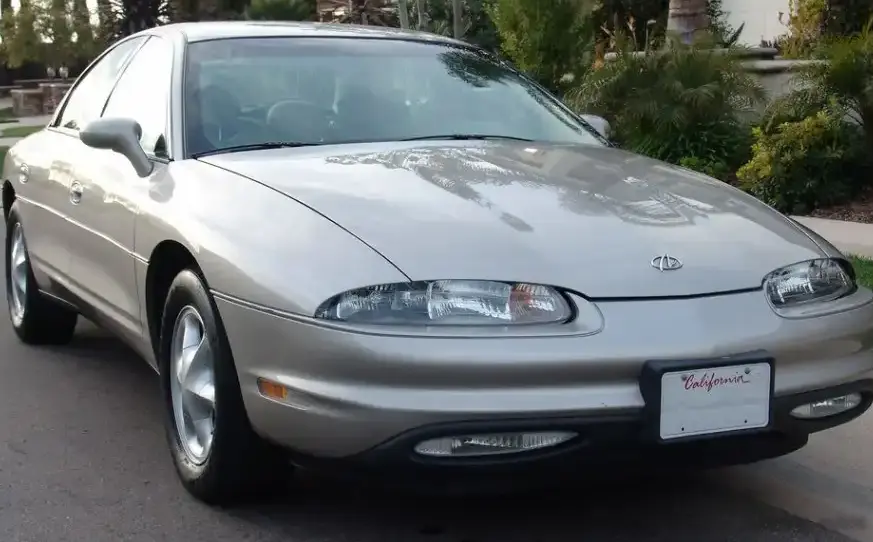
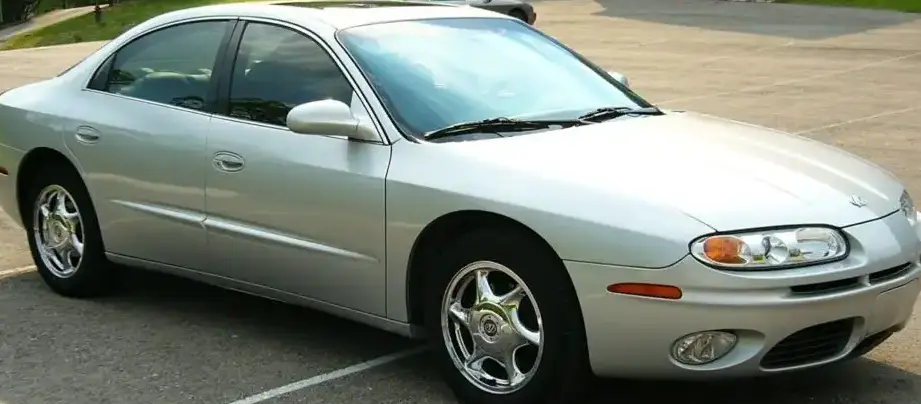
The Oldsmobile Aurora II, specifically the 3.5-liter V6 24V variant producing 218 horsepower, represented a significant evolution in Oldsmobile’s flagship sedan line. Produced from 2001 to 2003, this generation Aurora aimed to blend American luxury with improved performance and technology. It was positioned as a near-luxury vehicle, competing with imports like the Lexus ES and Acura TL, but ultimately struggled to gain significant market share in a rapidly changing automotive landscape. The Aurora II was built on a stretched version of the GM G platform, sharing underpinnings with the Buick LeSabre and Cadillac DeVille, but offering a more distinctive design and a focus on a more engaging driving experience.
Powertrain & Engine Architecture
The heart of the Aurora II 3.5 V6 was the LX5 engine, a 3.5-liter, 24-valve V6. This engine was a descendant of the L47 engine found in earlier Aurora models, but with significant revisions to improve power and refinement. It featured a 9.3:1 compression ratio and utilized multi-port fuel injection. The dual overhead camshafts (DOHC) and four valves per cylinder contributed to its relatively high output for its displacement. The engine was transversely mounted in the front of the vehicle, driving the front wheels. Paired with the LX5 was a 4-speed automatic transmission, a 4T65-E unit, chosen for its smoothness and reliability. While not a performance-oriented transmission, it was well-suited to the Aurora’s intended role as a comfortable cruiser. The transmission’s gear ratios were optimized for fuel efficiency and relaxed highway cruising, rather than aggressive acceleration.
Driving Characteristics
The 218 horsepower and 230 lb-ft of torque provided by the 3.5L V6 and 4-speed automatic resulted in adequate, but not exhilarating, performance. Acceleration from 0-60 mph took around 9.9 seconds, which was competitive with other vehicles in its class, but noticeably slower than the higher-output 4.0L V6 offered in some Aurora trims. The automatic transmission, while smooth, could feel somewhat sluggish during quick overtaking maneuvers. The focus was clearly on providing a comfortable and refined driving experience, with a quiet cabin and a well-tuned suspension. The Aurora II prioritized ride quality over sporty handling, making it a pleasant vehicle for long-distance travel.
Equipment & Trim Levels
The Aurora II 3.5 V6 typically came well-equipped, reflecting its near-luxury positioning. Standard features included leather upholstery, power-adjustable front seats, automatic climate control, a premium sound system, and alloy wheels. Optional extras included a sunroof, upgraded sound system with a trunk-mounted CD changer, and traction control. The interior design was generally conservative, with a focus on comfort and ease of use. The dashboard featured woodgrain accents and a straightforward layout. The Aurora II didn’t offer a wide range of trim levels; the 3.5L V6 was generally the base engine, with the 4.0L V6 being the upgrade option.
Chassis & Braking
The Aurora II utilized an independent front suspension with wishbone components and a trailing arm rear suspension. This setup prioritized ride comfort over sharp handling. The front brakes were ventilated discs, providing adequate stopping power, while the rear brakes were solid discs. Anti-lock brakes (ABS) were standard equipment. The steering was rack-and-pinion with hydraulic power assist, offering a light and easy steering feel. The tires were typically 225/60R16, chosen for a balance of ride comfort and grip.
Market Reception & Comparison
The Aurora II 3.5 V6 received mixed reviews from automotive critics. While praised for its comfortable ride and well-appointed interior, it was often criticized for its lack of sporty handling and its relatively modest performance compared to some of its competitors. Fuel economy was average for its class, with combined figures around 22 mpg. Compared to the 4.0L V6 Aurora, the 3.5L version offered lower running costs and a slightly more affordable price point, but at the expense of performance. The 3.5L was aimed at buyers who prioritized comfort and value over outright speed.
Legacy
The Oldsmobile Aurora II, including the 3.5 V6 variant, ultimately failed to revitalize the Oldsmobile brand. Production ceased in 2003, along with the entire Oldsmobile lineup. The LX5 engine proved to be reasonably reliable, with few major issues reported. Today, the Aurora II is a relatively affordable used car, but its value is limited by its age and the demise of the Oldsmobile brand. While not a particularly collectible vehicle, it represents a unique chapter in American automotive history, showcasing Oldsmobile’s attempt to compete in the near-luxury segment with a blend of American comfort and European-inspired design.