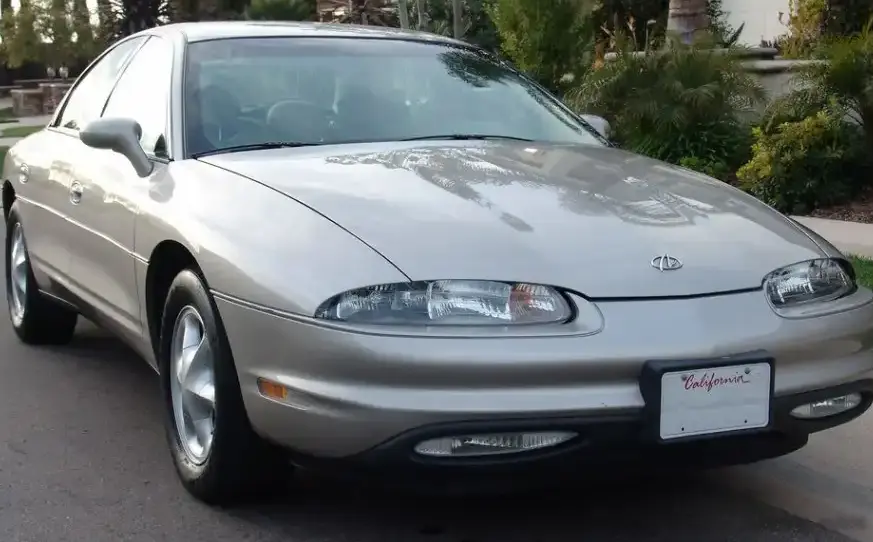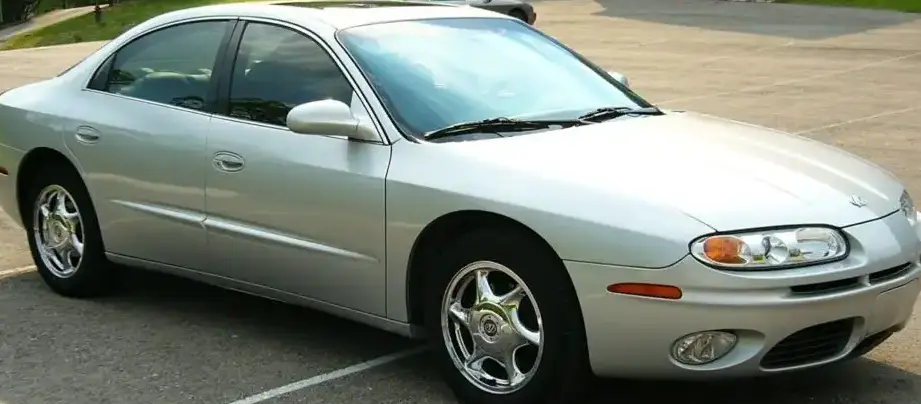
The Oldsmobile Aurora II, specifically the variant equipped with the 4.0-liter Northstar V8 engine producing 250 horsepower and paired with a four-speed automatic transmission, represented a significant evolution in Oldsmobile’s flagship sedan. Produced from November 1999 through March 2003, this iteration of the Aurora aimed to blend luxury, performance, and technology within the increasingly competitive American luxury car market. It was positioned as a premium offering within the Aurora lineup, sitting above the base models and offering a more powerful and refined driving experience. The Aurora II was built on the GM G platform, sharing architecture with other GM vehicles of the era, but distinguished itself through its distinctive styling and focus on a comfortable, yet capable, grand touring experience.
Technical Specifications
| Brand | Oldsmobile |
| Model | Aurora |
| Generation | Aurora II |
| Engine Type | 4.0 V8 (250 Hp) Automatic |
| Start of Production | November, 1999 |
| End of Production | March, 2003 |
| Powertrain Architecture | Internal Combustion Engine |
| Body Type | Sedan |
| Seats | 5 |
| Doors | 4 |
| Fuel Consumption (Urban) | 13.1-13.8 l/100 km (18-17 US mpg) |
| Fuel Consumption (Extra Urban) | 9-9.4 l/100 km (26.1-25 US mpg) |
| Fuel Consumption (Combined) | 11.2-11.8 l/100 km (21-19.9 US mpg) |
| Fuel Type | Petrol (Gasoline) |
| Weight-to-Power Ratio | 6.9 kg/Hp |
| Weight-to-Torque Ratio | 4.9 kg/Nm |
| Power | 250 Hp @ 5600 rpm |
| Power per Liter | 62.5 Hp/l |
| Torque | 353 Nm @ 4400 rpm (260.36 lb.-ft. @ 4400 rpm) |
| Engine Layout | Front, Transverse |
| Engine Model/Code | Northstar / L47 |
| Engine Displacement | 3998 cm3 (243.97 cu. in.) |
| Number of Cylinders | 8 |
| Engine Configuration | V-engine |
| Cylinder Bore | 87 mm (3.43 in.) |
| Piston Stroke | 84 mm (3.31 in.) |
| Compression Ratio | 10.3:1 |
| Valves per Cylinder | 4 |
| Fuel Injection System | Multi-port Manifold Injection |
| Engine Aspiration | Naturally Aspirated |
| Valvetrain | DOHC |
| Engine Oil Capacity | 6.7 l (7.08 US qt | 5.9 UK qt) |
| Coolant Capacity | 12.3 l (13 US qt | 10.82 UK qt) |
| Kerb Weight | 1725 kg (3802.97 lbs.) |
| Trunk Space | 422 l (14.9 cu. ft.) |
| Fuel Tank Capacity | 66 l (17.44 US gal | 14.52 UK gal) |
| Length | 5062 mm (199.29 in.) |
| Width | 1852 mm (72.91 in.) |
| Height | 1440 mm (56.69 in.) |
| Wheelbase | 2850 mm (112.2 in.) |
| Front Track | 1582 mm (62.28 in.) |
| Rear Track | 1582 mm (62.28 in.) |
| Turning Circle | 12.2 m (40.03 ft.) |
| Drivetrain | Front Wheel Drive |
| Gearbox | 4 gears, automatic transmission |
| Front Suspension | Independent, McPherson with coil spring and anti-roll bar |
| Rear Suspension | Independent coil spring, Transverse stabilizer, Trailing arm |
| Front Brakes | Ventilated Discs |
| Rear Brakes | Discs |
| Safety Systems | ABS (Anti-lock Braking System) |
| Steering | Steering rack and pinion, Hydraulic Power Steering |
| Tire Size | 235/55 R17 |
| Wheel Size | 7.5J x 17 |
Powertrain & Engine Architecture
The heart of this Aurora II variant is the 4.0-liter Northstar V8 engine, designated as the L47 code. This engine is a 90-degree V8 featuring a dual overhead camshaft (DOHC) valvetrain with four valves per cylinder. The Northstar engine family was known for its relatively compact size and smooth operation. Fuel delivery is managed by a multi-port fuel injection system, optimizing combustion efficiency. The engine produces 250 horsepower at 5600 rpm and 353 Nm (260.36 lb-ft) of torque at 4400 rpm. The engine’s transverse mounting and front-wheel-drive configuration were typical for GM’s W-body platform. Paired with the engine is a four-speed automatic transmission, designed to provide smooth shifts and adequate acceleration. While not a performance-oriented transmission, it was well-suited to the Aurora’s intended role as a comfortable cruiser.
Driving Characteristics
The 250 hp Northstar V8, coupled with the four-speed automatic, delivered a respectable, though not exhilarating, driving experience. Acceleration was adequate for highway merging and passing maneuvers, but it lacked the urgency of some of its competitors or even the higher-output Aurora trims. The automatic transmission’s gear ratios were tuned for comfort and fuel economy rather than outright performance. Compared to a manual transmission equipped Aurora (which wasn’t offered), the automatic resulted in a slight decrease in responsiveness. However, the automatic provided a more relaxed driving experience, particularly in city traffic. The front-wheel-drive layout contributed to predictable handling, but also limited the car’s cornering capabilities compared to rear-wheel-drive alternatives.
Equipment & Trim Levels
The 4.0L V8 Automatic Aurora II typically came well-equipped with features considered standard for a luxury sedan of its time. These included leather upholstery, power-adjustable front seats, a premium sound system, automatic climate control, and alloy wheels. Optional extras included a sunroof, upgraded sound systems, and various convenience packages. The interior design focused on providing a comfortable and refined environment, with woodgrain accents and a generally upscale aesthetic. The dashboard layout was straightforward and user-friendly, prioritizing ease of use over cutting-edge technology.
Chassis & Braking
The Aurora II utilized an independent suspension system at all four wheels. The front suspension employed a McPherson strut design with coil springs and an anti-roll bar, while the rear suspension featured an independent coil spring setup with a transverse stabilizer and trailing arms. This suspension configuration aimed to provide a balance between ride comfort and handling stability. Braking duties were handled by ventilated discs at the front and solid discs at the rear. An Anti-lock Braking System (ABS) was standard, enhancing safety and control during emergency braking situations. The steering system was a rack-and-pinion setup with hydraulic power assist, providing responsive and precise steering feel.
Market Reception & Comparison
The Oldsmobile Aurora II, including the 4.0L V8 Automatic variant, received mixed reviews from automotive critics. While praised for its comfortable ride, spacious interior, and refined engine, it was often criticized for its somewhat bland styling and lack of sporting character. Fuel economy was considered average for its class, with combined EPA estimates ranging from 19.9 to 21 US mpg. Compared to other trims, the 4.0L V8 offered a noticeable performance upgrade over the base engine, but at the cost of slightly reduced fuel efficiency. Reliability was generally considered acceptable, although the Northstar engine family was known to have potential issues with head gasket leaks and oil consumption in some cases.
Legacy
The Oldsmobile Aurora II, and particularly the 4.0L V8 Automatic version, represents a final chapter in Oldsmobile’s history as a purveyor of American luxury. While the brand was discontinued in 2004, the Aurora II remains a relatively affordable and comfortable used car option. The Northstar V8 engine, despite its potential maintenance concerns, is generally regarded as a durable and capable powerplant. Today, these Auroras are appreciated by enthusiasts for their unique styling, comfortable ride, and a glimpse into a bygone era of American automotive design. Parts availability can be a challenge, but a dedicated community of owners and online resources help to keep these vehicles on the road.