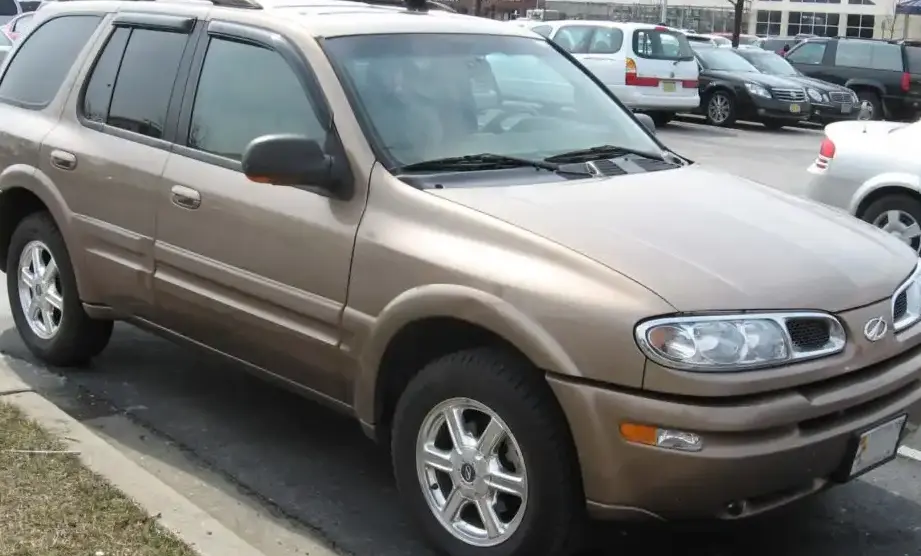
The Oldsmobile Bravada III, produced between 2001 and 2004, represented the third generation of Oldsmobile’s mid-size SUV offering. Built on the GMT360 platform shared with the Chevrolet TrailBlazer and GMC Envoy, the Bravada aimed to provide a more premium experience within the General Motors SUV lineup. The 4.2 24V variant, boasting 273 horsepower, was positioned as the top-tier engine option, offering a significant performance upgrade over the base 4.0L inline-six. This model year marked a period of transition for Oldsmobile, ultimately leading to the brand’s discontinuation in 2004, making the Bravada III a notable, if somewhat bittersweet, chapter in American automotive history.
Technical Specifications
| Brand | Oldsmobile |
| Model | Bravada |
| Generation | Bravada III |
| Type (Engine) | 4.2 24V (273 Hp) |
| Start of production | 2001 |
| End of production | 2004 |
| Powertrain Architecture | Internal Combustion engine |
| Body type | SUV |
| Seats | 5 |
| Doors | 5 |
| Fuel consumption (urban) | 14.7 l/100 km (16 US mpg, 19.2 UK mpg, 6.8 km/l) |
| Fuel consumption (extra urban) | 11.2 l/100 km (21 US mpg, 25.2 UK mpg, 8.9 km/l) |
| Fuel consumption (combined) | 13.1 l/100 km (18 US mpg, 21.6 UK mpg, 7.6 km/l) |
| Fuel Type | Petrol (Gasoline) |
| Acceleration 0 – 100 km/h | 9.2 sec |
| Acceleration 0 – 62 mph | 9.2 sec |
| Acceleration 0 – 60 mph | 8.7 sec |
| Maximum speed | 190 km/h (118.06 mph) |
| Weight-to-power ratio | 7.7 kg/Hp, 130 Hp/tonne |
| Weight-to-torque ratio | 5.6 kg/Nm, 177.6 Nm/tonne |
| Power | 273 Hp @ 6000 rpm |
| Power per litre | 65.7 Hp/l |
| Torque | 373 Nm @ 3600 rpm (275.11 lb.-ft. @ 3600 rpm) |
| Engine layout | Front, Longitudinal |
| Engine Model/Code | Vortec |
| Engine displacement | 4157 cm3 (253.68 cu. in.) |
| Number of cylinders | 6 |
| Engine configuration | Inline |
| Cylinder Bore | 93 mm (3.66 in.) |
| Piston Stroke | 102 mm (4.02 in.) |
| Compression ratio | 10:1 |
| Number of valves per cylinder | 4 |
| Fuel injection system | Multi-port manifold injection |
| Engine aspiration | Naturally aspirated engine |
| Valvetrain | DOHC |
| Engine oil capacity | 6.6 l (6.97 US qt | 5.81 UK qt) |
| Coolant capacity | 13.1 l (13.84 US qt | 11.53 UK qt) |
| Kerb Weight | 2100 kg (4629.71 lbs.) |
| Max. weight | 2610 kg (5754.07 lbs.) |
| Max load | 510 kg (1124.36 lbs.) |
| Trunk (boot) space – minimum | 1125 l (39.73 cu. ft.) |
| Trunk (boot) space – maximum | 2360 l (83.34 cu. ft.) |
| Fuel tank capacity | 71 l (18.76 US gal | 15.62 UK gal) |
| Length | 4870 mm (191.73 in.) |
| Width | 1895 mm (74.61 in.) |
| Height | 1830 mm (72.05 in.) |
| Wheelbase | 2870 mm (112.99 in.) |
| Front track | 1605 mm (63.19 in.) |
| Rear (Back) track | 1575 mm (62.01 in.) |
| Drive wheel | All wheel drive (4×4) |
| Number of gears and type of gearbox | 4 gears, automatic transmission |
| Front suspension | Double wishbone |
| Rear suspension | Transverse stabilizer |
| Front brakes | Ventilated discs |
| Rear brakes | Disc |
| Assisting systems | ABS (Anti-lock braking system) |
| Steering type | Steering rack and pinion |
| Power steering | Hydraulic Steering |
| Tires size | 245/70 R16 |
Powertrain & Engine Architecture
The heart of the Bravada III 4.2 was the Vortec 4200 engine, a 4.2-liter (253.68 cubic inch) inline-six cylinder powerplant. This engine utilized a cast iron block with aluminum cylinder heads, featuring dual overhead camshafts (DOHC) and four valves per cylinder. The Vortec 4200 employed multi-port fuel injection, delivering precise fuel metering for optimal combustion. The engine’s 93mm bore and 102mm stroke contributed to its robust torque output. Paired with this engine was a 4-speed automatic transmission (likely the 4L60-E), chosen for its smooth operation and suitability for towing. This transmission featured electronically controlled shifting and overdrive for improved fuel efficiency at highway speeds. The 4L60-E was a common transmission in GM trucks and SUVs of the era, known for its durability when properly maintained.
Driving Characteristics
The 4.2L engine and automatic transmission combination in the Bravada III delivered a noticeable improvement in performance compared to the base 4.0L engine. While not a sports car, the 273 horsepower and 275 lb-ft of torque provided adequate power for merging onto highways and passing other vehicles. Acceleration from 0-60 mph was achieved in around 8.7 seconds, a respectable figure for a mid-size SUV of that era. The automatic transmission, while smooth, wasn’t particularly quick to downshift, resulting in a slightly less responsive feel than a manual transmission equipped model. The 4L60-E’s gear ratios were optimized for towing and everyday driving, prioritizing usability over outright performance. The all-wheel-drive system provided enhanced traction in various weather conditions, making the Bravada a capable vehicle for year-round use.
Equipment & Trim Levels
The Bravada III 4.2 typically came well-equipped, reflecting its position as the premium trim level. Standard features included leather upholstery, power-adjustable front seats, a premium sound system, and automatic climate control. Exterior features often included alloy wheels, chrome accents, and fog lights. Optional extras included a sunroof, a navigation system, and a rear entertainment system. The interior design was generally considered comfortable and well-appointed, although the materials used weren’t as luxurious as those found in some European or Japanese SUVs. The Bravada’s dashboard layout was functional and straightforward, with easy-to-read gauges and intuitive controls.
Chassis & Braking
The Bravada III utilized a body-on-frame construction, providing a robust and durable chassis. The front suspension featured an independent double wishbone design, while the rear suspension employed a solid axle with a transverse stabilizer bar. This setup offered a good balance between ride comfort and handling. Braking duties were handled by ventilated disc brakes at all four corners, along with an anti-lock braking system (ABS) for enhanced safety. The braking system was generally considered adequate for the vehicle’s weight and performance, although it lacked the stopping power of some more modern SUVs. Steering was provided by a hydraulic power rack and pinion system, offering responsive and precise control.
Market Reception & Comparison
The Oldsmobile Bravada III 4.2 received mixed reviews from automotive critics. While the engine was praised for its power and smoothness, some reviewers criticized the SUV’s fuel economy and somewhat dated interior design. Compared to its siblings, the Chevrolet TrailBlazer and GMC Envoy, the Bravada offered a more refined driving experience and a more luxurious interior. However, it also carried a higher price tag. Against competitors like the Ford Explorer and Honda Pilot, the Bravada offered a unique blend of American ruggedness and Oldsmobile refinement, but struggled to gain significant market share due to the brand’s declining reputation and eventual demise.
Legacy
The Oldsmobile Bravada III 4.2, while not a commercial success, remains a fondly remembered SUV among enthusiasts. The Vortec 4200 engine, when properly maintained, proved to be a reliable and durable powerplant. However, like many vehicles of this era, the Bravada is susceptible to age-related issues such as corrosion and wear and tear on suspension components. Today, well-maintained examples of the Bravada III 4.2 can be found on the used car market, often appealing to those seeking a capable and affordable SUV with a touch of American nostalgia. The 4L60-E transmission, while generally reliable, can require rebuilds after high mileage, and sourcing parts for the Bravada can sometimes be challenging due to the brand’s discontinuation.