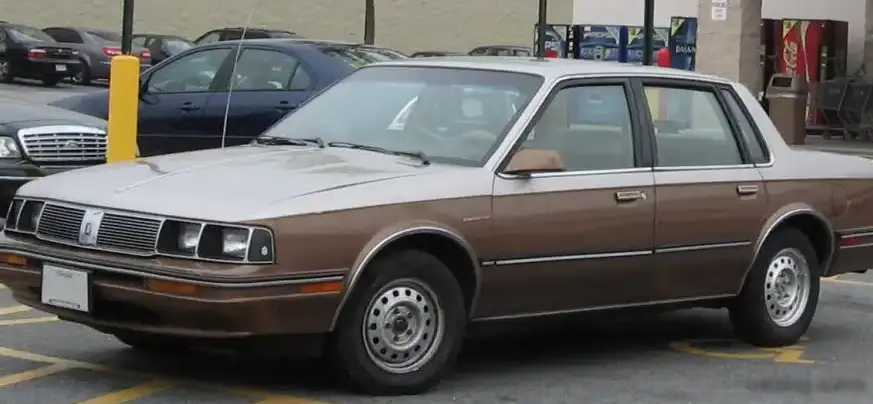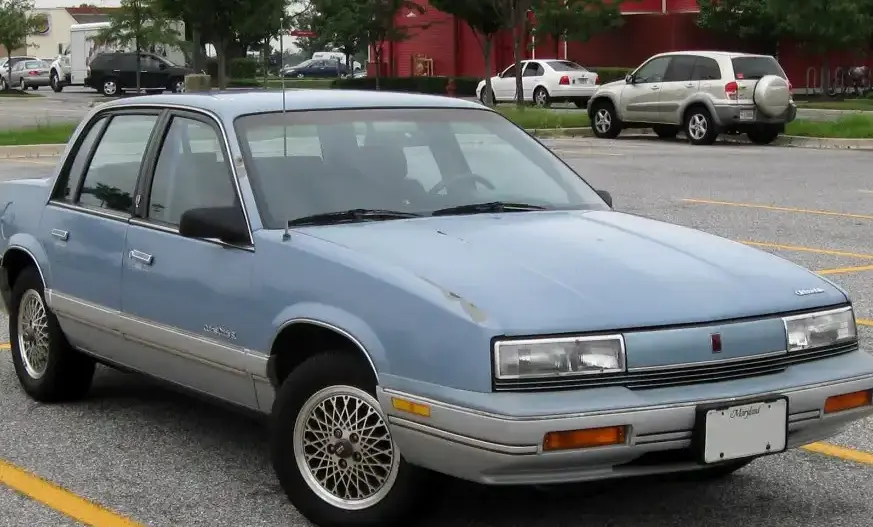
The Oldsmobile Cutlass Calais 2.3 16V, produced between 1988 and 1991, represented a significant entry point into the Cutlass lineup during a period of substantial redesign for the model. Falling within the third generation of the Cutlass (1988-1997), the Calais was positioned as the more conservatively styled and typically lower-equipped variant compared to the Cutlass Supreme. This 2.3-liter, 16-valve engine paired with a 5-speed manual transmission offered a balance of fuel efficiency and acceptable performance for the era, targeting buyers seeking a practical and affordable American sedan. It was a key component in Oldsmobile’s attempt to modernize its image and compete in a crowded mid-size market.
Technical Specifications
| Brand | Oldsmobile |
| Model | Cutlass |
| Generation | Cutlass Calais |
| Type (Engine) | 2.3 16V (162 Hp) |
| Start of production | 1988 |
| End of production | 1991 |
| Powertrain Architecture | Internal Combustion engine |
| Body type | Sedan |
| Seats | 5 |
| Doors | 4 |
| Fuel consumption (urban) | 15 l/100 km (15.7 US mpg, 18.8 UK mpg, 6.7 km/l) |
| Fuel consumption (extra urban) | 9.2 l/100 km (25.6 US mpg, 30.7 UK mpg, 10.9 km/l) |
| Fuel Type | Petrol (Gasoline) |
| Maximum speed | 195 km/h (121.17 mph) |
| Weight-to-power ratio | 7.4 kg/Hp, 135 Hp/tonne |
| Weight-to-torque ratio | 5.7 kg/Nm, 175 Nm/tonne |
| Power | 162 Hp @ 6200 rpm |
| Power per litre | 71.7 Hp/l |
| Torque | 210 Nm @ 5200 rpm (154.89 lb.-ft. @ 5200 rpm) |
| Engine layout | Front, Transverse |
| Engine displacement | 2260 cm3 (137.91 cu. in.) |
| Number of cylinders | 4 |
| Engine configuration | Inline |
| Cylinder Bore | 92 mm (3.62 in.) |
| Piston Stroke | 85 mm (3.35 in.) |
| Compression ratio | 9.5:1 |
| Number of valves per cylinder | 4 |
| Fuel injection system | Multi-port manifold injection |
| Engine aspiration | Naturally aspirated engine |
| Valvetrain | DOHC |
| Engine oil capacity | 4.3 l (4.54 US qt | 3.78 UK qt) |
| Coolant | 10.5 l (11.1 US qt | 9.24 UK qt) |
| Kerb Weight | 1200 kg (2645.55 lbs.) |
| Trunk (boot) space – minimum | 375 l (13.24 cu. ft.) |
| Fuel tank capacity | 51 l (13.47 US gal | 11.22 UK gal) |
| Length | 4555 mm (179.33 in.) |
| Width | 1700 mm (66.93 in.) |
| Height | 1330 mm (52.36 in.) |
| Wheelbase | 2625 mm (103.35 in.) |
| Front track | 1420 mm (55.91 in.) |
| Rear (Back) track | 1410 mm (55.51 in.) |
| Drivetrain Architecture | The Internal combustion engine (ICE) drives the front wheels of the vehicle. |
| Drive wheel | Front wheel drive |
| Number of gears and type of gearbox | 5 gears, manual transmission |
| Front suspension | Coil spring |
| Rear suspension | Leaf spring |
| Front brakes | Ventilated discs |
| Rear brakes | Drum |
| Assisting systems | ABS (Anti-lock braking system) |
| Steering type | Steering rack and pinion |
| Power steering | Hydraulic Steering |
| Tires size | 185/75 R14 |
Powertrain & Engine Architecture
The heart of the Cutlass Calais 2.3 was the 2.3-liter inline-four cylinder engine, designated as the 231 cubic inch engine. This engine, part of General Motors’ “Quad 4” family (though technically predating the full Quad 4 designation), featured a dual overhead camshaft (DOHC) valvetrain with four valves per cylinder – a relatively advanced configuration for a mainstream American engine of the time. Multi-port fuel injection was employed, contributing to improved fuel efficiency and throttle response. The engine produced 162 horsepower at 6200 rpm and 155 lb-ft of torque at 5200 rpm. The 5-speed manual transmission was a key component, offering drivers more control and contributing to better fuel economy than the available automatic option. The engine was transversely mounted, driving the front wheels.
Driving Characteristics
The 2.3-liter engine in the Cutlass Calais provided adequate, though not exhilarating, performance. Acceleration was reasonable for everyday driving, but the car wasn’t particularly quick. The 5-speed manual transmission allowed drivers to keep the engine in its optimal power band, improving responsiveness. Compared to the V6-powered Cutlass Supreme, the 2.3 Calais felt noticeably less powerful, but it offered a more engaging driving experience thanks to the manual gearbox. The gear ratios were tuned for fuel economy, meaning that highway cruising was comfortable, but passing maneuvers required downshifting. The front-wheel-drive configuration provided predictable handling, though it lacked the sporting feel of rear-wheel-drive alternatives.
Equipment & Trim Levels
The Cutlass Calais 2.3 16V typically came with a fairly basic level of standard equipment. Interior features generally included cloth upholstery, a basic AM/FM radio, and manual windows and locks. Air conditioning was often an optional extra. The dashboard layout was functional but lacked the luxury appointments found in the Cutlass Supreme. Optional extras included upgraded sound systems, power windows and locks, and a sunroof. The Calais was designed to be an affordable option, so many examples were equipped with minimal extras.
Chassis & Braking
The Cutlass Calais utilized a front-wheel-drive chassis with an independent coil spring suspension in the front and a solid axle with leaf springs in the rear. This suspension setup provided a comfortable ride, but it wasn’t particularly sporty. The front brakes were ventilated discs, while the rear brakes were drums. An anti-lock braking system (ABS) was available as an option, enhancing safety. The steering was rack-and-pinion with hydraulic power assist, providing reasonably precise steering feel. The tires were typically 185/75R14 size, offering a balance of ride comfort and handling.
Market Reception & Comparison
The Cutlass Calais 2.3 16V was generally well-received as an affordable and fuel-efficient option in the mid-size sedan segment. Critics praised its modern engine and relatively good handling, but some found the interior to be somewhat spartan. Compared to the V6-powered Cutlass Supreme, the 2.3 Calais offered significantly better fuel economy, but at the expense of performance. The 2.3L engine was considered more reliable than some of the earlier Oldsmobile engines, but it wasn’t without its issues, such as potential oil leaks and occasional sensor failures. The manual transmission version was favored by enthusiasts for its more engaging driving experience.
Legacy
The Oldsmobile Cutlass Calais 2.3 16V, while not a particularly collectible car today, represents an interesting chapter in Oldsmobile’s history. It showcased the brand’s attempt to embrace more modern engine technology and compete in a changing automotive landscape. The 2.3-liter engine proved to be reasonably durable, and many examples are still on the road today. However, finding well-maintained examples can be challenging, as many were used as daily drivers and subjected to years of wear and tear. In the used car market, these Calais models are typically quite affordable, making them an attractive option for budget-minded buyers seeking a classic American sedan.