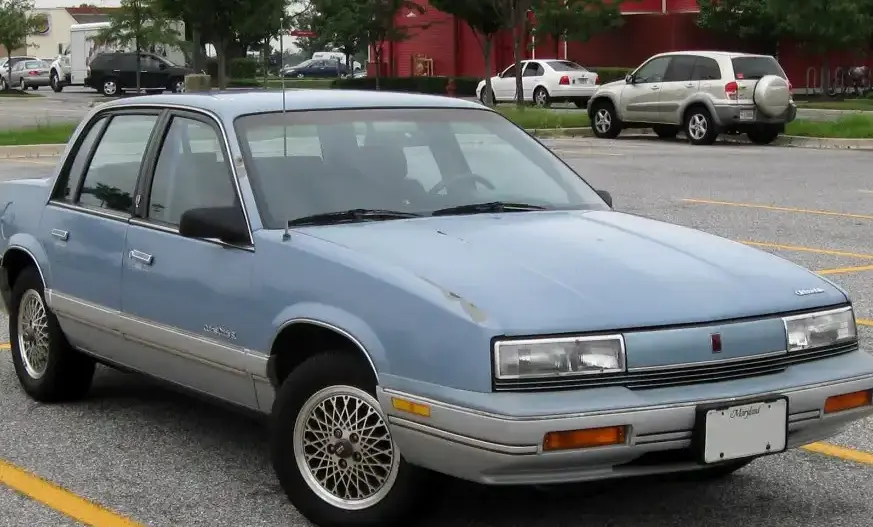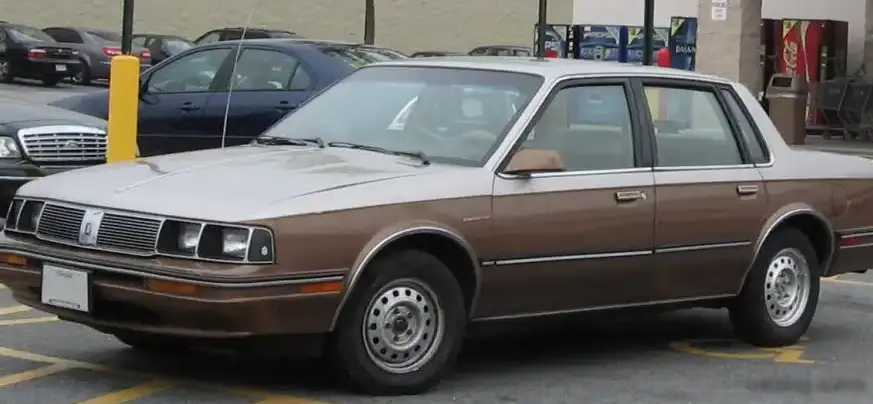
The Oldsmobile Cutlass Supreme 2.3 16V, produced from 1987 to 1997, represented a downsized and more fuel-efficient offering within the traditionally larger Cutlass Supreme lineup. Positioned as the entry-level engine option, it aimed to attract buyers seeking a comfortable, mid-size sedan with improved economy compared to the V6 models. This variant was part of the third generation (1988-1997) of the Cutlass Supreme, which saw a significant shift towards front-wheel drive and a more modern design. The 2.3-liter engine, designated the LD2, was a key component of this modernization, offering a balance between performance and fuel efficiency in a segment increasingly focused on both.
Technical Specifications
| Brand | Oldsmobile |
| Model | Cutlass |
| Generation | Cutlass Supreme |
| Type (Engine) | 2.3 16V (162 Hp) |
| Start of production | 1987 |
| End of production | 1997 |
| Powertrain Architecture | Internal Combustion engine |
| Body type | Sedan |
| Seats | 5 |
| Doors | 4 |
| Fuel consumption (urban) | 16 l/100 km (14.7 US mpg) |
| Fuel consumption (extra urban) | 9 l/100 km (26.1 US mpg) |
| Fuel Type | Petrol (Gasoline) |
| Maximum speed | 190 km/h (118.06 mph) |
| Weight-to-power ratio | 9.2 kg/Hp |
| Weight-to-torque ratio | 7.1 kg/Nm |
| Power | 162 Hp @ 6200 rpm |
| Power per litre | 71.7 Hp/l |
| Torque | 210 Nm @ 5200 rpm (154.89 lb.-ft. @ 5200 rpm) |
| Engine layout | Front, Transverse |
| Engine Model/Code | LD2 |
| Engine displacement | 2260 cm3 (137.91 cu. in.) |
| Number of cylinders | 4 |
| Engine configuration | Inline |
| Cylinder Bore | 92 mm (3.62 in.) |
| Piston Stroke | 85 mm (3.35 in.) |
| Compression ratio | 9.5:1 |
| Number of valves per cylinder | 4 |
| Fuel injection system | Multi-port manifold injection |
| Engine aspiration | Naturally aspirated engine |
| Valvetrain | DOHC |
| Engine oil capacity | 4.3 l (4.54 US qt | 3.78 UK qt) |
| Coolant | 10.5 l (11.1 US qt | 9.24 UK qt) |
| Kerb Weight | 1490 kg (3284.89 lbs.) |
| Trunk (boot) space – minimum | 440 l (15.54 cu. ft.) |
| Fuel tank capacity | 63 l (16.64 US gal | 13.86 UK gal) |
| Length | 4921 mm (193.74 in.) |
| Width | 1804 mm (71.02 in.) |
| Height | 1391 mm (54.76 in.) |
| Wheelbase | 2730 mm (107.48 in.) |
| Front track | 1512 mm (59.53 in.) |
| Rear (Back) track | 1472 mm (57.95 in.) |
| Drivetrain Architecture | Front wheel drive |
| Number of gears and type of gearbox | 3 gears, automatic transmission |
| Front suspension | Coil spring |
| Rear suspension | Leaf spring |
| Front brakes | Ventilated discs |
| Rear brakes | Disc |
| Assisting systems | ABS (Anti-lock braking system) |
| Steering type | Steering rack and pinion |
| Power steering | Hydraulic Steering |
| Tires size | 195/75 R14 |
Powertrain & Engine Architecture
The heart of the Cutlass Supreme 2.3 was the LD2 engine, a 2.3-liter inline-four cylinder powerplant. This engine featured a double overhead camshaft (DOHC) valvetrain with four valves per cylinder, contributing to its relatively high output for its displacement. The LD2 utilized multi-port fuel injection, a significant advancement over earlier carburetor-equipped engines, improving fuel efficiency and throttle response. The engine’s 9.5:1 compression ratio was a compromise between performance and the fuel quality available at the time. Paired with this engine was a 3-speed automatic transmission, a common choice for American buyers prioritizing convenience over outright performance. This transmission was designed for smooth shifts and comfortable cruising, but lacked the responsiveness of a manual gearbox or more modern automatic designs.
Driving Characteristics
The 162 horsepower and 155 lb-ft of torque produced by the 2.3-liter engine provided adequate, but not exhilarating, performance in the Cutlass Supreme. Acceleration was modest, with 0-60 mph times estimated around 10-11 seconds. The 3-speed automatic transmission, while smooth, contributed to a somewhat sluggish feel, particularly during overtaking maneuvers. Compared to the V6-powered Cutlass Supremes, the 2.3L model offered significantly less power, but also better fuel economy. The gear ratios were optimized for cruising, making it a comfortable highway car, but less engaging on winding roads. The front-wheel-drive configuration provided predictable handling, but lacked the dynamic capabilities of rear-wheel-drive vehicles.
Equipment & Trim Levels
The 2.3-liter Cutlass Supreme typically came with a standard equipment list focused on comfort and convenience. This included features like air conditioning, power steering, an AM/FM stereo, and cloth upholstery. Optional extras included power windows and locks, cruise control, and a more upgraded sound system. Interior trim was generally basic, reflecting the car’s position as the entry-level model. The dashboard layout was functional and straightforward, prioritizing ease of use over aesthetic flair. The Cutlass Supreme offered a relatively spacious interior for its class, providing comfortable seating for five passengers.
Chassis & Braking
The Cutlass Supreme 2.3 utilized a front-wheel-drive chassis with an independent coil spring suspension in the front and a leaf spring suspension in the rear. The leaf spring rear suspension was a cost-saving measure, and while it provided adequate ride comfort, it wasn’t as refined as a fully independent rear suspension. Braking duties were handled by ventilated discs in the front and solid discs in the rear. An anti-lock braking system (ABS) was available as an option, enhancing safety by preventing wheel lockup during hard braking. The steering system employed a rack-and-pinion setup with hydraulic power assist, providing relatively light and precise steering feel.
Market Reception & Comparison
The Cutlass Supreme 2.3 16V was generally well-received as a practical and affordable mid-size sedan. Critics praised its fuel efficiency and comfortable ride, but noted its lack of outright performance compared to V6 models. Compared to competitors like the Ford Taurus and Chevrolet Lumina, the Cutlass Supreme offered a similar level of comfort and features, but often at a slightly lower price point. The 2.3-liter engine proved to be relatively reliable, but required regular maintenance to ensure optimal performance. Fuel economy figures of around 16 mpg city and 26 mpg highway were competitive for the time.
Legacy
The Oldsmobile Cutlass Supreme 2.3 16V, while not the most powerful or sporty version of the Cutlass Supreme, remains a popular choice among collectors and enthusiasts seeking an affordable and reliable classic car. The LD2 engine, when properly maintained, is known for its durability. Today, these cars can be found in reasonable condition at relatively low prices, making them an accessible entry point into the world of classic American automobiles. The 2.3-liter engine, while not a high-performance unit, provided a good balance of fuel efficiency and reliability, contributing to the Cutlass Supreme’s enduring appeal.