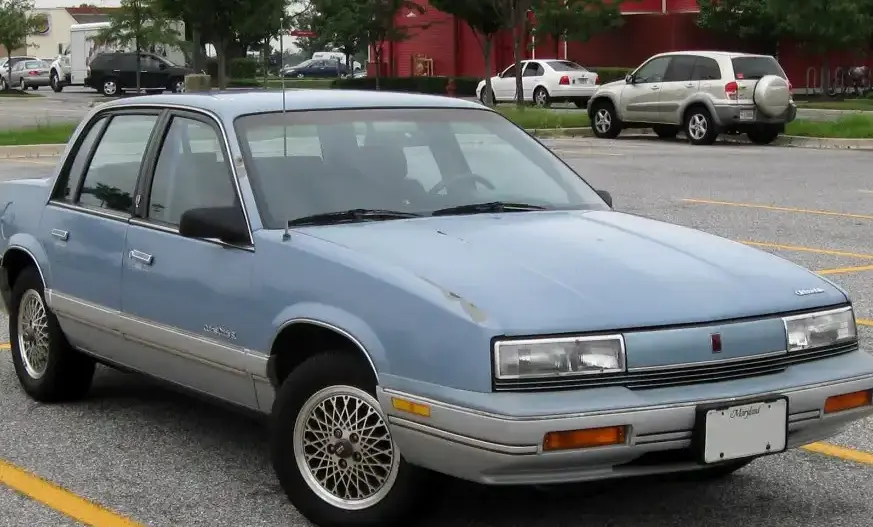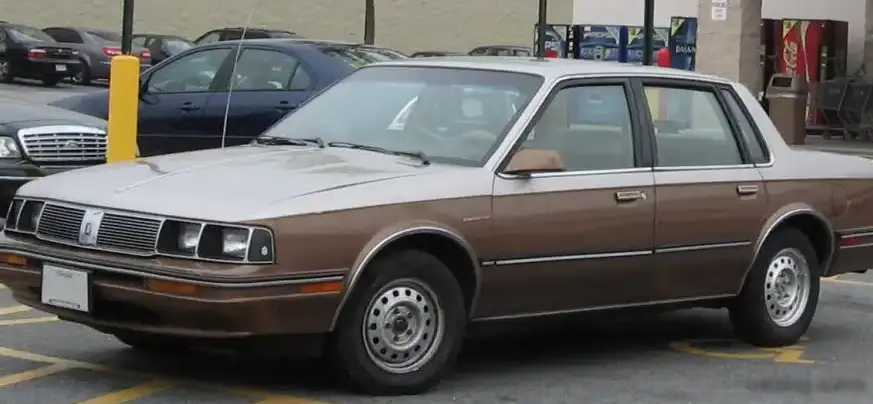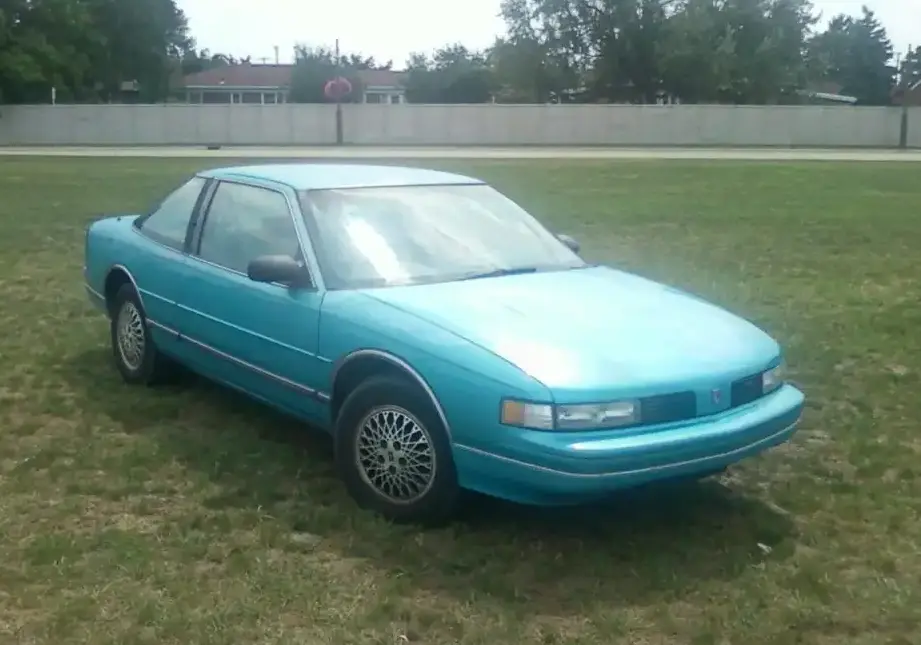
The Oldsmobile Cutlass Supreme Coupe with the 3.1-liter V6 engine producing 141 horsepower was a mainstay of the American automotive landscape from 1989 through 1998. Representing the fifth generation of the Cutlass Supreme, this variant occupied a middle-ground position within the lineup, offering a balance between affordability and comfort. It was positioned below the more powerful V8-equipped models and above the base four-cylinder offerings, targeting buyers seeking a reasonably equipped and reliable personal-luxury coupe. The Cutlass Supreme, throughout its history, was a popular choice for those desiring a comfortable and stylish vehicle, and this generation continued that tradition, albeit with a shift towards front-wheel drive and more modern engineering.
Technical Specifications
| Brand | Oldsmobile |
| Model | Cutlass |
| Generation | Cutlass Supreme Coupe |
| Type (Engine) | 3.1 V6 (141 Hp) |
| Start of production | 1989 |
| End of production | 1998 |
| Powertrain Architecture | Internal Combustion engine |
| Body type | Coupe |
| Seats | 5 |
| Doors | 2 |
| Fuel consumption (urban) | 16 l/100 km (14.7 US mpg, 17.7 UK mpg, 6.3 km/l) |
| Fuel consumption (extra urban) | 9 l/100 km (26.1 US mpg, 31.4 UK mpg, 11.1 km/l) |
| Fuel Type | Petrol (Gasoline) |
| Maximum speed | 185 km/h (114.95 mph) |
| Weight-to-power ratio | 10.2 kg/Hp (97.6 Hp/tonne) |
| Weight-to-torque ratio | 5.8 kg/Nm (173.7 Nm/tonne) |
| Power | 141 Hp @ 4400 rpm |
| Power per litre | 45 Hp/l |
| Torque | 251 Nm @ 3200 rpm (185.13 lb.-ft. @ 3200 rpm) |
| Engine layout | Front, Transverse |
| Engine Model/Code | LH0 |
| Engine displacement | 3135 cm3 (191.31 cu. in.) |
| Number of cylinders | 6 |
| Engine configuration | V-engine |
| Cylinder Bore | 89 mm (3.5 in.) |
| Piston Stroke | 84 mm (3.31 in.) |
| Compression ratio | 8.8:1 |
| Number of valves per cylinder | 2 |
| Fuel injection system | Multi-port manifold injection |
| Engine aspiration | Naturally aspirated engine |
| Valvetrain | OHC |
| Engine oil capacity | 4.8 l (5.07 US qt | 4.22 UK qt) |
| Coolant | 11.8 l (12.47 US qt | 10.38 UK qt) |
| Kerb Weight | 1445 kg (3185.68 lbs.) |
| Trunk (boot) space – minimum | 490 l (17.3 cu. ft.) |
| Fuel tank capacity | 63 l (16.64 US gal | 13.86 UK gal) |
| Length | 4900 mm (192.91 in.) |
| Width | 1805 mm (71.06 in.) |
| Height | 1350 mm (53.15 in.) |
| Wheelbase | 2730 mm (107.48 in.) |
| Front track | 1510 mm (59.45 in.) |
| Rear (Back) track | 1470 mm (57.87 in.) |
| Drivetrain Architecture | The Internal combustion engine (ICE) drives the front wheels of the vehicle. |
| Drive wheel | Front wheel drive |
| Number of gears and type of gearbox | 4 gears, automatic transmission |
| Front suspension | Coil spring |
| Rear suspension | Leaf spring |
| Front brakes | Ventilated discs |
| Rear brakes | Disc |
| Assisting systems | ABS (Anti-lock braking system) |
| Steering type | Steering rack and pinion |
| Power steering | Hydraulic Steering |
| Tires size | 195/75 R14 |
Powertrain & Engine Architecture
The heart of this Cutlass Supreme variant was the 3.1-liter (191.31 cubic inches) LH0 V6 engine. This engine, part of General Motors’ “3100” family, was a 60-degree V-engine featuring a cast iron block and aluminum cylinder heads. It utilized a multi-port fuel injection system, providing improved fuel efficiency and smoother operation compared to earlier carbureted designs. The engine employed a single overhead camshaft (OHC) design, operating two valves per cylinder. The 141 horsepower output was achieved at 4400 rpm, while peak torque of 185.13 lb.-ft. arrived at 3200 rpm. The engine was transversely mounted in the front of the vehicle, driving the front wheels. Paired with the 3.1L V6 was a four-speed automatic transmission, offering convenient operation for everyday driving. This transmission was a typical GM unit of the era, known for its reliability but not particularly sporty shift characteristics.
Driving Characteristics
The 141-horsepower 3.1L V6 and four-speed automatic combination delivered adequate, but not exhilarating, performance. Acceleration was sufficient for merging onto highways and passing slower traffic, but it wasn’t a particularly quick car. The automatic transmission, while smooth, prioritized comfort over responsiveness. Gear ratios were tuned for fuel economy and relaxed cruising, resulting in a somewhat leisurely feel. Compared to the available V8 engines, the 3.1L felt noticeably less powerful, especially when fully loaded with passengers. However, it offered a significant improvement in fuel economy. The front-wheel-drive configuration provided decent handling in most conditions, but lacked the sporty feel of rear-wheel-drive alternatives.
Equipment & Trim Levels
The Cutlass Supreme Coupe 3.1L typically came standard with features like air conditioning, power steering, power brakes, and a basic AM/FM stereo. Cloth upholstery was standard, with optional upgrades to leather available. Common options included power windows and locks, cruise control, and a more advanced sound system. The interior design was typical of the early 1990s, featuring a relatively simple dashboard layout and comfortable seating. Higher trim levels offered additional features like alloy wheels, upgraded interior trim, and a sunroof.
Chassis & Braking
The Cutlass Supreme Coupe utilized a front-wheel-drive chassis with an independent coil spring suspension in the front and a leaf spring suspension in the rear. The leaf spring rear suspension was a cost-saving measure, and while it provided adequate ride comfort, it wasn’t as sophisticated as a fully independent rear suspension. Braking duties were handled by ventilated discs in the front and solid discs in the rear. An anti-lock braking system (ABS) was often included as standard equipment, enhancing safety. The steering system was a rack-and-pinion setup with hydraulic power assist, providing relatively light and easy steering.
Market Reception & Comparison
The Cutlass Supreme 3.1L Automatic was generally well-received by consumers as a comfortable and affordable coupe. Critics noted its adequate performance and good fuel economy, but some found the engine to be somewhat underpowered compared to the V8 options. Compared to the V6-powered Ford Thunderbird and Chevrolet Monte Carlo, the Cutlass Supreme offered a similar level of comfort and features at a competitive price point. The 3.1L engine was generally considered reliable, but required regular maintenance to prevent oil leaks and ensure optimal performance. Fuel economy was a strong point, averaging around 26 mpg on the highway.
Legacy
The Oldsmobile Cutlass Supreme 3.1L V6 Automatic, while not a performance icon, remains a popular choice among collectors and enthusiasts seeking a classic American coupe. The 3.1L engine, when properly maintained, proved to be a durable and reliable powerplant. Today, these vehicles are relatively affordable and offer a nostalgic driving experience. Parts availability is generally good, although some trim-specific components can be difficult to find. The Cutlass Supreme represents a transitional period in American automotive history, bridging the gap between traditional body-on-frame construction and the more modern unibody designs that would become prevalent in the years to come. Its enduring appeal lies in its comfortable ride, stylish design, and relatively simple mechanicals.