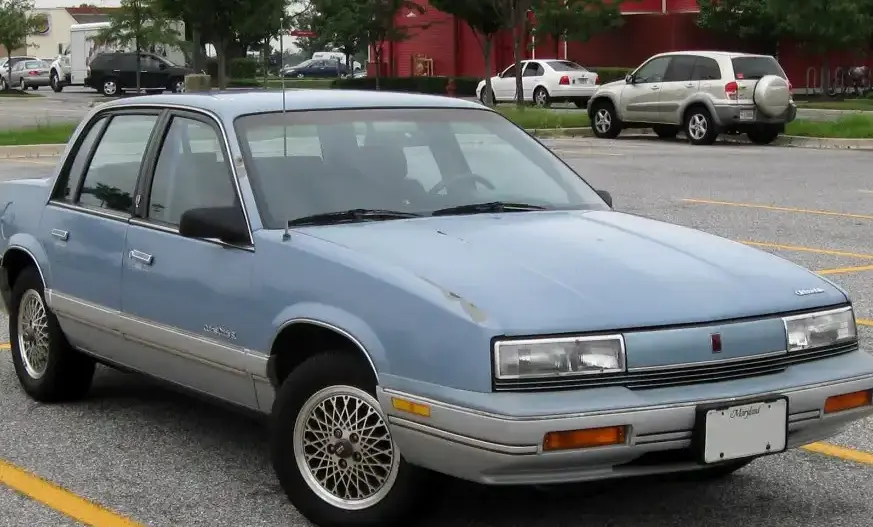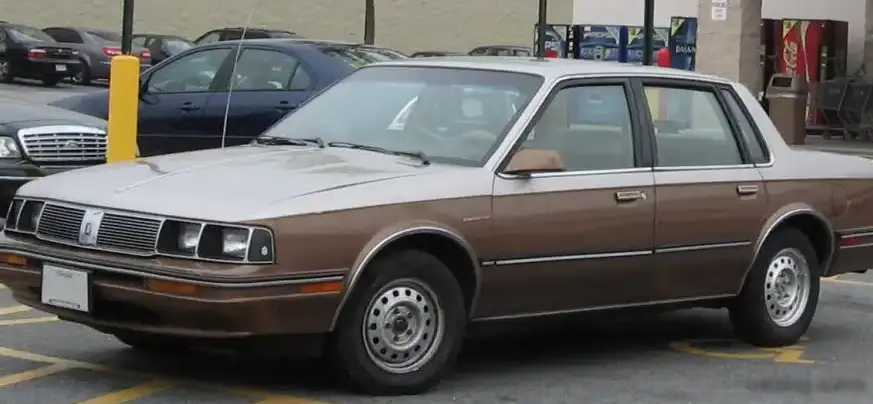
The Oldsmobile Cutlass Supreme Holiday Sedan with the 5.4-liter V8 engine, producing 320 horsepower, represented a significant offering in the American luxury car market during its brief production run from 1966 to 1967. Positioned as a premium trim within the broader Cutlass Supreme line, the Holiday Sedan catered to buyers seeking a blend of performance, comfort, and style. This variant was part of the second generation of the Cutlass Supreme, which saw a substantial redesign and a move towards larger, more powerful engines. It stood out as one of the larger displacement options available, aimed at those desiring substantial power in a full-size American sedan.
Technical Specifications
| Brand | Oldsmobile |
| Model | Cutlass |
| Generation | Cutlass Supreme Holiday Sedan |
| Type (Engine) | 5.4 V8 (320 Hp) Automatic |
| Start of production | 1966 |
| End of production | 1967 |
| Powertrain Architecture | Internal Combustion engine |
| Body type | Sedan |
| Seats | 5 |
| Doors | 4 |
| Fuel Type | Petrol (Gasoline) |
| Weight-to-power ratio | 4.9 kg/Hp, 206.2 Hp/tonne |
| Weight-to-torque ratio | 3.2 kg/Nm, 314.4 Nm/tonne |
| Power | 320 Hp |
| Power per litre | 59.2 Hp/l |
| Torque | 488 Nm / 359.93 lb.-ft. |
| Engine layout | Front, Longitudinal |
| Engine displacement | 5408 cm3 / 330.02 cu. in. |
| Number of cylinders | 8 |
| Engine configuration | V-engine |
| Number of valves per cylinder | 2 |
| Fuel injection system | Carburettor |
| Engine aspiration | Naturally aspirated engine |
| Valvetrain | OHV |
| Engine oil capacity | 4.7 l / 4.97 US qt | 4.14 UK qt |
| Coolant capacity | 15.6 l / 16.48 US qt | 13.73 UK qt |
| Kerb Weight | 1552 kg / 3421.57 lbs. |
| Fuel tank capacity | 76 l / 20.08 US gal | 16.72 UK gal |
| Length | 5187 mm / 204.21 in. |
| Width | 1930 mm / 75.98 in. |
| Height | 1382 mm / 54.41 in. |
| Wheelbase | 2921 mm / 115 in. |
| Drivetrain Architecture | The Internal combustion engine (ICE) drives the rear wheels of the vehicle. |
| Drive wheel | Rear wheel drive |
| Number of gears and type of gearbox | 2 gears, automatic transmission |
| Front brakes | Drum |
| Rear brakes | Drum |
| Tires size | 205/75 SR14; 225/70 SR14 |
| Wheel rims size | 6J x 14 ET0; 7J x 14 ET0 |
Powertrain & Engine Architecture
The heart of the Cutlass Supreme Holiday Sedan was its massive 5.4-liter (330 cubic inch) V8 engine. This engine, internally designated with various codes depending on specific calibration, was a traditional overhead valve (OHV) design. It utilized a four-barrel carburetor for fuel delivery, a common practice for high-performance engines of the era. The engine’s large displacement and relatively low compression ratio (for the time) contributed to its substantial torque output of 488 Nm (359.93 lb-ft). The two-speed automatic transmission, a Hydramatic unit, was the sole transmission option for this variant. While offering smooth shifts, the two-speed design was relatively simple compared to the three-speed automatics becoming more prevalent in later years. The transmission was geared for strong acceleration, prioritizing the delivery of the engine’s considerable power to the rear wheels.
Driving Characteristics
The 5.4-liter V8 and two-speed automatic combination delivered a distinctly American driving experience. Acceleration was brisk, especially considering the car’s substantial weight of 1552 kg (3421.57 lbs). The two-speed automatic, while not as refined as later transmissions, provided adequate performance for highway cruising and passing maneuvers. However, it lacked the versatility of a multi-speed transmission, and fuel economy suffered as a result. Compared to other Cutlass Supreme variants, such as those equipped with smaller engines, the 5.4-liter model offered a significant performance advantage. It was noticeably quicker and more responsive, but at the cost of increased fuel consumption and a slightly less comfortable ride due to the larger engine’s added weight.
Equipment & Trim Levels
The Holiday Sedan trim level represented a step up in luxury compared to the base Cutlass Supreme models. Standard features included plush interior upholstery, often in cloth or vinyl, and a well-appointed dashboard with woodgrain accents. Power steering and power brakes were typically included, enhancing the driving experience. Optional extras included air conditioning, a radio, and upgraded interior trim packages. The Holiday Sedan was designed to appeal to buyers who wanted a comfortable and stylish car with a powerful engine. It wasn’t necessarily the most luxurious Oldsmobile available – the Ninety-Eight models offered even more refinement – but it provided a compelling combination of features and performance.
Chassis & Braking
The Cutlass Supreme Holiday Sedan utilized a traditional body-on-frame construction, common for American cars of the 1960s. The suspension consisted of independent front suspension with coil springs and a solid rear axle with leaf springs. The braking system employed drum brakes on all four wheels, which were adequate for the car’s weight and performance but lacked the stopping power of disc brakes. Stabilizer bars were fitted to both the front and rear suspension to reduce body roll during cornering. The chassis was designed to provide a comfortable ride, prioritizing smoothness over sharp handling.
Market Reception & Comparison
The 1966-1967 Cutlass Supreme Holiday Sedan with the 5.4-liter V8 received generally positive reviews from automotive critics. It was praised for its powerful engine, comfortable ride, and stylish design. However, some critics noted the car’s large size and relatively poor fuel economy. Compared to other full-size American sedans of the era, the Cutlass Supreme offered a competitive combination of features and performance. It was often compared to models from Chevrolet, Ford, and Plymouth. The 5.4-liter engine gave it an edge in terms of outright power, but it also made it more expensive to operate.
Legacy
The Oldsmobile Cutlass Supreme Holiday Sedan 5.4 V8 represents a high point in American automotive excess. While its production run was brief, it remains a desirable classic car among collectors and enthusiasts. The 5.4-liter V8 engine is known for its durability and relatively simple design, making it a relatively easy engine to maintain. However, parts availability can be a challenge, and the car’s large size and poor fuel economy make it less practical for everyday use. Today, well-maintained examples command a premium in the used car market, appealing to those who appreciate the style and power of classic American automobiles. The engine, while not particularly technologically advanced, is celebrated for its raw power and distinctive sound, cementing its place in automotive history.