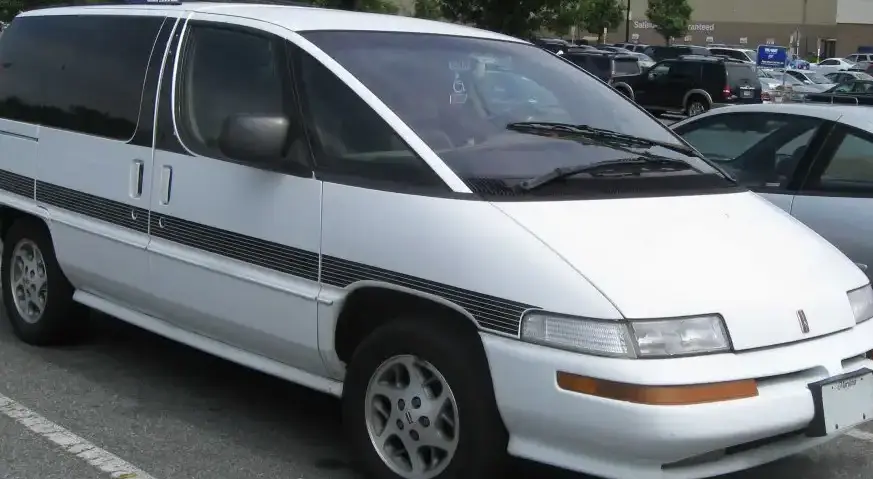
The Oldsmobile Silhouette II, specifically the 3.4i V6 AWD variant, represented a significant offering in the American minivan market during its production run from 2002 to 2004. Falling within the second generation of the Silhouette (often referred to as the U-body platform), this model aimed to provide a blend of family practicality, all-weather capability with its all-wheel drive system, and a reasonably powerful V6 engine. It occupied a mid-range position within the Silhouette lineup, offering more performance and features than the base models but falling short of the fully-loaded trims. The Silhouette II, along with its Chevrolet Venture and Pontiac Montana counterparts, was a key player in GM’s attempt to compete with the Chrysler minivans and the Honda Odyssey.
Technical Specifications
| Brand | Oldsmobile |
| Model | Silhouette |
| Generation | Silhouette II |
| Type (Engine) | 3.4 i V6 AWD (187 Hp) |
| Start of production | 2002 |
| End of production | 2004 |
| Powertrain Architecture | Internal Combustion engine |
| Body type | Minivan |
| Seats | 7 |
| Doors | 4 |
| Fuel consumption (urban) | 13.9 l/100 km (16.9 US mpg) |
| Fuel consumption (extra urban) | 10.7 l/100 km (22 US mpg) |
| Fuel Type | Petrol (Gasoline) |
| Maximum speed | 157 km/h (97.56 mph) |
| Weight-to-power ratio | 11 kg/Hp, 90.8 Hp/tonne |
| Weight-to-torque ratio | 7.2 kg/Nm, 138.3 Nm/tonne |
| Power | 187 Hp @ 5200 rpm |
| Power per litre | 55.8 Hp/l |
| Torque | 285 Nm @ 4000 rpm (210.21 lb.-ft. @ 4000 rpm) |
| Engine layout | Front, Transverse |
| Engine Model/Code | LA1 |
| Engine displacement | 3350 cm3 (204.43 cu. in.) |
| Number of cylinders | 6 |
| Engine configuration | V-engine |
| Cylinder Bore | 92 mm (3.62 in.) |
| Piston Stroke | 84 mm (3.31 in.) |
| Compression ratio | 9.5:1 |
| Number of valves per cylinder | 2 |
| Fuel injection system | Multi-port manifold injection |
| Engine aspiration | Naturally aspirated engine |
| Engine oil capacity | 4.25 l (4.49 US qt | 3.74 UK qt) |
| Coolant | 9.1 l (9.62 US qt | 8.01 UK qt) |
| Kerb Weight | 2060 kg (4541.52 lbs.) |
| Max. weight | 2608 kg (5749.66 lbs.) |
| Max load | 548 kg (1208.13 lbs.) |
| Trunk (boot) space – minimum | 1125 l (39.73 cu. ft.) |
| Trunk (boot) space – maximum | 2270 l (80.16 cu. ft.) |
| Fuel tank capacity | 72 l (19.02 US gal | 15.84 UK gal) |
| Length | 4834 mm (190.31 in.) |
| Width | 1829 mm (72.01 in.) |
| Height | 1778 mm (70 in.) |
| Wheelbase | 2870 mm (112.99 in.) |
| Front track | 1603 mm (63.11 in.) |
| Rear (Back) track | 1576 mm (62.05 in.) |
| Drive wheel | All wheel drive (4×4) |
| Number of gears and type of gearbox | 4 gears, automatic transmission |
| Front suspension | Spring Strut |
| Rear suspension | Torsion |
| Front brakes | Ventilated discs |
| Rear brakes | Disc |
| Assisting systems | ABS (Anti-lock braking system) |
| Steering type | Steering rack and pinion |
| Power steering | Hydraulic Steering |
| Tires size | 225/60 R16 |
Powertrain & Engine Architecture
The heart of the Silhouette II 3.4i AWD was the LA1 3.4-liter (3350 cc) V6 engine. This engine, a member of GM’s 60-degree V6 family, featured a cast iron block and aluminum cylinder heads. It utilized a multi-port fuel injection system, delivering fuel directly to each intake port for improved efficiency and power delivery. The engine produced 187 horsepower at 5200 rpm and 285 Nm (210 lb-ft) of torque at 4000 rpm. The LA1 engine was known for its relatively smooth operation and adequate power for moving the sizable minivan. The engine’s valvetrain consisted of two valves per cylinder, operated by a single overhead camshaft. Paired with the engine was a 4-speed automatic transmission, a common choice for minivans prioritizing ease of use over outright performance. This transmission was electronically controlled, adapting shift points based on throttle position and vehicle speed.
Driving Characteristics
The 3.4L V6 and 4-speed automatic combination in the Silhouette II AWD provided adequate, but not exhilarating, performance. Acceleration was sufficient for merging onto highways and passing slower traffic, but it wasn’t a particularly quick vehicle. The automatic transmission, while smooth, lacked the responsiveness of a manual gearbox. The gear ratios were tuned for fuel economy and comfortable cruising rather than sporty acceleration. Compared to the base 3.4L front-wheel drive Silhouette, the AWD version experienced a slight performance penalty due to the added weight and drivetrain losses. However, the added traction of the all-wheel drive system significantly improved handling and stability, especially in inclement weather. The steering was light and easy, typical of minivans, prioritizing ease of maneuvering over road feel.
Equipment & Trim Levels
The Silhouette II 3.4i AWD typically came standard with features such as air conditioning, power windows and locks, a CD player, and cloth upholstery. The AWD variant often included upgraded features as standard equipment compared to the base models, reflecting its higher price point. Optional extras included leather upholstery, a premium sound system, power sliding doors, and a rear entertainment system. Interior trim levels varied, with higher trims featuring more refined materials and additional comfort features. The dashboard layout was functional and straightforward, with easy-to-read gauges and logically placed controls.
Chassis & Braking
The Silhouette II utilized a front-wheel drive based chassis adapted for all-wheel drive. The front suspension consisted of independent spring struts, while the rear suspension employed a torsion beam setup. This suspension configuration prioritized ride comfort over handling precision. The AWD system added weight and complexity to the chassis, but it provided improved traction and stability. Braking duties were handled by ventilated discs at the front and solid discs at the rear. An Anti-lock Braking System (ABS) was standard, enhancing safety by preventing wheel lockup during hard braking. The steering system was a rack-and-pinion setup with hydraulic power assist, providing light and easy steering effort.
Market Reception & Comparison
The Oldsmobile Silhouette II 3.4i AWD received mixed reviews from automotive critics. While the all-wheel drive system was praised for its added security and capability, the minivan’s overall performance and fuel economy were considered average. Compared to the Chrysler Pacifica and Honda Odyssey, the Silhouette II was often seen as less refined and less technologically advanced. However, it offered a competitive price point and a spacious interior. Fuel economy was rated at approximately 16.9 mpg in the city and 22 mpg on the highway, which was typical for a minivan of its size and weight. Reliability was generally considered acceptable, but some owners reported issues with the automatic transmission and the cooling system.
Legacy
The Oldsmobile Silhouette II 3.4i AWD, while not a standout performer, remains a reasonably practical and affordable option in the used car market. The LA1 3.4L V6 engine, when properly maintained, is known for its durability. However, potential buyers should be aware of potential issues with the automatic transmission and cooling system. The all-wheel drive system adds a degree of versatility and capability that is appealing to buyers in regions with harsh winters or challenging road conditions. As Oldsmobile ceased production in 2004, parts availability may become a concern over time, but many components are shared with other GM vehicles, making them relatively easy to source. The Silhouette II represents a final chapter in Oldsmobile’s history, offering a glimpse into the brand’s attempt to compete in the increasingly competitive minivan segment.