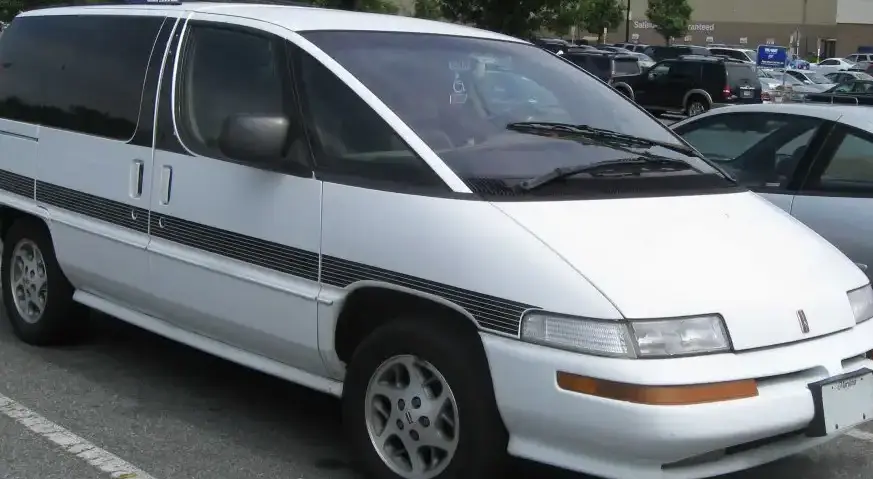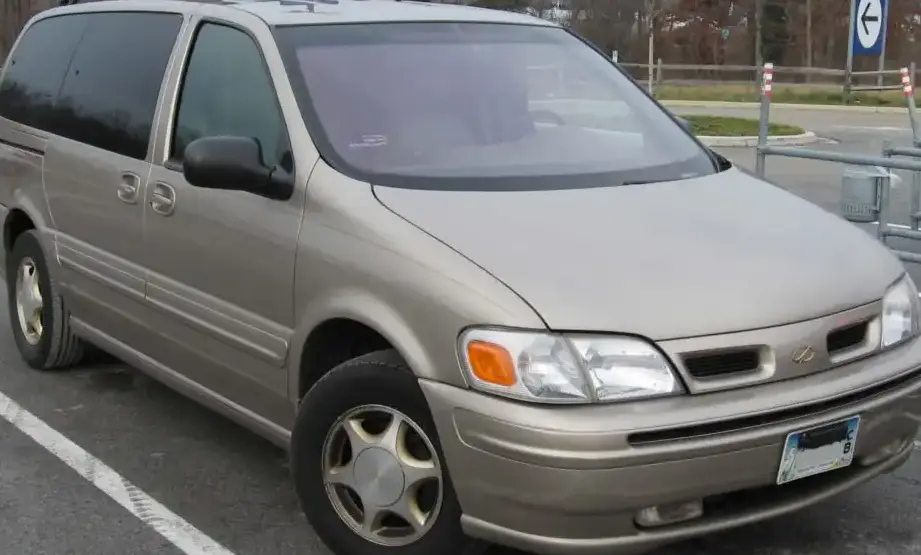
The Oldsmobile Silhouette II, equipped with the 3.4-liter V6 engine producing 182 horsepower, represented a key offering in Oldsmobile’s minivan lineup from 1996 to 2000. Part of the second generation of the Silhouette (1996-2000), this variant aimed to provide a balance of power and practicality for families. It shared its platform with the Chevrolet Venture, Pontiac Montana, and Buick Terraza, all falling under the U-body designation. The Silhouette II, and specifically this engine/transmission combination, was positioned as a mid-range option, offering more power than the base engine but falling short of the performance offered by some of its competitors or higher trim levels within the Oldsmobile range.
Technical Specifications
| Brand | Oldsmobile |
| Model | Silhouette |
| Generation | Silhouette II |
| Type (Engine) | 3.4 V6 (182 Hp) |
| Start of production | 1996 |
| End of production | 2000 |
| Powertrain Architecture | Internal Combustion engine |
| Body type | Minivan |
| Seats | 7 |
| Doors | 4 |
| Fuel consumption (urban) | 13.1 l/100 km (18 US mpg, 21.6 UK mpg) |
| Fuel consumption (extra urban) | 9.4 l/100 km (25 US mpg, 30.1 UK mpg) |
| Fuel Type | Petrol (Gasoline) |
| Acceleration 0 – 100 km/h | 11 sec |
| Acceleration 0 – 62 mph | 11 sec |
| Acceleration 0 – 60 mph | 10.5 sec |
| Maximum speed | 190 km/h (118.06 mph) |
| Weight-to-power ratio | 9.3 kg/Hp, 107.7 Hp/tonne |
| Weight-to-torque ratio | 6.1 kg/Nm, 165.1 Nm/tonne |
| Power | 182 Hp @ 5200 rpm |
| Power per litre | 54.3 Hp/l |
| Torque | 279 Nm @ 4000 rpm (205.78 lb.-ft. @ 4000 rpm) |
| Engine layout | Front, Transverse |
| Engine Model/Code | LA1 |
| Engine displacement | 3350 cm3 (204.43 cu. in.) |
| Number of cylinders | 6 |
| Engine configuration | V-engine |
| Cylinder Bore | 92 mm (3.62 in.) |
| Piston Stroke | 84 mm (3.31 in.) |
| Compression ratio | 9.5:1 |
| Number of valves per cylinder | 2 |
| Fuel injection system | Multi-port manifold injection |
| Engine aspiration | Naturally aspirated engine |
| Engine oil capacity | 4.3 l (4.54 US qt | 3.78 UK qt) |
| Coolant | 9.1 l (9.62 US qt | 8.01 UK qt) |
| Kerb Weight | 1690 kg (3725.81 lbs.) |
| Trunk (boot) space – maximum | 3585 l (126.6 cu. ft.) |
| Fuel tank capacity | 76 l (20.08 US gal | 16.72 UK gal) |
| Length | 4760 mm (187.4 in.) |
| Width | 1835 mm (72.24 in.) |
| Height | 1710 mm (67.32 in.) |
| Wheelbase | 2845 mm (112.01 in.) |
| Front track | 1560 mm (61.42 in.) |
| Rear (Back) track | 1610 mm (63.39 in.) |
| Drivetrain Architecture | The Internal combustion engine (ICE) drives the front wheels of the vehicle. |
| Drive wheel | Front wheel drive |
| Number of gears and type of gearbox | 4 gears, automatic transmission |
| Front suspension | Spring Strut |
| Rear suspension | Torsion |
| Front brakes | Ventilated discs |
| Rear brakes | Drum |
| Assisting systems | ABS (Anti-lock braking system) |
| Steering type | Steering rack and pinion |
| Power steering | Hydraulic Steering |
| Tires size | 205/70 R15 |
Powertrain & Engine Architecture
The heart of this Silhouette II variant was the 3.4-liter (3350 cc) LA1 V6 engine. This engine, a member of Oldsmobile’s L-series family, featured a 90-degree V-angle and a cast iron block with aluminum cylinder heads. It utilized a multi-port fuel injection system, delivering fuel directly to each intake port for improved efficiency and power delivery. The engine produced 182 horsepower at 5200 rpm and 279 Nm (205.78 lb-ft) of torque at 4000 rpm. The engine’s valvetrain employed two valves per cylinder, operated by a single overhead camshaft. Paired with the engine was a 4-speed automatic transmission, a common choice for minivans prioritizing ease of use and comfort over outright performance. This transmission was designed for smooth shifting and reliable operation, though it wasn’t known for particularly quick acceleration.
Driving Characteristics
The 182 hp and automatic transmission combination resulted in a driving experience geared towards practicality rather than sportiness. Acceleration from 0-60 mph took around 10.5 seconds, which was adequate for merging onto highways and general driving but noticeably slower than versions equipped with the optional, more powerful engines. The automatic transmission, while smooth, had relatively conservative gear ratios, prioritizing fuel economy over rapid acceleration. The engine provided sufficient torque for everyday driving and hauling passengers, but felt strained when fully loaded or climbing steep hills. Compared to the manual transmission options, the automatic sacrificed some responsiveness, but offered a more relaxed driving experience, particularly in city traffic.
Equipment & Trim Levels
The Silhouette II 3.4 V6 Automatic typically came standard with features expected of a mid-range minivan in the late 1990s. These included air conditioning, power windows and locks, an AM/FM stereo, and cloth upholstery. Optional extras included a CD player, upgraded sound system, leather upholstery, power-adjustable front seats, and a rear entertainment system. The Silhouette II offered a relatively spacious interior with seating for seven passengers, and the rear seats could be folded or removed to create additional cargo space. The dashboard layout was functional and straightforward, with easy-to-read gauges and controls.
Chassis & Braking
The Silhouette II utilized a front-wheel-drive layout with an independent front suspension featuring coil springs and a strut design. The rear suspension employed a torsion beam setup, which was a cost-effective solution for providing a comfortable ride. Braking duties were handled by ventilated discs at the front and drum brakes at the rear. Anti-lock braking system (ABS) was standard, enhancing safety by preventing wheel lockup during hard braking. The steering system was a rack-and-pinion setup with hydraulic power assist, providing relatively light and responsive steering feel.
Market Reception & Comparison
Critics generally viewed the Silhouette II 3.4 V6 Automatic as a competent, if unremarkable, minivan. It offered a good balance of space, comfort, and features, but didn’t stand out in a crowded segment. Fuel economy was average for its class, with EPA estimates around 18 mpg city and 25 mpg highway. Reliability was generally considered acceptable, though some owners reported issues with the automatic transmission and cooling system. Compared to the higher-trim Silhouette models with the more powerful 3.8-liter V6 engine, the 3.4-liter version offered less performance but a lower price point. It also competed with other minivans like the Dodge Caravan, Ford Windstar, and Toyota Sienna, each offering its own strengths and weaknesses.
Legacy
The Oldsmobile Silhouette II 3.4 V6 Automatic, while not a particularly iconic vehicle, remains a relatively affordable and practical option in the used car market. The 3.4-liter V6 engine is generally considered reliable, though regular maintenance is crucial to prevent issues. The automatic transmission, while not known for its durability, can last a long time with proper care. Today, these vans are often sought after by families needing a spacious and affordable vehicle for transportation. Parts availability is generally good, as many components were shared with other GM minivans of the era. However, finding well-maintained examples can be challenging, as many have accumulated high mileage and may require significant repairs.