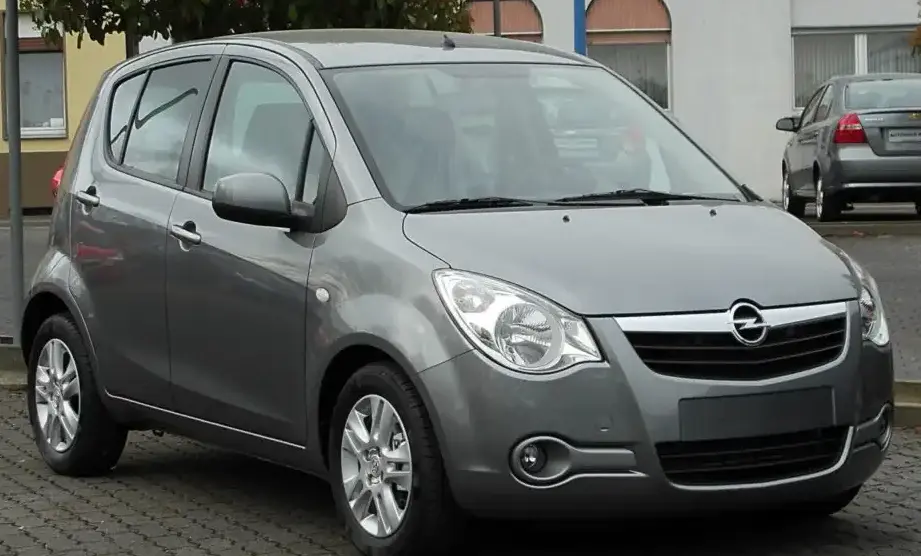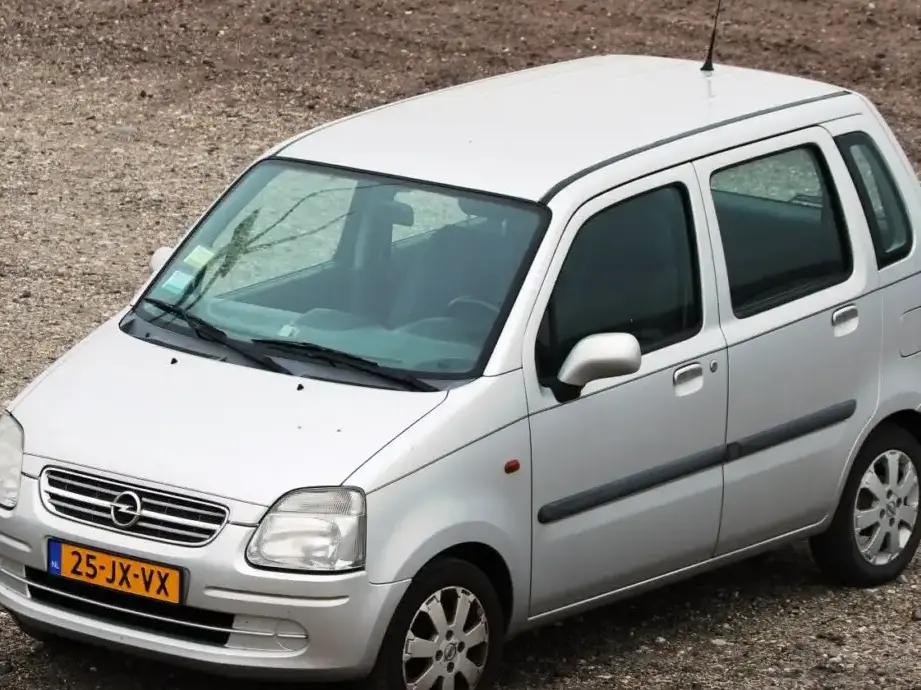
The Opel Agila I 1.2 16V, produced between 2000 and 2004, represented the entry point into the first generation of Opel’s supermini MPV. Positioned as an affordable and practical city car, the Agila aimed to maximize interior space within a compact footprint. This variant, powered by the 1.2-liter 16-valve engine producing 75 horsepower, was a popular choice for buyers prioritizing economy and ease of driving over outright performance. It was a key component of Opel’s strategy to compete in the burgeoning micro-MPV segment, particularly in European markets. The Agila I was built on the GM/Opel’s 1HX0 platform, shared with the Suzuki Wagon R+, a result of a joint venture between the two manufacturers.
Technical Specifications
| Brand | Opel |
| Model | Agila |
| Generation | Agila I |
| Type (Engine) | 1.2 16V (75 Hp) |
| Start of production | 2000 year |
| End of production | 2004 year |
| Powertrain Architecture | Internal Combustion engine |
| Body type | Minivan |
| Seats | 4 |
| Doors | 5 |
| Fuel consumption (urban) | 8 l/100 km (29.4 US mpg, 35.3 UK mpg, 12.5 km/l) |
| Fuel consumption (extra urban) | 5.7 l/100 km (41.3 US mpg, 49.6 UK mpg, 17.5 km/l) |
| Fuel consumption (combined) | 6 l/100 km (39.2 US mpg, 47.1 UK mpg, 16.7 km/l) |
| Fuel Type | Petrol (Gasoline) |
| Acceleration 0 – 100 km/h | 13 sec |
| Acceleration 0 – 62 mph | 13 sec |
| Acceleration 0 – 60 mph | 12.4 sec |
| Maximum speed | 155 km/h (96.31 mph) |
| Emission standard | Euro 4 |
| Weight-to-power ratio | 12.8 kg/Hp, 78.1 Hp/tonne |
| Weight-to-torque ratio | 8.7 kg/Nm, 114.6 Nm/tonne |
| Power | 75 Hp @ 5600 rpm |
| Power per litre | 62.6 Hp/l |
| Torque | 110 Nm @ 4000 rpm (81.13 lb.-ft. @ 4000 rpm) |
| Engine layout | Front, Transverse |
| Engine Model/Code | Z12XE |
| Engine displacement | 1199 cm3 (73.17 cu. in.) |
| Number of cylinders | 4 |
| Engine configuration | Inline |
| Cylinder Bore | 72.5 mm (2.85 in.) |
| Piston Stroke | 72.6 mm (2.86 in.) |
| Compression ratio | 10.1:1 |
| Number of valves per cylinder | 4 |
| Fuel injection system | Multi-port manifold injection |
| Engine aspiration | Naturally aspirated engine |
| Valvetrain | DOHC |
| Engine oil capacity | 3.5 l (3.7 US qt | 3.08 UK qt) |
| Coolant | 4.5 l (4.76 US qt | 3.96 UK qt) |
| Kerb Weight | 960 kg (2116.44 lbs.) |
| Max. weight | 1345 kg (2965.22 lbs.) |
| Max load | 385 kg (848.78 lbs.) |
| Trunk (boot) space – minimum | 250 l (8.83 cu. ft.) |
| Trunk (boot) space – maximum | 595 l (21.01 cu. ft.) |
| Fuel tank capacity | 41 l (10.83 US gal | 9.02 UK gal) |
| Length | 3500 mm (137.8 in.) |
| Width | 1620 mm (63.78 in.) |
| Height | 1700 mm (66.93 in.) |
| Wheelbase | 2360 mm (92.91 in.) |
| Front track | 1420 mm (55.91 in.) |
| Rear (Back) track | 1390 mm (54.72 in.) |
| Drivetrain Architecture | The Internal combustion engine (ICE) drives the front wheels of the vehicle. |
| Drive wheel | Front wheel drive |
| Number of gears and type of gearbox | 5 gears, manual transmission |
| Front suspension | Coil spring |
| Rear suspension | Coil spring |
| Front brakes | Disc |
| Rear brakes | Drum |
| Assisting systems | ABS (Anti-lock braking system) |
| Steering type | Steering rack and pinion |
| Power steering | Electric Steering |
| Tires size | 165/65 R14 |
Powertrain & Engine Architecture
The heart of the Agila I 1.2 16V is the Z12XE engine, a 1.2-liter (1199 cc) inline-four cylinder petrol engine. This engine is a member of Opel’s ‘Ecotec’ family, known for its focus on fuel efficiency and reduced emissions. The ‘XE’ designation indicates a single overhead camshaft (SOHC) design, although it features four valves per cylinder (16V) for improved breathing. Fuel delivery is managed by a multi-point fuel injection system, providing precise fuel metering for optimal combustion. The engine produces 75 horsepower at 5600 rpm and 110 Nm (81.13 lb-ft) of torque at 4000 rpm. The engine’s relatively low compression ratio of 10.1:1 contributes to its ability to run on standard unleaded gasoline. The Agila 1.2 16V was exclusively offered with a five-speed manual transmission, designed to maximize fuel economy and provide adequate acceleration for urban driving. The transmission is a standard front-wheel-drive configuration.
Driving Characteristics
The 1.2-liter engine in the Agila I 1.2 16V delivers modest performance. Acceleration from 0 to 60 mph takes approximately 12.4 seconds, and the top speed is around 96 mph. The five-speed manual transmission is well-matched to the engine’s characteristics, allowing drivers to keep the engine in its optimal power band. However, the engine can feel strained when fully loaded or when climbing hills. Compared to the more powerful 1.4-liter variants, the 1.2 offers a smoother, more relaxed driving experience, prioritizing fuel efficiency over outright speed. The gear ratios are tuned for economy, meaning the engine revs relatively high at highway speeds. Steering is light and precise, making it easy to maneuver in tight city streets. The suspension provides a comfortable ride, absorbing bumps and imperfections in the road surface effectively.
Equipment & Trim Levels
The Agila I 1.2 16V typically came with a basic but functional equipment list. Standard features included power steering, central locking, and an adjustable steering column. Interior upholstery was typically cloth, with a simple dashboard layout. Optional extras included air conditioning, electric front windows, and a radio/CD player. The Agila was not offered in multiple trim levels in many markets; it was largely a single specification model with a limited number of optional extras. The focus was on providing an affordable and practical vehicle, rather than luxury or extensive features.
Chassis & Braking
The Agila I features a relatively simple chassis design. Front suspension utilizes coil springs and MacPherson struts, while the rear suspension employs a torsion beam setup. This configuration provides a good balance between ride comfort and handling. Braking is handled by disc brakes on the front wheels and drum brakes on the rear. An Anti-lock Braking System (ABS) was standard, enhancing safety by preventing wheel lockup during hard braking. The steering system is a rack and pinion type with electric power assistance, providing light and responsive steering feel.
Market Reception & Comparison
The Opel Agila I 1.2 16V was generally well-received as an affordable and practical city car. Critics praised its spacious interior, fuel efficiency, and ease of driving. However, some reviewers noted its lack of power and relatively basic equipment levels. Compared to other superminis of the time, such as the Ford Fiesta or Volkswagen Polo, the Agila offered a more MPV-like interior space but lacked the refinement and driving dynamics of its rivals. The 1.4-liter Agila offered significantly more performance but came at a higher price point. The 1.2-liter model appealed to buyers prioritizing economy and practicality over performance.
Legacy
The Opel Agila I 1.2 16V, while not a performance icon, remains a relatively reliable and affordable used car. The Z12XE engine is known for its durability, although regular maintenance is essential. Common issues include oil leaks and occasional sensor failures. The Agila’s simple mechanical design makes it relatively easy and inexpensive to repair. Today, the Agila I 1.2 16V is often sought after as a budget-friendly city car or a first car for new drivers. Its compact size, fuel efficiency, and practicality continue to make it a viable option in the used car market.