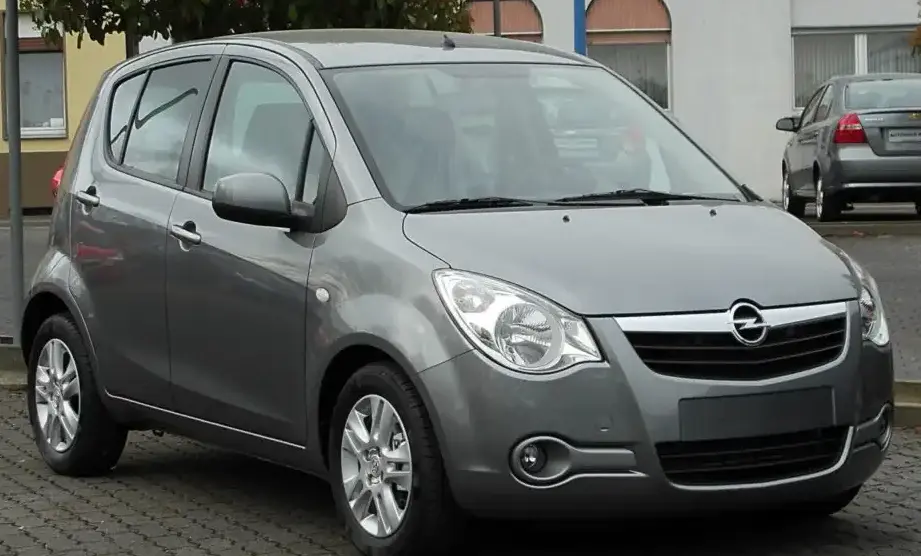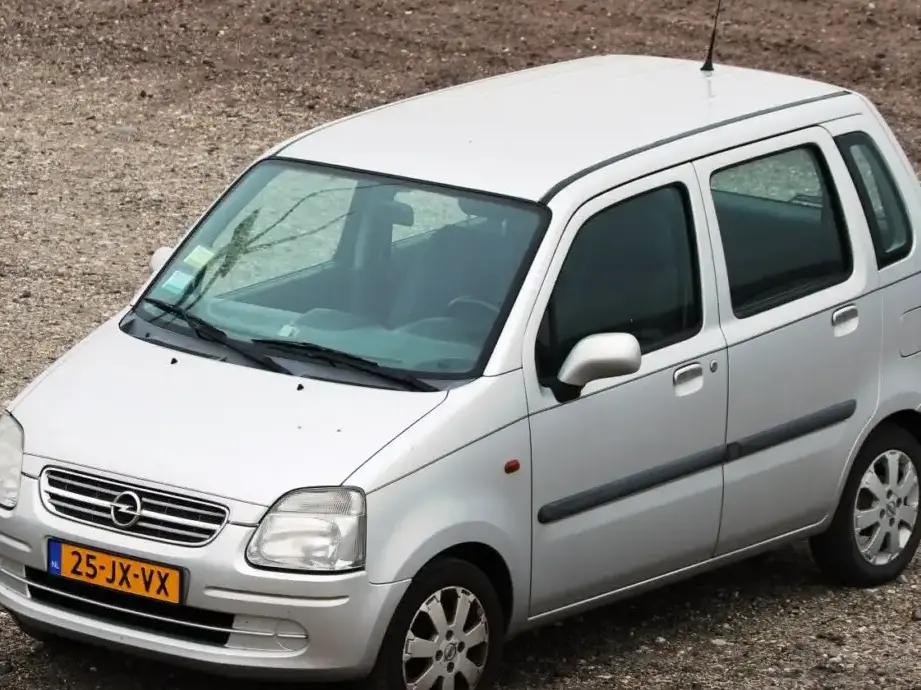
The Opel Agila I 1.2 i 16V (80 hp) was a popular subcompact MPV produced between 2003 and 2005. Part of the first generation Agila (A04 platform), this variant occupied the entry-level position in the Agila lineup, offering an affordable and practical option for urban drivers. It was primarily marketed in Europe, where small, economical vehicles were – and continue to be – in high demand. The Agila, and this specific trim, aimed to provide a spacious interior and good visibility in a compact package, appealing to families and individuals seeking a versatile city car.
Technical Specifications
| Brand | Opel |
| Model | Agila |
| Generation | Agila I |
| Type (Engine) | 1.2 i 16V (80 Hp) |
| Start of production | 2003 |
| End of production | 2005 |
| Powertrain Architecture | Internal Combustion engine |
| Body type | Minivan |
| Seats | 4 |
| Doors | 5 |
| Fuel consumption (urban) | 7.6 l/100 km (30.9 US mpg) |
| Fuel consumption (extra urban) | 5.1 l/100 km (46.1 US mpg) |
| Fuel Type | Petrol (Gasoline) |
| Acceleration 0 – 100 km/h | 13 sec |
| Acceleration 0 – 62 mph | 13 sec |
| Acceleration 0 – 60 mph | 12.4 sec |
| Maximum speed | 161 km/h (100.04 mph) |
| Weight-to-power ratio | 12.3 kg/Hp |
| Weight-to-torque ratio | 9 kg/Nm |
| Power | 80 Hp @ 5600 rpm |
| Power per litre | 65.1 Hp/l |
| Torque | 110 Nm @ 4000 rpm (81.13 lb.-ft. @ 4000 rpm) |
| Engine layout | Front, Transverse |
| Engine Model/Code | Z12XEP |
| Engine displacement | 1229 cm3 (75 cu. in.) |
| Number of cylinders | 4 |
| Engine configuration | Inline |
| Cylinder Bore | 73.4 mm (2.89 in.) |
| Piston Stroke | 72.6 mm (2.86 in.) |
| Compression ratio | 10.5:1 |
| Number of valves per cylinder | 4 |
| Fuel injection system | Multi-port manifold injection |
| Engine aspiration | Naturally aspirated engine |
| Valvetrain | DOHC |
| Engine oil capacity | 3.5 l (3.7 US qt | 3.08 UK qt) |
| Kerb Weight | 985 kg (2171.55 lbs.) |
| Max. weight | 1450 kg (3196.7 lbs.) |
| Max load | 465 kg (1025.15 lbs.) |
| Trunk (boot) space – minimum | 250 l (8.83 cu. ft.) |
| Trunk (boot) space – maximum | 595 l (21.01 cu. ft.) |
| Fuel tank capacity | 41 l (10.83 US gal | 9.02 UK gal) |
| Length | 3500 mm (137.8 in.) |
| Width | 1620 mm (63.78 in.) |
| Height | 1700 mm (66.93 in.) |
| Wheelbase | 2360 mm (92.91 in.) |
| Front track | 1420 mm (55.91 in.) |
| Rear (Back) track | 1390 mm (54.72 in.) |
| Drivetrain Architecture | The Internal combustion engine (ICE) drives the front wheels of the vehicle. |
| Drive wheel | Front wheel drive |
| Number of gears and type of gearbox | 5 gears, manual transmission |
| Front suspension | Coil spring |
| Rear suspension | Coil spring |
| Front brakes | Disc |
| Rear brakes | Drum |
| Assisting systems | ABS (Anti-lock braking system) |
| Steering type | Steering rack and pinion |
| Power steering | Hydraulic Steering |
| Tires size | 155/65 R14 |
Powertrain & Engine Architecture
The Agila I 1.2 i 16V was powered by the Opel/Vauxhall Z12XEP engine, a 1.2-liter inline-four cylinder gasoline engine. This engine was part of the ‘Family 0’ engine family, known for its compact size and relatively simple design. The Z12XEP featured a dual overhead camshaft (DOHC) valvetrain with four valves per cylinder, contributing to its improved breathing and power output compared to earlier single overhead cam (SOHC) designs. Fuel delivery was handled by a multi-port fuel injection system, providing precise fuel metering for optimal combustion. The engine produced 80 horsepower at 5600 rpm and 110 Nm (81.13 lb-ft) of torque at 4000 rpm. This power was transmitted to the front wheels through a five-speed manual transmission. The engine’s design prioritized fuel efficiency and reliability over outright performance.
Driving Characteristics
The 1.2-liter engine, paired with the five-speed manual transmission, provided adequate, though not exhilarating, performance. Acceleration from 0 to 60 mph took approximately 12.4 seconds, and the top speed was around 100 mph. The engine felt somewhat strained at higher speeds or when fully loaded. The gear ratios were tuned for economy, meaning the engine needed to be revved to access its power. Compared to the more powerful (and often more expensive) Agila variants, such as those with larger engines, the 1.2L felt noticeably slower. However, its lighter weight and responsive steering made it enjoyable to drive in urban environments. The suspension provided a comfortable ride, absorbing bumps and imperfections in the road reasonably well.
Equipment & Trim Levels
The 1.2 i 16V Agila typically came with a basic, yet functional, level of equipment. Standard features included power steering, central locking, front airbags, and an adjustable steering column. Interior upholstery was typically cloth, and the dashboard featured a simple, straightforward design. Optional extras included air conditioning, electric front windows, and a radio/CD player. The trim level was generally considered the entry-level offering, making it an attractive option for budget-conscious buyers. It was positioned below trims equipped with larger engines or more comprehensive feature packages.
Chassis & Braking
The Agila I utilized a relatively simple chassis design. Front suspension consisted of coil springs, while the rear employed a twist beam setup with coil springs. This configuration provided a good balance between ride comfort and handling. The braking system featured disc brakes on the front wheels and drum brakes on the rear. Anti-lock Braking System (ABS) was standard, enhancing safety by preventing wheel lockup during hard braking. The Agila’s relatively light weight contributed to its manageable braking performance.
Market Reception & Comparison
The Opel Agila I 1.2 i 16V was generally well-received as an affordable and practical city car. Critics praised its spacious interior, good visibility, and fuel efficiency. However, some reviewers noted its lack of power and somewhat basic interior. Compared to other small MPVs of the time, such as the Renault Modus or Fiat Idea, the Agila offered a competitive price point and a slightly more compact footprint. Fuel economy was a strong point, with combined cycle figures around 46 mpg. Reliability was generally considered good, although routine maintenance was essential to ensure longevity.
Legacy
The Opel Agila I 1.2 i 16V remains a relatively common sight on European roads today, testament to its durability and affordability. The Z12XEP engine, while not known for its high performance, proved to be a reliable unit when properly maintained. In the used car market, these Agilas are typically offered at very low prices, making them an attractive option for first-time car buyers or those seeking a cheap and cheerful runabout. While not a particularly exciting vehicle, the Agila I 1.2 i 16V served its purpose as a practical and economical mode of transportation for many drivers.