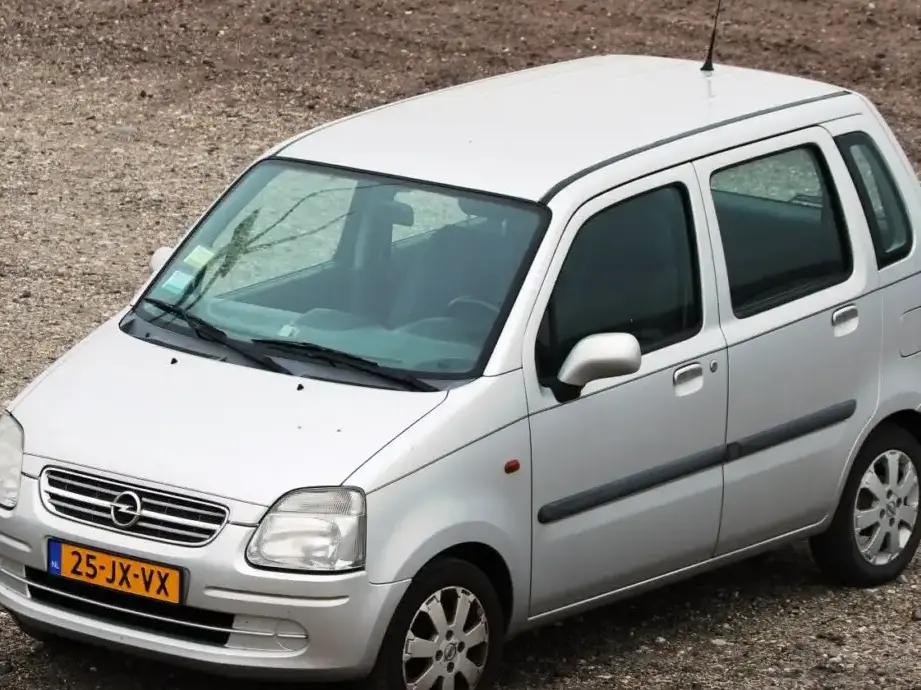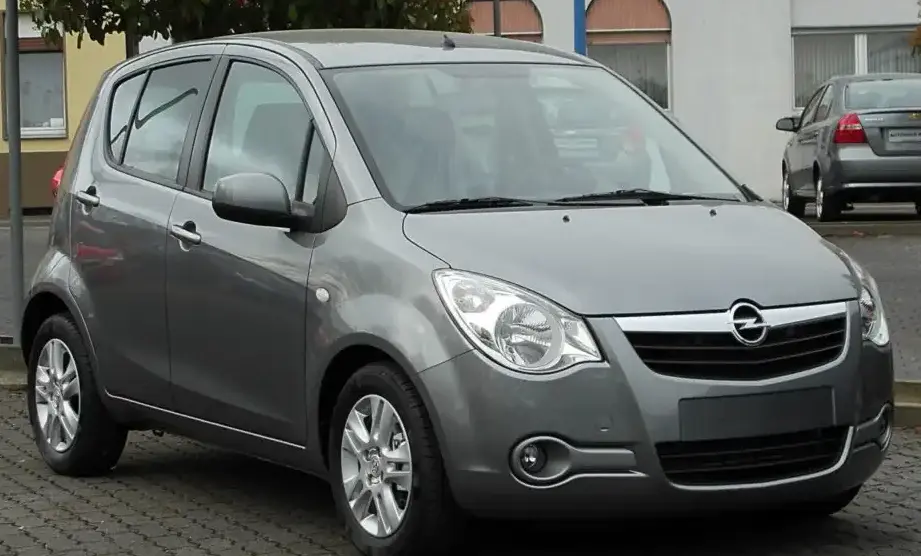
The Opel Agila II 1.0i, produced from 2008 to 2010, represented the entry point into the second generation of Opel’s city car. Positioned as an affordable and practical hatchback, it served as a key model in Opel’s European lineup, competing with vehicles like the Fiat Panda and Renault Twingo. The Agila II, built in conjunction with Suzuki (sharing its platform with the Suzuki Splash), aimed to provide a spacious and economical option for urban drivers. This specific 1.0i variant, with its 65 horsepower engine and typically a five-speed manual transmission, was designed for maximizing fuel efficiency and minimizing running costs, making it a popular choice for first-time car buyers and those seeking a low-cost vehicle.
Technical Specifications
| Brand | Opel |
| Model | Agila |
| Generation | Agila II |
| Type (Engine) | 1.0i (65 Hp) |
| Start of production | 2008 |
| End of production | 2010 |
| Powertrain Architecture | Internal Combustion engine |
| Body type | Hatchback |
| Seats | 5 |
| Doors | 5 |
| Fuel consumption (urban) | 5.9 l/100 km (39.9 US mpg, 47.9 UK mpg, 16.9 km/l) |
| Fuel consumption (extra urban) | 4.4 l/100 km (53.5 US mpg, 64.2 UK mpg, 22.7 km/l) |
| Fuel consumption (combined) | 5 l/100 km (47 US mpg, 56.5 UK mpg, 20 km/l) |
| Fuel Type | Petrol (Gasoline) |
| Acceleration 0 – 100 km/h | 14.7 sec |
| Acceleration 0 – 62 mph | 14.7 sec |
| Acceleration 0 – 60 mph | 14 sec |
| Maximum speed | 160 km/h (99.42 mph) |
| Emission standard | Euro 4 |
| Weight-to-power ratio | 16.2 kg/Hp, 61.9 Hp/tonne |
| Weight-to-torque ratio | 11.7 kg/Nm, 85.7 Nm/tonne |
| Power | 65 Hp @ 6000 rpm |
| Power per litre | 65.1 Hp/l |
| Torque | 90 Nm @ 4800 rpm (66.38 lb.-ft. @ 4800 rpm) |
| Engine layout | Front, Transverse |
| Engine Model/Code | K10B |
| Engine displacement | 998 cm3 (60.9 cu. in.) |
| Number of cylinders | 3 |
| Engine configuration | Inline |
| Cylinder Bore | 73.4 mm (2.89 in.) |
| Piston Stroke | 78.6 mm (3.09 in.) |
| Compression ratio | 10.5:1 |
| Number of valves per cylinder | 4 |
| Fuel injection system | Multi-port manifold injection |
| Engine aspiration | Naturally aspirated engine |
| Valvetrain | DOHC |
| Engine oil capacity | 2.9 l (3.06 US qt | 2.55 UK qt) |
| Coolant capacity | 4.4 l (4.65 US qt | 3.87 UK qt) |
| Kerb Weight | 1050 kg (2314.85 lbs.) |
| Max. weight | 1485 kg (3273.86 lbs.) |
| Max load | 435 kg (959.01 lbs.) |
| Trunk (boot) space – minimum | 225 l (7.95 cu. ft.) |
| Trunk (boot) space – maximum | 660 l (23.31 cu. ft.) |
| Fuel tank capacity | 45 l (11.89 US gal | 9.9 UK gal) |
| Length | 3740 mm (147.24 in.) |
| Width | 1680 mm (66.14 in.) |
| Height | 1590 mm (62.6 in.) |
| Wheelbase | 2360 mm (92.91 in.) |
| Front track | 1470 mm (57.87 in.) |
| Rear (Back) track | 1480 mm (58.27 in.) |
| Minimum turning circle | 9.6 m (31.5 ft.) |
| Drivetrain Architecture | Front wheel drive |
| Number of gears | 5 |
| Gearbox type | Manual transmission |
| Front suspension | Coil spring |
| Rear suspension | Coil spring |
| Front brakes | Disc |
| Rear brakes | Drum |
| Assisting systems | ABS (Anti-lock braking system) |
| Steering type | Steering rack and pinion |
| Power steering | Hydraulic Steering |
| Tires size | 185/60 R16 |
Powertrain & Engine Architecture
The heart of the Agila II 1.0i is the K10B engine, a 998cc inline-three cylinder petrol engine. This engine, developed by Suzuki and shared with several other small cars, is known for its simplicity and fuel efficiency. It utilizes a multi-point fuel injection system and a double overhead camshaft (DOHC) valvetrain, contributing to reasonable performance for its size. The engine produces 65 horsepower at 6000 rpm and 90 Nm (66.38 lb-ft) of torque at 4800 rpm. The five-speed manual transmission was the most common pairing for this engine, offering a balance between fuel economy and drivability. The transmission’s gear ratios were tuned for maximizing efficiency in urban environments, with a relatively tall final drive.
Driving Characteristics
The Agila II 1.0i, with its modest power output, wasn’t designed for spirited driving. Acceleration from 0 to 100 km/h (0-62 mph) took approximately 14.7 seconds, and its top speed was around 160 km/h (99 mph). However, within city limits, the 1.0i proved to be surprisingly nimble and easy to maneuver. The light weight of the vehicle (around 1050 kg or 2315 lbs) helped to offset the engine’s limited power. Compared to higher-spec Agila II models with larger engines, the 1.0i felt noticeably slower, particularly when fully loaded or tackling inclines. The manual transmission allowed for precise control, but the gear ratios required frequent shifting to maintain optimal engine speed. The steering was light and responsive, making parking and navigating tight spaces effortless.
Equipment & Trim Levels
The 1.0i Agila II typically came with a basic level of equipment, reflecting its position as the entry-level model. Standard features generally included power steering, central locking, front airbags, and an adjustable steering column. Interior upholstery was typically cloth, and the dashboard featured a simple, functional design. Optional extras, such as air conditioning, electric windows, and a CD player, were available, but often added significantly to the vehicle’s price. Higher trim levels offered more comprehensive equipment lists, including alloy wheels, upgraded interior trim, and additional safety features.
Chassis & Braking
The Agila II utilized a relatively simple chassis design, featuring coil spring suspension at both the front and rear. The front suspension employed MacPherson struts, while the rear used a torsion beam setup. This configuration provided a comfortable ride quality, although it wasn’t particularly sporty. The braking system consisted of disc brakes at the front and drum brakes at the rear. ABS (Anti-lock Braking System) was standard, enhancing safety during emergency braking situations. The relatively light weight of the vehicle helped to compensate for the less powerful braking system.
Market Reception & Comparison
The Opel Agila II 1.0i was generally well-received by critics as an affordable and practical city car. Its fuel efficiency was a major selling point, and its compact size made it easy to park and maneuver in urban environments. However, its limited power and basic equipment levels were often criticized. Compared to other trims in the Agila II lineup, such as the 1.2-liter model, the 1.0i offered lower running costs but significantly reduced performance. Its reliability was generally considered good, although the small engine could be prone to wear and tear if not properly maintained.
Legacy
The Opel Agila II 1.0i remains a popular choice in the used car market, particularly for budget-conscious buyers. Its simplicity and fuel efficiency continue to appeal to those seeking a low-cost vehicle for urban commuting. While the K10B engine is generally reliable, regular maintenance is crucial to prevent issues such as oil leaks and timing chain wear. The Agila II’s platform-sharing with the Suzuki Splash also means that parts availability is generally good. Today, the Agila II 1.0i represents a practical and economical option for those seeking a no-frills city car.