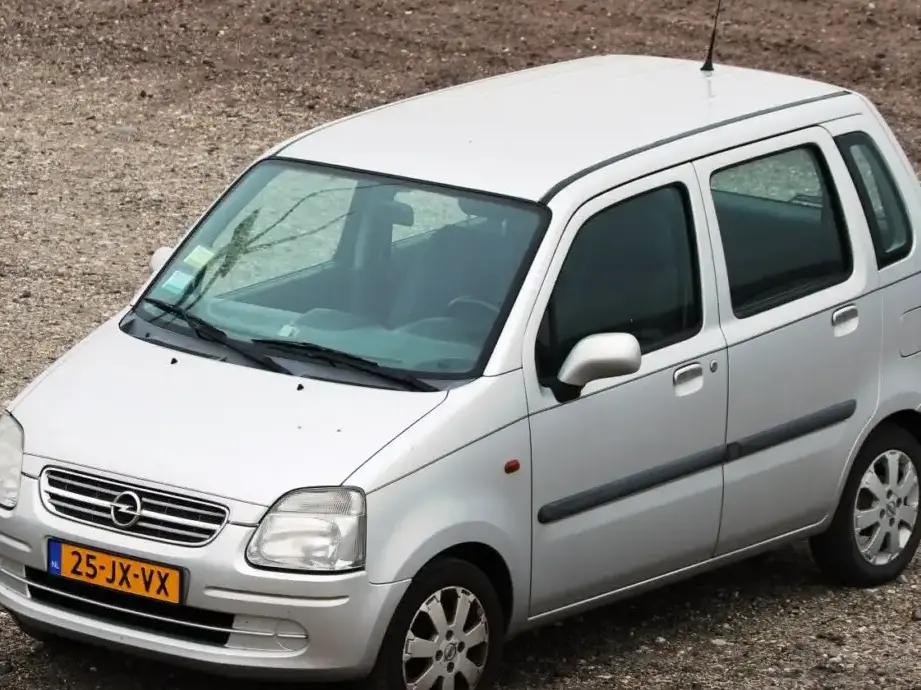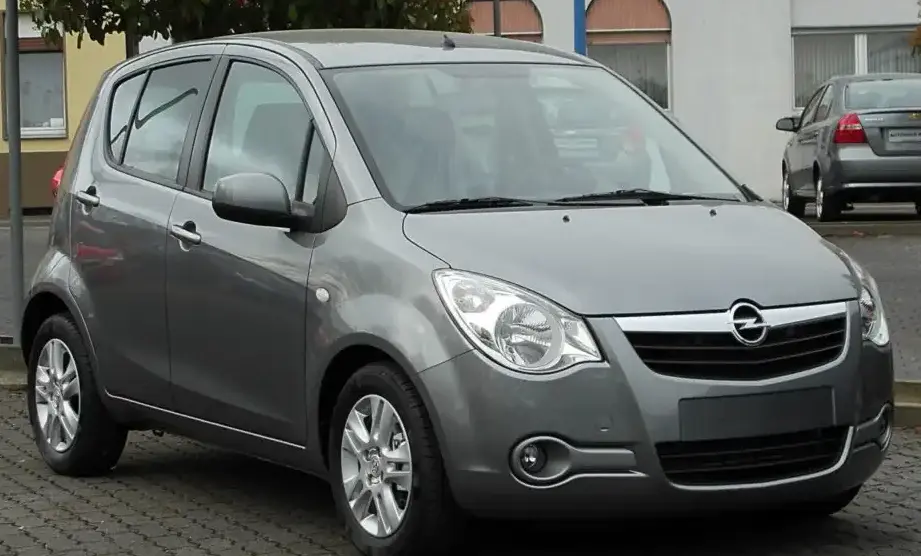
The Opel Agila II 1.2 (94 hp) Automatic, produced from 2008 to 2014, represented an entry-level offering within the broader Agila II range. Positioned as a practical and affordable city car, it aimed to provide economical transportation for urban drivers. The Agila II itself was based on the General Motors Gamma platform, shared with models like the Chevrolet Kalos and Matiz, and represented a significant step up in refinement and space compared to its predecessor. This particular variant, with its smaller engine and automatic transmission, catered to buyers prioritizing ease of use over outright performance.
Technical Specifications
| Brand | Opel |
| Model | Agila |
| Generation | Agila II |
| Type (Engine) | 1.2 (94 Hp) Automatic |
| Start of production | 2008 |
| End of production | 2014 |
| Powertrain Architecture | Internal Combustion engine |
| Body type | Hatchback |
| Seats | 5 |
| Doors | 5 |
| Fuel consumption (urban) | 6.9 l/100 km (34.1 US mpg, 40.9 UK mpg, 14.5 km/l) |
| Fuel consumption (extra urban) | 5 l/100 km (47 US mpg, 56.5 UK mpg, 20 km/l) |
| Fuel consumption (combined) | 5.7 l/100 km (41.3 US mpg, 49.6 UK mpg, 17.5 km/l) |
| CO2 emissions | 131 g/km |
| Fuel Type | Petrol (Gasoline) |
| Emission standard | Euro 5 |
| Power | 94 Hp @ 6000 rpm |
| Power per litre | 75.7 Hp/l |
| Torque | 118 Nm @ 4800 rpm (87.03 lb.-ft. @ 4800 rpm) |
| Engine layout | Front, Transverse |
| Engine Model/Code | K12B |
| Engine displacement | 1242 cm3 (75.79 cu. in.) |
| Number of cylinders | 4 |
| Engine configuration | Inline |
| Compression ratio | 11:1 |
| Fuel injection system | Multi-port manifold injection |
| Engine aspiration | Naturally aspirated engine |
| Engine oil capacity | 3.1 l (3.28 US qt, 2.73 UK qt) |
| Coolant capacity | 4.5 l (4.76 US qt, 3.96 UK qt) |
| Length | 3740 mm (147.24 in.) |
| Width | 1680 mm (66.14 in.) |
| Height | 1590 mm (62.6 in.) |
| Wheelbase | 2360 mm (92.91 in.) |
| Front track | 1470 mm (57.87 in.) |
| Rear track | 1480 mm (58.27 in.) |
| Minimum turning circle | 10 m (32.81 ft.) |
| Drivetrain | Front wheel drive |
| Number of gears | 4 |
| Gearbox type | Automatic transmission |
| Assisting systems | ABS (Anti-lock braking system) |
| Steering type | Steering rack and pinion |
Powertrain & Engine Architecture
The heart of the Agila II 1.2 Automatic is the Opel-developed K12B engine, a 1.2-liter inline four-cylinder petrol engine. This engine utilizes a multi-port fuel injection system, delivering fuel directly into the intake ports rather than directly into the combustion chamber. The K12B features a single overhead camshaft (SOHC) valvetrain, operating two valves per cylinder. This configuration, while simple, contributes to the engine’s reliability and affordability. The 94 horsepower output is achieved at 6000 rpm, while peak torque of 118 Nm (87 lb-ft) arrives at 4800 rpm. Paired with this engine is a four-speed automatic transmission. This transmission, while providing convenience, is a relatively older design and contributes to slightly lower fuel economy compared to a manual gearbox. The transmission’s gear ratios are tuned for urban driving, prioritizing smooth acceleration from a standstill rather than high-speed cruising.
Driving Characteristics
The Agila II 1.2 Automatic is not a performance-oriented vehicle. Acceleration is modest, with a 0-60 mph time estimated around 13-14 seconds. The four-speed automatic transmission, while smooth, lacks the responsiveness of more modern transmissions with more gears. The engine feels strained when attempting brisk acceleration or overtaking maneuvers. However, within city limits, the powertrain proves adequate for everyday driving. The automatic transmission simplifies driving in congested traffic, and the light steering makes maneuvering in tight spaces easy. Compared to the 1.0-liter version, the 1.2 offers a noticeable improvement in power, making it more suitable for highway driving, although still not particularly quick. Compared to the more powerful 1.4-liter engine, the 1.2 Automatic feels significantly slower and less refined.
Equipment & Trim Levels
The Agila II 1.2 Automatic typically came with a fairly basic level of equipment, reflecting its position as an entry-level model. Standard features generally included power steering, central locking, electric front windows, and an ABS anti-lock braking system. Air conditioning was often an optional extra, as were alloy wheels and a CD player with radio. Interior upholstery was typically cloth, with a simple dashboard layout. Higher trim levels, if selected, might add features like a trip computer, upgraded audio system, and different interior trim materials. Safety features were limited to the basics, with driver and passenger airbags being standard.
Chassis & Braking
The Agila II utilizes a MacPherson strut front suspension and a torsion beam rear suspension. This setup provides a comfortable ride quality, particularly on smooth roads. However, the torsion beam rear suspension can feel less composed on uneven surfaces. Braking is handled by disc brakes on the front wheels and drum brakes on the rear wheels. The ABS system helps to maintain steering control during emergency braking. The relatively light weight of the vehicle helps to compensate for the less sophisticated rear braking system. Stabilizer bars were typically fitted to both the front and rear axles, helping to reduce body roll during cornering.
Market Reception & Comparison
The Opel Agila II 1.2 Automatic was generally well-received as a practical and affordable city car. Critics praised its spacious interior for its size, its ease of driving, and its relatively low running costs. However, the engine was often criticized for being underpowered, particularly when paired with the automatic transmission. Compared to rivals like the Fiat Panda and Renault Twingo, the Agila II offered a more refined interior and a more comfortable ride, but lacked the same level of driving engagement. Fuel economy was competitive for its class, but not class-leading. Reliability was generally good, although some owners reported minor issues with the automatic transmission.
Legacy
The Opel Agila II 1.2 Automatic has become a popular choice on the used car market, particularly for first-time drivers and those seeking an affordable and reliable city car. The K12B engine is known for its durability, and the automatic transmission, while not the most advanced, is generally reliable if properly maintained. Parts availability is good, and maintenance costs are relatively low. While not a particularly exciting vehicle to drive, the Agila II 1.2 Automatic remains a practical and economical option for those seeking a no-frills, dependable mode of transportation.