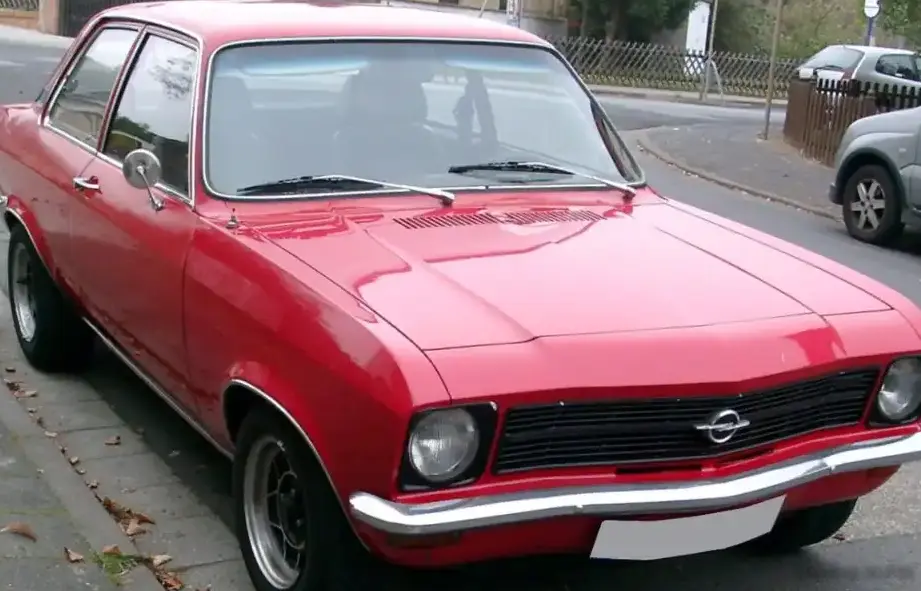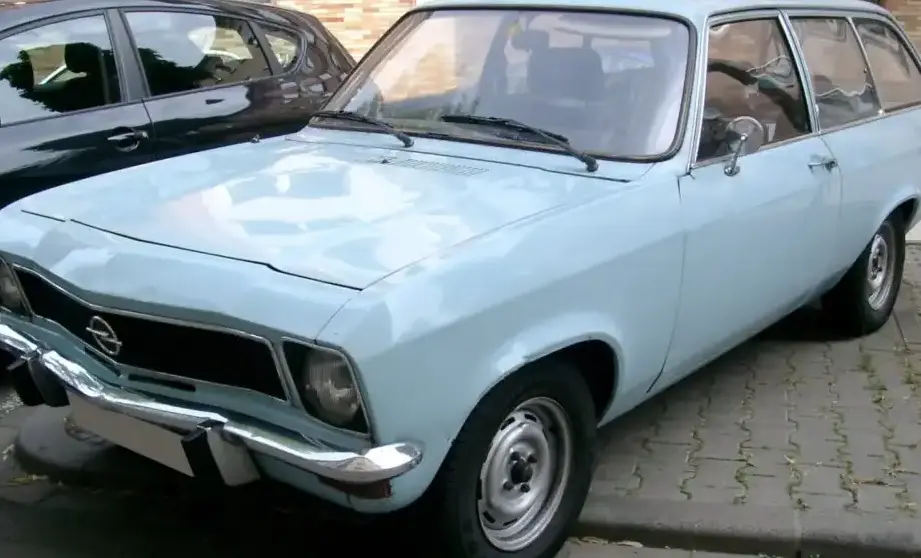
The Opel Ascona A Voyage 1.6 N, producing 60 horsepower, was a variant of the Ascona A series produced briefly between January and July of 1975. Positioned as an entry-level offering within the Voyage (estate/station wagon) body style, it represented an affordable and practical option for families in the European market. The Ascona A, launched in 1970, was Opel’s competitor in the mid-size segment, aiming to provide a blend of comfort, practicality, and reasonable performance. The Voyage body style, introduced later in the Ascona A’s lifecycle, expanded the model’s appeal to those needing increased cargo capacity. This particular 1.6 N engine and manual transmission combination was designed for economy and usability rather than outright speed.
Technical Specifications
| Brand | Opel |
| Model | Ascona |
| Generation | Ascona A Voyage |
| Type (Engine) | 1.6 N (60 Hp) |
| Start of production | January, 1975 |
| End of production | July, 1975 |
| Powertrain Architecture | Internal Combustion engine |
| Body type | Station wagon (estate) |
| Seats | 5 |
| Doors | 3 |
| Fuel Type | Petrol (Gasoline) |
| Acceleration 0 – 100 km/h | 21 sec |
| Acceleration 0 – 62 mph | 21 sec |
| Acceleration 0 – 60 mph | 20 sec |
| Maximum speed | 140 km/h (86.99 mph) |
| Weight-to-power ratio | 16.4 kg/Hp, 60.9 Hp/tonne |
| Weight-to-torque ratio | 9.4 kg/Nm, 106.6 Nm/tonne |
| Power | 60 Hp @ 5000 rpm |
| Power per litre | 37.9 Hp/l |
| Torque | 105 Nm @ 3000-3400 rpm (77.44 lb.-ft. @ 3000-3400 rpm) |
| Engine layout | Front, Longitudinal |
| Engine Model/Code | 16N |
| Engine displacement | 1584 cm3 (96.66 cu. in.) |
| Number of cylinders | 4 |
| Engine configuration | Inline |
| Cylinder Bore | 85 mm (3.35 in.) |
| Piston Stroke | 69.8 mm (2.75 in.) |
| Compression ratio | 8:1 |
| Number of valves per cylinder | 2 |
| Fuel injection system | Carburettor |
| Engine aspiration | Naturally aspirated engine |
| Valvetrain | CIH |
| Engine oil capacity | 3.8 l (4.02 US qt | 3.34 UK qt) |
| Coolant | 6.5 l (6.87 US qt | 5.72 UK qt) |
| Kerb Weight | 985 kg (2171.55 lbs) |
| Max. weight | 1505 kg (3317.96 lbs) |
| Max load | 520 kg (1146.4 lbs) |
| Fuel tank capacity | 46 l (12.15 US gal | 10.12 UK gal) |
| Permitted trailer load with brakes (12%) | 1000 kg (2204.62 lbs) |
| Permitted trailer load without brakes | 500 kg (1102.31 lbs) |
| Length | 4180 mm (164.57 in) |
| Width | 1632 mm (64.25 in) |
| Height | 1400 mm (55.12 in) |
| Wheelbase | 2430 mm (95.67 in) |
| Front track | 1331 mm (52.4 in) |
| Rear (Back) track | 1320 mm (51.97 in) |
| Ride height (ground clearance) | 134 mm (5.28 in) |
| Drag coefficient (Cd) | 0.50 |
| Minimum turning circle (turning diameter) | 9.76 m (32.02 ft) |
| Drivetrain Architecture | The Internal combustion engine (ICE) drives the rear wheels of the vehicle. |
| Drive wheel | Rear wheel drive |
| Number of gears and type of gearbox | 4 gears, manual transmission |
| Front suspension | Double wishbone, Independent coil spring, Transverse stabilizer |
| Rear suspension | Rigid axle suspension, Transverse stabilizer, Trailing arm, Coil spring |
| Front brakes | Disc |
| Rear brakes | Drum |
| Steering type | Steering rack and pinion |
| Tires size | 155/80 R13; 165/80 R13; 185/70 R13 |
| Wheel rims size | 5J x 13; 5.5J x 13 |
Powertrain & Engine Architecture
The heart of the Ascona A Voyage 1.6 N was the 16N engine, a 1.6-liter (1584 cc) inline-four cylinder unit. This engine utilized a single overhead camshaft (OHC) design, part of Opel’s CIH (Cylinder Head Integrated) engine family. The CIH design was known for its relatively simple and robust construction. Fuel delivery was handled by a single carburetor, contributing to the engine’s modest power output. The 16N engine featured a compression ratio of 8:1 and produced 60 horsepower at 5000 rpm and 105 Nm (77.44 lb-ft) of torque between 3000 and 3400 rpm. The engine was mounted longitudinally in the front of the vehicle, driving the rear wheels. The transmission was a four-speed manual gearbox, chosen for its cost-effectiveness and simplicity.
Driving Characteristics
The 1.6 N engine, paired with the four-speed manual transmission, provided adequate but not exhilarating performance. Acceleration from 0 to 100 km/h (0-62 mph) took approximately 21 seconds, and the top speed was around 140 km/h (87 mph). Compared to higher-spec Ascona A models, such as those equipped with the 1.9-liter engine or the later injection versions, the 1.6 N felt noticeably slower. However, the lower power output also meant better fuel economy. The gear ratios were geared towards providing reasonable acceleration in everyday driving situations, but lacked the close ratios found in sportier variants. The rear-wheel-drive configuration provided a balanced feel, but the relatively soft suspension setup meant that handling was not particularly sharp.
Equipment & Trim Levels
The Ascona A Voyage 1.6 N was typically equipped with basic but functional features. Standard equipment included cloth upholstery, basic instrumentation (speedometer, fuel gauge, temperature gauge), and a three-spoke steering wheel. The interior was generally utilitarian in design, prioritizing practicality over luxury. Optional extras included a radio, upgraded upholstery, and a sunroof. The Voyage body style itself offered a significant amount of cargo space, making it a popular choice for families and those needing to transport larger items. The trim level was considered the base model, focusing on affordability and essential features.
Chassis & Braking
The Ascona A Voyage featured a conventional chassis design for the era. The front suspension utilized a double wishbone setup with independent coil springs and a transverse stabilizer bar. The rear suspension employed a rigid axle with trailing arms, coil springs, and a transverse stabilizer bar. This setup provided a comfortable ride, but wasn’t particularly sporty. Braking was accomplished via disc brakes on the front wheels and drum brakes on the rear wheels. The braking system was adequate for the vehicle’s weight and performance, but lacked the stopping power of more modern systems. Steering was via a rack and pinion system, providing reasonable precision.
Market Reception & Comparison
The Ascona A Voyage 1.6 N was generally well-received as an affordable and practical family car. Critics acknowledged its reasonable fuel economy and spacious interior, but noted its lack of performance compared to higher-spec models. Compared to the 1.9-liter Ascona, the 1.6 N offered lower running costs but significantly less power. The 1.6 N was also positioned below the later fuel-injected versions of the Ascona, which offered improved performance and refinement. However, the 1.6 N’s simplicity and reliability made it a popular choice for budget-conscious buyers.
Legacy
The Opel Ascona A Voyage 1.6 N, while not a particularly high-performance variant, represents a significant piece of automotive history. The CIH engine family proved to be durable and reliable, and many examples of the 16N engine are still running today. In the used car market, the Ascona A Voyage 1.6 N is considered a classic car, appealing to enthusiasts and collectors. Its simplicity and affordability make it a relatively easy car to maintain and restore. While not as sought-after as some of the higher-spec Ascona models, the 1.6 N remains a testament to Opel’s commitment to providing practical and reliable transportation to the masses.