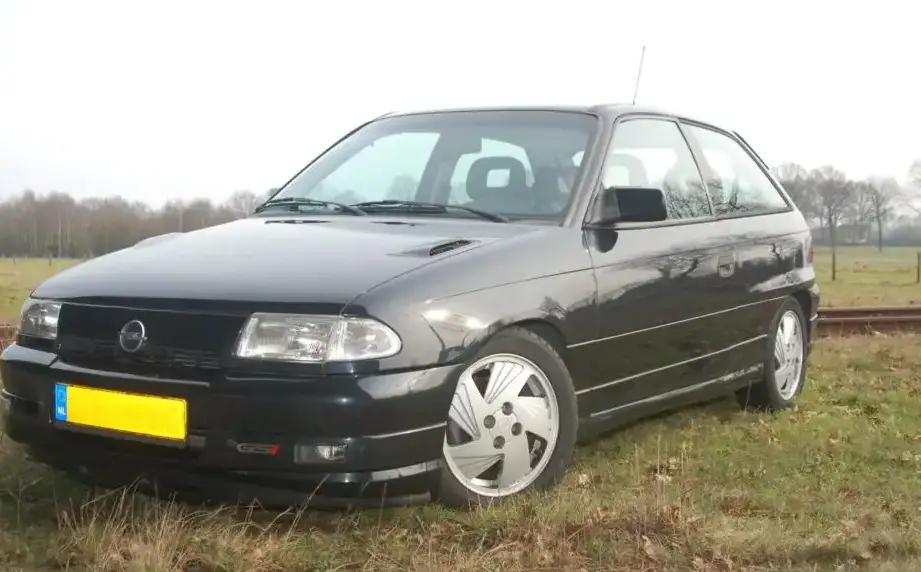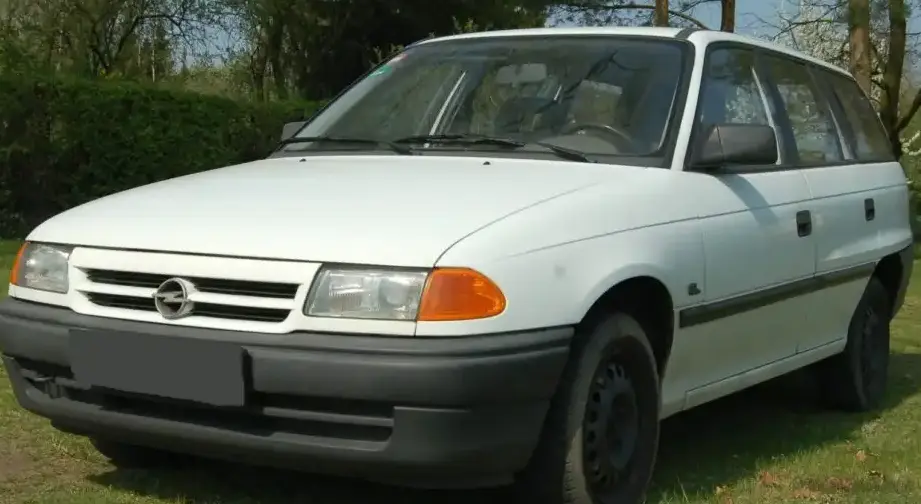
The Opel Astra F Caravan 1.4i, producing 60 horsepower, was a mainstay of the European family car market from October 1991 to July 1994. Positioned as the entry-level variant of the Astra F Caravan (estate) range, it offered practical transportation with a focus on affordability and fuel economy. This model was part of the larger Astra F generation (1991-1998), which represented a significant step forward for Opel in terms of design, safety, and technology. The Caravan body style, a popular choice in Europe, provided increased cargo capacity compared to the hatchback version, making it ideal for families and those requiring versatile load-carrying capabilities.
Technical Specifications
| Brand | Opel |
| Model | Astra |
| Generation | Astra F Caravan |
| Type (Engine) | 1.4i (60 Hp) |
| Start of production | October, 1991 |
| End of production | July, 1994 |
| Powertrain Architecture | Internal Combustion engine |
| Body type | Station wagon (estate) |
| Seats | 5 |
| Doors | 5 |
| Fuel consumption (urban) | 8.6 l/100 km (27.4 US mpg, 32.8 UK mpg, 11.6 km/l) |
| Fuel consumption (extra urban) | 5.1 l/100 km (46.1 US mpg, 55.4 UK mpg, 19.6 km/l) |
| Fuel consumption (combined) | 6.6 l/100 km (35.6 US mpg, 42.8 UK mpg, 15.2 km/l) |
| Fuel Type | Petrol (Gasoline) |
| Acceleration 0 – 100 km/h | 17 sec |
| Acceleration 0 – 62 mph | 17 sec |
| Acceleration 0 – 60 mph | 16.2 sec |
| Maximum speed | 155 km/h (96.31 mph) |
| Weight-to-power ratio | 16.6 kg/Hp, 60.3 Hp/tonne |
| Weight-to-torque ratio | 9.7 kg/Nm, 103.5 Nm/tonne |
| Power | 60 Hp @ 5200 rpm |
| Power per litre | 43.2 Hp/l |
| Torque | 103 Nm @ 2800 rpm (75.97 lb.-ft. @ 2800 rpm) |
| Engine layout | Front, Transverse |
| Engine Model/Code | C14NZ |
| Engine displacement | 1389 cm3 (84.76 cu. in.) |
| Number of cylinders | 4 |
| Engine configuration | Inline |
| Cylinder Bore | 77.6 mm (3.06 in.) |
| Piston Stroke | 73.4 mm (2.89 in.) |
| Compression ratio | 9.4:1 |
| Number of valves per cylinder | 2 |
| Fuel injection system | Single-point injection |
| Engine aspiration | Naturally aspirated engine |
| Valvetrain | SOHC |
| Engine oil capacity | 3.5 l (3.7 US qt | 3.08 UK qt) |
| Coolant | 5.7 l (6.02 US qt | 5.02 UK qt) |
| Kerb Weight | 995 kg (2193.6 lbs.) |
| Max. weight | 1515 kg (3340 lbs.) |
| Max load | 520 kg (1146.4 lbs.) |
| Trunk (boot) space – minimum | 500 l (17.66 cu. ft.) |
| Trunk (boot) space – maximum | 1630 l (57.56 cu. ft.) |
| Fuel tank capacity | 50 l (13.21 US gal | 11 UK gal) |
| Length | 4278 mm (168.43 in.) |
| Width | 1688 mm (66.46 in.) |
| Width including mirrors | 1795 mm (70.67 in.) |
| Height | 1475 mm (58.07 in.) |
| Wheelbase | 2517 mm (99.09 in.) |
| Front track | 1430 mm (56.3 in.) |
| Rear (Back) track | 1429 mm (56.26 in.) |
| Ride height (ground clearance) | 135 mm (5.31 in.) |
| Drag coefficient (Cd) | 0.34 |
| Minimum turning circle | 10.5 m (34.45 ft.) |
| Drivetrain Architecture | The Internal combustion engine (ICE) drives the front wheels of the vehicle. |
| Drive wheel | Front wheel drive |
| Number of gears and type of gearbox | 5 gears, manual transmission |
| Front suspension | Wishbone |
| Rear suspension | Coil spring |
| Front brakes | Disc |
| Rear brakes | Drum |
| Assisting systems | ABS (Anti-lock braking system) |
| Steering type | Steering rack and pinion |
| Tires size | 175/70 R13 82T; 175/65 R14 82T |
| Wheel rims size | 5.5J x 13 ET49; 5.5J x 14 ET49 |
Powertrain & Engine Architecture
The Astra F Caravan 1.4i was powered by the Opel C14NZ engine, a 1.4-liter inline-four cylinder petrol engine. This engine featured a single overhead camshaft (SOHC) valvetrain with two valves per cylinder. The C14NZ utilized a single-point fuel injection system, a relatively simple and cost-effective technology for the time. This system injected fuel into the intake manifold rather than directly into the cylinders, as seen in more modern engines. The engine produced 60 horsepower at 5200 rpm and 103 Nm (76 lb-ft) of torque at 2800 rpm. The engine was transversely mounted at the front of the vehicle, driving the front wheels. The standard transmission was a five-speed manual gearbox, although a four-speed automatic transmission was also available as an option. The automatic transmission, while offering convenience, did impact acceleration and fuel economy.
Driving Characteristics
The 1.4i engine, paired with the five-speed manual transmission, provided adequate, but not exhilarating, performance. Acceleration from 0 to 60 mph took around 16.2 seconds, and top speed was limited to 155 km/h (96 mph). The engine felt somewhat strained when accelerating hard or climbing hills. The automatic transmission further reduced performance, increasing the 0-60 mph time. The gear ratios were geared towards fuel efficiency rather than outright speed. The steering was light and easy, making the car maneuverable in urban environments. The suspension provided a comfortable ride, although it could feel somewhat soft and wallowy when cornering. Compared to the more powerful 1.6L and 2.0L versions of the Astra F, the 1.4i offered a more economical driving experience, but at the expense of performance.
Equipment & Trim Levels
The 1.4i Caravan typically came with a basic level of equipment. Standard features included power steering, central locking, and an adjustable steering column. Interior upholstery was typically cloth, and the dashboard featured a simple, functional design. Optional extras included power windows, a sunroof, and upgraded audio systems. The trim level was generally considered the entry point to the Astra F Caravan range, appealing to buyers prioritizing practicality and value. Higher trim levels, such as the GLS, offered more luxurious features and a more refined interior.
Chassis & Braking
The Astra F Caravan featured a front-wheel-drive layout with independent wishbone suspension at the front and a coil spring rear suspension. The front brakes were disc brakes, while the rear brakes were drum brakes. ABS (Anti-lock Braking System) was available as an option, enhancing safety by preventing wheel lockup during hard braking. The suspension was tuned for comfort, providing a relatively smooth ride over uneven surfaces. The chassis was relatively lightweight, contributing to the car’s fuel efficiency.
Market Reception & Comparison
The Astra F Caravan 1.4i was well-received as an affordable and practical family car. Critics praised its spacious interior, comfortable ride, and fuel efficiency. However, the engine’s lack of power was a common criticism. Compared to the 1.6L and 2.0L versions, the 1.4i offered significantly less performance. The 1.7D diesel version provided better fuel economy but was even slower. The 1.4i was often chosen by buyers who primarily used the car for commuting and short trips, where performance was less of a concern. Its fuel economy of around 35.6 US mpg combined made it an attractive option for budget-conscious drivers.
Legacy
The Opel Astra F Caravan 1.4i has proven to be a relatively reliable car, with many examples still on the road today. The C14NZ engine is known for its durability, although regular maintenance is essential. Common issues include oil leaks and wear on the timing chain. The availability of spare parts is generally good, making it relatively easy and affordable to keep these cars running. In the used car market, the 1.4i Caravan is often sought after as a cheap and practical workhorse. While it may not offer the performance or refinement of more expensive models, it remains a popular choice for those seeking a reliable and affordable estate car.