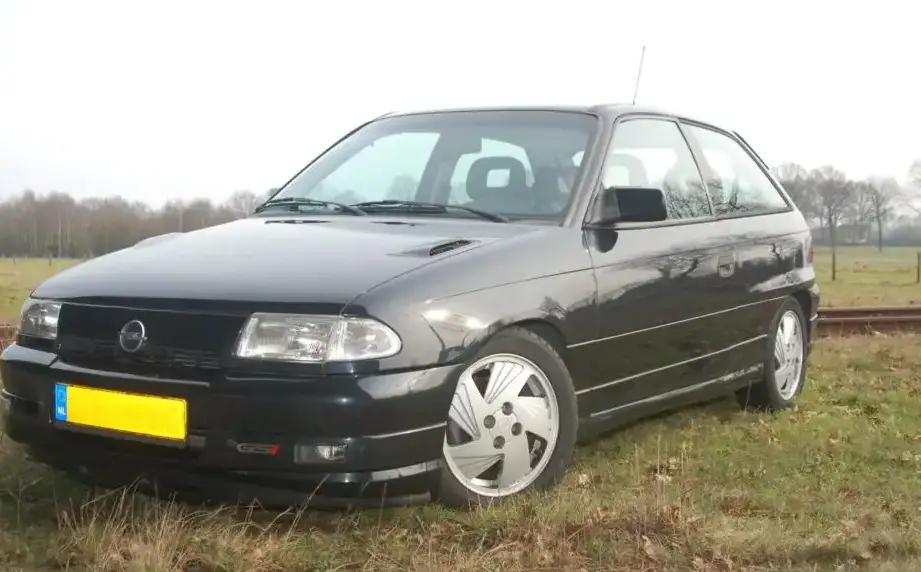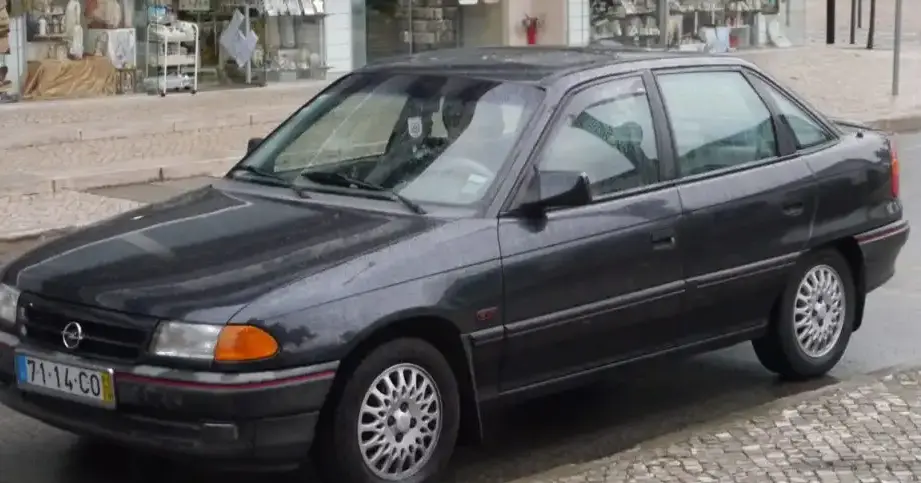
Technical Specifications
| Brand | Opel |
| Model | Astra |
| Generation | Astra F Classic |
| Type (Engine) | 1.7 D (60 Hp) |
| Start of production | 1993 |
| End of production | 1994 |
| Powertrain Architecture | Internal Combustion engine |
| Body type | Sedan |
| Seats | 5 |
| Doors | 4 |
| Fuel consumption (urban) | 8.3 l/100 km (28.3 US mpg, 34 UK mpg, 12 km/l) |
| Fuel consumption (extra urban) | 6.6 l/100 km (35.6 US mpg, 42.8 UK mpg, 15.2 km/l) |
| Fuel consumption (combined) | 6.6 l/100 km (35.6 US mpg, 42.8 UK mpg, 15.2 km/l) |
| Fuel Type | Diesel |
| Acceleration 0 – 100 km/h | 18.5 sec |
| Acceleration 0 – 62 mph | 18.5 sec |
| Acceleration 0 – 60 mph | 17.6 sec |
| Maximum speed | 153 km/h (95.07 mph) |
| Weight-to-power ratio | 17.6 kg/Hp, 56.9 Hp/tonne |
| Weight-to-torque ratio | 10 kg/Nm, 99.5 Nm/tonne |
| Power | 60 Hp @ 4600 rpm |
| Power per litre | 35.3 Hp/l |
| Torque | 105 Nm @ 2400-2600 rpm (77.44 lb.-ft. @ 2400-2600 rpm) |
| Engine layout | Front, Transverse |
| Engine Model/Code | 17DR |
| Engine displacement | 1699 cm3 (103.68 cu. in.) |
| Number of cylinders | 4 |
| Engine configuration | Inline |
| Cylinder Bore | 82.5 mm (3.25 in.) |
| Piston Stroke | 79.5 mm (3.13 in.) |
| Compression ratio | 23:1 |
| Number of valves per cylinder | 2 |
| Fuel injection system | Precombustion chamber injection |
| Engine aspiration | Naturally aspirated engine |
| Valvetrain | SOHC |
| Engine oil capacity | 5 l (5.28 US qt | 4.4 UK qt) |
| Coolant capacity | 7.8 l (8.24 US qt | 6.86 UK qt) |
| Kerb Weight | 1055 kg (2325.88 lbs.) |
| Max. weight | 1535 kg (3384.1 lbs.) |
| Max load | 480 kg (1058.22 lbs.) |
| Trunk (boot) space – minimum | 500 l (17.66 cu. ft.) |
| Trunk (boot) space – maximum | 1200 l (42.38 cu. ft.) |
| Fuel tank capacity | 52 l (13.74 US gal | 11.44 UK gal) |
| Length | 4239 mm (166.89 in.) |
| Width | 1688 mm (66.46 in.) |
| Width including mirrors | 1795 mm (70.67 in.) |
| Height | 1410 mm (55.51 in.) |
| Wheelbase | 2517 mm (99.09 in.) |
| Front track | 1430 mm (56.3 in.) |
| Rear (Back) track | 1429 mm (56.26 in.) |
| Ride height (ground clearance) | 135 mm (5.31 in.) |
| Drag coefficient (Cd) | 0.31 |
| Minimum turning circle | 10.5 m (34.45 ft.) |
| Drivetrain Architecture | ICE, Front wheel drive |
| Drive wheel | Front wheel drive |
| Number of gears | 5 |
| Gearbox type | Manual transmission |
| Front suspension | Wishbone |
| Rear suspension | Suspension with traction connecting levers |
| Front brakes | Ventilated discs |
| Rear brakes | Drum |
| Steering type | Steering rack and pinion |
| Tires size | 175/70 R13 82T |
| Wheel rims size | 5.5J x 13 ET49 |
The Opel Astra F Classic 1.7 D, produced from 1993 to 1994, was a cornerstone of the European compact car market, offering an economical diesel option within the broader Astra F Classic range. Positioned as the entry-level diesel variant, it catered to buyers prioritizing fuel efficiency and affordability. The Astra F Classic represented a cost-effective revision of the original Astra F launched in 1991, maintaining the platform’s core strengths while reducing production costs. Its primary market was Europe, where it competed directly with popular models like the Volkswagen Golf, Ford Escort, and Peugeot 305. The “Classic” designation signified a simplified trim level and a more accessible price point compared to the higher-spec Astra F models.
Powertrain & Engine Architecture
The Astra F Classic 1.7 D was powered by the 17DR engine, a 1.7-liter inline-four cylinder diesel. This engine employed a precombustion chamber injection system, a common feature in diesel engines of the time. Fuel was injected into a small chamber within the cylinder head, initiating partial combustion before entering the main cylinder, improving cold-start performance and reducing noise. A single overhead camshaft (SOHC) controlled two valves per cylinder. The engine’s 1699cc displacement was achieved through a bore of 82.5mm and a stroke of 79.5mm. The high compression ratio of 23:1, typical for indirect injection diesels, contributed to its fuel efficiency. The engine was mounted transversely at the front of the vehicle, powering the front wheels through a five-speed manual transmission.
Driving Characteristics
With 60 horsepower, the 1.7 D engine delivered modest performance. Acceleration to 62 mph (100 km/h) took around 18.5 seconds, and its top speed was approximately 95 mph (153 km/h). The five-speed manual transmission was geared for fuel economy rather than rapid acceleration. Compared to the 1.8 or 2.0-liter gasoline versions of the Astra F, the 1.7 D felt significantly slower, particularly when loaded or tackling inclines. However, the diesel engine’s broad torque curve provided adequate pulling power at lower RPMs, making it suitable for everyday driving. The manual transmission offered more driver control than the optional automatic transmission available on other Astra F trims. The gear ratios were optimized for maximizing fuel efficiency, resulting in a relaxed driving experience at cruising speeds.
Equipment & Trim Levels
The Astra F Classic 1.7 D was generally equipped with basic, functional features. Standard amenities typically included cloth upholstery, a simple dashboard layout, and manual windows and door locks. Power steering was often an optional extra. The interior prioritized practicality and durability over luxury. Trim levels for the 1.7 D were limited, with most vehicles featuring a consistent specification. Available options included a radio/cassette player, upgraded seat fabrics, and central locking. The overall focus was on providing an affordable and reliable vehicle, minimizing unnecessary features.
Chassis & Braking
The Astra F Classic featured a straightforward chassis design. The front suspension utilized independent wishbones, while the rear suspension employed a torsion beam setup with traction connecting levers. This configuration balanced ride comfort and handling. Braking was handled by ventilated discs on the front wheels and drum brakes on the rear. While adequate for the vehicle’s weight and performance, this setup lacked the stopping power of all-disc brake systems found on higher-spec Astra F models. The steering system was a rack and pinion type, providing precise and responsive steering feel.
Market Reception & Comparison
The Astra F Classic 1.7 D was well-received in markets where diesel fuel was affordable and fuel economy was a priority. Critics praised its reliability and low running costs. However, the engine’s lack of power was frequently noted. Compared to the gasoline-powered Astra F variants, the 1.7 D offered superior fuel economy but significantly slower acceleration. Against competitors like the Volkswagen Golf Diesel and Ford Escort Diesel, the Astra F 1.7 D offered comparable performance and economy, often at a competitive price. Its simple design and robust construction contributed to its reputation for reliability.
Legacy
The Opel Astra F Classic 1.7 D powertrain, despite its modest performance, proved remarkably durable. Numerous examples remain operational today, a testament to the engine’s robust design and the overall reliability of the Astra F platform. In the used car market, these vehicles are often sought after by buyers seeking an affordable and economical vehicle. Maintenance is generally straightforward, and parts availability remains reasonable. While not a collector’s item, the Astra F Classic 1.7 D represents a significant chapter in Opel’s history, embodying the brand’s commitment to providing practical and reliable transportation for a wide range of customers.