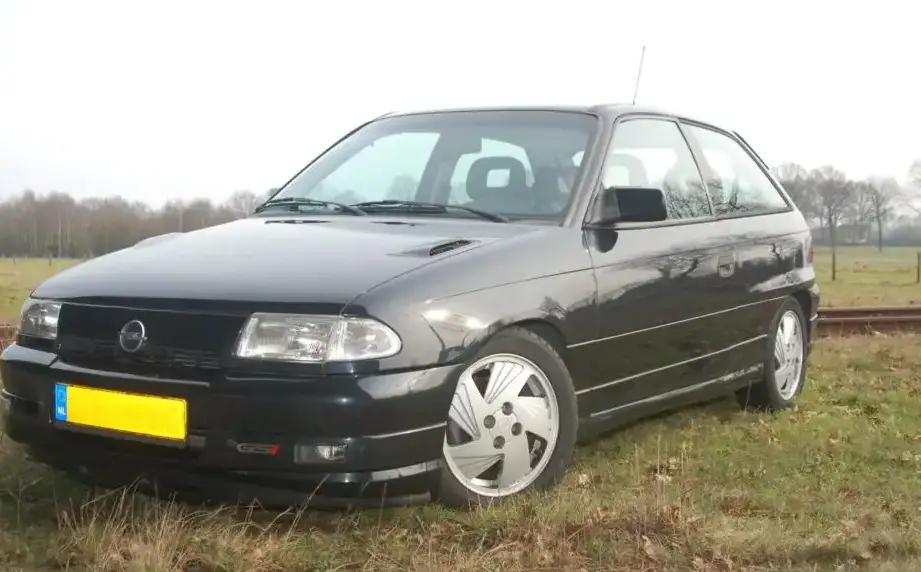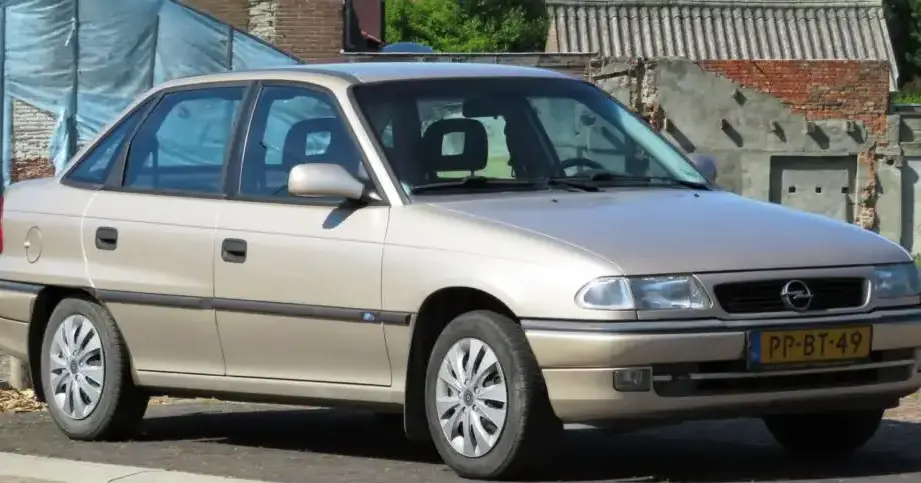
The Opel Astra F Classic 1.6i (75 hp) was a popular subcompact sedan produced from 1996 to December 1997, representing a key iteration of the Astra F series following the 1994 facelift. Positioned as an entry-level offering within the Astra F range, it provided affordable transportation for families and commuters. This variant played a significant role in Opel’s European market share during the mid-to-late 1990s, offering a balance of practicality, fuel efficiency, and a relatively low purchase price. It was a direct competitor to vehicles like the Ford Escort, Volkswagen Golf, and Peugeot 306.
Technical Specifications
| Brand | Opel |
| Model | Astra |
| Generation | Astra F Classic (facelift 1994) |
| Type (Engine) | 1.6i (75 Hp) |
| Start of production | 1996 |
| End of production | December, 1997 |
| Powertrain Architecture | Internal Combustion engine |
| Body type | Sedan |
| Seats | 5 |
| Doors | 4 |
| Fuel consumption (urban) | 10 l/100 km (23.5 US mpg) |
| Fuel consumption (extra urban) | 5.7 l/100 km (41.3 US mpg) |
| Fuel consumption (combined) | 7.3 l/100 km (32.2 US mpg) |
| CO2 emissions | 174 g/km |
| Fuel Type | Petrol (Gasoline) |
| Acceleration 0 – 100 km/h | 14.5 sec |
| Acceleration 0 – 62 mph | 14.5 sec |
| Acceleration 0 – 60 mph | 13.8 sec |
| Maximum speed | 168 km/h (104.39 mph) |
| Weight-to-power ratio | 13.5 kg/Hp |
| Weight-to-torque ratio | 7.9 kg/Nm |
| Power | 75 Hp @ 5200 rpm |
| Torque | 128 Nm @ 2800 rpm (94.41 lb.-ft. @ 2800 rpm) |
| Engine layout | Front, Transverse |
| Engine Model/Code | X16SZR |
| Engine displacement | 1598 cm3 (97.52 cu. in.) |
| Number of cylinders | 4 |
| Engine configuration | Inline |
| Cylinder Bore | 79 mm (3.11 in.) |
| Piston Stroke | 81.5 mm (3.21 in.) |
| Compression ratio | 9.6:1 |
| Number of valves per cylinder | 2 |
| Fuel injection system | Single-point injection |
| Engine aspiration | Naturally aspirated |
| Valvetrain | OHC |
| Engine oil capacity | 3.5 l (3.7 US qt | 3.08 UK qt) |
| Coolant capacity | 5.6 l (5.92 US qt | 4.93 UK qt) |
| Kerb Weight | 1010 kg (2226.67 lbs.) |
| Max. weight | 1535 kg (3384.1 lbs.) |
| Max load | 525 kg (1157.43 lbs.) |
| Trunk (boot) space – minimum | 500 l (17.66 cu. ft.) |
| Trunk (boot) space – maximum | 1200 l (42.38 cu. ft.) |
| Fuel tank capacity | 52 l (13.74 US gal | 11.44 UK gal) |
| Length | 4239 mm (166.89 in.) |
| Width | 1696 mm (66.77 in.) |
| Width including mirrors | 1852 mm (72.91 in.) |
| Height | 1410 mm (55.51 in.) |
| Wheelbase | 2517 mm (99.09 in.) |
| Front track | 1430 mm (56.3 in.) |
| Rear track | 1429 mm (56.26 in.) |
| Ride height (ground clearance) | 135 mm (5.31 in.) |
| Drag coefficient (Cd) | 0.31 |
| Drivetrain Architecture | Front wheel drive |
| Number of gears | 5 |
| Gearbox type | Manual transmission |
| Front suspension | Independent type McPherson |
| Rear suspension | Dependent spring suspension with transverse stabilizer |
| Front brakes | Disc |
| Rear brakes | Drum |
| Steering type | Steering rack and pinion |
| Power steering | Hydraulic |
| Tires size | 175/70 R13 |
| Wheel rims size | 13 |
Powertrain & Engine Architecture
The Astra F Classic 1.6i was powered by the Opel X16SZR engine, a 1.6-liter inline-four cylinder gasoline engine. This engine featured a single-point fuel injection system, a relatively simple and cost-effective technology for the time. The X16SZR produced 75 horsepower at 5200 rpm and 128 Nm (94.41 lb-ft) of torque at 2800 rpm. The engine utilized an overhead camshaft (OHC) valvetrain with two valves per cylinder. The engine’s design prioritized fuel economy and reliability over outright performance. It was paired with a five-speed manual transmission, which was the most common configuration. While an automatic transmission was offered in some markets, it was less frequently selected with this engine due to its impact on performance and fuel consumption.
Driving Characteristics
The 1.6i engine, coupled with the five-speed manual transmission, provided adequate, though not exhilarating, performance. Acceleration from 0 to 100 km/h (0-62 mph) took approximately 14.5 seconds, and the top speed was around 168 km/h (104 mph). The engine felt somewhat strained at higher speeds or when carrying a full load. The gear ratios were tuned for fuel efficiency, meaning the engine needed to be revved to access its power. Compared to the more powerful 1.8-liter and 2.0-liter versions of the Astra F, the 1.6i felt noticeably slower. However, it offered a more forgiving and economical driving experience, particularly in urban environments. The manual transmission was light and easy to use, contributing to a reasonably engaging driving experience.
Equipment & Trim Levels
The Astra F Classic 1.6i typically came with a basic level of equipment. Standard features included power steering, central locking, and a basic audio system. Interior upholstery was typically cloth, and the dashboard featured a simple, functional design. Optional extras included air conditioning, electric windows, and upgraded audio systems. The trim level was generally considered the base model, aimed at budget-conscious buyers. Higher trim levels, such as the GLS, offered more luxurious features like alloy wheels, upgraded interior trim, and additional comfort features.
Chassis & Braking
The Astra F Classic 1.6i utilized an independent McPherson strut suspension at the front and a dependent spring suspension with a transverse stabilizer at the rear. This suspension setup provided a reasonable balance of ride comfort and handling. The front brakes were disc brakes, while the rear brakes were drum brakes – a common configuration for vehicles in this price range at the time. The steering was a rack and pinion system with hydraulic power assistance, providing light and precise steering feel. The tires were typically 175/70 R13, offering adequate grip for everyday driving conditions.
Market Reception & Comparison
The Astra F Classic 1.6i was generally well-received as an affordable and practical family car. Critics praised its fuel efficiency and reliability, but noted its lack of outright performance. Compared to the higher-output Astra variants, the 1.6i offered a lower purchase price and better fuel economy, but at the expense of acceleration and overall driving enjoyment. The 1.8-liter version, while more expensive, provided a noticeable performance boost and was often preferred by drivers who prioritized driving dynamics. The 1.6i was a popular choice for first-time car buyers and those seeking a reliable and economical mode of transportation.
Legacy
The Opel Astra F Classic 1.6i remains a relatively common sight on European roads today, testament to its durability and reliability. The X16SZR engine is known for its robustness and relatively low maintenance costs. However, age-related issues such as corrosion and wear and tear on suspension components are common. In the used car market, the 1.6i variant typically commands a lower price than the higher-output models. It is often seen as a good entry point for those looking for an affordable and reliable classic car. While not a performance icon, the Astra F Classic 1.6i played a significant role in providing affordable transportation to a wide range of drivers during the 1990s.