Technical Specifications
| Brand | Opel |
| Model | Astra |
| Generation | Astra F (facelift 1994) |
| Type (Engine) | 2.0i Ecotec 16V (136 Hp) Automatic |
| Start of production | 1995 |
| End of production | December, 1997 |
| Powertrain Architecture | Internal Combustion engine |
| Body type | Hatchback |
| Seats | 5 |
| Doors | 3 |
| Fuel consumption (urban) | 11.3 l/100 km (20.8 US mpg, 25 UK mpg, 8.8 km/l) |
| Fuel consumption (extra urban) | 7.2 l/100 km (32.7 US mpg, 39.2 UK mpg, 13.9 km/l) |
| Fuel consumption (combined) | 9.6 l/100 km (24.5 US mpg, 29.4 UK mpg, 10.4 km/l) |
| Fuel Type | Petrol (Gasoline) |
| Acceleration 0 – 100 km/h | 10.5 sec |
| Acceleration 0 – 62 mph | 10.5 sec |
| Acceleration 0 – 60 mph | 10 sec |
| Maximum speed | 200 km/h (124.27 mph) |
| Weight-to-power ratio | 8.6 kg/Hp, 115.7 Hp/tonne |
| Weight-to-torque ratio | 6.4 kg/Nm, 157.4 Nm/tonne |
| Power | 136 Hp @ 6000 rpm |
| Power per litre | 68.1 Hp/l |
| Torque | 185 Nm @ 4000 rpm (136.45 lb.-ft. @ 4000 rpm) |
| Engine layout | Front, Transverse |
| Engine Model/Code | X20XEV |
| Engine displacement | 1998 cm3 (121.93 cu. in.) |
| Number of cylinders | 4 |
| Engine configuration | Inline |
| Cylinder Bore | 86 mm (3.39 in.) |
| Piston Stroke | 86 mm (3.39 in.) |
| Compression ratio | 10.8:1 |
| Number of valves per cylinder | 4 |
| Fuel injection system | Multi-port manifold injection |
| Engine aspiration | Naturally aspirated engine |
| Valvetrain | DOHC |
| Engine oil capacity | 4 l (4.23 US qt | 3.52 UK qt) |
| Coolant | 6.6 l (6.97 US qt | 5.81 UK qt) |
| Kerb Weight | 1175 kg (2590.43 lbs.) |
| Max. weight | 1680 kg (3703.77 lbs.) |
| Max load | 505 kg (1113.33 lbs.) |
| Trunk (boot) space – minimum | 360 l (12.71 cu. ft.) |
| Trunk (boot) space – maximum | 1200 l (42.38 cu. ft.) |
| Fuel tank capacity | 52 l (13.74 US gal | 11.44 UK gal) |
| Length | 4051 mm (159.49 in.) |
| Width | 1696 mm (66.77 in.) |
| Width including mirrors | 1852 mm (72.91 in.) |
| Height | 1410 mm (55.51 in.) |
| Wheelbase | 2517 mm (99.09 in.) |
| Front track | 1430 mm (56.3 in.) |
| Rear (Back) track | 1423 mm (56.02 in.) |
| Ride height (ground clearance) | 135 mm (5.31 in.) |
| Drag coefficient (Cd) | 0.32 |
| Minimum turning circle | 10.5 m (34.45 ft.) |
| Drivetrain Architecture | ICE to Front Wheels |
| Drive wheel | Front wheel drive |
| Number of gears | 4 |
| Gearbox type | automatic transmission |
| Front brakes | Ventilated discs |
| Rear brakes | Disc |
| Steering type | Steering rack and pinion |
| Tires size | 195/55 R15 |
| Wheel rims size | 6Jx15 |
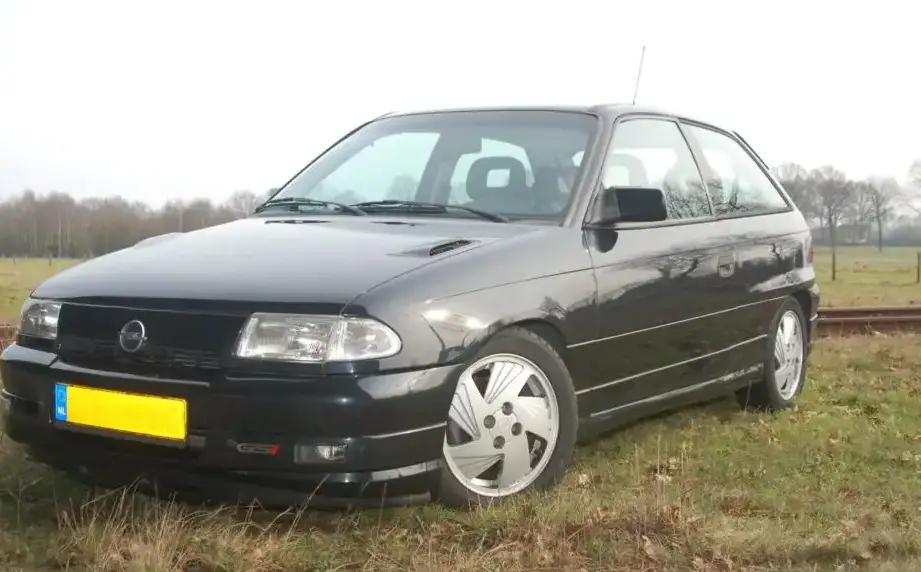
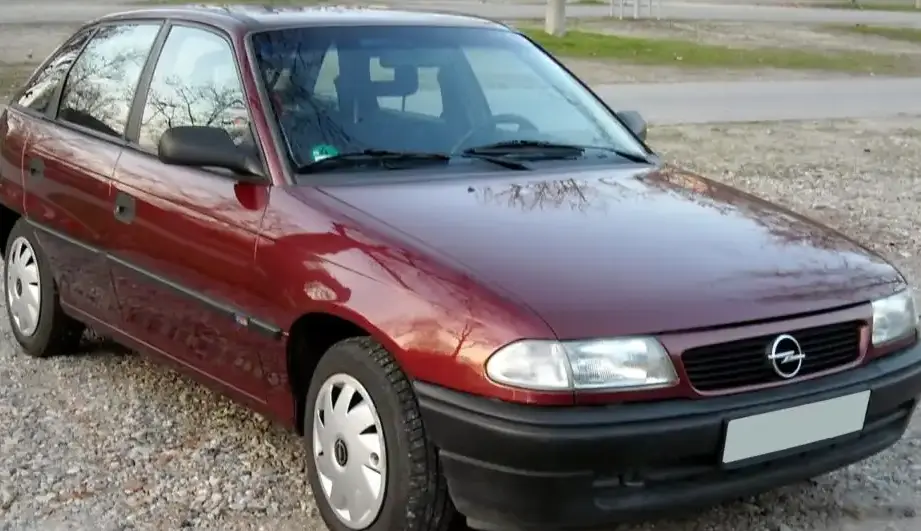
The Opel Astra F 2.0i Ecotec 16V Automatic, produced from 1995 to 1997, represented a significant step up in performance and refinement within the Astra F range. Introduced as part of the facelifted Astra F series (often referred to as the ’94-’98 model), this variant aimed to provide a more comfortable and powerful option for buyers seeking a mid-range hatchback. It occupied a position between the more economical base models and the performance-oriented GSi trims, offering a blend of practicality and driving enjoyment. The Astra F itself was a crucial model for Opel, solidifying its position in the competitive European small family car segment.
Powertrain & Engine Architecture
The heart of the Astra F 2.0i Automatic is the X20XEV engine, a 1998cc inline-four cylinder unit belonging to Opel’s Ecotec family. This engine featured a dual overhead camshaft (DOHC) valvetrain with four valves per cylinder, contributing to its relatively high power output for its displacement. The X20XEV utilized multi-port fuel injection, delivering fuel directly into the intake ports for improved combustion efficiency. The engine was known for its smooth operation and reasonable reliability. Paired with this engine was a four-speed automatic transmission, designed to provide comfortable and effortless driving. This transmission, while not particularly advanced by modern standards, was well-suited to the engine’s torque curve and provided acceptable performance for everyday use.
Driving Characteristics
The 2.0i Automatic offered a noticeable improvement in performance over the lower-capacity Astra F models. While not a sports car, the 136 horsepower and 185 Nm of torque provided adequate acceleration for overtaking and highway cruising. The automatic transmission, however, did impact performance somewhat. Compared to the five-speed manual version, the automatic resulted in slightly slower acceleration times (around 10.5 seconds for 0-60 mph). The gear ratios were optimized for fuel efficiency and comfort rather than outright speed. In real-world driving, the automatic transmission provided a smooth and relaxed experience, particularly in urban environments. However, drivers seeking a more engaging driving experience often preferred the manual gearbox.
Equipment & Trim Levels
The 2.0i Automatic trim typically included features such as central locking, power windows, and an upgraded interior trim compared to the base models. Air conditioning was often included as standard or available as an option. Interior upholstery was typically cloth, with options for upgraded materials. The dashboard layout was functional and straightforward, with clear instrumentation. Optional extras included alloy wheels, a sunroof, and a more advanced audio system. The specific equipment levels could vary depending on the market and individual customer choices.
Chassis & Braking
The Astra F 2.0i Automatic utilized a MacPherson strut front suspension and a torsion beam rear suspension. This setup provided a good balance between ride comfort and handling. Braking was handled by ventilated discs on the front wheels and solid discs on the rear. The braking system was adequate for the car’s weight and performance, but lacked the sophistication of more advanced systems found on higher-performance models. Stabilizer bars were fitted to both the front and rear axles to reduce body roll during cornering.
Market Reception & Comparison
The Astra F 2.0i Automatic was generally well-received by automotive critics as a practical and comfortable family car. It offered a good compromise between performance, fuel economy, and price. Compared to the 1.8-liter models, the 2.0i provided a noticeable power boost, while remaining more affordable than the GSi performance variants. Fuel economy was reasonable for the time, averaging around 24.5 US mpg in combined driving. Reliability was generally good, although the automatic transmission could be prone to issues if not properly maintained. The 1.9 TDI diesel version offered superior fuel economy, but at the expense of performance.
Legacy
The Opel Astra F 2.0i Ecotec 16V Automatic remains a relatively common sight on European roads today, testament to its durability and practicality. The X20XEV engine is known for its robustness, and with regular maintenance, can provide many years of reliable service. However, age-related issues such as corrosion and wear and tear on suspension components are common. In the used car market, these Astras are typically affordable and represent a good value for money, particularly for those seeking a comfortable and reliable everyday vehicle. The combination of a capable engine and a convenient automatic transmission continues to appeal to a wide range of buyers.