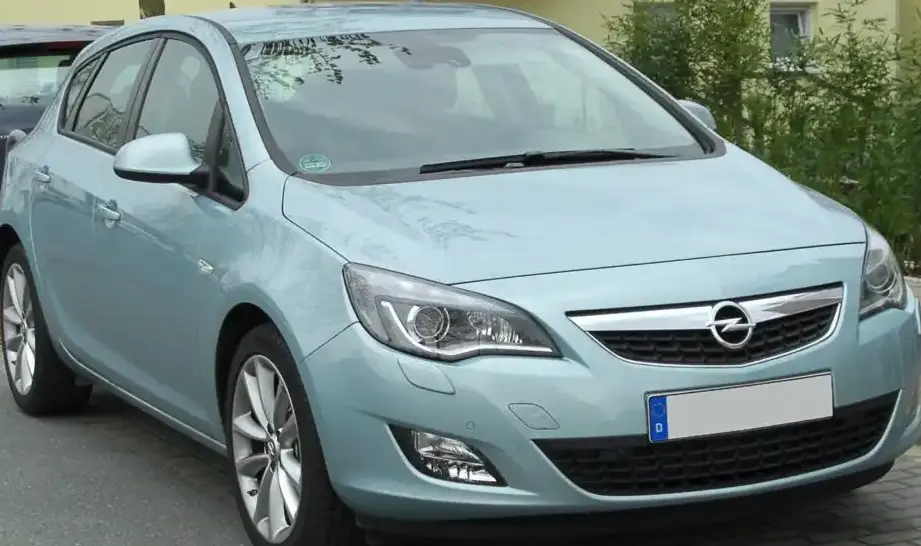
The Opel Astra J 1.4 Turbo, producing 120 horsepower, was a significant variant within the Astra J range (2009-2012). Positioned as a mid-range offering, it aimed to balance fuel efficiency with acceptable performance for everyday driving. This model, built on the General Motors Delta II platform (also known as the 1HX0/A3 platform), was primarily marketed in Europe as a practical and affordable compact hatchback. It represented a key step in Opel’s efforts to modernize its lineup and appeal to a broader customer base. The 1.4 Turbo engine was intended to provide a more refined and economical alternative to the base 1.6-liter naturally aspirated engine, while remaining more accessible than the higher-performance 1.6 Turbo or diesel options.
Technical Specifications
| Brand | Opel |
| Model | Astra |
| Generation | Astra J |
| Type (Engine) | 1.4 Turbo (120 Hp) |
| Start of production | 2009 |
| End of production | 2012 |
| Powertrain Architecture | Internal Combustion engine |
| Body type | Hatchback |
| Seats | 5 |
| Doors | 5 |
| Fuel consumption (urban) | 7.9 l/100 km (29.8 US mpg) |
| Fuel consumption (extra urban) | 4.7 l/100 km (50 US mpg) |
| Fuel consumption (combined) | 5.9 l/100 km (39.9 US mpg) |
| CO2 emissions | 137 g/km |
| Fuel Type | Petrol (Gasoline) |
| Acceleration 0 – 100 km/h | 10.1 sec |
| Acceleration 0 – 62 mph | 10.1 sec |
| Acceleration 0 – 60 mph | 9.6 sec |
| Maximum speed | 192 km/h (119.3 mph) |
| Emission standard | Euro 5 |
| Weight-to-power ratio | 10.8 kg/Hp |
| Weight-to-torque ratio | 6.5 kg/Nm |
| Power | 120 Hp @ 4200-6000 rpm |
| Torque | 200 Nm @ 1850-4200 rpm (147.51 lb.-ft.) |
| Engine layout | Front, Transverse |
| Engine Model/Code | A14NEL |
| Engine displacement | 1364 cm3 (83.24 cu. in.) |
| Number of cylinders | 4 |
| Engine configuration | Inline |
| Compression ratio | 9.5:1 |
| Number of valves per cylinder | 4 |
| Fuel injection system | Multi-port manifold injection |
| Engine aspiration | Turbocharger, Intercooler |
| Engine oil capacity | 4 l (4.23 US qt | 3.52 UK qt) |
| Coolant capacity | 6.2 l (6.55 US qt | 5.46 UK qt) |
| Kerb Weight | 1298 kg (2861.6 lbs.) |
| Max. weight | 1870 kg (4122.64 lbs.) |
| Max load | 572 kg (1261.04 lbs.) |
| Trunk (boot) space – minimum | 370 l (13.07 cu. ft.) |
| Trunk (boot) space – maximum | 1235 l (43.61 cu. ft.) |
| Fuel tank capacity | 56 l (14.79 US gal | 12.32 UK gal) |
| Length | 4419 mm (173.98 in.) |
| Width | 1814 mm (71.42 in.) |
| Width including mirrors | 2013 mm (79.25 in.) |
| Height | 1510 mm (59.45 in.) |
| Wheelbase | 2685 mm (105.71 in.) |
| Front track | 1541 mm (60.67 in.) |
| Rear track | 1551 mm (61.06 in.) |
| Ride height (ground clearance) | 160 mm (6.3 in.) |
| Drag coefficient (Cd) | 0.31 |
| Minimum turning circle | 11.4 m (37.4 ft.) |
| Drivetrain Architecture | Front wheel drive |
| Number of gears | 6 |
| Gearbox type | Manual transmission |
Powertrain & Engine Architecture
The heart of the Astra J 1.4 Turbo was the A14NEL engine, a 1.4-liter inline-four cylinder gasoline engine. This engine featured multi-point fuel injection and a single turbocharger with an intercooler. The turbocharger was a key component, providing a noticeable boost in power and torque compared to naturally aspirated engines of similar displacement. The A14NEL engine utilized a timing chain, contributing to its longevity and reduced maintenance requirements compared to timing belt setups. The engine’s 9.5:1 compression ratio was a compromise between efficiency and performance. The six-speed manual transmission was the standard offering for this variant, providing a good balance between fuel economy and driver engagement. The gear ratios were tuned for everyday usability, prioritizing acceleration in the lower gears and comfortable cruising at highway speeds.
Driving Characteristics
The 120 hp output, coupled with 200 Nm (147 lb-ft) of torque, provided adequate performance for typical commuting and highway driving. Acceleration from 0-60 mph took around 9.6 seconds, which was competitive within its class. While not a sports car, the turbocharger provided a useful surge of power when needed, making overtaking maneuvers relatively easy. Compared to the base 1.6-liter Astra J, the 1.4 Turbo offered a more responsive and refined driving experience. However, it didn’t possess the outright performance of the 1.6 Turbo or the fuel efficiency of the diesel options. The manual transmission allowed for greater driver control, but the relatively long throw of the shifter wasn’t particularly sporty. The suspension was tuned for comfort, providing a reasonably smooth ride over most road surfaces.
Equipment & Trim Levels
The Astra J 1.4 Turbo typically came equipped with a reasonable level of standard features. These included air conditioning, power windows, power mirrors, a CD/MP3 stereo system, and ABS brakes. Higher trim levels, such as the ‘Sport’ or ‘SE’ variants, added features like alloy wheels, cruise control, automatic climate control, and upgraded interior trim. Interior upholstery was typically cloth, with options for leather available on higher-spec models. Dashboard design was modern for its time, with a focus on ergonomics and ease of use. Optional extras included a sunroof, parking sensors, and a navigation system.
Chassis & Braking
The Astra J utilized a MacPherson strut front suspension and a torsion beam rear suspension. This setup provided a good balance between handling and ride comfort. The front brakes were typically ventilated discs, while the rear brakes were often drum brakes, depending on the trim level. Stabilizer bars were fitted to both the front and rear axles to reduce body roll during cornering. The steering was rack and pinion, providing precise and responsive steering feel. The 17-inch alloy wheels, often standard on higher trims, were fitted with 215/50 R17 tires.
Market Reception & Comparison
The Astra J 1.4 Turbo was generally well-received by automotive critics. It was praised for its fuel efficiency, comfortable ride, and refined engine. However, some critics noted that the performance wasn’t particularly exciting, and the interior materials could have been of higher quality. Compared to rivals like the Ford Focus and Volkswagen Golf, the Astra J 1.4 Turbo offered a competitive package in terms of price, features, and fuel economy. The 1.6-liter naturally aspirated Astra J offered lower running costs but lacked the 1.4 Turbo’s responsiveness. The 1.6 Turbo provided more performance but at a higher price point. The diesel variants offered superior fuel economy but were more expensive to purchase and maintain.
Legacy
The A14NEL engine, while not without its quirks, proved to be a relatively reliable powertrain. Common issues included occasional turbocharger failures and oil leaks. However, with regular maintenance, these engines could provide many years of service. Today, the Astra J 1.4 Turbo remains a popular choice in the used car market, particularly for buyers seeking an affordable and fuel-efficient compact hatchback. Its relatively low running costs and readily available parts make it a practical option for everyday transportation. The Astra J, in general, helped solidify Opel’s position as a major player in the European compact car segment, and the 1.4 Turbo variant played a key role in attracting a wider range of customers.