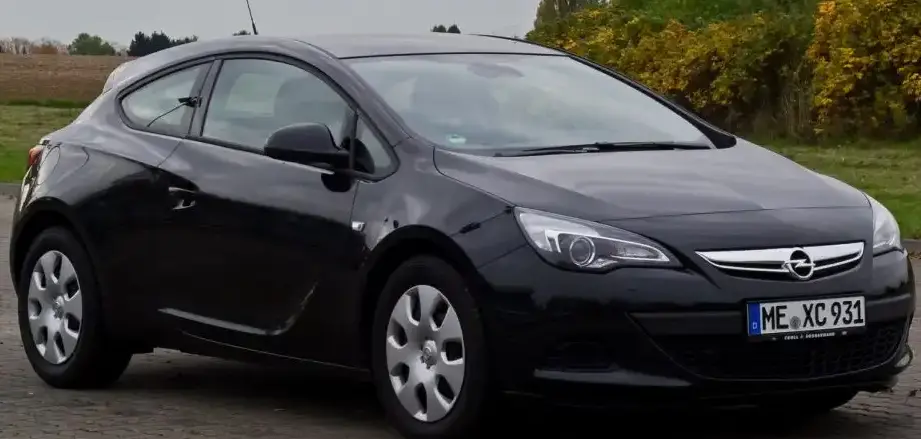
The Opel Astra J GTC 1.6 Turbo Ecotec start/stop, produced from 2011 to 2018, represented a sporty and efficient offering within the broader Astra J GTC range. Positioned as a mid-range option, it aimed to bridge the gap between the more economical base models and the higher-performance variants like the OPC. This three-door hatchback was a key component of Opel’s strategy to appeal to buyers seeking a stylish and practical vehicle with a balance of performance and fuel efficiency. It was primarily marketed in Europe, where the Astra held a significant position in the compact class.
Technical Specifications
| Brand | Opel |
| Model | Astra |
| Generation | Astra J GTC |
| Type (Engine) | 1.6 (170 Hp) Turbo Ecotec start/stop |
| Start of production | 2011 |
| End of production | 2018 |
| Powertrain Architecture | Internal Combustion engine |
| Body type | Hatchback |
| Seats | 5 |
| Doors | 3 |
| Fuel consumption (urban) | 7.8 l/100 km (30.2 US mpg) |
| Fuel consumption (extra urban) | 5.1-5.2 l/100 km (46.1 – 45.2 US mpg) |
| Fuel consumption (combined) | 6.1 l/100 km (38.6 US mpg) |
| CO2 emissions | 143-144 g/km |
| Fuel Type | Petrol (Gasoline) |
| Acceleration 0 – 100 km/h | 8.6 sec |
| Acceleration 0 – 62 mph | 8.6 sec |
| Acceleration 0 – 60 mph | 8.2 sec |
| Maximum speed | 219 km/h (136.08 mph) |
| Emission standard | Euro 5 |
| Power | 170 Hp @ 6000 rpm |
| Torque | 260 Nm @ 1650-3200 rpm (191.77 lb.-ft.) |
| Engine layout | Front, Transverse |
| Engine Model/Code | A16XHT |
| Engine displacement | 1598 cm3 (97.52 cu. in.) |
| Number of cylinders | 4 |
| Engine configuration | Inline |
| Cylinder Bore | 79 mm (3.11 in.) |
| Piston Stroke | 81.5 mm (3.21 in.) |
| Compression ratio | 10.5:1 |
| Number of valves per cylinder | 4 |
| Fuel injection system | Direct injection |
| Engine aspiration | Turbocharger, Intercooler |
| Engine oil capacity | 5.5 l (5.81 US qt | 4.84 UK qt) |
| Coolant capacity | 6.3 l (6.66 US qt | 5.54 UK qt) |
| Trunk (boot) space – minimum | 380 l (13.42 cu. ft.) |
| Trunk (boot) space – maximum | 1165 l (41.14 cu. ft.) |
| Fuel tank capacity | 56 l (14.79 US gal | 12.32 UK gal) |
| Length | 4466 mm (175.83 in.) |
| Width | 1840 mm (72.44 in.) |
| Width including mirrors | 2020 mm (79.53 in.) |
| Height | 1482 mm (58.35 in.) |
| Wheelbase | 2695 mm (106.1 in.) |
| Front track | 1584 mm (62.36 in.) |
| Rear track | 1588 mm (62.52 in.) |
| Ride height (ground clearance) | 112 mm (4.41 in.) |
| Drag coefficient (Cd) | 0.31 |
| Minimum turning circle | 11.4 m (37.4 ft.) |
| Drivetrain Architecture | Front wheel drive |
| Number of gears | 6 |
| Type of gearbox | Manual transmission |
| Front brakes | Ventilated discs |
| Assisting systems | ABS (Anti-lock braking system) |
| Steering type | Steering rack and pinion |
| Power steering | Electric Steering |
Introduction
The Opel Astra J GTC 1.6 Turbo Ecotec start/stop, launched in 2011, was a significant iteration of Opel’s popular compact model. Built on the 1HX0/A3 platform shared with other General Motors and Stellantis vehicles, the GTC (Gran Turismo Coupe) variant distinguished itself with its three-door body style and more aggressive styling cues. The 1.6-liter turbocharged engine, coupled with a manual transmission, offered a compelling blend of performance and fuel economy, making it a popular choice for drivers seeking a sporty yet practical vehicle. The “start/stop” system, a relatively new technology at the time, further enhanced its efficiency by automatically shutting off the engine when the vehicle was stationary.
Powertrain & Engine Architecture
At the heart of the Astra J GTC 1.6 Turbo Ecotec lay the A16XHT engine, a 1.6-liter inline-four cylinder powerplant. This engine utilized direct fuel injection, a technology that improved combustion efficiency and power output. The turbocharger, coupled with an intercooler, forced more air into the cylinders, boosting horsepower and torque. The engine’s architecture featured a dual overhead camshaft (DOHC) valvetrain with four valves per cylinder, optimizing airflow for enhanced performance. The A16XHT engine produced 170 horsepower at 6000 rpm and 260 Nm (191.77 lb.-ft.) of torque between 1650 and 3200 rpm. The six-speed manual transmission was carefully geared to maximize the engine’s output, providing responsive acceleration and decent highway cruising ability. The start/stop system, controlled by the vehicle’s ECU, automatically shut down the engine when the car came to a halt and the driver disengaged the clutch, restarting it instantly upon clutch engagement.
Driving Characteristics
The Astra J GTC 1.6 Turbo offered a noticeably more engaging driving experience than the base models equipped with smaller, naturally aspirated engines. While not as potent as the Astra GTC OPC, the 1.6 Turbo provided ample power for everyday driving and spirited weekend excursions. Acceleration from 0 to 60 mph took approximately 8.2 seconds, and the car could reach a top speed of 219 km/h (136.08 mph). The turbocharger provided a noticeable boost in power, delivering strong acceleration in the mid-range. The six-speed manual transmission allowed drivers to maintain optimal engine speed for efficient and responsive driving. Compared to the higher-output OPC variant, the 1.6 Turbo prioritized fuel economy and everyday usability over outright performance. The suspension was tuned for a balance between comfort and handling, providing a reasonably compliant ride without sacrificing cornering stability.
Equipment & Trim Levels
The Astra J GTC 1.6 Turbo Ecotec start/stop typically came equipped with a respectable level of standard features. These included air conditioning, power windows and mirrors, a CD/MP3 stereo system, and ABS brakes. Higher trim levels offered additional features such as alloy wheels, a touchscreen infotainment system, automatic climate control, and parking sensors. Interior upholstery was typically cloth, with optional leather upgrades available. The dashboard layout was modern and functional, with a focus on ergonomics. Optional extras included a panoramic sunroof, heated seats, and a premium sound system.
Chassis & Braking
The Astra J GTC featured a MacPherson strut front suspension and a torsion beam rear suspension. This setup provided a good balance of ride comfort and handling. The front brakes were ventilated discs, offering strong stopping power, while the rear brakes were typically solid discs. ABS (Anti-lock Braking System) was standard, enhancing safety and control during emergency braking situations. The steering was electrically assisted, providing light and precise steering feel. The chassis was designed to be relatively lightweight, contributing to the car’s agility and fuel efficiency.
Market Reception & Comparison
The Astra J GTC 1.6 Turbo Ecotec start/stop was generally well-received by automotive critics. It was praised for its stylish design, engaging driving dynamics, and fuel efficiency. Compared to other trims in the Astra J GTC lineup, the 1.6 Turbo offered a compelling balance of performance and economy. It was more affordable than the OPC variant, yet provided significantly more power than the base models. Fuel economy was a strong point, with combined fuel consumption figures of around 6.1 l/100 km (38.6 US mpg). Reliability was generally good, although some owners reported minor issues with the turbocharger and the start/stop system.
Legacy
The Opel Astra J GTC 1.6 Turbo Ecotec start/stop remains a popular choice in the used car market today. Its combination of style, performance, and fuel efficiency continues to appeal to buyers. The A16XHT engine, while not without its quirks, has proven to be reasonably durable with proper maintenance. The start/stop system, while initially met with some skepticism, has become increasingly common in modern vehicles. The Astra J GTC 1.6 Turbo represents a significant step forward in Opel’s efforts to produce a compelling and efficient compact car.