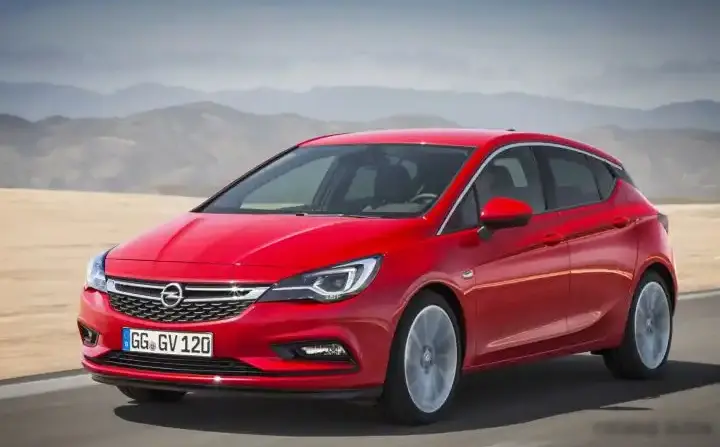
The Opel Astra K 1.4 (100 hp) was a front-wheel-drive, five-door hatchback produced between 2015 and 2018. Positioned as an entry-level offering within the broader Astra K range, it aimed to provide affordable and efficient transportation. This variant played a significant role in the European market, where the Astra consistently ranked as a popular choice in the compact family car segment. It represented Opel’s attempt to balance fuel economy with acceptable performance for everyday driving. The 1.4-liter engine and five-speed manual transmission combination was designed to appeal to buyers prioritizing practicality and lower running costs.
Technical Specifications
| Brand | Opel |
| Model | Astra |
| Generation | Astra K |
| Type (Engine) | 1.4 (100 Hp) |
| Start of production | 2015 |
| End of production | 2018 |
| Powertrain Architecture | Internal Combustion engine |
| Body type | Hatchback |
| Seats | 5 |
| Doors | 5 |
| Fuel consumption (urban) | 7.5 l/100 km (31.4 US mpg, 37.7 UK mpg, 13.3 km/l) |
| Fuel consumption (extra urban) | 4.4 l/100 km (53.5 US mpg, 64.2 UK mpg, 22.7 km/l) |
| Fuel consumption (combined) | 5.5 l/100 km (42.8 US mpg, 51.4 UK mpg, 18.2 km/l) |
| CO2 emissions | 124 g/km |
| Fuel Type | Petrol (Gasoline) |
| Acceleration 0 – 100 km/h | 13.4 sec |
| Acceleration 0 – 62 mph | 13.4 sec |
| Acceleration 0 – 60 mph | 12.7 sec |
| Maximum speed | 185 km/h (114.95 mph) |
| Emission standard | Euro 6 |
| Weight-to-power ratio | 11.7 kg/Hp, 85.5 Hp/tonne |
| Weight-to-torque ratio | 9 kg/Nm, 111.2 Nm/tonne |
| Power | 100 Hp @ 6000 rpm |
| Power per litre | 71.5 Hp/l |
| Torque | 130 Nm @ 4400 rpm (95.88 lb.-ft. @ 4400 rpm) |
| Engine layout | Front, Transverse |
| Engine Model/Code | B14XE |
| Engine displacement | 1399 cm3 (85.37 cu. in.) |
| Number of cylinders | 4 |
| Engine configuration | Inline |
| Cylinder Bore | 74 mm (2.91 in.) |
| Piston Stroke | 81.3 mm (3.2 in.) |
| Compression ratio | 10.6:1 |
| Number of valves per cylinder | 4 |
| Fuel injection system | Multi-port manifold injection |
| Engine aspiration | Naturally aspirated engine |
| Engine oil capacity | 4 l (4.23 US qt | 3.52 UK qt) |
| Kerb Weight | 1169 kg (2577.2 lbs.) |
| Max. weight | 1760 kg (3880.14 lbs.) |
| Max load | 591 kg (1302.93 lbs.) |
| Trunk (boot) space – minimum | 370 l (13.07 cu. ft.) |
| Trunk (boot) space – maximum | 1210 l (42.73 cu. ft.) |
| Fuel tank capacity | 48 l (12.68 US gal | 10.56 UK gal) |
| Max. roof load | 75 kg (165.35 lbs.) |
| Permitted trailer load with brakes (12%) | 900 kg (1984.16 lbs.) |
| Permitted trailer load without brakes | 600 kg (1322.77 lbs.) |
| Length | 4370 mm (172.05 in.) |
| Width | 1809 mm (71.22 in.) |
| Width with mirrors folded | 1871 mm (73.66 in.) |
| Width including mirrors | 2042 mm (80.39 in.) |
| Height | 1485 mm (58.46 in.) |
| Wheelbase | 2662 mm (104.8 in.) |
| Front track | 1544 mm (60.79 in.) |
| Rear (Back) track | 1558 mm (61.34 in.) |
| Front overhang | 960 mm (37.8 in.) |
| Rear overhang | 748 mm (29.45 in.) |
| Ride height (ground clearance) | 150 mm (5.91 in.) |
| Drag coefficient (Cd) | 0.31 |
| Minimum turning circle | 11.05 m (36.25 ft.) |
| Drivetrain Architecture | The Internal combustion engine (ICE) drives the front wheels of the vehicle. |
| Drive wheel | Front wheel drive |
| Number of gears and type of gearbox | 5 gears, manual transmission |
| Front brakes | Ventilated discs |
| Rear brakes | Disc |
| Assisting systems | ABS (Anti-lock braking system) |
| Steering type | Steering rack and pinion |
| Tires size | 205/55 R16 |
| Wheel rims size | 6J x 15 |
INTRODUCTION
The Opel Astra K 1.4 (100 hp) represented a significant step forward for the Astra line when it debuted in 2015. Part of the K generation, which ran through 2018, this model was built on the GM’s flexible 1HX0/A3 platform. This platform allowed for a lighter construction compared to its predecessor, contributing to improved fuel efficiency and handling. The 1.4-liter engine variant was specifically targeted at buyers seeking a balance between affordability, practicality, and reasonable running costs. It served as the entry point into the Astra K range, offering a more accessible price point than the more powerful engine options.
Powertrain & Engine Architecture
The heart of the Astra K 1.4 was the B14XE engine, a 1399cc inline-four cylinder petrol engine. This engine featured multi-port fuel injection and a naturally aspirated design. It produced 100 horsepower at 6000 rpm and 130 Nm (95.88 lb-ft) of torque at 4400 rpm. The engine utilized a single overhead camshaft (SOHC) valvetrain with four valves per cylinder. The engine’s relatively simple design contributed to its reliability and ease of maintenance. The engine was paired with a five-speed manual transmission, which was the standard offering for this trim level. The transmission was chosen for its cost-effectiveness and suitability for the engine’s power output. While an automatic transmission was available on other Astra K models, it wasn’t offered with the 1.4-liter 100 hp engine.
Driving Characteristics
The Astra K 1.4 (100 hp) offered a comfortable, if not particularly exhilarating, driving experience. Acceleration from 0 to 100 km/h (0-62 mph) took around 13.4 seconds, making it suitable for urban and suburban driving but less ideal for frequent highway overtaking. The five-speed manual transmission provided adequate control, but the relatively wide gear ratios meant that frequent shifting was often necessary to maintain optimal engine speed. Compared to the more powerful 1.6-liter turbo or diesel variants, the 1.4-liter engine felt noticeably less responsive. However, it offered a smoother and quieter ride, particularly at lower speeds. The engine’s torque curve was relatively flat, providing usable power across a reasonable rev range, but it lacked the punch of the turbocharged options.
Equipment & Trim Levels
The Astra K 1.4 (100 hp) typically came with a standard equipment list focused on practicality and safety. Standard features included air conditioning, power windows, central locking, and an audio system with USB connectivity. Safety features included ABS, electronic stability control, and multiple airbags. Higher trim levels, such as the ‘Essentia’ or ‘Enjoy’ offered additional features like alloy wheels, cruise control, and a more advanced infotainment system. Interior upholstery was typically cloth, with a functional and durable design. Optional extras included parking sensors, a rearview camera, and upgraded audio systems.
Chassis & Braking
The Astra K utilized a MacPherson strut front suspension and a torsion beam rear suspension. This setup provided a good balance between ride comfort and handling. The front brakes were ventilated discs, while the rear brakes were solid discs. ABS (Anti-lock Braking System) was standard, providing enhanced braking performance in emergency situations. The chassis was designed to be lightweight, contributing to the car’s overall efficiency. The suspension tuning was geared towards comfort, but it still offered reasonable body control in corners. Stabilizer bars were fitted to both the front and rear axles to reduce body roll.
Market Reception & Comparison
The Astra K 1.4 (100 hp) received generally positive reviews for its fuel efficiency and affordability. Critics noted that it wasn’t the most exciting car to drive, but it offered a practical and reliable solution for everyday transportation. Compared to other trims in the Astra K lineup, the 1.4-liter variant offered the best fuel economy, but at the expense of performance. The 1.6-liter turbo engine provided significantly more power and a more engaging driving experience, but it came with a higher price tag and slightly lower fuel economy. The diesel variants offered even better fuel economy, but they were often more expensive to purchase and maintain. The 1.4-liter model was particularly popular with buyers who prioritized running costs and practicality.
Legacy
The Opel Astra K 1.4 (100 hp) has proven to be a relatively reliable vehicle in the used car market. The B14XE engine is known for its durability, and the simple design makes it relatively easy to maintain. Common issues are typically related to wear and tear, such as exhaust system components and suspension bushings. The Astra K’s lightweight construction and efficient engine contribute to its continued appeal as a budget-friendly and economical option. While it may not offer the performance or features of higher-end trims, the 1.4-liter variant remains a viable choice for buyers seeking a practical and reliable compact hatchback.