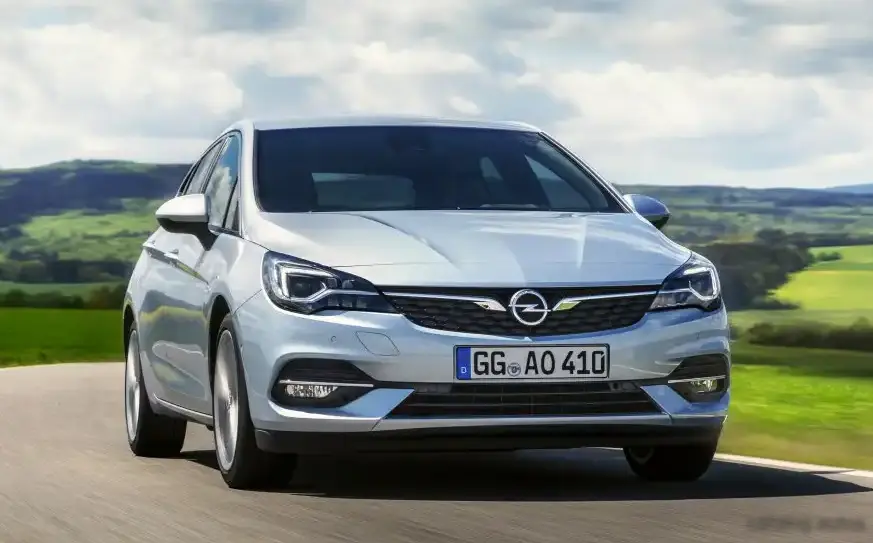
The Opel Astra K (facelift, introduced in 2019) 1.5d (122 hp) Automatic represents a significant iteration within the Astra K generation, produced from August 2019 to October 2021. Positioned as a mid-range offering, this variant aimed to balance fuel efficiency with acceptable performance for everyday driving. It was a key model in the European market, where the Astra consistently ranked as a popular compact hatchback. The facelift brought styling updates and technological enhancements to the K series, solidifying its position against competitors like the Volkswagen Golf, Ford Focus, and Peugeot 308. This specific powertrain combination – the 1.5-liter diesel with a nine-speed automatic – was designed to appeal to buyers prioritizing comfort and economy over outright sportiness.
Technical Specifications
| Brand | Opel |
| Model | Astra |
| Generation | Astra K (facelift 2019) |
| Type (Engine) | 1.5d (122 Hp) Automatic |
| Start of production | August, 2019 |
| End of production | October, 2021 |
| Powertrain Architecture | Internal Combustion engine |
| Body type | Hatchback |
| Seats | 5 |
| Doors | 5 |
| Fuel consumption (urban) | 5.7-5.8 l/100 km (41.3 – 40.6 US mpg, 49.6 – 48.7 UK mpg, 17.5 – 17.2 km/l) |
| Fuel consumption (extra urban) | 3.9 l/100 km (60.3 US mpg, 72.4 UK mpg, 25.6 km/l) |
| Fuel consumption (combined) | 4.6 l/100 km (51.1 US mpg, 61.4 UK mpg, 21.7 km/l) |
| CO2 emissions | 120-122 g/km |
| Fuel Type | Diesel |
| Acceleration 0 – 100 km/h | 10.6 sec |
| Acceleration 0 – 62 mph | 10.6 sec |
| Acceleration 0 – 60 mph | 10.1 sec |
| Maximum speed | 205 km/h (127.38 mph) |
| Emission standard | Euro 6d |
| Weight-to-power ratio | 10.8 kg/Hp, 92.4 Hp/tonne |
| Weight-to-torque ratio | 4.4 kg/Nm, 227.3 Nm/tonne |
| Power | 122 Hp @ 3500 rpm |
| Power per litre | 81.6 Hp/l |
| Torque | 300 Nm @ 1750-2500 rpm (221.27 lb.-ft. @ 1750-2500 rpm) |
| Engine layout | Front, Transverse |
| Engine Model/Code | F15DVH |
| Engine displacement | 1496 cm3 (91.29 cu. in.) |
| Number of cylinders | 3 |
| Engine configuration | Inline |
| Cylinder Bore | 84 mm (3.31 in.) |
| Piston Stroke | 90 mm (3.54 in.) |
| Compression ratio | 15.5:1 |
| Number of valves per cylinder | 4 |
| Fuel injection system | Diesel Commonrail |
| Engine aspiration | Turbocharger, Intercooler |
| Engine oil capacity | 4.25 l (4.49 US qt | 3.74 UK qt) |
| Coolant | 7 l (7.4 US qt | 6.16 UK qt) |
| Kerb Weight | 1320 kg (2910.1 lbs.) |
| Max. weight | 1920 kg (4232.88 lbs.) |
| Max load | 600 kg (1322.77 lbs.) |
| Trunk (boot) space – minimum | 370 l (13.07 cu. ft.) |
| Trunk (boot) space – maximum | 1210 l (42.73 cu. ft.) |
| Fuel tank capacity | 48 l (12.68 US gal | 10.56 UK gal) |
| AdBlue tank | 12.5 l (3.3 US gal | 2.75 UK gal) |
| Permitted trailer load with brakes (12%) | 1350 kg (2976.24 lbs.) |
| Permitted trailer load without brakes | 660 kg (1455.05 lbs.) |
| Length | 4370 mm (172.05 in.) |
| Width | 1809 mm (71.22 in.) |
| Width with mirrors folded | 1871 mm (73.66 in.) |
| Width including mirrors | 2042 mm (80.39 in.) |
| Height | 1485 mm (58.46 in.) |
| Wheelbase | 2662 mm (104.8 in.) |
| Front track | 1548 mm (60.94 in.) |
| Rear (Back) track | 1565 mm (61.61 in.) |
| Front overhang | 960 mm (37.8 in.) |
| Rear overhang | 748 mm (29.45 in.) |
| Drag coefficient (Cd) | 0.26 |
| Minimum turning circle (turning diameter) | 11.05 m (36.25 ft.) |
| Drivetrain Architecture | The Internal combustion engine (ICE) drives the front wheels of the vehicle. |
| Drive wheel | Front wheel drive |
| Number of gears and type of gearbox | 9 gears, automatic transmission |
| Front brakes | Disc |
| Rear brakes | Disc |
| Assisting systems | ABS (Anti-lock braking system) |
| Steering type | Steering rack and pinion |
| Power steering | Electric Steering |
| Tires size | 205/65 R16; 225/45 R17 |
| Wheel rims size | 6.5J x 16; 7J x 16; 7.5J x 17 |
Powertrain & Engine Architecture
The heart of this Astra K variant is the F15DVH, a 1.5-liter inline three-cylinder diesel engine. This engine is part of Opel’s ‘Small Diesel’ family, known for its compact size and efficiency. The engine utilizes a turbocharger with an intercooler to boost power output, achieving 122 horsepower at 3500 rpm and 300 Nm (221 lb-ft) of torque between 1750 and 2500 rpm. A key feature is its diesel commonrail fuel injection system, delivering precise fuel metering for optimized combustion. The engine boasts a high compression ratio of 15.5:1, contributing to its thermal efficiency. Paired with the engine is a sophisticated nine-speed automatic transmission, providing smooth gear changes and contributing to improved fuel economy. This transmission was a relatively new offering at the time, designed to replace older six-speed automatics and offer a wider gear spread for better optimization of engine performance.
Driving Characteristics
The 1.5d Automatic Astra K offers a comfortable and refined driving experience. While not particularly sporty, the engine provides adequate power for everyday commuting and highway cruising. Acceleration from 0-100 km/h (0-62 mph) takes around 10.6 seconds, which is typical for a diesel-powered compact hatchback. The nine-speed automatic transmission is generally responsive, although some drivers noted occasional hesitation during downshifts. The torque delivery is strong from low engine speeds, making it easy to navigate city traffic. Compared to the more powerful 1.4-liter turbocharged gasoline engine options, the 1.5d Automatic prioritizes fuel economy over outright performance. Manual transmission versions of the 1.5d offered slightly quicker acceleration and a more engaging driving experience, but at the expense of convenience.
Equipment & Trim Levels
The 1.5d Automatic trim typically included standard features such as air conditioning, a touchscreen infotainment system with Apple CarPlay and Android Auto compatibility, Bluetooth connectivity, and a suite of safety features including automatic emergency braking and lane departure warning. Higher trim levels added features like heated seats, a larger touchscreen display, navigation system, and adaptive cruise control. Interior upholstery was typically cloth, with options for leather upgrades. Dashboard configurations were generally consistent across the Astra K range, with a focus on a clean and modern design.
Chassis & Braking
The Astra K utilizes a MacPherson strut front suspension and a torsion beam rear suspension. This setup provides a good balance between ride comfort and handling. The 1.5d Automatic variant typically featured disc brakes on all four wheels, providing adequate stopping power. ABS (Anti-lock Braking System) was standard. Stabilizer bars were fitted to both the front and rear axles to reduce body roll during cornering. The suspension tuning was generally geared towards comfort, rather than sporty handling.
Market Reception & Comparison
The Opel Astra K 1.5d Automatic was generally well-received by automotive critics. It was praised for its fuel efficiency, comfortable ride, and well-equipped interior. However, some reviewers noted that the engine could be somewhat noisy under hard acceleration. Compared to other trims in the Astra K lineup, the 1.5d Automatic offered the best fuel economy, making it an attractive option for drivers who prioritize running costs. The gasoline-powered versions offered more performance, while the higher-output diesel variants provided a blend of power and efficiency. Against competitors like the Volkswagen Golf and Ford Focus, the Astra K 1.5d Automatic offered a competitive package in terms of price, features, and fuel economy.
Legacy
The F15DVH engine has proven to be a relatively reliable powertrain, although like any diesel engine, it requires regular maintenance, including oil changes and diesel particulate filter (DPF) regeneration. The nine-speed automatic transmission has also demonstrated good durability. In the used car market, the Astra K 1.5d Automatic remains a popular choice due to its fuel efficiency and affordability. However, potential buyers should be aware of the potential costs associated with DPF maintenance and ensure that the vehicle has been properly serviced. The Astra K, in general, represents a well-rounded and practical compact hatchback that continues to offer good value for money.