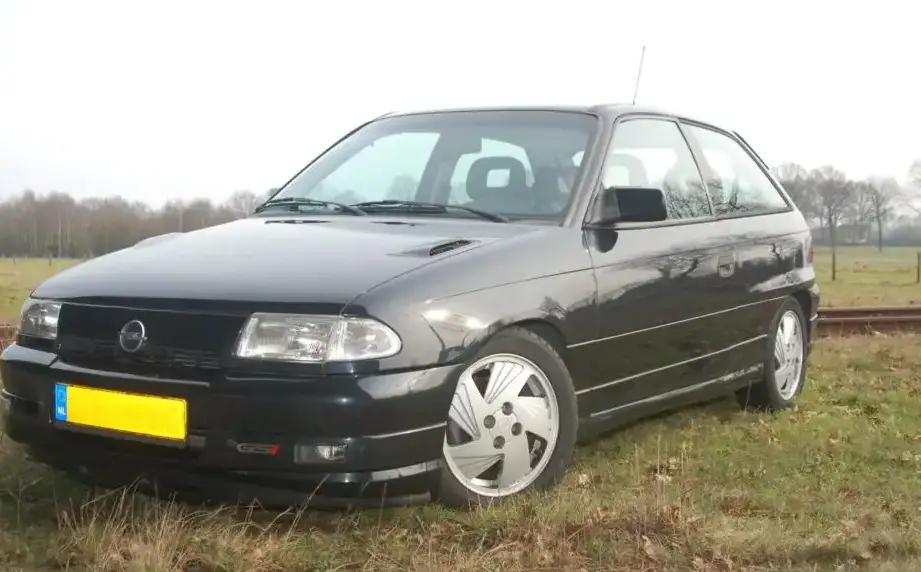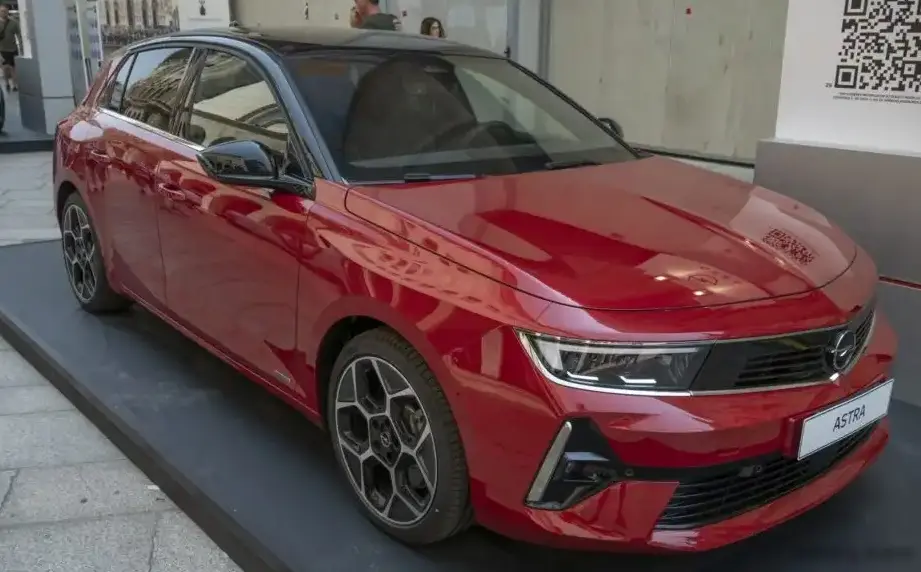
The Opel Astra L 1.6 Turbo (180 hp) Plug-in Hybrid Automatic represents a significant step in Opel’s electrification strategy, launched in October 2021 and continuing through July 2025. Positioned as a mid-range offering within the Astra L generation (introduced as a successor to the Astra K), this variant combines a turbocharged gasoline engine with an electric motor and battery pack, offering both all-electric driving capability and extended range through its hybrid powertrain. It’s part of the broader Astra L family built on the EMP2 platform, shared with other Stellantis brands like Peugeot and Citroën. This model was primarily aimed at the European market, catering to increasing demand for fuel-efficient and environmentally conscious vehicles.
Technical Specifications
| Brand | Opel |
| Model | Astra |
| Generation | Astra L |
| Type (Engine) | 1.6 Turbo (180 Hp) Plug-in Hybrid Automatic |
| Start of production | October, 2021 |
| End of production | July, 2025 |
| Powertrain Architecture | PHEV (Plug-in Hybrid Electric Vehicle) |
| Body type | Hatchback |
| Seats | 5 |
| Doors | 5 |
| Combined fuel consumption (WLTP) | 1-1.1 l/100 km (235.2 – 213.8 US mpg, 282.5 – 256.8 UK mpg, 100 – 90.9 km/l) |
| CO2 emissions (WLTP) | 22-26 g/km |
| Fuel Type | Petrol / electricity |
| Acceleration 0 – 100 km/h | 7.6 sec |
| Acceleration 0 – 62 mph | 7.6 sec |
| Acceleration 0 – 60 mph | 7.2 sec |
| Maximum speed | 225 km/h (139.81 mph) |
| Emission standard | Euro 6d |
| Weight-to-power ratio | 8.9 kg/Hp, 112.3 Hp/tonne |
| Weight-to-torque ratio | 4.5 kg/Nm, 224.6 Nm/tonne |
| Gross battery capacity | 12.4 kWh |
| Battery technology | Lithium-ion (Li-Ion) |
| All-electric range (WLTP) | 66-73 km (41.01 – 45.36 mi) |
| Average Energy consumption (WLTP) | 14.2-15.1 kWh/100 km (22.85 – 24.3 kWh/100 mi, 147 – 139 MPGe, 7 – 6.6 km/kWh, 4.4 – 4.1 mi/kWh) |
| Max speed (electric) | 135 km/h (83.89 mph) |
| Electric motor power | 110 Hp @ 2500 rpm (320 Nm @ 500-2500 rpm / 236.02 lb.-ft. @ 500-2500 rpm) |
| System power | 180 Hp |
| System torque | 360 Nm (265.52 lb.-ft.) |
| Power | 150 Hp @ 6000 rpm (93.9 Hp/l) |
| Torque | 250 Nm @ 1750 rpm (184.39 lb.-ft. @ 1750 rpm) |
| Engine layout | Front, Transverse |
| Engine Model/Code | EP6FADTXHPE |
| Engine displacement | 1598 cm3 (97.52 cu. in.) |
| Number of cylinders | 4 |
| Engine configuration | Inline |
| Number of valves per cylinder | 4 |
| Fuel injection system | Direct injection |
| Engine aspiration | Turbocharger, Intercooler |
| Engine oil capacity | 4.3 l (4.54 US qt | 3.78 UK qt) |
| Kerb Weight | 1603 kg (3534.01 lbs.) |
| Max. weight | 2150 kg (4739.94 lbs.) |
| Max load | 547 kg (1205.93 lbs.) |
| Trunk (boot) space – minimum | 352 l (12.43 cu. ft.) |
| Trunk (boot) space – maximum | 1268 l (44.78 cu. ft.) |
| Fuel tank capacity | 42 l (11.1 US gal | 9.24 UK gal) |
| Max. roof load | 75 kg (165.35 lbs.) |
| Permitted trailer load with brakes (12%) | 1450 kg (3196.7 lbs.) |
| Permitted trailer load without brakes | 750 kg (1653.47 lbs.) |
| Permitted towbar download | 70 kg (154.32 lbs.) |
| Length | 4374 mm (172.2 in.) |
| Width with mirrors folded | 1860 mm (73.23 in.) |
| Width including mirrors | 2062 mm (81.18 in.) |
| Height | 1442-1472 mm (56.77 – 57.95 in.) |
| Wheelbase | 2675 mm (105.31 in.) |
| Front track | 1551-1559 mm (61.06 – 61.38 in.) |
| Rear (Back) track | 1546-1554 mm (60.87 – 61.18 in.) |
| Minimum turning circle (turning diameter) | 10.51 m (34.48 ft.) |
| Drivetrain Architecture | The Internal combustion engine (ICE) and electric motor drive the front wheels of the car with the ability to work in full electric or mixed mode. |
| Drive wheel | Front wheel drive |
| Number of gears and type of gearbox | 8 gears, automatic transmission |
| Front brakes | Ventilated discs |
| Rear brakes | Disc |
| Tires size | 225/45 R17 94V; 225/40 R18 92V |
| Wheel rims size | 7.5J x 17; 8J x 18 |
Powertrain & Engine Architecture
At the heart of the Astra L 1.6 Turbo Plug-in Hybrid is the EP6FADTXHPE engine, a 1.6-liter turbocharged inline-four cylinder gasoline engine producing 150 hp and 250 Nm (184 lb-ft) of torque. This engine utilizes direct fuel injection and is paired with an 110 hp electric motor integrated between the engine and the 8-speed automatic transmission. The combined system output is 180 hp and 360 Nm (265 lb-ft) of torque. The 12.4 kWh lithium-ion battery pack provides an all-electric range of 66-73 km (41-45 miles) under WLTP testing. The electric motor draws power from the battery and assists the gasoline engine, or can power the vehicle independently in electric mode. The transmission is an Aisin-sourced 8-speed automatic, chosen for its efficiency and smooth operation. The engine management system seamlessly blends power from both sources, optimizing for fuel economy or performance as needed.
Driving Characteristics
The 1.6 Turbo Plug-in Hybrid Automatic offers a refined driving experience. In electric mode, the Astra L provides near-silent acceleration and responsive performance for typical urban driving. When the gasoline engine engages, the transition is generally smooth and unobtrusive. The 8-speed automatic transmission provides quick and precise shifts. While not as overtly sporty as some of the higher-powered Astra L variants, the 180 hp combined output delivers adequate acceleration – 0-100 km/h in 7.6 seconds. The hybrid system’s weight (due to the battery pack) does slightly impact handling compared to lighter, non-hybrid models, but the Astra L maintains a composed and comfortable ride. The gear ratios are tuned for efficiency, prioritizing fuel economy over outright performance.
Equipment & Trim Levels
The 1.6 Turbo Plug-in Hybrid Automatic was typically offered in well-equipped trim levels, often positioned as a mid-range option. Standard features generally included a touchscreen infotainment system with Apple CarPlay and Android Auto compatibility, digital instrument cluster, automatic climate control, and a suite of advanced driver-assistance systems (ADAS) such as lane keeping assist, automatic emergency braking, and adaptive cruise control. Interior upholstery was typically cloth or a combination of cloth and synthetic leather. Optional extras included a panoramic sunroof, premium audio system, heated seats, and upgraded alloy wheels. The specific trim levels and available options varied slightly depending on the market.
Chassis & Braking
The Astra L 1.6 Turbo Plug-in Hybrid utilizes a MacPherson strut front suspension and a torsion beam rear suspension. The suspension tuning is geared towards comfort and stability, providing a balanced ride quality. Braking duties are handled by ventilated discs at the front and solid discs at the rear. The car is equipped with ABS (Anti-lock Braking System), electronic brake-force distribution (EBD), and brake assist. The added weight of the battery pack necessitates slightly firmer spring rates and dampers compared to non-hybrid Astra L models to maintain handling composure.
Market Reception & Comparison
The Astra L 1.6 Turbo Plug-in Hybrid was generally well-received by automotive critics. It was praised for its fuel efficiency, comfortable ride, and refined driving experience. Compared to the petrol-only and diesel Astra L variants, the plug-in hybrid offered significantly lower running costs, particularly for drivers who could regularly utilize the electric driving range. Compared to the more powerful Astra L models (like those with the 1.6 Turbo 225 hp engine), the 180 hp version offered a more accessible price point and prioritized efficiency over outright performance. The fuel economy and lower emissions were key selling points, appealing to environmentally conscious buyers.
Legacy
The Opel Astra L 1.6 Turbo Plug-in Hybrid represents a crucial step in Opel’s transition towards electrification. While long-term reliability data is still emerging, the powertrain components (the 1.6 Turbo engine and Aisin 8-speed automatic) have proven relatively robust in other Stellantis vehicles. The battery pack is expected to maintain a useful capacity for at least 8-10 years, although degradation will occur over time. On the used car market, these models are becoming increasingly attractive to buyers seeking a fuel-efficient and technologically advanced hatchback. The combination of electric range and gasoline engine provides a practical solution for those who want to reduce their carbon footprint without the range anxiety associated with fully electric vehicles.